
NASA’s Curiosity Mars rover shows the vehicle at the site from which it reached down to drill into a rock target called “Buckskin” on lower Mount Sharp – NASA/JPL-Caltech/MSSS
Related channels: MARS, SPIRIT (ROVER), OPPORTUNITY (ROVER), EXOMARS (SPACECRAFT), WATER, ASTROBIOLOGY
1
/
4


Our Commercial Approach to Mars Sample Return
As the nation looks to commercial industry to drive innovation in space exploration, we are leading the charge. Our latest offering to NASA is a game-changing solution for the Mars Sample Return (MSR) mission, delivering a firm-fixed price solution for under $3 billion, a significant reduction from current estimates of $7 billion.
By leveraging our extensive experience in deep space exploration and utilizing existing designs, we're streamlining operations and reducing risk to achieve a lower total mission cost. Our commercial industry-led design features a simplified and centralized architecture, enabling a drastic reduction in mass.
Learn more about our innovative approach to MSR, featuring a smaller lander based on our flight-proven InSight spacecraft, a smaller Mars ascent vehicle and a smaller Earth entry system - all tailored to the needs of returning Mars samples. Join us as we push the boundaries of space exploration and show how science and deep space exploration can be done differently.
Learn more about MSR: https://lockheedmartin.com/en-us/news/features/2025/bringing-commercial-industry-efficiency-to-exploration-lockheed-martins-plan-for-mars-sample-return.html
Learn more about our deep space capabilities: https://lockheedmartin.com/en-us/capabilities/space/deep-space-exploration.html
NASA’s Curiosity Rover Explores “Spiderwebs” on Mars (360)
Drag your mouse or move your phone to explore this 360-degree panorama provided by NASA’s Curiosity Mars rover. This view shows some of the rover’s first looks at a region that has only been viewed from space until now, and where the surface is crisscrossed with spiderweblike patterns.
00:00 Title
00:08 Intro
00:26 Labeled Image
00:50 Groundwater Rock Vein
01:43 Unlabeled Image
First seen in the years before Curiosity landed in 2012, these patterns are boxwork formations — a kind of low ridge, some just a few inches tall, created by groundwater as it soaks into subsurface rock cracks. That groundwater left behind minerals that accumulated in those cracks, hardening and becoming cementlike. Eons of sandblasting by Martian wind wore away the rock but not the minerals, revealing networks of resistant ridges within.
This video will show you rover tracks left by Curiosity, some of the boxwork ridges and an example of a white mineral vein found running through a rock crack — another sign of how groundwater shaped this area.
This panorama is stitched together from 291 individual images captured by the rover’s Mast Camera, or Mastcam, between May 15 and May 18, 2025 (the 4,451st Martian day, or sol, of the mission and the 4,454th sol). The color in these images has been adjusted to match the lighting conditions as the human eye would see them on Earth.
Note on best viewing: Not all browsers support 360-degree videos. YouTube supports playback on computers using Chrome, Firefox, MS Edge, and Opera browsers. For the best experience on a mobile device, play this video in the YouTube app. To improve the resolution, open the video settings (using the gear icon) and select the highest quality available.
For more about Curiosity, visit: https://science.nasa.gov/mission/msl-curiosity/.
Credit: NASA/JPL-Caltech/MSSS
Curiosity Rover Leaves Gediz Vallis Channel (360 View)
Drag your mouse or move your phone to explore this 360-degree panorama provided by NASA’s Curiosity Mars rover. This view was captured just before the rover exited Gediz Vallis channel, which likely was formed by ancient floodwaters and landslides.
Visible in this scene is the field of sulfur stones where the rover rolled over a rock and cracked it open, revealing yellow crystals inside and marking the first time scientists have seen pure sulfur on Mars. (The rover has discovered lots of sulfur-based minerals in the past, but not pure sulfur). In the video, a close-up of the sulfur field is embedded roughly where it’s located in the landscape.
Also look for rover tracks, a dusty view of Gale Crater’s rim in the distance, and the route Curiosity is taking away from the channel and onto new adventures.
The rover used its Mast Camera, or Mastcam, to take this panorama on Sept. 21 and 22, 2024, the 4,311st and 4,312nd Martian day, or sol, of Curiosity’s surface mission. It’s made up of 341 individual images that were stitched together. The color has been adjusted to match lighting conditions as the human eye would see them on Earth.
Note on best viewing: Not all browsers support 360-degree videos. YouTube supports playback on computers using Chrome, Firefox, MS Edge, and Opera browsers. For the best experience on a mobile device, play this video in the YouTube app. To improve the resolution, open the video settings (using the gear icon) and select the highest quality available.
For more about Curiosity, visit: https://science.nasa.gov/mission/msl-curiosity/.
Credit: NASA/JPL-Caltech/MSSS
Curiosity Killed the... Wheel? Mars Rover is Damaged!
Huge thanks to Ekster for sponsoring this video! They sent me their awesome wallet with built-in RFID blocking that protects from data theft and wireless skimming as well as their new Tracker Card, which lets you find your wallet instantly using their "My Find" network! It's super slim and even works for other things too, not just wallets!
Right now, Ekster is having a sale with 25% off, but if you use my code SPACEMOG you will get an additional 5% discount on top of any web sales. Don't miss out on this deal! 😉
👉 Get up to 30% off with my code: SPACEMOG and going to https://partner.ekster.com/SpaceMog 👈
Hi Spacecats, I'm Dr Maggie Lieu and welcome to my channel, where you can find all things space, astronomy and physics! NASA's Mars rover Curiosity's Wheel is FALLING APART on Mars! See the shocking damage that could threaten its mission. IS this the end of curiosity? or can NASA engineers save the day? Find out in this video!
Media credits:
Rover tyres: ZadocPaet
Various: NASA/JPL
Special thanks to my YouTube Members: Annex Celestial, Wheely Big Bike Trip, Steven Yee, Anders Welander, Bill Fratt, David Brant, John Lewis, Jordan Workshop, macgonzo, Christopher Senn, Mike B., Gregory McCoy, Arcane Domain & Nigel Draper
You can also sign up on my channel page to get access to perks:
https://www.youtube.com/channel/UClO6TuRE6XLzbMBmQ_KY38A/join
Support me through my shop:
www.maggielieu.com/shop
If you enjoyed the video, please consider by liking, sharing and subscribing! I'm also on:
twitter: https://twitter.com/space_mog
instagram: https://instagram.com/space_mog/
facebook: https://facebook.com/spacemog/
Curiosity Rover Explores Gediz Vallis Channel (360 View)
Drag your mouse or move your phone to explore this 360-degree panorama provided by NASA’s Curiosity Mars rover. This view was captured within Gediz Vallis channel, which was likely formed by ancient floodwaters and landslides. After Curiosity drove over a bright stone and cracked it open, scientists discovered it was filled with pure sulfur — something that’s never been seen on Mars before. (The rover has discovered lots of sulfur-based minerals in the past, but not pure sulfur). In the video, a separate image of the sulfur crystals appears embedded roughly where the rock was found; the camera’s view of the rock was blocked by the rover at the time this panorama was taken.
You’ll also see Curiosity’s robotic arm, which is raised after drilling its 41st hole at a location nicknamed “Mammoth Lakes.” The sample collected by Curiosity was dropped into instruments in its belly, and will help scientists understand how this area formed.
The rover used its Mast Camera, or Mastcam, to take this panorama on June 19, 2024, the 4,220th Martian day, or sol, of the mission. It’s made up of 336 individual images that were stitched together. The color has been adjusted to match lighting conditions as the human eye would see them on Earth.
Note on best viewing: Not all browsers support 360-degree videos. YouTube supports playback on computers using Chrome, Firefox, MS Edge, and Opera browsers. For the best experience on a mobile device, play this video in the YouTube app. To improve the resolution, open the video settings (using the gear icon) and select the highest quality available.
For more about Curiosity, visit: https://science.nasa.gov/mission/msl-curiosity/.
Credit: NASA/JPL-Caltech/MSSS
NASA’s Curiosity Rover pictures solar storm from the surface of Mars
Astronomer-at-Large Fred Watson discusses how the solar storm that hit Earth in May affected Mars as recorded by one of NASA’s rovers.
“That extraordinary set of measurements that have come from one of the rovers that is on the surface of Mars, Curiosity, a NASA rover, and an orbiting spacecraft called Marvin,” Mr Watson told Sky News Australia.
“Curiosity has sent back images from the surface of Mars which show, first of all, a dust storm going on at the time, but also lots of sparkles in the images, which actually come from the subatomic particles that are reaching Mars from the Sun.”
Curiosity Rover Finds New Clues to Mars’ Watery Past
NASA’s Curiosity Mars rover has discovered lots of evidence of ancient lakes on the Red Planet – and this recent panorama shows intriguing new clues.
Curiosity, which landed on Mars in 2012, is currently exploring a unique feature known as the “Marker Band” in the foothills of Mount Sharp. Rocks in this area show the clearest evidence yet for waves the mission has ever seen: rippled textures that formed billions of years ago, as waves on the surface of a shallow lake stirred up sediment on the lake bottom.
Farther up the mountain, Curiosity can see more evidence of ancient water: wet landslides caused boulders and other debris to slip down into a valley. Curiosity caught a glimpse of this debris from a distance, but the rover's team hopes to get a closer look later in 2023.
For more information on NASA's Curiosity rover, visit mars.nasa.gov/msl.
For more on NASA’s Mars missions, visit mars.nasa.gov.
Credit: NASA/JPL-Caltech/MSSS/University of Arizona
NASA’s Curiosity Mars Rover Finds A Changing Landscape
NASA’s Curiosity rover explores Mount Sharp, a 5-mile-tall (8-kilometer-tall) mountain within the basin of Gale Crater on Mars.
Curiosity’s Deputy Project Scientist, Abigail Fraeman of NASA’s Jet Propulsion Laboratory in Southern California, gives viewers a descriptive tour of Curiosity's location. The panorama was captured by the rover’s Mast Camera, or Mastcam, on July 3, 2021, the 3,167th Martian day, or sol, of its mission. Read the full story at: https://www.jpl.nasa.gov/news/nasas-curiosity-mars-rover-explores-a-changing-landscape
Curiosity landed nine years ago on August 5, 2012, with a mission to study whether different Martian environments could have supported microbial life in the ancient past, when long-lived lakes and groundwater existed within Gale Crater.
Credit: NASA/JPL-Caltech/MSSS
Sarah Lamm - Curiosity and Perseverance Mars Missions; ASKC General Meeting 27 March 2021
Sarah Lamm is the featured speaker for the March 27, 2021, Astronomical Society of Kansas City’s General Meeting. She is a graduate student in geology at Kansas State University. Her presentation will touch on both the Curiosity and Perseverance missions. She was a team member on the
Curiosity Rover for three years, and her current research is creating a Raman calibration for chlorite minerals that will have applications for both Perseverance and ExoMars missions.
How Long Does Curiosity Have Left?
Since landing on Mars in 2012, the Mars Curiosity rover has travelled 22km across the Martian surface - discovering evidence of ancient water on the red planet. But how long can Curiosity survive on Mars? This video looks at Curiosity's greatest discoveries and how its power source will eventually run out.
Thanks for watching this Primal Space video. If you enjoyed it, let me know in the comments below and don't forget to subscribe so you can see more videos like this!
Support Primal Space by becoming a Patron!
https://www.patreon.com/primalspace
Twitter: https://twitter.com/thePrimalSpace
Facebook: https://www.facebook.com/ThePrimalSpace
References:
https://primalnebula.com/how-long-does-curiosity-have-left/
Music used in this video:
» Angelic Forest - Doug Maxwell
» Sunset Trails - DJ Williams
» Stuck In The Air - The Tower Of Light
» Nevada City - Huma-Huma
» Court and Page - Silent Partner
Credits:
Written by: Paul McDougal (https://www.paulsmcdougal.com/) & Ewan Cunningham (https://www.instagram.com/ewan_cee/)
Edited by: Martin Popovski
Narrated by: Beau Stucki
#marscuriosityrover #marscuriosity #marscuriositynews
NASA’s Curiosity Finds Climate Clues on a Martian Mountain
After spending the better part of a year exploring Mars’ Vera Rubin Ridge, NASA’s Curiosity Mars rover has moved to a new part of Mount Sharp. Project Scientist Ashwin Vasavada gives a tour of the rover's new home in the “clay unit,” as well as other areas scientists are excited to visit. Find out what they could tell us about watery ancient Mars versus the dry Red Planet we see today.
For more about the mission, visit https://mars.nasa.gov/msl
Credit: NASA/JPL-Caltech/ESA/U of Arizona/JHUAPL/MSSS/USGS Astrogeology Science Center
NASA's Curiosity Mars Rover Departs Vera Rubin Ridge (360 View)
NASA's Curiosity Mars Rover has already descended from Vera Rubin Ridge, a region of Mount Sharp that it has been exploring for more than a year. But before it left, the rover took a 360-degree panorama of the area depicting its last drill hole on the ridge (at a location called "Rock Hall"), a new region it will spent the next year exploring (the clay unit) and its last view of Gale Crater's floor until it starts ascending in elevation again.
Important note: Not all browsers support viewing 360 videos/images. YouTube supports uploading and playback of 360 degree videos/images on computers using Chrome, Firefox, Internet Explorer, and Opera browsers.
If your browser does not support 360, a static view of this same panorama image will be available on https://photojournal.jpl.nasa.gov/new . For more information about the mission, visit https://mars.nasa.gov/msl.
Credit: NASA/JPL-Caltech/MSSS
OTD in Space - Nov. 26: Curiosity Rover Launches to Mars
On November 26, 2011, the NASA Curiosity rover launched to Mars. Curiosity was the biggest and most powerful rover anyone had ever sent to the Red Planet. The two-ton science laboratory is about the size of a small SUV. The mission's goal was to search for habitable environments on Mars, or evidence that the planet could have been habitable in the past. It launched on an Atlas V rocket from Cape Canaveral Air Force Station. About nine months later, Curiosity made a challenging landing on Mars. It successfully used a new landing technology called a sky crane to gently lower it to the surface. Within weeks, Curiosity fulfilled its mission. It found evidence of ancient running water on Mars. It later found organic molecules on Mars as well.
Mission to Mars searching for extra-terrestrial life | 60 Minutes Australia
Are we alone in the universe? Or is there life out there? This question has long plagued mankind. NASA’s rovers, Spirit and Curiosity, have come very close to finding an answer, discovering evidence of water on Mars, but the search for life goes on. Now NASA is gearing up for the next rover mission, and an Australian will play a crucial role in this quest for extra-terrestrial beings.
WATCH more of 60 Minutes Australia: https://www.60minutes.com.au
LIKE 60 Minutes Australia on Facebook: https://www.facebook.com/60Minutes9
FOLLOW 60 Minutes Australia on Twitter: https://twitter.com/60Mins
FOLLOW 60 Minutes Australia on Instagram: https://www.instagram.com/60minutes9
For forty years, 60 Minutes have been telling Australians the world’s greatest stories. Tales that changed history, our nation and our lives. Reporters Liz Hayes, Allison Langdon, Tara Brown, Charles Wooley, Liam Bartlett and Tom Steinfort look past the headlines because there is always a bigger picture. Sundays are for 60 Minutes.
Walking on Mars (live public talk)
Original air date: July 12, 2018 at 7 p.m. PT (10 p.m. ET, 0200 UTC)
Virtual and augmented reality promise to transport us to places that we can only imagine. When joined with spacecraft and robots, these technologies will extend humanity's presence to real destinations that are equally fantastic. NASA's Operations Laboratory at JPL is spearheading several ambitious projects applying virtual and augmented reality to the challenges of space exploration. Through partnerships with multiple VR and AR companies, scientists on the Curiosity Mars rover mission are exploring the Martian terrain, engineers are finding new ways to collaborate on 3D designs, and astronauts on the International Space Station are preparing to perform their work more efficiently than ever before. The lead of these projects at NASA will share their progress so far, the challenges that lie ahead, and their vision for the future of VR and AR in space exploration.
Primary Presenter/Speaker:
Victor Luo – Operations Lab Lead
Panel Speakers:
Alice Winter – User Experience Researcher
Parker Abercrombie – OnSight Project Lead
Abby Fraeman – MSL Scientist
TMRO:Space - The different personalities of the JPL rovers - Orbit 11.24
JPL Science System Engineer Kim Steadman joins us to talk about some past, present and future missions that JPL has sent to Mars and beyond. We touch on Spirit, Opportunity, Curiosity, the upcoming Mars 2020 and the different personalities each rover has. We sprinkle a little Juno and Cassini in there for good measure as well.
Launches:
H-2A Rocket Launches IGS-Radar 6 Spy Satellite
Space News:
Opportunity LOS
SpaceX is planning even more facilities at KSC
Axiom Space Announces Private Astronaut Expeditions
=== CONTINUE THE CONVERSATION ===
Twitter.com/TMRO
Facebook.com/TMROTV
YouTube.com/TMRO
Reddit.com/r/tmro
Twitch.tv/TMRO
TMRO.tv
=== OUR REAL-TIME DISCORD CHANNEL ===
All of the TMRO Shows are created and maintained in our Discord channel. Escape Velocity Patrons have access to a special room, but we also have free #general rooms that anyone can participate in. Join in for free at https://discord.gg/9NkkFWD
=== TMRO IS CROWD FUNDED ===
TMRO shows are crowd funded. If you like this episode consider contributing to help us to continue to improve. Head over to http://www.patreon.com/tmro for funding levels, goals and all of our different rewards!
Curiosity Found Organic Molecules on Mars! Now What?
Last week, NASA released some pretty cool Mars news: Curiosity found even more evidence to indicate the planet could’ve been habitable billions of years ago.
Hosted by: Hank Green
For special, curated artifacts of this universe, check out https://scishowfinds.com/
----------
Support SciShow by becoming a patron on Patreon: https://www.patreon.com/scishow
----------
Dooblydoo thanks go to the following Patreon supporters:
Lazarus G, Sam Lutfi, Nicholas Smith, D.A. Noe, alexander wadsworth, سلطا الخليفي, Piya Shedden, KatieMarie Magnone, Scott Satovsky Jr, Charles Southerland, Bader AlGhamdi, James Harshaw, Patrick D. Ashmore, Candy, Tim Curwick, charles george, Saul, Mark Terrio-Cameron, Viraansh Bhanushali, Kevin Bealer, Philippe von Bergen, Chris Peters, Justin Lentz
----------
Like SciShow? Want to help support us, and also get things to put on your walls, cover your torso and hold your liquids? Check out our awesome products over at DFTBA Records: http://dftba.com/scishow
----------
Looking for SciShow elsewhere on the internet?
Facebook: http://www.facebook.com/scishow
Twitter: http://www.twitter.com/scishow
Tumblr: http://scishow.tumblr.com
Instagram: http://instagram.com/thescishow
----------
Sources:
http://science.sciencemag.org/content/sci/360/6393/1068.full.pdf
http://www.sciencemag.org/news/2018/06/nasa-rover-hits-organic-pay-dirt-mars
http://science.sciencemag.org/content/360/6393/1096.full.pdf
http://science.sciencemag.org/content/sci/360/6393/1093.full.pdf
https://www.nasa.gov/press-release/nasa-finds-ancient-organic-material-mysterious-methane-on-mars
https://news.nationalgeographic.com/2018/06/mars-organic-compounds-methane-curiosity-space-science/
https://gizmodo.com/curiosity-rover-finds-3-5-billion-year-old-organic-comp-1826637615
https://www.forbes.com/sites/startswithabang/2018/06/08/sorry-methane-and-organics-on-mars-are-not-evidence-for-life
https://www.livescience.com/62761-life-on-mars-organic-methane.html
http://exploration.esa.int/mars/48088-mission-overview/
https://mars.nasa.gov/mars2020/mission/instruments/
Images:
https://en.wikipedia.org/wiki/File:Curiosity_Cradled_by_Gale_Crater.jpg
https://en.wikipedia.org/wiki/File:MarsCuriosityRover-Drilling-01.jpg
https://en.wikipedia.org/wiki/File:East_Beach_1_2006.JPG
https://en.wikipedia.org/wiki/File:Drawing-of-the-Mars-Science_Laboratory.png
https://svs.gsfc.nasa.gov/11697
https://en.wikipedia.org/wiki/File:PIA19664-MarsInSightLander-Assembly-20150430.jpg
https://en.wikipedia.org/wiki/File:Mars_rover_being_tested_near_the_Paranal_Observatory.jpg
https://commons.wikimedia.org/wiki/File:JPL-Tech-Works-Mars-2020-Descent-Stage-PIA22342.jpg
https://www.jpl.nasa.gov/spaceimages/images/wallpaper/PIA14156-1920x1200.jpg
New Mars Science Results
NASA discusses new science results from NASA's Mars Curiosity rover. The media and public are invited to ask questions.
Michelle Thaller, assistant director of science for communications, in NASA's Planetary Science Division will host the chat. Participants include:
Paul Mahaffy, director of the Solar System Exploration Division at NASA's Goddard Space Flight Center in Greenbelt, Maryland
Jen Eigenbrode, research scientist at Goddard
Chris Webster, senior research fellow, Jet Propulsion Laboratory, Pasadena, California
Ashwin Vasavada, Mars Science Laboratory project scientist, JPL
The public can send questions on social media by using #askNASA.
For information about NASA's Curiosity rover, visit:
https://www.nasa.gov/msl
All chats are moderated. Inappropriate language or posts that harass other individuals will be removed.
Be courteous
Use respectful language
Protect your private information
No spam, sexually explicit or discriminatory material
Stay on topic
Did Curiosity find life on Mars? No... but... maybe!
NASA announced today that the curiosity Mars rover has discovered organics on Mars and has discovered Methane changes through out the Martian seasons. Exciting news for the search for life on Mars!
Follow and Like my upcoming new series on Facebook Watch with Space.com "Spacing Out!" - https://www.facebook.com/SpacingOutEverydayAstronaut/
Show your support and join our discord channel by becoming a Patron - http://patreon.com/everydayastronaut
Everyday Astronaut hats, prints, shirts and more at - https://everydayastronaut.com/shop/
SpaceX models by Oli Braun http://twitter.com/oli_braun and his store - https://www.buzzspacemodels.com/
Ancient Organics Discovered on Mars
Since arriving at Mars in 2012, NASA's Curiosity rover has drilled into rocks in search of organics - molecules containing carbon. Organics are the building blocks of all life on Earth, though they can also come from non-living sources. The surface of Mars readily destroys these molecules, making them difficult to detect. Now, Curiosity has discovered ancient organics that have been preserved in rocks for billions of years. This finding helps scientists better understand the habitability of early Mars, and it paves the way for future missions to the Red Planet.
This video is public domain and along with other supporting visualizations can be downloaded from the Scientific Visualization Studio at: http://svs.gsfc.nasa.gov/12951
Graphics from the NASA-TV broadcast of this discovery are available at: http://svs.gsfc.nasa.gov/12967
Credit: NASA's Goddard Space Flight Center/Dan Gallagher
Music provided by Killer Tracks: "Crystalline" by Enrico Cacace & Manuel Bandettini, "Based On True Events" by Eric Chevalier, "Mirrored Cubes" by Laurent Dury, "Lost In The Sky" by Matthews Samar
If you liked this video, subscribe to the NASA Goddard YouTube channel: http://www.youtube.com/NASAExplorer
Credits
Interviewee: Jennifer Eigenbrode (NASA/GSFC)
Producer: Dan Gallagher (USRA)
Scientists:
Jennifer Eigenbrode (NASA/GSFC)
Paul Mahaffy (NASA/GSFC)
Editor: Dan Gallagher (USRA)
Science Writer: William Steigerwald (NASA/GSFC)
Videographer: Rob Andreoli (AIMM)
Production Assistant: John Caldwell (AIMM)
Animators:
Lisa Poje (Freelance)
Josh Masters (USRA)
Walt Feimer (KBRwyle)
Michael Lentz (USRA)
Chris Smith (SLAC)
John Blackwell (LPI)
Project Support: Molly Wasser (ADNET Systems Inc.)
Technical Support: Aaron E. Lepsch (ADNET Systems Inc.)
1
/
4
Also Recommended
 SPIRIT (NASA ROVER)
 VIPER (NASA Rover)
 Opportunity (NASA Mars Rover)
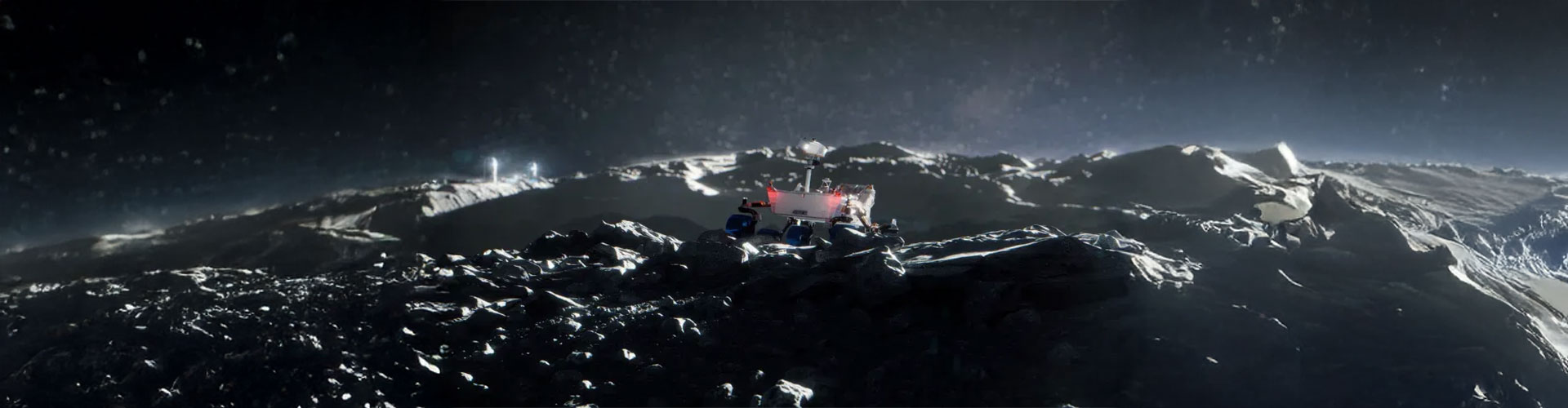 PROMISE (NASA Lunar Rover)
 Perseverance (NASA Rover)
 MAVEN (NASA SPACECRAFT)
 Zhurong (CNSA Rover)
 Mars Reconnaissance Orbiter (NASA Spacecraft)
 UAHiRISE (NASA MRO)
 SpaceBit Moon Rover
 Pragyan (ISRO Lunar Rover)
 MARS INSIGHT (NASA LANDER)
 Ingenuity (NASA Mars Helicopter)
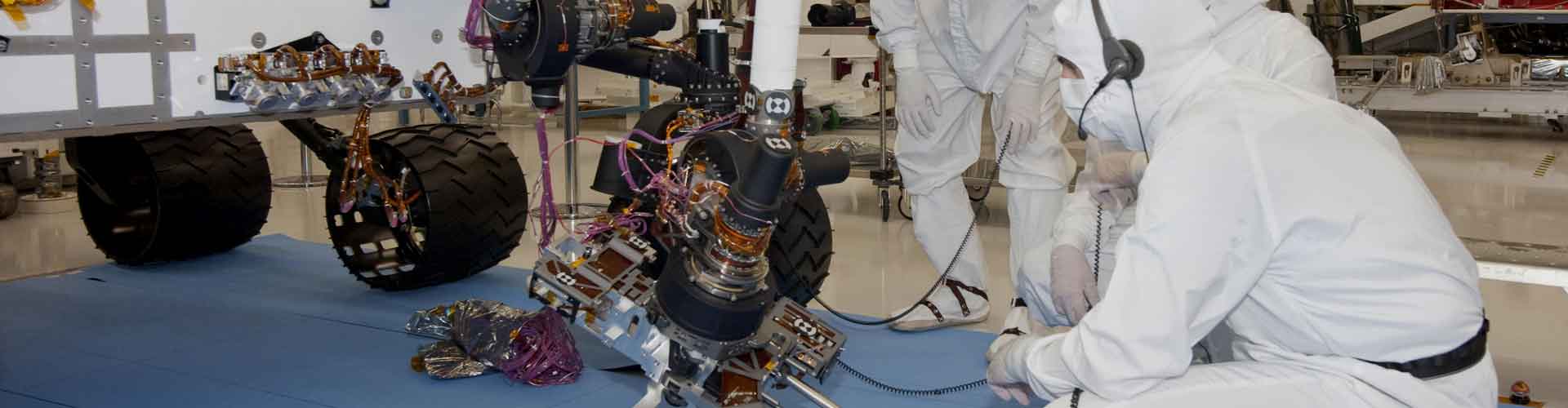 NASA JET PROPULSION LABORATORY
 VERITAS (NASA Spacecraft)
 Phobos (Mars Moon)
 NASA’s Johnson Space Center
 MARS EXPRESS (ESA SPACECRAFT)




