Farfarout (officially designated 2018 AG37) is an icy trans-Neptunian planetoid that holds the record as the most distant object in our solar system, currently orbiting 132 AU from the Sun. Measuring roughly 400 kilometres in diameter, this remote world crosses paths with Neptune along a highly eccentric 1,000-year orbit, making it a prime candidate for future dwarf planet status. Image credit: NASA/JPL-Caltech
Farfarout Confirmed As The Farthest Object in the Solar System
I wrote a foreword for this awesome Sci-Fi book here: https://amzn.to/3aGrg0I
Get a Wonderful Person shirt: https://teespring.com/stores/whatdamath
Alternatively, PayPal donations can be sent here: paypal.me/whatdamath
Hello and welcome! My name is Anton and in this video, we will talk about a confirmation of the most distant visible object in the solar system - Farfarout.
Press release: https://noirlab.edu/public/news/noirlab2108/?lang
Support this channel on Patreon to help me make this a full time job:
https://www.patreon.com/whatdamath
Space Engine is available for free here: http://spaceengine.org
Enjoy and please subscribe.
Bitcoins to spare? Donate them here to help this channel grow!
1GFiTKxWyEjAjZv4vsNtWTUmL53HgXBuvu
Twitter: https://twitter.com/WhatDaMath
Facebook: https://www.facebook.com/whatdamath
Twitch: http://www.twitch.tv/whatdamath
The hardware used to record these videos:
New Camera: https://amzn.to/34DUUlv
CPU: https://amzn.to/2LZFQCJ
Video Card: https://amzn.to/2M1W26C
Motherboard: https://amzn.to/2JYGiQQ
RAM: https://amzn.to/2Mwy2t4
PSU: https://amzn.to/2LZcrIH
Case: https://amzn.to/2MwJZz4
Microphone: https://amzn.to/2t5jTv0
Mixer: https://amzn.to/2JOL0oF
Recording and Editing: https://amzn.to/2LX6uvU
Some of the above are affiliate links, meaning I would get a (very small) percentage of the price paid.
Thank you to all Patreon supporters of this channel
Specifically, great thanks to the following members:
Morrison Waud
Vlad Manshin
Mark Teranishi
TheHuntress
Ralph Spataro
Albert B. Cannon
Lilith Dawn
Greg Lambros
adam lee
Gabriel Seiffert
Henry Spadoni
J Carter
Jer
Silver surfer
Konrad Kummli
Nick Dolgy
UnexpectedBooks.com
Mario Rahmani
George Williams
Shinne
Jakub Glos
Johann Goergen
Jake Salo
LS Greger
Lyndon Riley
Lauren Smith
Michael Tiganila
Russell Sears
Vinod sethi
Dave Blair
Robert Wyssbrod
Randal Masutani
Michael Mitsuda
Assaf Dar Sagol
Liam Moss
Timothy Welter MD
Barnard Rabenold
Gordon Cooper
Tracy Burgess
Douglas Burns
Jayjay Volz
Anataine Deva
Kai Raphahn
Sander Stols
Bodo Graßmann
Daniel Charles Smith
Daniel G.
Eugene Sandulenko
gary steelman
Max McNally
Michael Koebel
Sergio Ruelas
Steven Aiello
Victor Julian Castillo
xyndicate
Honey Suzanne Lyons
Olegas Budnik
Dale Andrew Darling
Niji
Peter Hamrak
Matthew Lazear
Alexander Afanasyev
Anton Newman
Anton Reed
Far far out: the most distant object in the solar system
Farfarout is the nickname of the most distant object ever seen in the solar system. At present, it's 132 times further from the Sun than Earth is. But the solar system is vast and contains many objects that are even more remote.
My other YouTube channels:
The Science Fiction Rock Experience ( the music show I produce):
https://www.youtube.com/@ScienceFictionRockExperience
Discover Maths (with Juan Medina):
https://www.youtube.com/@discovermaths
Science World (with Emrah Polat):
https://www.youtube.com/@ScienceWorld1
My website: https://www.daviddarling.info
Image credit: NOIRLab/NSF/AURA/J. da Silva, S. Sheppard
Famous Scientist Discovers Another Record Breaking Super Far Object - FarFarOut
You can buy Universe Sandbox 2 game here: http://amzn.to/2yJqwU6
Hello and welcome! My name is Anton and in this video, we will talk about another new record holder about which we currently know nothing about - FarFarOut.
Support this channel on Patreon to help me make this a full time job:
https://www.patreon.com/whatdamath
Space Engine is available for free here: http://spaceengine.org
Enjoy and please subscribe.
Twitter: https://twitter.com/WhatDaMath
Facebook: https://www.facebook.com/whatdamath
Twitch: http://www.twitch.tv/whatdamath
Bitcoins to spare? Donate them here to help this channel grow!
1GFiTKxWyEjAjZv4vsNtWTUmL53HgXBuvu
The hardware used to record these videos:
CPU: https://amzn.to/2LZFQCJ
Video Card: https://amzn.to/2M1W26C
Motherboard: https://amzn.to/2JYGiQQ
RAM: https://amzn.to/2Mwy2t4
PSU: https://amzn.to/2LZcrIH
Case: https://amzn.to/2MwJZz4
Microphone: https://amzn.to/2t5jTv0
Mixer: https://amzn.to/2JOL0oF
Recording and Editing: https://amzn.to/2LX6uvU
Thank you to all Patreon
supporters of this channel
Specifically, great thanks to the
following members:
Mayumi
Mark Teranishi
Lilith Dawn
Marin Templeton
Sam Reed
William
Nick Dolgy
Luminger
Greg Lambros
Unexpectedbooks.com
Lauren Smith
Michael Tiganila
Jordan
Michael Mitsuda
Lyndon Riley
Jer
Dave Blair
Leo Wehrli
Konrad Kummli
Alexander Leimbeck
Sander Stols
Kai Raphahn
Sergio Ruelas
Olegas Budnik
Tracy Burgess
Bartholomew Macaluso
Gordon Cooper
George Williams
Jayjay Volz
Shinne
AA
Justin Fortune
Chase Staggs
Jakub Glos
Toğrul Hüseynli
Moonic
Robert MacDonald
Becky
Giovanni Perryman
Steven
Zachary Fluke
Anataine Deva
Bob Davies
Steve Aiello
Michael Rucker
Tom Warren
Xyndicate
Bodo Graßmann
Liam Moss
Michael Koebel
Gary Steelman
Jake Salo
Shelley Passage
Honey Suzanne Lyons
Arikkat A Unnikrishnan
Angelina Werner
Steve Wotton
Rock Howard
Daniel Coleman
Aneliya Pancheva
Niji
Ralph Spataro
Peter Hamrak
Andrey Vesnin
Willem ter Harmsel
Robert Wyssbrod
James Myers
MrR
Vincent L Cleaver
Jacob Spencer
Stan Komander
Claye Griffith
Jakub Rychecky
JohnTaylorWalker
Jon Haynes
Shaun Cahill
George Naumov
Kyle eagle
David Lewis
Matthew Lazear
Michael J Fluharty
Howard Zhang
Former Patrons:
Tim Sageser
Jokage
Jurrien Diepenbroek
Lunos
Hundolin
Galaxia
Zio
Nelson Reyes
Brett Comeau
Jamie Walcott
Hazen Miller
Bobby Kent
Snowie15
Madalevek
Khai Hung
Joseph McEvoy
Isambard
Jason Neuschmid
Nicolas Belanger
Peter Rose
Nor Dine
Galant Human
Jeffrey Paik
Check the Patreon page to join.
FarFarOut is The Most Distant Object In Our Solar System
The most distant known object in the Solar System is now confirmed. FarFarOut, a large chunk of rock found in 2018 at a whopping distance of around 132 astronomical units from the Sun, has been studied and characterised, and we now know a lot more about it, and its orbit. Well, you are watching gateway to knowledge and stay tuned to know how astronomers have confirmed the Most Distant Known Object in The Solar System. It's about 250 miles across, which is on the low end of the dwarf planet scale, and initial observations suggest it has an average orbital distance of 101 astronomical units. Since Pluto has an average orbital distance of around 39 astronomical units, FarFarOut is very, well, far out indeed. It has been given the provisional designation 2018 AG37.
'Farfarout' is now farthest object observed in our solar system
In Jan. 2018, a distant object, designated 2018 AG37 and nicknamed "FarFarout, was discovered using the Subaru Telescope in Hawai‘i. It now holds the record for farthest object observed in our solar system at 132 astronomical units (AU) away from the Sun. -- Full Story: https://www.space.com/farfarout-most-distant-solar-system-object-confirmed
Credit: Space.com | produced & edited by Steve Spaleta (http://www.twitter.com/stevespaleta)
The farthest object from our solar system has been nicknamed "Farfarout"@NASA
A team of astronomers has confirmed the orbit of a distant planetoid at the farthest reaches of our solar system — aptly nicknamed "Farfarout." The minor planet, officially designated 2018 AG37, is almost four times farther from the sun than Pluto. It is the most distant planetoid ever detected in our solar system, researchers announced this week.
Farfarout was first detected in 2018, beating out the previous record-holder, "Farout." The team, responsible for both discoveries, has an ongoing survey to map the outer solar system.
After being discovered at the Subaru 8-meter telescope atop Maunakea in Hawaii, astronomers used the Gemini North and Magellan telescopes to track its orbit over the past few years. In a few more years, when its orbit has been further tracked, Farfarout will be given an official name.
"The discovery of Farfarout shows our increasing ability to map the outer solar system and observe farther and farther towards the fringes of our solar system," said discovery team member Scott S. Sheppard. "Only with the advancements in the last few years of large digital cameras on very large telescopes has it been possible to efficiently discover very distant objects like Farfarout."
Farfarout's average distance from the sun is 132 astronomical units, meaning it is 132 times farther from the sun than Earth is. For comparison, Pluto is just 39 au from the sun.
Farfarout's journey around the sun takes about 1,000 years. The planetoid, which is very faint, is estimated to be about 250 miles across, on the small end of dwarf planets like Pluto.
"A single orbit of Farfarout around the Sun takes a millennium," said discovery team member David Tholen. "Because of this long orbital, it moves very slowly across the sky, requiring several years of observations to precisely determine its trajectory."
Interactions with Neptune are responsible for the planetoid's large, elongated orbit. Its orbit reaches 175 au at its most distant and around 27 au, within the orbit of Neptune, at it is closest to the sun.
The effects of Neptune on Farfarout's orbit also means that the planetoid likely cannot contribute to scientists' efforts to find a mysterious unknown planet lurking in the outskirts of the solar system.
"Farfarout's orbital dynamics can help us understand how Neptune formed and evolved, as Farfarout was likely thrown into the outer solar system by getting too close to Neptune in the distant past," said a discovery team member Chad Trujillo. "Farfarout will likely strongly interact with Neptune again since their orbits continue to intersect."
Scientists believe they will eventually find the hypothetical "Planet Nine."
"Farfarout is just the tip of the iceberg of solar system objects in the very distant solar system," Sheppard said. ----------------------------------
You only need to join this channel to take advantage of the advantages:
https://www.youtube.com/channel/UCD_2Or2uPcodMynhz1XBFMg/join
The free info channel is the best place to watch documentaries
About the animal, the universe, and other things; We wish you enjoyable scenes
Channel: HTTPS: //www.youtube.com/channel/UCD_2Or2uPcodMynhz1XBFMg
--------------------------------------------------------------------------
#nasa
#Farfarout
#Planets
That's ‘FarFarOut’! The Most Distant Object In Our Solar System Has Just Been Spotted!
While searching for planet nine, a scientist from the Carnegie Institution for Science found what may be the most distant object in our solar system.
Farfarout: Astronomers discover most distant object of the solar system| Oneindia News
Incase you are wondering the most distant known object of our solar system, Farfarout is our solar system's most distant known object. The planetoid dubbed Farfarout was first detected in 2018, at an estimated distance of 140 astronomical units from the sun — farther away than any object had ever been observed. As far as it is understood now, the object has a 'very elongated orbit that goes inside the orbit of Neptune, when it is closest to the Sun. This is around 27 astronomical units away. One revolution for Farfarout will take about a thousand years.
#Farfarout #SolarSystem #MostDistantObject
--------------------------------------------------------------------------------------------------------------
Oneindia News is a youth-driven channel that brings you stories that need your attention, are popular, informative, and entertaining. Follow and like us for thought-provoking & exclusive content...
Youtube: https://www.youtube.com/channel/UCqTa...
Like us on Facebook: https://www.facebook.com/oneindianews
Follow us on Instagram: https://www.instagram.com/oneindia_news
We are there on Twitter: https://twitter.com/Oneindia
Astronomers confirm solar system’s most distant known object is indeed Farfarout
Astronomers confirm solar system’s most distant known object is indeed Farfarout - Information for all latest updates Science and Technology https://tinyurl.com/TodaySciencology
Blog - https://todaysciencology.blogspot.com
Facebook - https://www.facebook.com/TodaySciencology
Twitter - https://twitter.com/sciencology
Pinterest - https://in.pinterest.com/TodaySciencology/
Tumblr - http://todaysciencology.tumblr.com
#Scientist #Science #Invention
With the help of the international Gemini Observatory, a Program of NSF's NOIRLab, and other ground-based telescopes, astronomers have confirmed that a faint object discovered in 2018 and nicknamed "Farfarout" is indeed the most distant object yet found in our Solar System. The object has just received its designation from the International Astronomical Union. Farfarout was first spotted in January 2018 by the Subaru Telescope, located on Maunakea in Hawai'i. Its discoverers could tell it was very far away, but they weren't sure exactly how far. They needed more observations.
"At that time we did not know the object's orbit as we only had the Subaru discovery observations over 24 hours, but it takes years of observations to get an object's orbit around the Sun," explained co-discoverer Scott Sheppard of the Carnegie Institution for Science. "All we knew was that the object appeared to be very distant at the time of discovery."
Sheppard and his colleagues, David Tholen of the University of Hawai'i and Chad Trujillo of Northern Arizona University, spent the next few years tracking the object with the Gemini North telescope (also on Maunakea in Hawai'i) and the Carnegie Institution for Science's Magellan Telescopes in Chile to determine its orbit. They have now confirmed that Farfarout currently lies 132 astronomical units (au) from the Sun, which is 132 times farther from the Sun than Earth is. (For comparison, Pluto is 39 au from the Sun, on average.)
Farfarout is even more remote than the previous Solar System distance record-holder, which was discovered by the same team and nicknamed "Farout." Provisionally designated 2018 VG18, Farout is 124 au from the Sun.
However, the orbit of Farfarout is quite elongated, taking it 175 au from the Sun at its farthest point and around 27 au at its closest, which is inside the orbit of Neptune. Because its orbit crosses Neptune's, Farfarout could provide insights into the history of the outer Solar System.
"Farfarout was likely thrown into the outer Solar System by getting too close to Neptune in the distant past," said Trujillo. "Farfarout will likely interact with Neptune again in the future since their orbits still intersect."
Farfarout is very faint. Based on its brightness and distance from the Sun, the team estimates it to be about 400 kilometers (250 miles) across, putting it at the low end of possibly being designated a dwarf planet by the International Astronomical Union (IAU).
The IAU's Minor Planet Center in Massachusetts announced today that it has given Farfarout the provisional designation 2018 AG37. The Solar System's most distant known member will receive an official name after more observations are gathered and its orbit becomes even more refined in the coming years.
"Farfarout takes a millennium to go around the Sun once," said Tholen. "Because of this, it moves very slowly across the sky, requiring several years of observations to precisely determine its trajectory."
Farfarout's discoverers are confident that even more distant objects remain to be discovered on the outskirts of the Solar System, and that its distance record might not stand for long.
"The discovery of Farfarout shows our increasing ability to map the outer Solar System and observe farther and farther towards the fringes of our Solar System," said Sheppard. "Only with the advancements in the last few years of large digital cameras on very large telescopes has it been possible to efficiently discover very distant objects like Farfarout. Even though some of these distant objects are quite large -- the size of dwarf planets -- they are very faint because of their extreme distances from the Sun. Farfarout is just the tip of the iceberg of objects in the very distant Solar System." Story Source: Materials provided by NSF's NOIRLab . Note: Content may be edited for style and length.
«
previous page
1
/
1
next page
»
Dwarf Planet Farfarout: Distance Record, Orbit, and Facts
Are you looking for the most distant planet in our solar system? Farfarout (officially named 2018 AG37) is an icy world located on the absolute outer edge of space. Discovered by astronomers Scott Sheppard, David Tholen, and Chad Trujillo, this tiny planetoid holds the record as the farthest object we can see from Earth, offering scientists critical clues about how our solar system formed.
How Far Away is Farfarout?
Farfarout is famous for its extreme distance from the Sun. Because it sits so far away in deep space, its orbital tracking metrics are completely different from closer planets like Mars or Jupiter:
Farthest Distance from the Sun: At its furthest point, Farfarout travels a staggering 175 Astronomical Units (AU) away from our star, which is nearly six times further than Pluto.
Closest Approach: Its highly elongated orbit swings back inward, crossing deep inside Neptune’s path at just 27 AU from the Sun.
Year Length: Because its orbital path is so massive, it takes Farfarout approximately 1,000 Earth years to complete just one full trip around the Sun.
How Neptune Controls Farfarout’s Orbit
The primary reason for Farfarout’s unusual, loop-like orbit is the gravitational pull of Neptune. Space scientists have calculated that the icy dwarf planet got too close to the gas giant billions of years ago. Neptune‘s powerful gravity acted like a slingshot, throwing Farfarout out into the deep, scattered disc of the outer solar system. Because its path still crosses Neptune’s orbit today, the two worlds will continue to interact over time, slowly changing Farfarout’s trajectory.
Size, Composition, and Dwarf Planet Facts
Because it is so distant, Farfarout appears extremely faint in the night sky. Astronomers must use the world’s largest ground-based telescopes to track its movement. By measuring how much sunlight reflects off its icy surface, scientists estimate that Farfarout is roughly 400 kilometres (250 miles) wide. This makes it about the size of a large asteroid. While it is likely made of a frozen mix of water ice, methane, and rock, it needs more structural tracking data before scientists can officially give it full dwarf planet status.
We use cookies on our website to give you the most relevant experience by remembering your preferences and repeat visits. By clicking “Accept”, you consent to the use of ALL the cookies.
This website uses cookies to improve your experience while you navigate through the website. Out of these cookies, the cookies that are categorized as necessary are stored on your browser as they are essential for the working of basic functionalities of the website. We also use third-party cookies that help us analyze and understand how you use this website. These cookies will be stored in your browser only with your consent. You also have the option to opt-out of these cookies. But opting out of some of these cookies may have an effect on your browsing experience.
Necessary cookies are absolutely essential for the website to function properly. This category only includes cookies that ensures basic functionalities and security features of the website. These cookies do not store any personal information.
Any cookies that may not be particularly necessary for the website to function and is used specifically to collect user personal data via analytics, ads, other embedded contents are termed as non-necessary cookies. It is mandatory to procure user consent prior to running these cookies on your website.
SPACETV.NET is a not-for-profit space media platform and original video content producer, supported by volunteers. Our news videos are produced by an independent editorial team, including experienced journalists, editors, fact-checkers and experts, and sometimes created in collaboration with space researchers. We create carefully fact-checked space news videos covering spaceflight, astronomy, and space exploration, and we also curate high-quality space content from trusted sources worldwide.
Our mission is to make it easy to discover reliable space news, launch coverage, and educational space videos in one place. We continually review new sources and welcome suggestions for quality space content we may not yet feature.
All video content on SPACETV.NET comes from external sources including YouTube, Twitch, Facebook, and Vimeo.
Views and opinions expressed in videos or external links do not represent SPACETV.NET or our sponsors.
All trademarks, logos, music, thumbnails and content within videos is owned by their respective copyright owners.
Our website is currently in fundraisting mode. During this time advertisements may be displayed.
This site is a participant in the Amazon Services LLC Associates Program, an affiliate advertising program designed to provide a means for sites to earn advertising fees by advertising and linking to amazon.com.
SPACETV.NET is a not-for-profit space media platform and original video content producer, supported by volunteers. Our news videos are produced by an independent editorial team, including experienced journalists, editors, fact-checkers and experts, and sometimes created in collaboration with space researchers. We create carefully fact-checked space news videos covering spaceflight, astronomy, and space exploration, and we also curate high-quality space content from trusted sources worldwide.
Our mission is to make it easy to discover reliable space news, launch coverage, and educational space videos in one place. We continually review new sources and welcome suggestions for quality space content we may not yet feature.
All video content on SPACETV.NET comes from external sources including YouTube, Twitch, Facebook, and Vimeo.
Views and opinions expressed in videos or external links do not represent SPACETV.NET or our sponsors.
All trademarks, logos, music, thumbnails and content within videos is owned by their respective copyright owners.
Our website is currently in fundraisting mode. During this time advertisements may be displayed.



 DWARF PLANET FAROUT
 Dwarf Planet Makemake
 Dwarf Planet Gonggong
 DWARF PLANET GOBLIN
 DWARF PLANET ERIS
 DWARF PLANET HAUMEA
 DWARF PLANET PLUTO
 DWARF PLANET CERES
 DWARF PLANETS
 PLANET NINE
 PLANET NEPTUNE
 Brown Dwarf
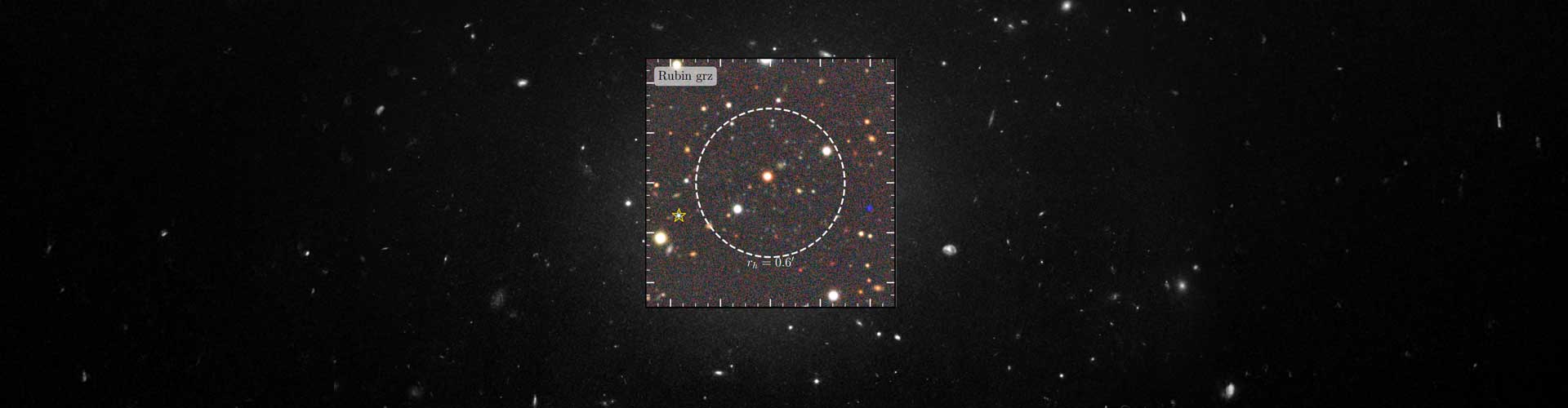 Aquarius IV Dwarf Satellite Galaxy
 PLANET URANUS
 PLANET EARTH
 PLANET MERCURY
 Ultracool Dwarf Stars
 PLANET VENUS




