Makemake is a frozen dwarf planet and plutoid located in the icy Kuiper Belt beyond Neptune that takes 305 Earth years to orbit the Sun and is accompanied by a tiny, ultra-dark provisional moon nicknamed MK 2. Image: Artist’s impression shows the dwarf planet Makemake and it’s moon.
Pluto gets all the attention, but its newfound family deserves some love.
Guide to Dwarf Planets: Ceres, Pluto, Eris, Haumea and Makemake for Kids - FreeSchool
https://patreon.com/freeschool - Help support more content like this!
The category of dwarf planets was created in 2006 by the International Astronomical Union to help contain new objects that were being discovered. Although there are hundreds of objects in the solar system that could potentially be classified as dwarf planets, as of 2017 there are only five officially recognized ones: Ceres, Pluto, Eris, Haumea, and Makemake. Unlike planets, dwarf planets have not cleared their orbits of objects and debris.
Like this video if you want to see more videos about SPACE!
Subscribe to FreeSchool: https://www.youtube.com/user/watchfreeschool?sub_confirmation=1
Visit us on Facebook: https://www.facebook.com/watchFreeSchool
Check our our companion channel, FreeSchool Mom! https://www.youtube.com/channel/UCTcEtHRQhqiCZIIb77LyDmA
And our NEW channel for little ones, FreeSchool Early Birds!
https://www.youtube.com/channel/UC3OV62x86XHwaqsxLsuy8dA
What You Didn't Know About Makemake
15 fun facts on the dwarf planet Makemake. Since not much is known about Makemake, I had to make this video shorter as I did for Haumea. For more planetary facts, check out the playlist: https://www.youtube.com/playlist?list=PLrLu47k41a8Rb0q7R0J1t0zD6YWkHZaes
This is a revival of an old video series I made in 2012 (focusing on solar system trivia), after getting the motivation to bring this back. The original videos are gone, but my 2013 editions of these videos can be found here: https://www.youtube.com/playlist?list=PLrLu47k41a8TbdKNhPm3gzaJE7iu0rxIr
Song: "Soundbox (hiphop/pop/etc.)" by Musicshake
Sources:
• http://solarsystem.nasa.gov/planets/makemake
• http://www.space.com/23122-makemake.html
• https://theplanets.org/makemake/
• http://space-facts.com/makemake/
• http://solarsystem.nasa.gov/planets/makemake/indepth
• http://space-facts.com/dwarf-planets/
MK2 Moon/Dwarf Planet Makemake
Subscribe to KLT: https://www.youtube.com/channel/UC7EFWpvc1wYuUwrtZ_BLi9A?sub_confirmation=1
Listen to KLT Music on Spotify: https://open.spotify.com/artist/3RvQsrlQFlGXHeLl1Vl9e0?si=Q-yVLAGmQEO-4hnbXvWe_Q&nd=1 KLT
Download the KLT App here for an ad-free viewing experience:
iPhone & iPad
* https://apps.apple.com/us/app/kids-learning-tube/id1491094573?ls=1
* https://tinyurl.com/swsndce
Android Phone and Tablet
* https://play.google.com/store/apps/details?id=com.w35ef400ff78.www
* https://tinyurl.com/vl5ctf5
Learn about Makemake's new moon MK2 with this fun educational music video and parents. Brought to you by KLT. Don't forget to sing along. https://kidslearningtubeshop.com/products/video-membership
Watch KLT ad-free for $12 a YEAR! See the latest videos before anyone else in the world. Sign up today for ad-free video streaming for all KLT videos!
https://www.patreon.com/kidslearningtube
KLT Website: https://kidslearningtubeshop.com/
T-Shirts: https://kidslearningtubeshop.com/collections/featured-collection
Music Downloads: https://kidslearningtubeshop.com/collections/music
Facebook: https://www.facebook.com/kidslearningtube
Subscribe: http://www.youtube.com/c/kidslearningtube
Tweet Us: https://twitter.com/learningtube
Instagram: https://instagram.com/kidslearningtube
iTunes: http://itunes.apple.com/album/id1192890817?ls=1&app=itunes
Music: Copyright 2015, 2016, 2017, 2018 KLT
Video: Copyright 2015, 2016, 2017, 2018 KLT
Lyrics
I’m Makemake
I have an official new moon
Let me introduce MK2
To all the world and you
Hello I’m MK 2
Satellite of Makemake
I was noticed one year ago
Now an official moon I be
In the month of April
in 2015
Is when I was noticed
by Hubble’s Wide Field Camera 3
The Southwest Research Institute
Lead by Marc Buie
Are the first scientist in the world
to ever notice me
I’m very hard to see
Because I’m in the Kuiper belt
and my charcoal colored surface
Certainly doesn’t help
S/2015 (136472) 1
Is what I was Provisionally designated
But not much fun
They official nicknamed me
with the name MK 2
I’ll tell you more about me
after the chorus you’ll hear is through
I’m Makemake
I have an official new moon
Let me introduce MK2
To all the world and you
Hello I’m MK 2
Satellite of Makemake
I was noticed one year ago
Now an official moon I be
It’s estimated my Diameters
100 miles across
That's an estimate only
from a bunch of Astronomers
I’m 1,300 times fainter
Than Dwarf Makemake
When a telescope gets closer
They will see me more clearly
I’m 13,000 miles
from my dwarf planet so bright
And I’m called a moon because
I am a natural satellite
Makemake had what scientist
thought were dark warm spots
Now they think it was me
making those warm dots
I’m Makemake
I have an official new moon
Let me introduce MK2
To all the world and you
Hello I’m MK 2
Satellite of Makemake
I was noticed one year ago
Now an official moon I be
I’m Makemake
I have an official new moon
Let me introduce MK2
To all the world and you
Hello I’m MK 2
Satellite of Makemake
I was noticed one year ago
Now an official moon I be
Astronomers using the Hubble Space Telescope discovered a moon orbiting dwarf planet Makemake -- the third largest known object past the orbit of Neptune, about two thirds the size of Pluto. Further observations of this moon may allow astronomers to calculate Makemake's mass, which will give them a better idea of its density and thus its bulk composition. The Hubble Space Telescope has been instrumental in studying our outer solar system; it also discovered four of the five moons orbiting Pluto.
This video is public domain and can be downloaded from the Scientific Visualization Studio at: http://svs.gsfc.nasa.gov/12223
Read more: http://www.nasa.gov/feature/goddard/2016/hubble-discovers-moon-orbiting-the-dwarf-planet-makemake
Music - "Digital Conquest" by JC Lemay and Laurent Dury, Koka Media and Universal Publishing Production Music
Dwarf Planet Makemake Has No Atmosphere | Video
The Dwarf Planet pass in front of a distant star (occulation) was witnessed from several locations in South America. Data from, European observatories in Chile shows it is not like Pluto as previously thought due to a lack of atmosphere.
«
previous page
1
/
1
next page
»
Dwarf Planet Makemake: Structural Ice Dynamics, Reddish Tholins, and Orbital Tracking
Makemake (officially designated 136472 Makemake) is a major icy dwarf planet and plutoid located in the classical population of the Kuiper Belt, a vast disc of frozen primordial material extending beyond the orbit of Neptune. Discovered on 31 March 2005 by a team led by astronomer Mike Brown at the Palomar Observatory, its identification served as a vital legal trigger that prompted the International Astronomical Union to reclassify Pluto and establish the dwarf planet classification framework.
Orbital Metrics and Rotational Profile
Positioned on the frigid outer edges of our solar system, Makemake operates within an eccentric, highly inclined orbit that keeps much of its baseline physics hidden from simple terrestrial tracking:
Orbital Period: The dwarf planet takes approximately 305 Earth years to complete a single revolution around the Sun, moving along a flight plane inclined at a steep 29 degrees to the rest of the solar system.
Rotation and Day Length: It rotates on its axis once every 22.5 hours, giving it a day length strikingly similar to Earth and Mars.
Distance Scale: Its path ranges between 38 and 53 Astronomical Units (AU) from the Sun, keeping surface temperatures at a punishing average of minus 243 degrees Celsius.
Physical Dimensions and Methane Plume Anomalies
With a radius of approximately 444 miles (715 kilometers), Makemake stands as the fourth largest known dwarf planet, measuring roughly two-thirds the physical volume of Pluto. To an outside tracking observer, the planet exhibits a distinct reddish-brown coloration. This signature hue is generated by the presence of tholins—complex organic molecules formed when solar ultraviolet light interacts with frozen chemical reservoirs on the surface. While early stellar occultations confirmed the body lacks a dense, permanent atmosphere, deep-space observations executed by the James Webb Space Telescope detected a faint glow of gaseous methane above the crust. This indicates either the presence of a seasonal, paper-thin atmosphere or active, evolutionary cryovolcanic plumes venting volatile materials out from a potential subsurface liquid water ocean.
The Discovery and Tracking of Moon MK2
For more than a decade following its initial tracking manifest, Makemake appeared to be unique among the large trans-Neptunian objects for lacking a satellite system. However, precision imaging data gathered by the Hubble Space Telescope’s Wide Field Camera 3 revealed a tiny, provisional moon officially designated S/2015 (136472) 1 and nicknamed MK2. Measuring roughly 110 miles (175 kilometers) in diameter, this dark, non-reflective companion orbits approximately 13,800 miles from the dwarf planet. By applying planetary tracking laws to MK2’s 18-day orbital loop, astrophysicists successfully calculated the absolute mass and internal density profile of Makemake, showing it is a rocky, ice-shrouded world.
We use cookies on our website to give you the most relevant experience by remembering your preferences and repeat visits. By clicking “Accept”, you consent to the use of ALL the cookies.
This website uses cookies to improve your experience while you navigate through the website. Out of these cookies, the cookies that are categorized as necessary are stored on your browser as they are essential for the working of basic functionalities of the website. We also use third-party cookies that help us analyze and understand how you use this website. These cookies will be stored in your browser only with your consent. You also have the option to opt-out of these cookies. But opting out of some of these cookies may have an effect on your browsing experience.
Necessary cookies are absolutely essential for the website to function properly. This category only includes cookies that ensures basic functionalities and security features of the website. These cookies do not store any personal information.
Any cookies that may not be particularly necessary for the website to function and is used specifically to collect user personal data via analytics, ads, other embedded contents are termed as non-necessary cookies. It is mandatory to procure user consent prior to running these cookies on your website.
SPACETV.NET is a not-for-profit space media platform and original video content producer, supported by volunteers. Our news videos are produced by an independent editorial team, including experienced journalists, editors, fact-checkers and experts, and sometimes created in collaboration with space researchers. We create carefully fact-checked space news videos covering spaceflight, astronomy, and space exploration, and we also curate high-quality space content from trusted sources worldwide.
Our mission is to make it easy to discover reliable space news, launch coverage, and educational space videos in one place. We continually review new sources and welcome suggestions for quality space content we may not yet feature.
All video content on SPACETV.NET comes from external sources including YouTube, Twitch, Facebook, and Vimeo.
Views and opinions expressed in videos or external links do not represent SPACETV.NET or our sponsors.
All trademarks, logos, music, thumbnails and content within videos is owned by their respective copyright owners.
Our website is currently in fundraisting mode. During this time advertisements may be displayed.
This site is a participant in the Amazon Services LLC Associates Program, an affiliate advertising program designed to provide a means for sites to earn advertising fees by advertising and linking to amazon.com.
SPACETV.NET is a not-for-profit space media platform and original video content producer, supported by volunteers. Our news videos are produced by an independent editorial team, including experienced journalists, editors, fact-checkers and experts, and sometimes created in collaboration with space researchers. We create carefully fact-checked space news videos covering spaceflight, astronomy, and space exploration, and we also curate high-quality space content from trusted sources worldwide.
Our mission is to make it easy to discover reliable space news, launch coverage, and educational space videos in one place. We continually review new sources and welcome suggestions for quality space content we may not yet feature.
All video content on SPACETV.NET comes from external sources including YouTube, Twitch, Facebook, and Vimeo.
Views and opinions expressed in videos or external links do not represent SPACETV.NET or our sponsors.
All trademarks, logos, music, thumbnails and content within videos is owned by their respective copyright owners.
Our website is currently in fundraisting mode. During this time advertisements may be displayed.



 Dwarf Planet Gonggong
 DWARF PLANET FAROUT
 Dwarf Planet Farfarout
 DWARF PLANET ERIS
 DWARF PLANET HAUMEA
 DWARF PLANET GOBLIN
 DWARF PLANET PLUTO
 DWARF PLANET CERES
 DWARF PLANETS
 PLANET NINE
 PLANET NEPTUNE
 Brown Dwarf
 PLANET EARTH
 PLANET URANUS
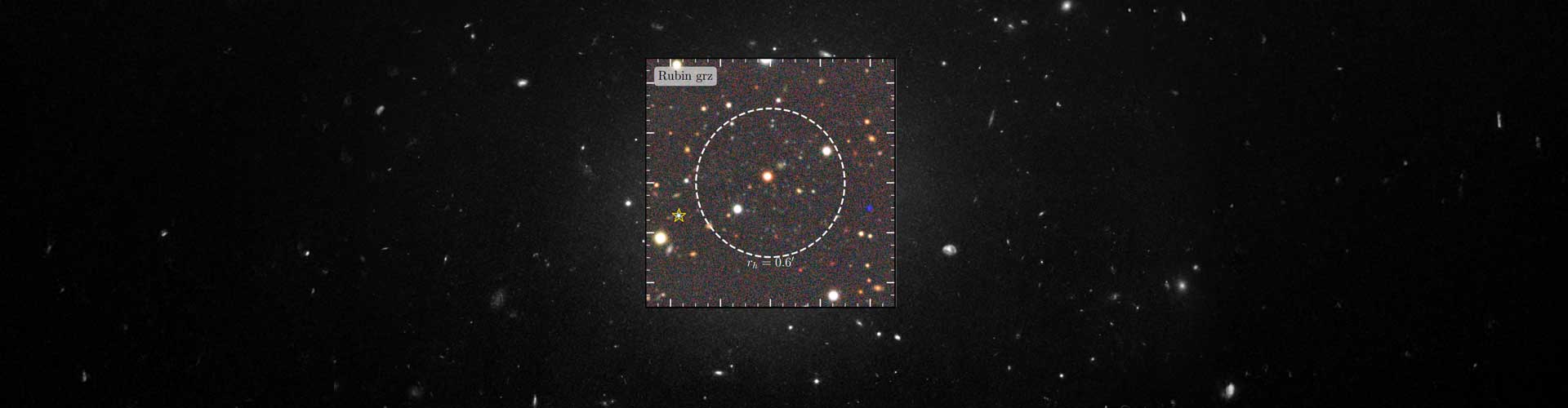 Aquarius IV Dwarf Satellite Galaxy
 Ultracool Dwarf Stars
 Planet Mars
 PLANET VENUS




