
Hera is the European component of the ESA–NASA AIDA mission. The Hera spacecraft, approved on 29 November 2019, will focus on key measurements to validate impact and asteroid deflection models such as the detailed characterisation of the impact crater made by the DART impactor. Image credit: ESA
Related channels: DIDYMOS AND DIMORPHOS (ASTEROID 65803), ASTEROIDS, EUROPEAN SPACE AGENCY, NEO SURVEYOR (NASA SPACECRAFT), ASTEROID DAY, METEORS, COMETS, OSIRIS-REx, SPITZER SPACE TELESCOPE, ASTEROID ‘OUMUAMUA’
Latest Hera videos
1
/
2


EPSC2026 Press Briefing: ESA’s Hera Mission and looking ahead to RAMSES and Apophis
In November 2026, ESA’s Hera mission will arrive at the Didymos binary asteroid system to make a detailed survey of the asteroid moonlet Dimorphos, which was impacted by NASA’s DART mission in September 2022.
During this press briefing held at EPSC2026 in The Hague on 7 September 2026, the Hera team gave updates on the status and plans for the mission post-arrival and looked ahead to the the ESA/JAXA RAMSES mission, which will rendezvous with asteroid (99942) Apophis and accompany it on its flyby of Earth on 13 April 2029.
Speakers:
- Michael Küppers, ESA Hera Project Scientist, ESA-ESAC, Spain
- Patrick Michel, Hera Mission Principal Investigator, RAMSES ESA Project Scientist and Director of Research at CNRS, Observatoire de la Côte d’Azur, France.
- Heli Greus, Hera and RAMSES ESA project teams.
Hera marks one year on its way to Didymos
What a difference a year makes! Today Hera’s asteroid mission for planetary defence is cruising through deep space on the far side of the Sun, headed to its final destination: the Didymos binary asteroid system. But a year ago, on 7 October 2024, it was unsure if the mission was ever going to take off at all.
Its launcher was grounded due to a launch anomaly and Hurricane Milton was closing on Cape Canaveral! The mission needed to lift off then and there because it had to perform a flyby of Mars to speed it on its way to Didymos. Any delay would add years to its travel time. But Hera received permission for launch and the heavens cleared just half an hour before launch. Liftoff happened to plan – the team had their mission in space!
Since then Hera has been testing out the ‘self-driving’ technology it will use around the asteroids on Earth and the Moon, performed its flyby of Mars and imaged its very first asteroid from three million kilometres, proving the capability of its main Asteroid Framing Camera. Next Hera is heading for aphelion, its furthest distance from the Sun. It will reach Didymos in autumn 2026, after which it will begin its mission to find out what happened to the smaller asteroid after NASA’s DART spacecraft impacted it in September 2022.
Read more: https://www.esa.int/Space_Safety/Hera/ESA_s_Hera_targets_early_arrival_at_Didymos_asteroids
Credits: European Space Agency (ESA)
Footage: ESA-Science Office-JAXA-Getty
Access the video on the ESA video library: https://www.esa.int/ESA_Multimedia/Videos/2025/10/Hera_s_first_year_in_space
★ Subscribe: http://bit.ly/ESAsubscribe and click twice on the bell button to receive our notifications.
Check out our full video catalog: http://bit.ly/SpaceInVideos
Follow us on Twitter: http://bit.ly/ESAonTwitter
On Facebook: http://bit.ly/ESAonFacebook
On Instagram: http://bit.ly/ESAonInstagram
On LinkedIn: https://bit.ly/ESAonLinkedIn
On Pinterest: https://bit.ly/ESAonPinterest
On Flickr: http://bit.ly/ESAonFlickr
We are Europe's gateway to space. Our mission is to shape the development of Europe's space capability and ensure that investment in space continues to deliver benefits to the citizens of Europe and the world. Check out https://www.esa.int/ to get up to speed on everything space related.
Copyright information about our videos is available here: https://www.esa.int/ESA_Multimedia/Terms_and_Conditions
Hera and Clipper plan on getting up close with other worlds, and Black Hole News
Let's take a fast-paced journey thru all that's new in space and astronomy, including microscopic black holes trying to be dark matter, massive black holes firing off jets, a deep dive into Hera and Clippers journey to look at other worlds, and tales from the launch pad.
CHAPTERS
0:00 Introduction
2:17 Are microscopic black holes a kind of dark matter?
4:53 Massive black holes fire off cosmos-altering jets
9:05 Closer Look: Hera and Clipper will get up close looks at other worlds
16:55 Tales from the launch pad
33:10 How to get Free updates
HASHTAGS
#europaclipper #hera #blackholes #darkmatter #darkenergy
CREDITS
Hosts: Pamela Gay ( @starstryder ) and Erik Madaus
Produced by: Ally Pelphrey
Season 3, Episode 06
Released October 25, 2024
Special Thanks to our "Written in the Stars" Patrons at Patreon.com/CosmoQuestX
Bluz Nash, David Truog, Gary William Burklow, Janelle aka Veronica_Cure, Jeffrey David Marraccini, Joe Hollstein, Lenor Horner, Timelord Iroh
SUPPORTED BY YOU
Donate today: https://bit.ly/CQX-FY25. This week would like to specifically thank the following $50 and up Patrons: Paul Fischer, Joe Hollstein, Lenore Horner, Janella aka Veronica_Cure, David Truog.
Want to support CosmoQuest? Here are specific ways you can help:
* Subscribe to our podcasts Astronomy Cast and ESVN wherever you get your podcasts!
* Become a Patreon of CosmoQuest https://www.patreon.com/cosmoquestx
* Become a Patreon of Astronomy Cast https://www.patreon.com/astronomycast
* Buy stuff from our Redbubble https://www.redbubble.com/people/cosmoquestx/shop
* Use our affiliate link to make purchases at OPT https://bit.ly/OPTforCQ
* Join our Discord server for CosmoQuest - https://discord.gg/r57VVvzknv
Don't forget to like and subscribe! Plus we love being shared with new people, so tweet, comment, and review us... all the free things you can do to help bring science into people's lives.
#space #science #scicomm
ESA's Hera mission launch (Official broadcast)
Hera, ESA’s first planetary defence mission, is headed to space.
Hera will fly to a unique target among the 1.3 million known asteroids of our Solar System – the first body to have had its orbit shifted by human action – to probe lingering unknowns related to its deflection.
—————————————————
Credits: ESA/SpaceX
—————————————————
Chapters:
00:00 Start of ESA WebTV programme – live from ESA’s European Space Operations Centre in Darmstadt, Germany
18:30 SpaceX live broadcast begins
36:15 Hera lift-off
1:53:00 - Hera separates from Falcon 9 launcher: End of SpaceX live broadcast, ESA WebTV programme continues
1:57:20 Acquisition of the first signals from the Hera spacecraft
2:13:26 End of ESA WebTV programme
★ Subscribe: http://bit.ly/ESAsubscribe and click twice on the bell button to receive our notifications.
Check out our full video catalog: http://bit.ly/SpaceInVideos
Follow us on Twitter: http://bit.ly/ESAonTwitter
On Facebook: http://bit.ly/ESAonFacebook
On Instagram: http://bit.ly/ESAonInstagram
On LinkedIn: https://bit.ly/ESAonLinkedIn
On Pinterest: https://bit.ly/ESAonPinterest
On Flickr: http://bit.ly/ESAonFlickr
We are Europe's gateway to space. Our mission is to shape the development of Europe's space capability and ensure that investment in space continues to deliver benefits to the citizens of Europe and the world. Check out https://www.esa.int/ to get up to speed on everything space related.
Copyright information about our videos is available here: https://www.esa.int/ESA_Multimedia/Terms_and_Conditions
#ESA #HeraMission #Asteroid
Solving asteroid mysteries | Hera planetary defence mission
There’s a mystery out there in deep space – and solving it will make Earth safer. That’s why the European Space Agency’s Hera mission is taking shape – to go where one particular spacecraft has gone before.
On 26 September 2022, moving at 6.1 km/s, NASA’s DART spacecraft crashed into the Dimorphos asteroid. Part of our Solar System changed. The impact shrunk the orbit of the Great Pyramid-sized Dimorphos around its parent asteroid, the mountain-sized Didymos.
This grand experiment was performed to prove we could defend Earth against an incoming asteroid, by striking it with a spacecraft to deflect it. DART succeeded. But that still leaves many things scientists don’t know: What is the precise mass and makeup of Dimorphos? What did the impact do to the asteroid? How big is the crater left by DART’s collision? Or has Dimorphos completely cracked apart, to be held together only by its own weak gravity?
That’s why we’re going back – with ESA’s Hera mission. The spacecraft will revisit Dimorphos to gather vital close-up data about the deflected body, to turn DART’s grand-scale experiment into a well-understood and potentially repeatable planetary defence technique.
The mission will also perform the most detailed exploration yet of a binary asteroid system – although binaries make up 15% of all known asteroids, one has never been surveyed in detail.
Hera will also perform technology demonstration experiments, including the deployment ESA’s first deep space ‘CubeSats’ – shoebox-sized spacecraft to venture closer than the main mission then eventually land – and an ambitious test of 'self-driving' for the main spacecraft, based on vision-based navigation.
By the end of Hera’s observations, Dimorphos will become the best studied asteroid in history – which is vital, because if a body of this size ever struck Earth it could destroy a whole city. The dinosaurs had no defence against asteroids, because they never had a space agency. But – through Hera – we are teaching ourselves what we can do to reduce this hazard and make space safer.
German: https://youtu.be/4d-H9JwwzrU
—————————————————
Credits: ESA-Science Office
—————————————————
★ Subscribe: http://bit.ly/ESAsubscribe and click twice on the bell button to receive our notifications.
Check out the YPSat LinkedIn page: https://www.linkedin.com/company/ypsat/posts/?feedView=all
For more information about YPSat: https://www.esa.int/Enabling_Support/Space_Engineering_Technology/ESA_Young_Professionals_Satellites
Check out our full video catalog: http://bit.ly/SpaceInVideos
Follow us on Twitter: http://bit.ly/ESAonTwitter
On Facebook: http://bit.ly/ESAonFacebook
On Instagram: http://bit.ly/ESAonInstagram
On LinkedIn: https://bit.ly/ESAonLinkedIn
On Pinterest: https://bit.ly/ESAonPinterest
On Flickr: http://bit.ly/ESAonFlickr
We are Europe's gateway to space. Our mission is to shape the development of Europe's space capability and ensure that investment in space continues to deliver benefits to the citizens of Europe and the world. Check out https://www.esa.int/ to get up to speed on everything space related.
Copyright information about our videos is available here: https://www.esa.int/ESA_Multimedia/Te...
#ESA #Hera #Asteroid
10 impact craters seen from space
Have you ever wondered what an impact crater looks like from space? Today, we’re counting down some of our favourite impact craters here on Earth – captured by Earth-observing satellites.
Craters are inevitably part of being a rocky planet. They occur on every planetary body in our solar system – no matter the size. By studying impact craters and the meteorites that cause them, we can learn more about the processes and geology that shape our entire solar system.
Credits: ESA - European Space Agency
Chapters:
00:00 - 01:03 Intro
01:04 - 01:37 Nördlinger Ries
01:38 - 02:12 Ouarkziz Crater
02:13 - 03:05 Tenoumer Crater
03:06 - 03:32 Gosses Bluff
03:33 - 04:00 Siljan Ring
04:01 - 04:31 Roter Kamm
04:32 - 4:59 Manicouagan Crater
05:00 - 5:32 Shoemaker Crater
05:33 - 06:06 Aorounga Crater
06:07 - 6:49 Meteor Crater
06:50 - 07:21 Outro
★ Subscribe: http://bit.ly/ESAsubscribe and click twice on the bell button to receive our notifications.
Check out our full video catalog: http://bit.ly/SpaceInVideos
Follow us on Twitter: http://bit.ly/ESAonTwitter
On Facebook: http://bit.ly/ESAonFacebook
On Instagram: http://bit.ly/ESAonInstagram
On LinkedIn: https://bit.ly/ESAonLinkedIn
On Pinterest: https://bit.ly/ESAonPinterest
On Flickr: http://bit.ly/ESAonFlickr
We are Europe's gateway to space. Our mission is to shape the development of Europe's space capability and ensure that investment in space continues to deliver benefits to the citizens of Europe and the world. Check out https://www.esa.int/ to get up to speed on everything space related.
Copyright information about our videos is available here: https://www.esa.int/ESA_Multimedia/Terms_and_Conditions
#ESA #Craters #Space
Hera & its CubeSats tested
ESA’s Hera asteroid mission and its two CubeSats have been operated together as if they were in space, within the foam pyramid-lined walls of the Agency’s Maxwell test chamber in the Netherlands. The trio communicated together, sharing data and ranging information at the same time as their Hera mothership received commands from its mission controllers at the European Space Operations Centre in Darmstadt, Germany.
Testing took place inside the Maxwell electromagnetic compatibility chamber, part of ESA’s ESTEC Test Centre, the largest spacecraft test facility in Europe. Maxwell’s 9-m high metal walls shield it from all external radio interference, while its interior foam pyramids absorb all radio waves from the space systems being tested. The result is a location that mimics the infinite void of space.
Access this video on the ESA video library:
Credits: ESA - European Space Agency
★ Subscribe: http://bit.ly/ESAsubscribe and click twice on the bell button to receive our notifications.
Our main YouTube channel: https://www.youtube.com/@EuropeanSpaceAgency
Check out our full video catalog: http://bit.ly/SpaceInVideos
Follow us on Twitter: http://bit.ly/ESAonTwitter
On Facebook: http://bit.ly/ESAonFacebook
On Instagram: http://bit.ly/ESAonInstagram
On LinkedIn: https://bit.ly/ESAonLinkedIn
On Pinterest: https://bit.ly/ESAonPinterest
On Flickr: http://bit.ly/ESAonFlickr
We are Europe's gateway to space. Our mission is to shape the development of Europe's space capability and ensure that investment in space continues to deliver benefits to the citizens of Europe and the world. Check out https://www.esa.int/ to get up to speed on everything space related.
Copyright information about our videos is available here: https://www.esa.int/ESA_Multimedia/Terms_and_Conditions
#ESA #SENER #Tech
Hera’s navigation around the asteroids
How will ESA’s Hera mission find its way through deep space and then navigate around the Didymos binary asteroid system? The spacecraft will navigate itself in three different modes, dependent on its distance from the asteroids. From far away the asteroid pair will appear as one bright point among many, but will gradually move compared to the still background stars. The second mode will see Hera from 30 km to 8 km distance, centring Didymos in its field of view by looking for the contrast between the edge of the roughly-circular asteroid and the cold dark of space. When the spacecraft grows closer than about 8 km then Didymos will fill its field of view. So Hera will switch to identifying surface features such as boulders and craters and tracking their motion to determine the spacecraft’s own relative position.
Credit: ESA-Science Office
★ Subscribe: http://bit.ly/ESAsubscribe and click twice on the bell button to receive our notifications.
Check out our full video catalog: http://bit.ly/SpaceInVideos
Follow us on Twitter: http://bit.ly/ESAonTwitter
On Facebook: http://bit.ly/ESAonFacebook
On Instagram: http://bit.ly/ESAonInstagram
On LinkedIn: https://bit.ly/ESAonLinkedIn
On Pinterest: https://bit.ly/ESAonPinterest
On Flickr: http://bit.ly/ESAonFlickr
We are Europe's gateway to space. Our mission is to shape the development of Europe's space capability and ensure that investment in space continues to deliver benefits to the citizens of Europe and the world. Check out https://www.esa.int/ to get up to speed on everything space related.
Copyright information about our videos is available here: https://www.esa.int/ESA_Multimedia/Terms_and_Conditions
#ESA #HeraMission #Astroid
ESA prepares Hera mission to investigate aftermath of NASA DART impact
On 26 September 2022, NASA’s DART spacecraft slammed into the asteroid Dimorphos, shifting its trajectory around its parent asteroid, Didymos. The mission was the first of a duo of craft set to visit the binary asteroid system in an attempt to learn more about how we might protect our planet from asteroids, should one be on a collision course.
The follow-up mission, involving a spacecraft called Hera built by the European Space Agency (ESA), is due to launch in October. It will investigate the collision’s aftermath using a suite of detectors and will carry two CubeSats called Juventus and Milani. But before it can leave Earth, Hera must undergo a barrage of tests at ESA’s European Space Research and Technology Centre in the Netherlands to ensure it can deal with the rigours of launch and space.
Heli Greus, the mission's product assurance and safety manager, is overseeing checks that include extreme noise and vibrations to simulate launch conditions, and a thermal vacuum test, in which Hera will face the extreme temperature and other fluctuations that it will experience in space. If it passes, Greus will be the last person to sign the probe off for launch. But, she says, in every launch campaign, there are always surprises.
–
Learn more ➤ https://www.newscientist.com/article/2406405-in-2024-the-hera-mission-will-revisit-the-asteroid-punched-by-nasa/
Subscribe ➤ https://bit.ly/NSYTSUBS
Get more from New Scientist:
Official website: https://bit.ly/NSYTHP
Facebook: https://bit.ly/NSYTFB
Twitter: https://bit.ly/NSYTTW
Instagram: https://bit.ly/NSYTINSTA
LinkedIn: https://bit.ly/NSYTLIN
About New Scientist:
New Scientist was founded in 1956 for “all those interested in scientific discovery and its social consequences”. Today our website, videos, newsletters, app, podcast and print magazine cover the world’s most important, exciting and entertaining science news as well as asking the big-picture questions about life, the universe, and what it means to be human.
New Scientist
https://www.newscientist.com/
Hera asteroid mission goes on trial
At some point, statistically speaking, a large asteroid will impact Earth. Whether that’s tomorrow, in ten years, or a problem for our descendants, ESA is getting prepared.
As part of the world’s first test of asteroid deflection, ESA’s Hera mission will perform a detailed post-impact survey of Dimorphos – the 160-metre asteroid struck, and successfully deflected, by NASA’s DART spacecraft.
Hera will soon study the aftermath. Launching in October 2024, Hera will turn this grand-scale experiment into a well-understood and hopefully repeatable planetary defence technique.
But before Hera and its two CubeSats fly, they’re rigorously tested at ESA’s ESTEC test centre in Noordwijk, the Netherlands. From the force and noise of the rocket take-off to the sustained vacuum and temperature extremes of deep space, all aspects of Hera’s functioning are checked before they begin their journey, alone in space.
Credits: ESA - European Space Agency
★ Subscribe: http://bit.ly/ESAsubscribe and click twice on the bell button to receive our notifications.
Check out our full video catalog: http://bit.ly/SpaceInVideos
Follow us on Twitter: http://bit.ly/ESAonTwitter
On Facebook: http://bit.ly/ESAonFacebook
On Instagram: http://bit.ly/ESAonInstagram
On LinkedIn: https://bit.ly/ESAonLinkedIn
On Pinterest: https://bit.ly/ESAonPinterest
On Flickr: http://bit.ly/ESAonFlickr
We are Europe's gateway to space. Our mission is to shape the development of Europe's space capability and ensure that investment in space continues to deliver benefits to the citizens of Europe and the world. Check out https://www.esa.int/ to get up to speed on everything space related.
Copyright information about our videos is available here: https://www.esa.int/ESA_Multimedia/Terms_and_Conditions
#ESA
#Asteroid
#HeraMission
Tales of Terrific Technology | The Incredible Adventures of the Hera mission
Meet Hera, our very own asteroid detective. Together with two CubeSats – Milani the rock decoder and Juventas the radar visionary – Hera is off on an adventure to explore Didymos, a double asteroid system that is typical of the thousands that pose an impact risk to planet Earth.
Suitable for kids and adults alike, this episode of ‘The Incredible Adventures of Hera’ details the miniaturised James-Bond-style technology that Hera and its CubeSats will carry aboard with them to explore their asteroid target.
Episode 1: Presenting Hera
https://youtu.be/MErloMuo55o
Episode 2: The curious case of the missing planet
https://youtu.be/goE_6z356Wg
Episode 3: Creating a crater
https://youtu.be/rzba_yS2f7k
Credit: ESA/Science Office
★ Subscribe: http://bit.ly/ESAsubscribe and click twice on the bell button to receive our notifications.
Check out our full video catalog: http://bit.ly/SpaceInVideos
Follow us on Twitter: http://bit.ly/ESAonTwitter
On Facebook: http://bit.ly/ESAonFacebook
On Instagram: http://bit.ly/ESAonInstagram
On LinkedIn: https://bit.ly/ESAonLinkedIn
On Pinterest: https://bit.ly/ESAonPinterest
On Flickr: http://bit.ly/ESAonFlickr
We are Europe's gateway to space. Our mission is to shape the development of Europe's space capability and ensure that investment in space continues to deliver benefits to the citizens of Europe and the world. Check out https://www.esa.int/ to get up to speed on everything space related.
Copyright information about our videos is available here: https://www.esa.int/ESA_Multimedia/Terms_and_Conditions
#ESA
#Animation
#HeraMission
The incredible adventures of the Hera mission | Creating a crater
Meet Hera, our very own asteroid detective. Together with two small CubeSats – Milani the rock decoder and Juventas the radar visionary – Hera is off on an adventure to explore Didymos, a double asteroid system that is typical of the thousands that pose an impact risk to planet Earth.
Suitable for space enthusiasts young and old, this episode of ‘The incredible adventures of the Hera mission’ is all about craters. What are they? Why are they important? Why is NASA’s DART spacecraft about to collide with an asteroid to create the Solar System’s newest – and perhaps most important – crater? And why do we need Hera to unveil the secrets of this crater?
Episode 1: Presenting Hera https://www.esa.int/ESA_Multimedia/Videos/2021/06/The_Incredible_Adventures_of_the_Hera_mission_presenting_Hera
Episode 2: The curious case of the missing planet https://www.esa.int/ESA_Multimedia/Videos/2021/11/The_Incredible_Adventures_of_the_Hera_mission_Episode_2#.YyCqp2kX89E.link
Credit: ESA/Science Office
★ Subscribe: http://bit.ly/ESAsubscribe and click twice on the bell button to receive our notifications.
Check out our full video catalog: http://bit.ly/SpaceInVideos
Follow us on Twitter: http://bit.ly/ESAonTwitter
On Facebook: http://bit.ly/ESAonFacebook
On Instagram: http://bit.ly/ESAonInstagram
On LinkedIn: https://bit.ly/ESAonLinkedIn
On Pinterest: https://bit.ly/ESAonPinterest
On Flickr: http://bit.ly/ESAonFlickr
We are Europe's gateway to space. Our mission is to shape the development of Europe's space capability and ensure that investment in space continues to deliver benefits to the citizens of Europe and the world. Check out https://www.esa.int/ to get up to speed on everything space related.
Copyright information about our videos is available here: https://www.esa.int/ESA_Multimedia/Terms_and_Conditions
#ESA
#HeraMission
#Crater
About ESA’s Hera Mission with Heli Greus
Heli Greus, the European Space Agency’s product assurance & safety manager for the Hera Mission describes the progress of this spacecraft and the race to ensure it is ready for a 2024 launch.
This video is part of 2021 Asteroid Day LIVE Digital from Luxembourg. Visit our YouTube channel to watch the full five hour broadcast.
Follow us!
Facebook: www.facebook.com/AsteroidDay
YouTube: www.youtube.com/user/asteroidday
Instagram: https://www.instagram.com/asteroidday
Twitch: https://www.twitch.tv/asteroidday
---
Visit our website: https://asteroidday.org/
Subscribe to our newsletters: https://bit.ly/3hbgzb1
Asteroid Day is held on 30 June each year to mark the date of the Tunguska, Siberia event. Asteroid Day was co-founded by astrophysicist and famed musician Dr Brian May of the rock group Queen; Apollo 9 Astronaut Rusty Schweickart; Filmmaker Grig Richters; and B612 Foundation President Danica Remy, to educate the public about the importance of asteroids in our history, and the role they play in the solar system. In 2016, prompted by the leadership of the Association of Space Explorers (ASE), the United Nations declared Asteroid Day to be a global day of education to raise awareness and promote knowledge in the general public about asteroids. Thousands of independently organised events have taken place around the globe, encompassing 125 of the world’s 195 countries.
NASA and ESA to test nudging asteroids off collision course with Earth
It's World Asteroid Day! And to celebrate, Euronews looks at how potentially dangerous asteroids could be nudged off course by flying a spacecraft into them. Subscribe to our channel: https://www.youtube.com/c/euronews?sub_confirmation=1
Watch our LIVE here: https://www.youtube.com/c/euronews/live
Subscribe to our thematic channels:
NoComment: https://www.youtube.com/c/nocommenttv?sub_confirmation=1
Euronews Green: http://bit.ly/2sMsaDB
Knowledge: https://www.youtube.com/c/euronewsknowledge?sub_confirmation=1:
Follow us on all platforms and on all devices: https://www.euronews.com/follow-us
Euronews is available on YouTube in 12 languages: https://www.youtube.com/user/euronewsnetwork/channels
The incredible adventures of the Hera mission | Presenting Hera
Meet Hera, our very own asteroid detective. Together with two CubeSats – Milani the rock decoder and Juventas the radar visionary – Hera is off on an adventure to explore Didymos, a double asteroid system that is typical of the thousands that pose an impact risk to planet Earth.
Suitable for kids and adults alike, this episode of ‘The Incredible Adventures of Hera’ takes you on a fun and informative journey to visit Didymos together with Hera. Along the way, you will discover who the main characters are, why this mission is so important, what ESA hopes to achieve with Hera and much more.
Learn more about Hera: https://www.esa.int/hera
Credit: ESA/Science Office
★ Subscribe: http://bit.ly/ESAsubscribe and click twice on the bell button to receive our notifications.
Check out our full video catalog: http://bit.ly/SpaceInVideos
Follow us on Twitter: http://bit.ly/ESAonTwitter
On Facebook: http://bit.ly/ESAonFacebook
On Instagram: http://bit.ly/ESAonInstagram
On Flickr: http://bit.ly/ESAonFlickr
We are Europe's gateway to space. Our mission is to shape the development of Europe's space capability and ensure that investment in space continues to deliver benefits to the citizens of Europe and the world. Check out https://www.esa.int/ to get up to speed on everything space related.
Copyright information about our videos is available here: https://www.esa.int/ESA_Multimedia/Terms_and_Conditions
#ESA
#Hera
#SpaceSafety
ESA’s Hera asteroid mission is go
Hera will be humanity's first-ever spacecraft to visit a double asteroid, the Didymos binary system. First, NASA will crash its DART spacecraft into the smaller asteroid - known as Didymoon - before ESA's Hera comes in to map the resulting impact crater and measure the asteroid's mass. Hera will carry two CubeSats on board, which will be able to fly much closer to the asteroid's surface, carrying out crucial scientific studies, before touching down. Hera's up-close observations will turn asteroid deflection into a well-understood planetary defence technique.
If An Asteroid Was Heading For Earth, How Could We Stop it?
NASA and ESA have a unique plan to slam a spacecraft into an asteroid—here’s why.
» Subscribe to Seeker!http://bit.ly/subscribeseeker
» Watch more Countdown to Launch: http://bit.ly/CTLplaylist
» Visit our shop at http://shop.seeker.com
Agencies around the world are working to bring samples of asteroids back to Earth, like NASA’s Osiris-Rex and JAXA’s Hayabusa-2, because bringing a piece back is like looking into a time capsule from the universe. BUT asteroids pose a serious threat to Earth. And ESA and NASA have a unique plan to combat that particular problem: they’re going to slam a spacecraft into an asteroid.
But asteroids also post a serious threat to Earth and so ESA and NASA formed a scientific collaboration known as the Asteroid Impact and Deflection Assessment, or AIDA, to combat this potential problem. The collab consists of two missions: NASA’s Double Asteroid Redirection Test, or DART, and ESA’s Hera Probe.
DART will smash into an asteroid in 2022 helping the AIDA mission study how effective a kinetic impactor would be in asteroid deflection and then four years later the Hera probe will arrive to do some assessments.
Find out more about the ins and outs of this space collaboration in this Countdown to Launch.
#NASA #ESA #asteroid #spacetravel #seeker #science #countdowntolaunch
This Metal Asteroid Could Reveal Secrets About Earth’s Core | Countdown to Launch
https://www.youtube.com/watch?v=NMknT8vKOL8
Read more:
Hera
https://www.esa.int/Safety_Security/Hera/Hera
"Hera – named after the Greek goddess of marriage – will be humankind’s first probe to rendezvous with a binary asteroid system, a little understood class making up around 15% of all known asteroids."
Europe Officially Signs on for Asteroid-Smashing Effort
https://www.space.com/european-hera-asteroid-mission-approved.html
"Europe has confirmed its participation in humanity's first full-on planetary-defense demo."
Asteroid Impact & Deflection Assessment (AIDA) collaboration
https://www.esa.int/Safety_Security/Hera/Asteroid_Impact_Deflection_Assessment_AIDA_collaboration
"Hera is proposed as ESA's contribution to a larger international endeavor, the Asteroid Impact and Deflection Assessment (AIDA) collaboration."
This Asteroid Is Heading Towards Earth, But NASA Has a Plan
What if a deadly asteroid was on a collision course to Earth? NASA and the ESA have come up with a solution.
» Subscribe to Seeker!http://bit.ly/subscribeseeker
» Watch more Elements! http://bit.ly/ElementsPlaylist
Asteroids impacting Earth can be devastating—killing all the dinosaurs in existence level devastating. But even the asteroids that aren’t mass-extinction huge can be a serious threat.
Every few thousand years Earth (a.k.a. you and I) get hit with a massive asteroid the size of the Great Pyramid of Giza, so what is the plan when we get hit with the next asteroid?
We get hit with an asteroid about the size of the Great Pyramid of Giza every few thousand years, and when the next one hits it could cause massive damage to an entire region. So when we spot the next one coming, what’s the plan?
Enter: NASA’s Planetary Defense Coordination office.
The Planetary Defense Coordination office is tasked with coming up with ways to protect the planet from threats from outer space.
And one of their great ideas is to smack a spacecraft head on with an oncoming asteroid to see if it can be slowed down and deflected. Members of NASA, the European Space Agency, and others are informally collaborating with a pair of missions that together are known as the Asteroid Impact and Deflection Assessment, or AIDA.
NASA is up first with a mission called the Double Asteroid Redirection Test, or DART. The launch window opens on July 22, 2021, and the goal is to nail an asteroid by late September or early October the following year.
Pretty cool, huh?
The target DART is aiming at is one of a pair of binary asteroids called Didymos B. Didymos is Greek for twin, hence the Double part of DART.
While the asteroid is not on a trajectory to hit Earth, it is an ideal candidate to see just how much of an impact will affect it because Didymos B is a moonlet 160 meters across that’s orbiting the much larger asteroid Didymos A, and as luck would have it, from our perspective it passes in front and behind the larger body, causing changes in the system’s brightness that we can measure.
When DART hits Didymos B at 6.6 kilometers per second, the asteroid’s speed will change by a fraction of a percent, but that’s enough to change the time it takes to orbit Didymos A by several minutes. Enough to be detected by telescopes roughly 11 million kilometers away here on Earth.
And not any old spacecraft will do when it comes to smashing into Didymos B.
Find out more about the spacecraft that will be used on this asteroid deflection mission and more on this episode of Elements.
#Asteroid #NASA #Earth #Space #Exploration #Seeker #Science #Elements
Read More:
We’re going to slam a spacecraft into an asteroid to try to deflect it
https://www.technologyreview.com/s/614330/were-going-to-slam-a-spacecraft-into-an-asteroid-to-try-to-deflect-it/
"An Earth-bound asteroid wouldn’t have to be huge to be a problem. Even something just a couple of hundred feet across could cause widespread devastation if it hit a town or city."
DART: Double Asteroid Redirection Test
https://dart.jhuapl.edu/Mission/
"An on-orbit demonstration of asteroid deflection is a key test that NASA and other agencies wish to perform before any actual need is present."
EARTH’S FIRST MISSION TO A BINARY ASTEROID, FOR PLANETARY DEFENCE
https://m.esa.int/Safety_Security/Hera/Earth_s_first_mission_to_a_binary_asteroid_for_planetary_defence
"Planning for humankind’s first mission to a binary asteroid system has entered its next engineering phase. "
____________________
Elements is more than just a science show. It’s your science-loving best friend, tasked with keeping you updated and interested on all the compelling, innovative and groundbreaking science happening all around us. Join our passionate hosts as they help break down and present fascinating science, from quarks to quantum theory and beyond.
Seeker empowers the curious to understand the science shaping our world. We tell award-winning stories about the natural forces and groundbreaking innovations that impact our lives, our planet, and our universe.
Visit the Seeker website https://www.seeker.com/videos
Elements on Facebook https://www.facebook.com/SeekerElements/
Subscribe now! http://www.youtube.com/subscription_center?add_user=dnewschannel
Seeker on Twitter http://twitter.com/seeker
Seeker on Facebook https://www.facebook.com/SeekerMedia/
Seeker http://www.seeker.com/
Asteroid Deflection Mission Explained by Queen's Brian May
Astrophysicist and Queen guitarist Dr. Brian May outlines ESA's Hera mission to Didymos and its moon. Read more about it: https://www.space.com/brian-may-video-asteroid-mission-hera.html
Credit: ESA
1
/
2
Also Recommended
 NEO Surveyor (NASA Spacecraft)
 Didymos (Asteroid 65803) and Dimorphos
 Comet Interceptor (ESA Spacecraft)
 LUCY (NASA SPACECRAFT)
 Psyche (NASA Spacecraft)
 ESA Vigil (ESA Spacecraft)
 Asteroids
 JUICE (ESA SPACECRAFT)
 BepiColombo (ESA/JAXA Spacecraft)
 Proba-3 (ESA spacecraft)
 EnVision (ESA Spacecraft)
 Solar Orbiter (ESA Spacecraft)
 Asteroid Dimorphos and Didymos
 OSIRIS-REx / OSIRIS-APEX (NASA Spacecraft)
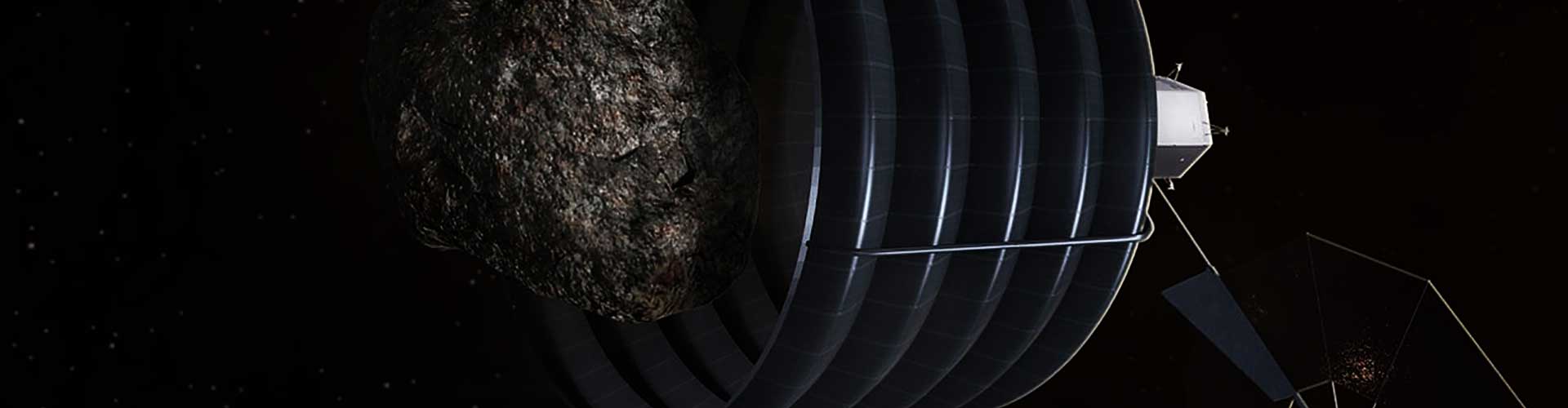 Space Mining
 DART (NASA Spacecraft)
 EXOMARS (ESA SPACECRAFT)
 MARS EXPRESS (ESA SPACECRAFT)