5 Spacecraft That Got a New Lease on Life
When something breaks on a spaceship, there's not an auto-shop it can pull up to, so NASA scientists have to get creative.
SciShow has a spinoff podcast! It's called SciShow Tangents. Check it out at http://www.scishowtangents.org
----------
Support SciShow by becoming a patron on Patreon: https://www.patreon.com/scishow
----------
Huge thanks go to the following Patreon supporters for helping us keep SciShow free for everyone forever:
Adam Brainard, Greg, Alex Hackman, Sam Lutfi, D.A. Noe, الخليفي سلطان, Piya Shedden, KatieMarie Magnone, Scott Satovsky Jr, Charles Southerland, Patrick D. Ashmore, charles george, Kevin Bealer, Chris Peters
----------
Like SciShow? Want to help support us, and also get things to put on your walls, cover your torso and hold your liquids? Check out our awesome products over at DFTBA Records: http://dftba.com/scishow
----------
Looking for SciShow elsewhere on the internet?
Facebook: http://www.facebook.com/scishow
Twitter: http://www.twitter.com/scishow
Tumblr: http://scishow.tumblr.com
Instagram: http://instagram.com/thescishow
----------
Sources:
Bon Voyage Opportunity | All Space Considered at Griffith Observatory | March 2019
All Space Considered discusses the final transmission from the Opportunity Rover and sends a fond farewell to our Martian friend.
All Space Considered is Griffith Observatory’s live science program that is free and open to the public, held the first Friday of every month.
Subscribe now for more All Space Considered clips: https://www.youtube.com/subscription_center?add_user=griffithobservatory
Watch All Space Considered videos: https://www.youtube.com/griffithobservatory
Learn more about All Space Considered on our official site: http://griffithobservatory.org/asc/all_space.html
Follow All Space Considered on SOCIAL MEDIA:
Twitter: https://twitter.com/allspacecnsdrd
Facebook: https://www.facebook.com/AllSpaceConsidered/
Instagram: https://www.instagram.com/allspaceconsidered/
-Disclaimer-
WE DO NOT OWN THE RIGHTS TO THE, VIDEOS, MUSICAL MATERIAL OR PICTURES PRESENT THAT WERE NOT CREATED DIRECTLY BY GRIFFITH OBSERVATORY OR ITS AFFILIATES, ALL CREDIT FOR THIS MATERIAL GOES TO THE ORIGINAL ARTISTS, CREATORS AND COMPOSERS.
Fair Use:
"Copyright Disclaimer Under Section 107 of the
Copyright Act 1976, allowance is made for "fair use"
for purposes such as criticism, comment, news
reporting, teaching, scholarship, and research. Fair
use is a use permitted by copyright statute that
might otherwise be infringing. Non-profit,
educational or personal use tips the balance in favor
of fair use."
Farewell Opportunity
On February 13, 2019 the world said 'so long' to NASA's Opportunity Mars rover.
Although it's hard to say goodbye, this record-breaking, discovery-making, marathon-driving mission has paved the way for future exploration and discovery of the Red Planet. Take a look at how we're exploring Mars: https://mars.nasa.gov/
Could We Have Saved the Opportunity Rover? | SciShow News
For more than a decade, Opportunity has been one of our best tools for understanding Mars, but after eight months of listening and hoping, it was officially time to put the rover to bed.
Hosted by: Caitlin Hofmeister
SciShow has a spinoff podcast! It's called SciShow Tangents. Check it out at https://www.scishowtangents.org
----------
Support SciShow by becoming a patron on Patreon: https://www.patreon.com/scishow
----------
Huge thanks go to the following Patreon supporters for helping us keep SciShow free for everyone forever:
Greg, Alex Schuerch, Alex Hackman, Andrew Finley Brenan, Sam Lutfi, D.A. Noe, الخليفي سلطان, Piya Shedden, KatieMarie Magnone, Scott Satovsky Jr, Charles Southerland, Patrick D. Ashmore, charles george, Kevin Bealer, Chris Peters
----------
Like SciShow? Want to help support us, and also get things to put on your walls, cover your torso and hold your liquids? Check out our awesome products over at DFTBA Records: http://dftba.com/scishow
----------
Looking for SciShow elsewhere on the internet?
Facebook: http://www.facebook.com/scishow
Twitter: http://www.twitter.com/scishow
Tumblr: http://scishow.tumblr.com
Instagram: http://instagram.com/thescishow
----------
Sources:
https://mars.nasa.gov/news/8348/opportunity-hunkers-down-during-dust-storm/
https://www.nasa.gov/press-release/nasas-record-setting-opportunity-rover-mission-on-mars-comes-to-end
https://www.jpl.nasa.gov/news/news.php?feature=7318
https://mars.nasa.gov/news/8370/opportunity-emerges-in-a-dusty-picture/
https://mars.nasa.gov/mer/mission/rover-status/opportunity/recent/all/#sols-5347
https://mars.nasa.gov/news/8414/six-things-to-know-about-nasas-opportunity-rover/
https://mars.nasa.gov/news/8412/nasas-insight-prepares-to-take-mars-temperature/
https://mars.nasa.gov/news/8409/360-video-curiosity-rover-departs-vera-rubin-ridge/
https://www.esa.int/Our_Activities/Human_and_Robotic_Exploration/Exploration/ExoMars/ESA_s_Mars_rover_has_a_name_Rosalind_Franklin
https://www.jpl.nasa.gov/news/news.php?feature=7286
http://www.planetary.org/multimedia/space-images/charts/mars_landing_site_map_lakdawalla.html
https://rps.nasa.gov/power-and-thermal-systems/thermal-systems/light-weight-radioisotope-heater-unit/
https://www.popsci.com/nasa-can-make-3-more-nuclear-batteries-and-thats-it
https://www.nature.com/news/nuclear-power-desperately-seeking-plutonium-1.16411
Images:
https://mars.jpl.nasa.gov/resources/21920/2018-giant-dust-storm-on-mars/
https://en.wikipedia.org/wiki/File:Opportunity_in_Endurance_Crater_(cropped).jpg
https://mars.jpl.nasa.gov/resources/5863/birds-eye-view-of-opportunity-at-erebus/
https://mars.jpl.nasa.gov/resources/6176/cleaned-solar-arrays-gleam-in-mars-rovers-new-selfie/
https://mars.nasa.gov/resources/22054/opportunity-after-the-dust-storm/
https://mars.nasa.gov/resources/6944/martian-blueberries/
https://www.nasa.gov/mission_pages/mer/news/mer20111207.html
https://www.nasa.gov/press-release/nasas-record-setting-opportunity-rover-mission-on-mars-comes-to-end
https://mars.nasa.gov/resources/22273/curiositys-selfie-at-rock-hall/
https://mars.nasa.gov/resources/22299/hp3-on-the-martian-surface/?site=insight
https://m.esa.int/spaceinimages/Images/2017/03/ExoMars_rover
http://www.planetary.org/multimedia/space-images/charts/mars_landing_site_map_lakdawalla.html
https://www.nasa.gov/image-feature/jpl/pia21635/nasa-s-mars-2020-rover-artist-s-concept
Thumbnail: https://en.wikipedia.org/wiki/File:NASA_Mars_Rover.jpg
Opportunity's Last Message to NASA & Remembering Oppy- The Case for Mars 36
What was the Opportunity rover last message to NASA? What great achievements did Opportunity make?
NASA's Opportunity Rover (part of the Mars Exploration Rover Mission) has recently reached the end of its journey. After almost half a year of trying to communicate with the rover, NASA decided to end the Mars rover's mission. In this video, we discuss the various locations Opportunity visited, and some of the key discoveries it and the Spirit rover made on the surface of Mars. Lastly, we talk about the impact these rovers had back here on Earth.
Thanks for watching! And consider subscribing if you enjoyed this video!
Twitter: https://twitter.com/wolf_martian
Facebook: https://fb.me/MartianWolf
Patreon: https://patreon.com/MartianWolf
Discord: https://discord.gg/ua3aMsAGBJ
Heading Home by Nekzlo @nekzlo
Music provided by Free Music for Vlogs youtu.be/YGL35p7LLqo
------------------------------
• Contact the artist:
@nekzlo
www.instagram.com/nekzlo/
twitter.com/Nekzlo_Music
open.spotify.com/artist/75LSn0DiQyH6LnHBT8fOEK
------------------------------
#Opportunity #Oppy
Goodbye, Oppy - This Is Why NASA Opportunity Rover Was Incredible
You can buy Universe Sandbox 2 game here: http://amzn.to/2yJqwU6
Hello and welcome! My name is Anton and in this video, we will talk about the end of the NASA Opportunity mission and the interesting facts that most people may have not known about.
Opportunity landing video is here: https://mars.nasa.gov/resources/20172/mars-exploration-rover-entry-descent-and-landing-on-mars/
Support this channel on Patreon to help me make this a full time job:
https://www.patreon.com/whatdamath
Space Engine is available for free here: http://spaceengine.org
Enjoy and please subscribe.
Twitter: https://twitter.com/WhatDaMath
Facebook: https://www.facebook.com/whatdamath
Twitch: http://www.twitch.tv/whatdamath
Bitcoins to spare? Donate them here to help this channel grow!
1GFiTKxWyEjAjZv4vsNtWTUmL53HgXBuvu
The hardware used to record these videos:
CPU: https://amzn.to/2LZFQCJ
Video Card: https://amzn.to/2M1W26C
Motherboard: https://amzn.to/2JYGiQQ
RAM: https://amzn.to/2Mwy2t4
PSU: https://amzn.to/2LZcrIH
Case: https://amzn.to/2MwJZz4
Microphone: https://amzn.to/2t5jTv0
Mixer: https://amzn.to/2JOL0oF
Recording and Editing: https://amzn.to/2LX6uvU
Thank you to all Patreon
supporters of this channel
Specifically, great thanks to the
following members:
Mayumi
Mark Teranishi
Lilith Dawn
Marin Templeton
Sam Reed
William
Nick Dolgy
Luminger
Greg Lambros
Unexpectedbooks.com
Lauren Smith
Michael Tiganila
Jordan
Michael Mitsuda
Lyndon Riley
Jer
Dave Blair
Leo Wehrli
Konrad Kummli
Alexander Leimbeck
Sander Stols
Kai Raphahn
Sergio Ruelas
Olegas Budnik
Tracy Burgess
Bartholomew Macaluso
Gordon Cooper
George Williams
Jayjay Volz
Shinne
AA
Justin Fortune
Chase Staggs
Jakub Glos
Toğrul Hüseynli
Moonic
Robert MacDonald
Becky
Giovanni Perryman
Steven
Zachary Fluke
Anataine Deva
Bob Davies
Steve Aiello
Michael Rucker
Tom Warren
Xyndicate
Bodo Graßmann
Liam Moss
Michael Koebel
Gary Steelman
Jake Salo
Shelley Passage
Honey Suzanne Lyons
Arikkat A Unnikrishnan
Angelina Werner
Steve Wotton
Rock Howard
Daniel Coleman
Aneliya Pancheva
Niji
Ralph Spataro
Peter Hamrak
Andrey Vesnin
Willem ter Harmsel
Robert Wyssbrod
James Myers
MrR
Vincent L Cleaver
Jacob Spencer
Stan Komander
Claye Griffith
Jakub Rychecky
JohnTaylorWalker
Jon Haynes
Shaun Cahill
George Naumov
Kyle eagle
David Lewis
Matthew Lazear
Michael J Fluharty
Howard Zhang
Former Patrons:
Tim Sageser
Jokage
Jurrien Diepenbroek
Lunos
Hundolin
Galaxia
Zio
Nelson Reyes
Brett Comeau
Jamie Walcott
Hazen Miller
Bobby Kent
Snowie15
Madalevek
Khai Hung
Joseph McEvoy
Isambard
Jason Neuschmid
Nicolas Belanger
Peter Rose
Nor Dine
Galant Human
Jeffrey Paik
Check the Patreon page to join.
The Highest Resolution Images Ever Taken of Mars' Victoria Crater | Opportunity Episode 3
My battery is low and it's getting dark. NASA's Opportunity has come to the end of a 15 year mission on Mars. But what did it discover? This episode focuses on its trip around Victoria crater!
https://brilliant.org/astrum/
**************
A big thank you to Brilliant for supporting this video. Sign up for free using the link above. That link will also get the first 200 subscribers 20% off a premium subscription to the website if you like what you see.
************** SUBSCRIBE for more videos about our other planets.
Subscribe! http://goo.gl/WX4iMN
Facebook! http://goo.gl/uaOlWW
Twitter! http://goo.gl/VCfejs
Donate!
Patreon: http://goo.gl/GGA5xT
Ethereum Wallet: 0x5F8cf793962ae8Df4Cba017E7A6159a104744038
Become a Patron today and support my channel! Donate link above. I can't do it without you. Thanks to those who have supported so far! Image Credits: NASA
Music Credits:
Hexalyte - Apollo
Stellardrone - Billions and Billions
Opportunity Mars Rover NASA Supercut 2004-2019
Learn more about the Opportunity Mars Rover https://www.spacetv.net/opportunity-rover/
Opportunity, also known as MER-B (Mars Exploration Rover – B) or MER-1, and nicknamed Oppy, is a robotic rover that was active on Mars from 2004 to 2018. Launched on July 7, 2003, as part of NASA's Mars Exploration Rover program, it landed in Meridiani Planum on January 25, 2004, three weeks after its twin Spirit (MER-A) touched down on the other side of the planet.[10] With a planned 90-sol duration of activity (slightly more than 90 earth days), Spirit functioned until getting stuck in 2009 and ceased communications in 2010, while Opportunity was able to stay operational for 5353 sols after landing, maintaining its power and key systems through continual recharging of its batteries through solar power, and hibernating during events such as dust storms to save power. This careful operation allowed Opportunity to exceed its operating plan by 14 years, 295 days (in Earth Time), 55 times its designed lifespan. By June 10, 2018, when it last contacted NASA, the rover had traveled a distance of 45.16 kilometers (28.06 miles).
Credit: NASA/JPL
NASA bids farewell to Mars rover Opportunity
NASA has declared the mission of the Mars rover Opportunity officially complete, 15 years after its launch. The solar-powered vehicle hasn't been hear from since June, when a dust storm swept across the red planet. CBS News' Tom Hanson reports.
Subscribe to the CBS News Channel HERE: http://youtube.com/cbsnews
Watch CBSN live HERE: http://cbsn.ws/1PlLpZ7
Follow CBS News on Instagram HERE: https://www.instagram.com/cbsnews/
Like CBS News on Facebook HERE: http://facebook.com/cbsnews
Follow CBS News on Twitter HERE: http://twitter.com/cbsnews
Get the latest news and best in original reporting from CBS News delivered to your inbox. Subscribe to newsletters HERE: http://cbsn.ws/1RqHw7T
Get your news on the go! Download CBS News mobile apps HERE: http://cbsn.ws/1Xb1WC8
Get new episodes of shows you love across devices the next day, stream CBSN and local news live, and watch full seasons of CBS fan favorites like Star Trek Discovery anytime, anywhere with CBS All Access. Try it free! http://bit.ly/1OQA29B
---
CBSN is the first digital streaming news network that will allow Internet-connected consumers to watch live, anchored news coverage on their connected TV and other devices. At launch, the network is available 24/7 and makes all of the resources of CBS News available directly on digital platforms with live, anchored coverage 15 hours each weekday. CBSN. Always On.
A Lifetime of Opportunity: NASA Mars Rover Completes Its Mission (news briefing)
NASA announces "mission complete" for its Mars Exploration Rover (MER) Opportunity in a media briefing at 11 a.m. PST (2 p.m. EST) Wednesday, Feb. 13, from the agency’s Jet Propulsion Laboratory (JPL) in Pasadena, California.
The briefing followed NASA’s last planned attempts to communicate with Opportunity late Tuesday evening. The solar-powered rover last communicated with Earth June 10, 2018, as a planet-wide dust storm was blanketing the Red Planet.
Briefing participants included:
· Jim Bridenstine, NASA administrator, NASA Headquarters, Washington
· Thomas Zurbuchen, associate administrator of the Science Mission Directorate, NASA Headquarters
· Lori Glaze, acting director of the Planetary Science Division, NASA Headquarters
· Michael Watkins, director, JPL
· Steve Squyres, MER principal investigator, Cornell University, Ithaca, New York
· John Callas, MER project manager, JPL
· Matt Golombek, MER project scientist, JPL
· Abigail Fraeman, MER deputy project scientist, JPL
· Jennifer Trosper, Mars 2020 project systems engineer, JPL
NASA Stops Trying to Wake Mars Opportunity After It Remains Silent
NASA has offically declared Mars Opportunity dead after trying to wake it for the last few months. The Rover exceeded its design in every way and set records for the distance it covered on another planet.
NASA to make final attempt to contact Opportunity Mars rover
NASA is making one last attempt to contact Opportunity Mars rover. If there is no response by an unspecified time on Wednesday, Opportunity might be declared dead, 15 years after arriving on Mars. #NASA #Mars #Tech #RIP
Subscribe to us on YouTube: https://goo.gl/lP12gA
Download our APP on Apple Store (iOS): https://itunes.apple.com/us/app/cctvnews-app/id922456579?l=zh&ls=1&mt=8
Download our APP on Google Play (Android): https://play.google.com/store/apps/details?id=com.imib.cctv
Follow us on:
Website: https://www.cgtn.com/
Facebook: https://www.facebook.com/ChinaGlobalTVNetwork/
Instagram: https://www.instagram.com/cgtn/?hl=zh-cn
Twitter: https://twitter.com/CGTNOfficial
Pinterest: https://www.pinterest.com/CGTNOfficial/
Tumblr: http://cctvnews.tumblr.com/
Weibo: http://weibo.com/cctvnewsbeijing
Tiktok: https://m.tiktok.com/h5/share/usr/6593878228716666886.html?u_code=d1kab7mki4ai6e&utm_campaign=client_share&app=musically&utm_medium=ios&user_id=6593878228716666886&tt_from=copy&utm_source=copy
Douyin: https://www.youtube.com/redirect?q=http%3A%2F%2Fv.douyin.com%2F8QTXhV%2F&redir_token=WkBScl40kZbx7ZwJ9M7QhhTjErx8MTU0NTcyMTg3N0AxNTQ1NjM1NDc3&event=channel_description
What did NASA's Opportunity Rover find on Mars? (Episode 1)
NASA's Opportunity rover may have come to the end of a nearly 15 year mission on Mars. A dust storm has drained its batteries, and we are unsure if it will recover. But what journey did it make?
https://brilliant.org/astrum/
**************
A big thank you to Brilliant for supporting this video. Sign up for free using the link above. That link will also get the first 200 subscribers 20% off a premium subscription to the website if you like what you see.
************** SUBSCRIBE for more videos about our other planets.
Subscribe! http://goo.gl/WX4iMN
Facebook! http://goo.gl/uaOlWW
Twitter! http://goo.gl/VCfejs
Donate!
Patreon: http://goo.gl/GGA5xT
Ethereum Wallet: 0x5F8cf793962ae8Df4Cba017E7A6159a104744038
Become a Patron today and support my channel! Donate link above. I can't do it without you. Thanks to those who have supported so far, especially:
Aber
And also:
Servando
Tariq Mulla
Garthvater
Milo Schuman
Eli Birnbaum
Solar Anamnesis
Alexander Simpson
Richard Smiles
Flint Corey
Patrick Ketaner
Paul Bertin
Shaheen Ghiassy
Steven Rumpel
Dermot Carthy
Christina Schreiber
Jesse Myles
Doug Felt
Shaheen Ghiassy
Will DeRousse
Guy Taylor
Philip O'Duffy
Thomas Burk
Matthias Randon
Knobiknows
John
Steve Mcjibbers
JWaldenback
Matthias Randon
Derrick
Ciaran Browne
Paul Meyer
Anastasia
Junette Ginger
Stefan Spieler
Antiroo
Nico Neuweiler
Phillip Desanto
Julio Ojeda
Mr Fluffington
Erynn Wilson
Mark Steven
Support to have your own name added to the list! Image Credits: NASA/MER
Clearing Skies for our Rovers on Mars on This Week @NASA – September 7, 2018
An update on our Mars rovers, continued progress for our Moon to Mars effort, and a look back at Dawn – in its twilight … a few of the stories to tell you about – This Week at NASA!
This video is available for download from NASA's Image and Video Library: https://images.nasa.gov/details-NHQ_2018_0907_Clearing%20Skies%20for%20our%20Rovers%20on%20Mars%20on%20This%20Week%20@NASA%20%E2%80%93%20September%207,%202018.html
Is There Life on Mars?
Viewers like you help make PBS (Thank you 😃) . Support your local PBS Member Station here: https://to.pbs.org/DonateSPACE
There is no greater hero in our search for life on mars than a little robot named Opportunity.
You can further support us on Patreon at https://www.patreon.com/pbsspacetime
Get your own Space Time t-shirt at http://bit.ly/1QlzoBi
Tweet at us! @pbsspacetime
Facebook: facebook.com/pbsspacetime
Email us! pbsspacetime [at] gmail [dot] com
Comment on Reddit: http://www.reddit.com/r/pbsspacetime
Help translate our videos!
https://www.youtube.com/timedtext_cs_...
Previous Episode:
How Will the Universe End?
https://www.youtube.com/watch?v=Qg4vb-KH5F4
What does the future of our Universe hold? Alas Lewis & Barnes
https://youtu.be/hCXRnwpmJTc
Hosted by Matt O'Dowd
Written by Drew Rosen & Matt O'Dowd
Graphics by Luke Maroldi
Assistant Editing and Sound Design by Mike Petrow
Made by Kornhaber Brown (www.kornhaberbrown.com)
Otherwise landed in 2004 with its twin - MER-A, better known as Spirit. These six-wheeled golf-cart-sized robots were Swiss army knives of geological lab instruments. Opportunities most spectacular discovery where these cute little so-called berries. They turned out to be concretions of hematite - which means they were grown in wet environments with dissolved iron. Wet means water FYI. Both rovers found a variety of other geological signs of past water activity, really solidifying the picture of Mars' much more liquid past. Both rovers were supposed to shut down after around 90 days as Martian dust accumulated on their solar panels, cutting of their power supply. Special thanks to our Patreon Big Bang, Quasar and Hypernova Supporters:
Big Bang
Anton Lifshits
CoolAsCats
David Nicklas
Fabrice Eap
Quasar
Dean Fuqua
Mark Rosenthal
Mayank M. Mehrota
Roman Pinchuk
Tambe Barsbay
Vinnie Falco
Hypernova
Chuck Zegar
Donal Botkin
Edmund Fokschaner
Eugene Lawson
John Hofmann
Jordan Young
Joseph Salomone
Matthew O’Connor
Ratfeast
Thanks to our Patreon Gamma Ray Burst Supporters:
Alexander Rodriguez
Alexey Eromenko
Benoit Pagé-Guitard
Brandon Cook
Brandon Labonte
Daniel Lyons
David Crane
Deborah Whittaker
Fabian Olesen
Greg Allen
Greg Weiss
Ian Anoan
James Flowers
James Hughes
JJ Bagnell
Jon Folks
Kevin Warne
Malte Ubl
Mark Vasile
Nicholas Rose
Nick Virtue
Scott Gossett
Shannan Catalano
سلطان الخليفي
Wake Up Opportunity! The Case for Mars 33
In this episode of the Case for Mars, we look at how the Jet Propulsion Laboratory plans on getting back in contact with Opportunity Rover. This includes the Deep Space Network, music hits, and what JPL will do once they get in contact.
Wake up playlist: https://tinyurl.com/y9sg9oqr
Official Opportunity Announcement: https://www.jpl.nasa.gov/news/news.php?feature=7215
NASA's Deep Space Network: https://deepspace.jpl.nasa.gov/ Thanks for watching! And consider subscribing if you enjoyed this video!
Twitter: https://twitter.com/wolf_martian
Facebook: https://fb.me/MartianWolf
Patreon: https://www.patreon.com/MartianWolf
Heading Home by Nekzlo @nekzlo
Music provided by Free Music for Vlogs youtu.be/YGL35p7LLqo
------------------------------
• Contact the artist:
@nekzlo
www.instagram.com/nekzlo/
twitter.com/Nekzlo_Music
open.spotify.com/artist/75LSn0DiQyH6LnHBT8fOEK
------------------------------
#OppyPhoneHome
Will the Opportunity Rover Survive This Dust Storm?
The global dust storm on Mars is threatening the Opportunity rover and the wind on Venus might be changing the length of its days.
Host: Hank Green
For special, curated artifacts of this universe, check out https://scishowfinds.com/
----------
Support SciShow by becoming a patron on Patreon: https://www.patreon.com/scishow
----------
Dooblydoo thanks go to the following Patreon supporters:
Lazarus G, Sam Lutfi, Nicholas Smith, D.A. Noe, alexander wadsworth, سلطا الخليفي, Piya Shedden, KatieMarie Magnone, Scott Satovsky Jr, Charles Southerland, Bader AlGhamdi, James Harshaw, Patrick D. Ashmore, Candy, Tim Curwick, charles george, Saul, Mark Terrio-Cameron, Viraansh Bhanushali, Kevin Bealer, Philippe von Bergen, Chris Peters, Justin Lentz
----------
Like SciShow? Want to help support us, and also get things to put on your walls, cover your torso and hold your liquids? Check out our awesome products over at DFTBA Records: http://dftba.com/scishow
----------
Looking for SciShow elsewhere on the internet?
Facebook: http://www.facebook.com/scishow
Twitter: http://www.twitter.com/scishow
Tumblr: http://scishow.tumblr.com
Instagram: http://instagram.com/thescishow
----------
Sources:
https://mars.nasa.gov/news/8348/opportunity-hunkers-down-during-dust-storm/
https://mars.nasa.gov/news/8349/media-telecon-about-mars-dust-storm-opportunity/
https://mars.nasa.gov/news/8350/nasa-encounters-the-perfect-storm-for-science/
https://www.youtube.com/watch?v=fIKxdRFx2Wo
http://www.planetary.org/explore/space-topics/mars/mars-calendar.html
https://press.nature.com/?post_type=press_release&p=116277
https://press.nature.com/wp-content/uploads/files/2018/06/41561_2018_157_OnlinePDF.pdf
https://press.nature.com/wp-content/uploads/files/2018/06/41561_2018_179_OnlinePDF.pdf
https://www.weather.gov/source/zhu/ZHU_Training_Page/Miscellaneous/gravity_wave/gravity_wave.html
-------
Images:
https://www.nasa.gov/directorates/heo/scan/services/missions/solarsystem/MEROppy.html
https://images.nasa.gov/details-PIA15959.html
https://commons.wikimedia.org/wiki/File:PIA19109-MarsOpportunityRover-EndeavourCrater-CapeTribulation-20150122.jpg
https://mars.nasa.gov/resources/21920/2018-giant-dust-storm-on-mars/
https://mars.nasa.gov/resources/21916/shades-of-martian-darkness/
https://mars.nasa.gov/resources/21928/duluth-after-dust-storm/
https://mars.nasa.gov/resources/21929/curiositys-dusty-selfie-at-duluth/
https://www.nasa.gov/multimedia/imagegallery/image_feature_47.html
https://www.nasa.gov/feature/goddard/2017/nasa-studies-cubesat-mission-to-solve-venusian-mystery
https://www.weather.gov/source/zhu/ZHU_Training_Page/Miscellaneous/gravity_wave/gravity_wave.html
https://www.istockphoto.com/photo/bandana-white-background-gm686197756-126037011
https://www.istockphoto.com/photo/dirty-and-dusty-safety-goggles-gm108129421-2507414
The Mars Opportunity Rover Is In Trouble And Other Stuff | Wednesday News
A giant martian dust storm threatens one of our most impressive rovers, the National Space Council addresses space debris, and scientists may have found the missing matter in the universe.
Get a cool shirt at http://www.answerswithjoe.com/shirts
Support me on Patreon!
http://www.patreon.com/answerswithjoe
Follow me at all my places!
Instagram: https://instagram.com/answerswithjoe
Snapchat: https://www.snapchat.com/add/answerswithjoe
Facebook: http://www.facebook.com/answerswithjoe
Twitter: https://www.twitter.com/answerswithjoe
LINKS LINKS LINKS:
https://www.digitaltrends.com/cool-tech/nasa-opportunity-rover/
https://arstechnica.com/science/2018/06/as-space-gets-more-crowded-us-seeks-to-ensure-a-safe-environment/
https://www.space.com/40942-trump-space-force-reopens-military-debate.html
https://gizmodo.com/did-scientists-just-find-a-missing-piece-of-the-univers-1826983782
TMRO:Space - The different personalities of the JPL rovers - Orbit 11.24
JPL Science System Engineer Kim Steadman joins us to talk about some past, present and future missions that JPL has sent to Mars and beyond. We touch on Spirit, Opportunity, Curiosity, the upcoming Mars 2020 and the different personalities each rover has. We sprinkle a little Juno and Cassini in there for good measure as well.
Launches:
H-2A Rocket Launches IGS-Radar 6 Spy Satellite
Space News:
Opportunity LOS
SpaceX is planning even more facilities at KSC
Axiom Space Announces Private Astronaut Expeditions
=== CONTINUE THE CONVERSATION ===
Twitter.com/TMRO
Facebook.com/TMROTV
YouTube.com/TMRO
Reddit.com/r/tmro
Twitch.tv/TMRO
TMRO.tv
=== OUR REAL-TIME DISCORD CHANNEL ===
All of the TMRO Shows are created and maintained in our Discord channel. Escape Velocity Patrons have access to a special room, but we also have free #general rooms that anyone can participate in. Join in for free at https://discord.gg/9NkkFWD
=== TMRO IS CROWD FUNDED ===
TMRO shows are crowd funded. If you like this episode consider contributing to help us to continue to improve. Head over to http://www.patreon.com/tmro for funding levels, goals and all of our different rewards!
OTD in Space – January 25: Opportunity Rover Lands on Mars
On January 25, 2004, NASA's Opportunity rover landed on Mars! This was the second of NASA's twin Mars Exploration Rovers to land on the red planet. Its counterpart, the Spirit rover, arrived just three weeks earlier. Opportunity is now the longest-running Mars rover mission. It was only intended to last 90 days, but the rover has been trekking around the Red Planet for more than 50 times its expected lifetime. Over the years, Opportunity has found meteorites on Mars, observed dust storms and looked for clues about the presence of water in Mars' ancient past.



 VIPER (NASA Rover)
 CURIOSITY (NASA ROVER)
 SPIRIT (NASA ROVER)
 Perseverance (NASA Rover)
 Mars Reconnaissance Orbiter (NASA Spacecraft)
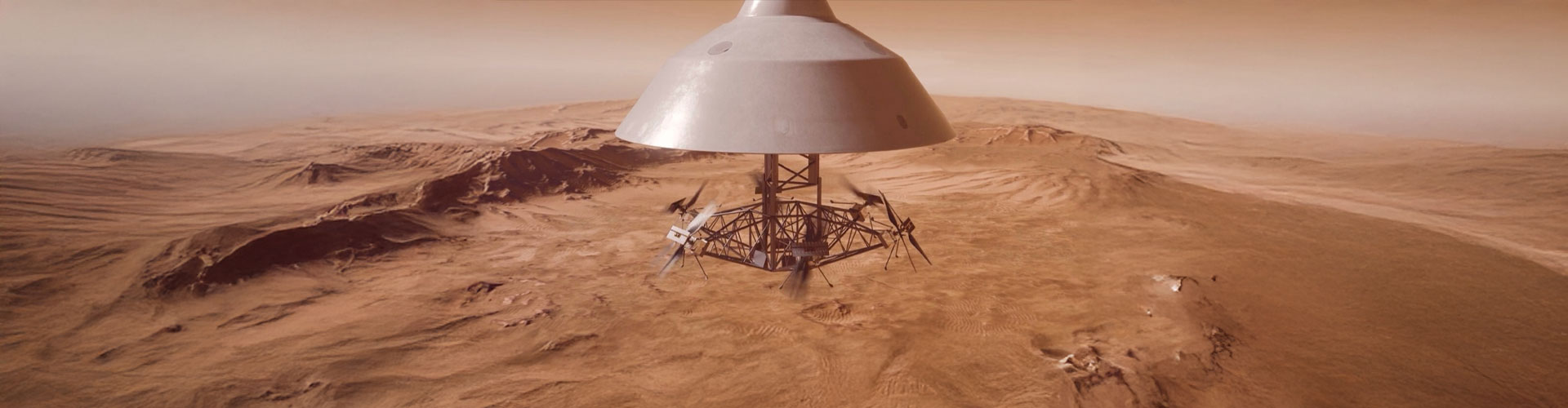 Skyfall (NASA Mars Helicopters)
 Ingenuity (NASA Mars Helicopter)
 PROMISE (NASA Lunar Rover)
 MARS INSIGHT (NASA LANDER)
 Planet Mars
 The Mars Society
 Hope Mars Mission (MBRSC Orbiter)
 MARS EXPRESS (ESA SPACECRAFT)
 Zhurong (CNSA Rover)
 Phobos (Mars Moon)
 MAVEN (NASA SPACECRAFT)
 Tianwen-1 Mars Mission (CNSA Spacecraft)
 MAGPIE (ESA Moon Rover)




