Flight VA271 | Amazon Leo LE-04 | Ariane 6 | Arianespace
On 24 November 2026 at 8:14 am local time, Arianespace successfully launched 36 Amazon Leo satellites aboard Ariane 6 in its Ariane 64 configuration, equipped with four enhanced-performance boosters, from Europe's Spaceport in Kourou, French Guiana.
The satellites were delivered with precision into low Earth orbit (LEO), at an altitude of approximately 460 km. As planned, the mission lasted a total of 2 hours and 4 minutes from lift-off to the separation of the last satellites.
David Cavaillolès, CEO of Arianespace, said: “Having now placed 136 Amazon Leo satellites into orbit this year, Arianespace has reached another milestone in the deployment of this ambitious constellation. This latest success demonstrates our ability to support our customers' projects over the long term and meet the needs of large constellations. We are proud to contribute to the development of global connectivity alongside Amazon Leo, and we thank our customer for its continued trust.”
Christophe Bruneau, CEO of ArianeGroup, said: “This tenth Ariane 6 mission is clear evidence of the industrial ramp-up now under way. This latest successful launch demonstrates ArianeGroup's ability to deliver the unrivalled reliability and performance of Ariane 6, Europe's heavy-lift launcher. More than ever, our focus is on consolidating this ramp-up to carry out next year's launches. This series of successful launches has been made possible by the extraordinary commitment of our teams and the entire industrial supply chain, to whom I would like to express my thanks.”
Steve Metayer, Amazon Leo VP of production, said: “Every Ariane 6 mission we fly with Arianespace builds on the one before it. Our Leo team works side by side with Arianespace on everything from satellite integration to launch day operations, and that shared expertise and trust is the driving force behind our cadence together this year. LE-04 is another strong result for that partnership, and we're looking forward to many more missions together as we prepare to roll out Amazon Leo to customers.”
VA271 is Ariane 6's tenth flight and marks a major milestone in the launcher's operational ramp-up. Since its inaugural flight in July 2024, Ariane 6 has demonstrated its versatility across a wide range of institutional and commercial missions. These include CSO-3 for French defence, Metop-SGA1, Sentinel-1D and MTG-I2 for weather forecasting and Earth observation, several Galileo satellites for global navigation, and the deployment of the Amazon Leo constellation. Spanning different target orbits and customer requirements, these missions demonstrate the adaptability of the launcher's operational capabilities and their potential for further development, to meet the needs of future European and international missions.
This was Ariane 6's fifth mission this year and its fourth for the Amazon Leo constellation. The launch was conducted under the partnership agreement between Arianespace and Amazon, which was recently expanded. In September 2026, Amazon announced an order for six additional Ariane 64 launches, bringing the total number of missions under contract to 24.
Amazon Leo is Amazon's low Earth orbit satellite network, whose mission is to deliver fast, reliable internet to customers beyond the reach of existing networks. Through this mission, Arianespace continues to contribute to the expansion of connectivity services worldwide. For the second time, the European launcher was equipped with the new P160C solid rocket boosters. This upgrade increases the launcher's capabilities without changing its overall architecture, demonstrating Ariane 6's ability to evolve rapidly in response to growing demand from institutional and commercial customers.
The P160Cs are among the world's largest monolithic carbon-fibre solid rocket motors and they replace the P120Cs used on Ariane 6's initial flights. While the boosters retain the same external dimensions (length and diameter), the new P160C motor inside is one metre longer than its P120C predecessor and can hold a total of 156 tonnes of solid propellant. This increases the launcher's performance in low Earth orbit (LEO) by 10% compared with the P120C, bringing Ariane 64's payload capacity to approximately 22 tonnes in LEO.
VA271 at a glance:
363rd Arianespace launch and the 5th in 2026
10th Ariane 6 launch and 4th Ariane 64 launch
2nd Ariane 64 launch with P160C boosters
4th Arianespace mission for Amazon Leo in 2026, under an agreement covering a total of 24 launches
136 Amazon Leo satellites placed into orbit by Arianespace
Meet the satellite: Metop-SGB1
Welcome back to our "Meet the Satellite" series. In this new video, EUMETSAT Training Manager Mark Higgins showcases the Metop Second Generation B1 satellite ahead of Metop-SGB1's launch later this year.
The Metop Second Generation B1 satellite is part of EUMETSAT's next generation of polar-orbiting weather satellites, soon to be flying in tandem with Metop-SGA1 to expand our observation capabilities into the 2040s.
Find out more at our website: https://www.eumetsat.int/metop-sg and please subscribe to our channel for updates!
Next Gen OPIR GEO: Advancing Missile Warning from Space
Our Next Generation Overhead Persistent Infrared Geosynchronous (Next Gen OPIR GEO) system is designed to detect advanced threats, including ballistic and hypersonic missiles, with enhanced sensing and greater resilience.
Built on the proven LM 2100 combat bus, Next Gen OPIR GEO delivers persistent multispectral sensing from space to strengthen missile warning and support timely decision-making when every second counts.
To learn more: https://lockheedmartin.com/en-us/products/next-generation-geo-opir.html
Spacecraft That Returned From The Dead! Transmissions From Beyond The Grave
Since it's Halloween - here's a story of spacecraft that returned from the grave, spacecraft which died and were abandoned and then somehow, returned from the dead. Well there's also a story about a hacker bringing a spacecraft back to life, with the help of a 'Frankenstein' satellite model assembled after a grave robbing incident.
Follow me on Twitter for more updates:
https://twitter.com/DJSnM
I have a discord server where I regularly turn up:
https://discord.gg/zStmKbM
If you really like what I do you can support me directly through Patreon
https://www.patreon.com/scottmanley
Quantum Computing Could Break Satellite Encryption — Here’s Why
Quantum computing may still be years away from breaking today’s encryption, but the security problem starts now.
In this SpaceIQ Q2 2026 conversation, Space Capital Founder and CEO Chad Anderson sits down with Eddie Zervigon, CEO of Quantum Exchange, to discuss why satellites are uniquely exposed to the emerging quantum threat.
Zervigon explains “Harvest Now, Decrypt Later,” where adversaries collect encrypted data today with the expectation that future quantum computers will be able to decrypt it. For satellites designed to remain in orbit for 10 to 15 years, upgrading security after deployment is not a realistic option.
They discuss the shift toward quantum-safe encryption, new federal migration deadlines, the importance of building crypto-agility into satellite architecture, and why post-quantum cybersecurity is becoming both a critical infrastructure requirement and an emerging investment category.
As more of the global economy depends on GPS, communications, defense systems, and infrastructure in orbit, securing space against future quantum attacks is becoming an immediate priority.
Learn more about Space Capital and the Q2 2026 SpaceIQ: spacecapital.com
#QuantumComputing #Cybersecurity #SpaceTech #Satellites #QuantumSecurity #SpaceEconomy
China Launches New Communication Technology Test Satellites
China sent new communication technology test satellites into space from the Taiyuan Satellite Launch Center in north China's Shanxi Province on July 30.
https://www.cctvplus.com/news/20260730/8491919.shtml#!language=1
Welcome to subscribe our channel so you never miss out the latest reports of China manned space program!
Official website: https://www.cctvplus.com
Find much more news content on CCTV+ YouTube Channel:
https://www.youtube.com/@CCTVVideoNewsAgency
Newly-launched Chinese Rocket Sends AI-3mpowered Satellites into Space
China on July 24 launched a Lijian-1 Y15 carrier rocket, sending five satellites into space, with two of them equipped with advanced AI large models in a pioneering effort to expand AI application to space.
https://www.cctvplus.com/news/20260724/8491053.shtml#!language=1
Welcome to subscribe our channel so you never miss out the latest reports of China manned space program!
Official website: https://www.cctvplus.com
Find much more news content on CCTV+ YouTube Channel:
https://www.youtube.com/@CCTVVideoNewsAgency
It's Official, There Are Too Many Satellites!
There are so many satellites its breaking old satellite tracking systems, the US Space Track began tracking satellites in the 1950's and the standard 'Two Line Element' or TLE format only allowed for 5 digit identifiers. The world just blew past that number!
Follow me on Twitter for more updates:
https://twitter.com/DJSnM
I have a discord server where I regularly turn up:
https://discord.gg/zStmKbM
If you really like what I do you can support me directly through Patreon
https://www.patreon.com/scottmanley
Thumbnail is a screenshot from LeoLabs realtime satellite visualization
Atlas V launches Amazon Leo 5 (LA-05)
A United Launch Alliance (ULA) Atlas V 551 launch vehicle launched the fifth Amazon Leo (LA-05) mission, 29 satellites into low Earth orbit (LEO) for Amazon’s broadband constellation previously known as Project Kuiper, from Space Launch Complex 41 (SLC-41) at Cape Canaveral Space Force Station, Florida, on 4 April 2026, at 05:46 UTC (01:46 EDT).
Credit: United Launch Alliance
#AtlasV
ViaSat-3 F2: Satellite Separation | Viasat
Separation confirmed! 🛰️ ViaSat-3 F2 has successfully separated from ULA's Atlas V rocket. Our satellite is now beginning its journey toward geostationary orbit – 22,236 miles above the Earth.
Learn more about ViaSat-3: vsat.co/vs3
#VS3F2 #VS3 #ViaSat3
____________________
Get the latest Viasat news: https://www.viasat.com/news
Follow Viasat:
LinkedIn: https://www.linkedin.com/company/viasat
X/Twitter: https://twitter.com/viasat
Facebook: https://www.facebook.com/viasat
Instagram: https://www.instagram.com/viasat/
Bluesky: https://bsky.app/profile/viasat.com
Resilient ISR connectivity for every mission | Viasat
Discover how Air-IQ, Viasat’s cutting-edge connectivity solution, transforms ISR operations for crewed and uncrewed aircraft.
From take-off to landing, Air-IQ delivers flexible, super-fast uplink capabilities, secure communications, and seamless switching between technologies, ensuring mission success even in tough environments. 🔗 https://www.viasat.com/products/software-and-services/air-iq/
____________________
Get the latest Viasat news: https://www.viasat.com/news
Follow Viasat:
LinkedIn: https://www.linkedin.com/company/viasat
X/Twitter: https://twitter.com/viasat
Facebook: https://www.facebook.com/viasat
Instagram: https://www.instagram.com/viasat/
Bluesky: https://bsky.app/profile/viasat.com
Risk of Ozone Layer Destruction from Internet Satellite Swarms and Rocket Fuel
Support this channel on Patreon to help me make this a full time job: https://www.patreon.com/whatdamath (Unreleased videos, extra footage, DMs, no ads)
Alternatively, PayPal donations can be sent here: http://paypal.me/whatdamath
Get a Wonderful Person Tee: https://teespring.com/stores/whatdamath
More cool designs are on Amazon: https://amzn.to/3QFIrFX
Hello and welcome! My name is Anton and in this video, we will talk about a bizarre new issue we may be facing - ozone depletion as a result of satellite launches
Links:
https://www.nature.com/articles/s41612-025-01098-6
https://platform.leolabs.space/visualization
https://agupubs.onlinelibrary.wiley.com/doi/10.1029/2024GL109280
https://www.pnas.org/doi/10.1073/pnas.2313374120
https://spaceweather.com/archive.php?view=1&day=06&month=08&year=2025
#starlink #ozone #rockets
0:00 Is ozone layer in trouble again?
0:40 Ozone hole and the 1980s
1:28 Ozone layer in a nutshell
3:30 How the ozone layer was healed
5:30 Is there a new issue?
5:55 Rocket launches and satellites
7:30 Rocket launch exhaust
8:40 Why this is an issue
9:20 Reentering satellites and aluminium pollution
10:30 How aluminium may destroy the ozone layer
11:40 The tricky part
12:55 Starlink reentry in 2025 and a giant atmospheric experiment
14:50 Conclusions and what's next
16:00 Possible solutions
Enjoy and please subscribe
Bitcoin/Ethereum to spare? Donate them here to help this channel grow!
bc1qnkl3nk0zt7w0xzrgur9pnkcduj7a3xxllcn7d4
or ETH: 0x60f088B10b03115405d313f964BeA93eF0Bd3DbF
Thank you to all Patreon supporters of this channel
Special thanks also goes to all the wonderful supporters of the channel through YouTube Memberships
Credit:
Vaishnav https://www.researchgate.net/figure/Ozone-structure-Ozone-O-3-is-a-triatomic-molecule-Figure-1-it-contains-three-oxygen_fig1_354926871
Licenses used:
https://creativecommons.org/licenses/by/4.0/
and relevant Creative Commons licenses
Earth’s Orbit Is Now Full of Satellites
A new study confirms that satellites now appear in nearly every wide-field image from major observatories. In this video, we discuss our increasingly crowded orbital neighborhood and how we've transformed our planet's orbit into a metal minefield.
Sources:
https://dx.doi.org/10.48550/arxiv.2505.03474
https://www.researchgate.net/publication/391492726_Classification_of_LEO_Satellites_Using_Occultations_of_Background_Stars
https://arxiv.org/abs/2505.03474
WATCH ANOTHER VIDEO: How Minisatellites Are Helping Us
https://www.youtube.com/watch?v=IgRG6qawFvo
CHECK OUT OUR MERCH: https://www.cosmoknowledge.com
You are welcome to support us so we can create more quality content:
https://www.buymeacoffee.com/cosmoknowledge
Join this channel to get access to the perks:
https://www.youtube.com/channel/UCdgpfQ5snGKcP-eqoVXI0pw/join
SUBSCRIBE ► https://goo.gl/PLLFPz
----
Website ► https://cosmoknowledge.com/
Instagram ► https://www.instagram.com/itscosmoknowledge
Facebook ► https://facebook.com/cosmoknowledge
TikTok ► https://www.tiktok.com/@cosmoknowledge
Twitter ► https://twitter.com/cosmoknowledge
A Cosmoknowledge production.
Graphics:
ESA, ID&Sense, ONiRiXEL, John Howard,
Mark Handley, NASA, A. H. Abolfath,
Starlink, NOIRLab, NSF/AURA, STScI,
Daniel López, elcielodecanarias.com,
Benjamin F. Cooke, Don Pollacco,
James Blake, Paul Chote, Hubble,
J. Kalirai, A. Milone, RubinObs,
NSF, AURA, H. Stockebrand
Music:
SCOREWIZARDS - In Plain Sight
Orchestralis - Neutral Dystopian Drones
Orchestralis - Neutral Evolving Drones
PremiumBeat - Pizzicato Traveling
A big thank you to our lovely channel members:
F̵L̴Y̵I̸N̴G̵ ̵T̷O̶I̸L̷E̷T̸ ̶S̷E̴A̵T̶
Myers666
Michael Ward
El Profesor Vega
Orion∆Star* Infinit∆musix
Gerald Griswold Sr
Heywood Tate
David Ray
ashok rowkavi
Ali Rıza Şeren
john roberts
-
Cosmoknowledge brings news from space.
We love you, explorers!
Will SpaceX Starlink Have Too Many Satellites in Orbit?
Use this link https://www.hostinger.com/curiousdroid and the Code: CURIOUSDROID to get 10% OFF your first month of Hostinger Horizons.
We currently have about 12,000 satellites in orbit, but within the next decade we could have 100,000 if all the new mega-constellations like SpaceX's Starlink and others go ahead.
Not only might that ruin the night skies for radio and visual astronomy, but it might also be just too much to manage safely without creating a calamitous orbital debris field that might lock us on the Earth for hundreds of years.
In this video, we look at how many satellites in orbit might be too many and what we can do to avoid a disaster for the whole space industry.
Written, researched and presented by Paul Shillito.
To give one-off tips and donations please use the following :
https://www.buymeacoffee.com/curiousdroid
or paypal.me/curiousdroid
And a big thanks go to our Patreons for the on going support.
Eριχθόνιος JL
Adriaan von Grobbe
Alex K
Alipasha Sadri
Andrew Gaess
Andrew Smith
Bengt Stromberg
Brian Kelly
Carl Soderstrom
Charles Thacker
Chris Senn
Daniel Armer
erik ahrsjo
Florian Muller
George Bishop II
Glenn Dickinson
Jesse Postier
John Michaelson
Ken Schwarz
L D
László Antal
Lorne Diebel
Patrick M Brennan
Paul Freed
Paul Shutler
Peter Engrav
Robert Sanges
Ryan Emmenegger
stefan hufenbach
Steve Ehrmann
Steve J - LakeCountySpacePort
tesaft
How do radar satellites work?
Radar allows us to see through what would otherwise be invisible. By sending out radio waves that bounce off objects and return as echoes, radar creates a detailed picture of our surrounding world.
This technology is everywhere: from guiding air traffic and enabling self-driving cars to tracking the movements of athletes. But its reach doesn’t stop there—radar is also transforming how we observe our Earth from space.
Satellites like the Copernicus Sentinel-1 mission use radar to see through clouds, darkness and any weather conditions. This capability is invaluable for detecting subtle changes on Earth’s surface—changes that are often hidden from the human eye. Discover how radar technology is helping us unlock these hidden insights about our planet.
Credit: ESA - European Space Agency
★ Subscribe: http://bit.ly/ESAsubscribe and click twice on the bell button to receive our notifications.
Check out our full video catalog: http://bit.ly/SpaceInVideos
Follow us on Twitter: http://bit.ly/ESAonTwitter
On Facebook: http://bit.ly/ESAonFacebook
On Instagram: http://bit.ly/ESAonInstagram
On LinkedIn: https://bit.ly/ESAonLinkedIn
On Pinterest: https://bit.ly/ESAonPinterest
On Flickr: http://bit.ly/ESAonFlickr
We are Europe's gateway to space. Our mission is to shape the development of Europe's space capability and ensure that investment in space continues to deliver benefits to the citizens of Europe and the world. Check out https://www.esa.int/ to get up to speed on everything space related.
Copyright information about our videos is available here: https://www.esa.int/ESA_Multimedia/Terms_and_Conditions
#ESA #Sentinel-1 #Satellite
Koreasat-6A deployment
Koreasat-6A was successfully deployed into geosynchronous transfer orbit approximately 35 minutes after being launched by a SpaceX Falcon 9 rocket from Launch Complex 39A (LC-39A) at Kennedy Space Center, Florida, on 11 November 2024, at 17:22 UTC (12:22 EST).
Credit: SpaceX
Satellites That Scoop Air And Use It As Propellant
Satellites run out of fuel and have to de-orbit and end their missions. But what if they had access to a practically infinite amount of fuel? What if they could scoop air from the atmosphere and use it as propellant? That is exactly the research that Dr Mansur Tisaev is doing!
🟣 Guest: Dr. Mansur Tisaev
https://www.researchgate.net/profile/Mansur-Tisaev
👉 Dr Andrea Lucca Fabris
https://www.surrey.ac.uk/people/andrea-lucca-fabris
🦄 Support us on Patreon:
https://patreon.com/universetoday
📚 Suggest books in the book club:
https://www.goodreads.com/group/show/1198440-universe-today-book-club
00:00 Intro
02:04 Ion engines
15:32 Effects of the solar activity
19:35 Advantages of air-breathing engines
28:13 What's next
32:05 Non-Earth applications
36:26 Interstellar applications
38:35 Current obsessions
41:03 Final thoughts
📰 EMAIL NEWSLETTER
Read by 70,000 people every Friday. Written by Fraser. No ads.
Subscribe for Free: https://universetoday.com/newsletter
🎧 PODCASTS
Universe Today: https://universetoday.fireside.fm/
Astronomy Cast: http://www.astronomycast.com/
🤳 OTHER SOCIAL MEDIA
Mastodon: astrodon.social/@fcain
Twitter: https://twitter.com/fcain
Twitter: https://twitter.com/universetoday
Facebook: https://facebook.com/universetoday
Instagram: https://instagram.com/universetoday
📩 CONTACT FRASER
[email protected]
⚖️ LICENSE
Creative Commons Attribution 4.0 International (CC BY 4.0)
You are free to use my work for any purpose you like, just mention me as the source and link back to this video.
Eclipse-making double-satellite | Proba-3
Proba-3 is ESA’s – and the world’s – first precision formation flying mission. A pair of satellites will fly together relative to the Sun so that one casts a precisely-controlled shadow onto the other, to create a prolonged solar eclipse in orbit. In the process the mission will open up the Sun’s faint surrounding coronal atmosphere for sustained study. Normally this corona is rendered invisible by the brilliant face of the Sun, like a firefly next to a bonfire.
Due for launch together this autumn, the two Proba-3 satellites will fly 144-m apart for up to six hours at a time to create these eclipses. Beside its scientific interest, this experiment will be a perfect method to demonstrate the precise positioning of the two platforms. It will be enabled using a novel combination of guidance technologies. In this video the Proba-3 team details the mission concept.
Find out more here: https://www.esa.int/Enabling_Support/Space_Engineering_Technology/Proba_Missions/About_Proba-3
Credits: ESA - European Space Agency
★ Subscribe: http://bit.ly/ESAsubscribe and click twice on the bell button to receive our notifications.
Check out our full video catalog: http://bit.ly/SpaceInVideos
Follow us on Twitter: http://bit.ly/ESAonTwitter
On Facebook: http://bit.ly/ESAonFacebook
On Instagram: http://bit.ly/ESAonInstagram
On LinkedIn: https://bit.ly/ESAonLinkedIn
On Pinterest: https://bit.ly/ESAonPinterest
On Flickr: http://bit.ly/ESAonFlickr
We are Europe's gateway to space. Our mission is to shape the development of Europe's space capability and ensure that investment in space continues to deliver benefits to the citizens of Europe and the world. Check out https://www.esa.int/ to get up to speed on everything space related.
Copyright information about our videos is available here: https://www.esa.int/ESA_Multimedia/Terms_and_Conditions
#ESA #Proba-3 #Satellite
Danger from Solar Storms, Observing Planet X, Pink Auroras | Q&A 259
Where can we observe the effects of dark matter? How did all satellites survive the recent solar storms? Why auroras can show different colours? If we found Planet X, could we even observe it? Answering all these questions and more in this week's Q&A show.
🦄 Support us on Patreon:
https://patreon.com/universetoday
📚 Suggest books in the book club:
https://www.goodreads.com/group/show/1198440-universe-today-book-club
00:00 Start
00:24 [Andoria] Where can we observe dark matter?
08:02 [Vulcan] How good are MOND theories?
11:21 [Risa] Why did we survive all the recent solar storms so well?
15:23 [Aeturen] Can we even see Planet X if it actually exists?
20:43 [Vendikar] Can multiple scientists use JWST at the same time?
24:23 [Remus] Can neutrinos be dark matter?
28:15 [Janus] Why some auroras are pink and not green?
29:50 [Cait] What is the Drake equation?
32:58 [Betazed] Falling into a black hole
📰 EMAIL NEWSLETTER
Read by 70,000 people every Friday. Written by Fraser. No ads.
Subscribe for FREE: https://universetoday.com/newsletter
🎧 PODCASTS
Universe Today: https://universetoday.fireside.fm/
Astronomy Cast: http://www.astronomycast.com/
🤳 OTHER SOCIAL MEDIA
Mastodon: astrodon.social/@fcain
Twitter: https://twitter.com/fcain
Twitter: https://twitter.com/universetoday
Facebook: https://facebook.com/universetoday
Instagram: https://instagram.com/universetoday
📩 CONTACT FRASER
[email protected]
⚖️ LICENSE
Creative Commons Attribution 4.0 International (CC BY 4.0)
You are free to use my work for any purpose you like, just mention me as the source and link back to this video.
NASA Abandoned A Spacecraft in Orbit for 5 Years. When It Came Home It Surprised Them!
NASA's Long Duration Exposure Facility started out as a meteorite exposure payload, but evolved to look at every aspect of material changes on orbit, in particular by the time it was launched it was realised that one of the biggest threats in low Earth orbit is atomic oxygen which would slowly erode many common materials. The spacecraft was covered with experiments and was supposed to spend 12 months in orbit, instead because of delays and the Challenger disaster it spent 69 months in orbit and was weeks away from falling back to earth.
Follow me on Twitter for more updates:
https://twitter.com/DJSnM
I have a discord server where I regularly turn up:
https://discord.gg/zStmKbM
If you really like what I do you can support me directly through Patreon
https://www.patreon.com/scottmanley



 Amazon Leo (Project Kuiper)
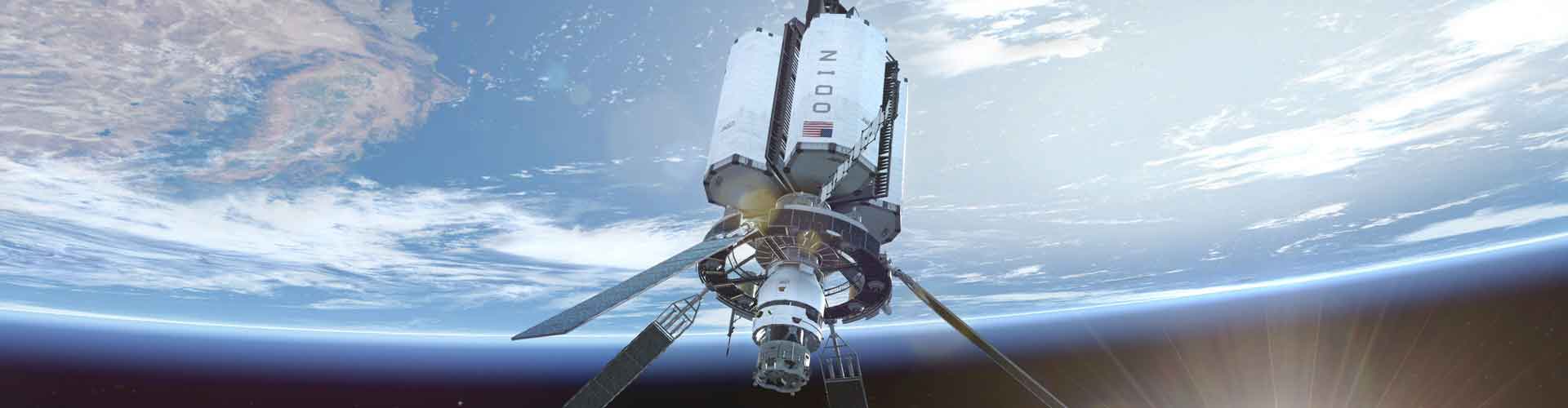 Space Weapons & Defence
 CNSA & CMSA
 C-Space Project
 United States Space Force (USSF)
 TAIKONAUTS
 Tiangong Space Station (CMSA)
 Space Junk & Debris
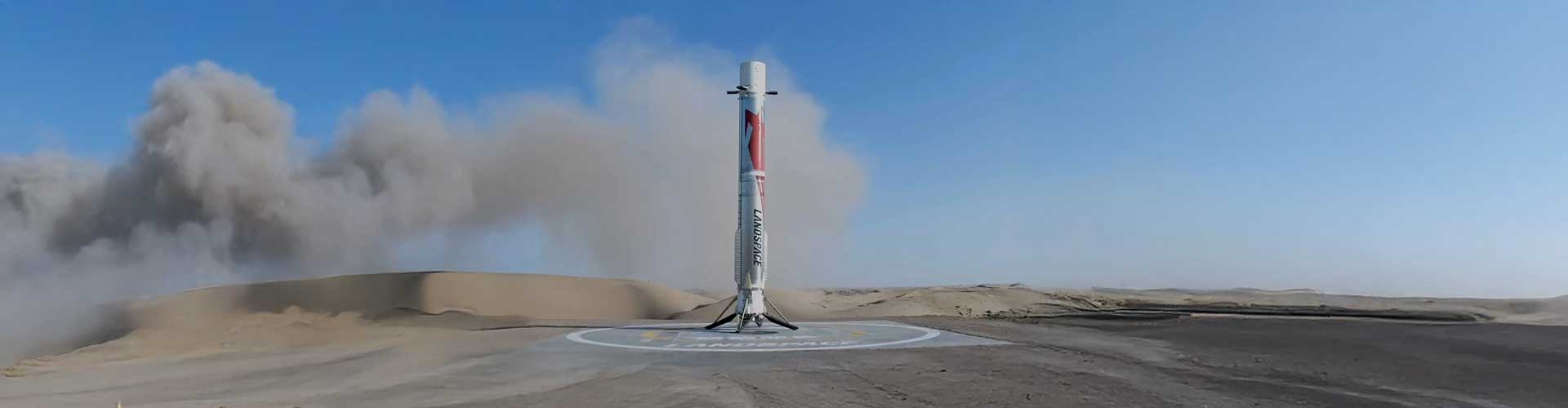 LandSpace
 Starlab (Space Station)
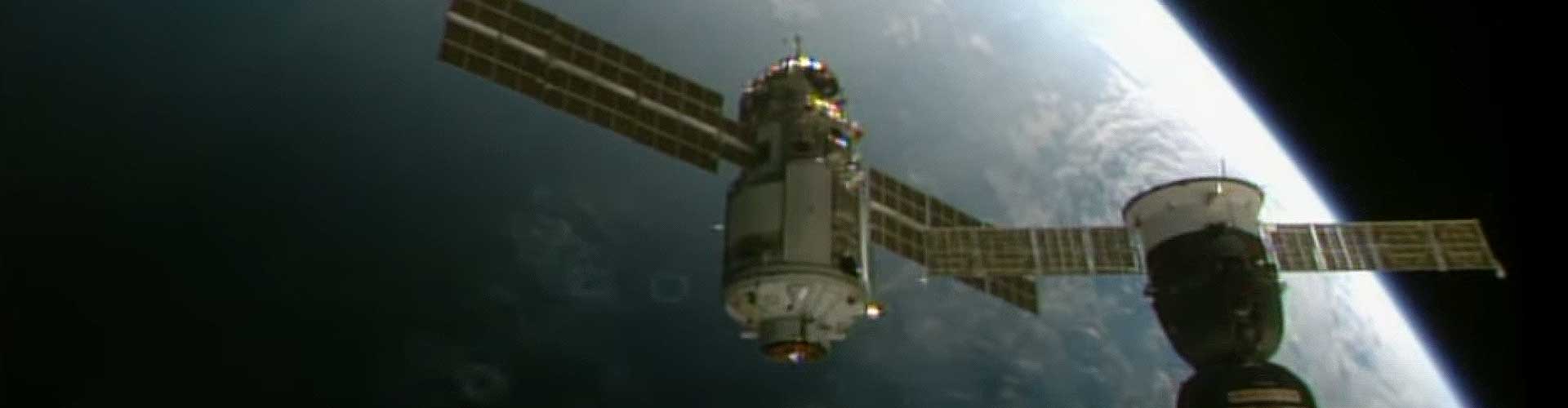 NAUKA ISS MODULE
 International Space Station (ISS)
 SpaceX Crew Dragon Spacecraft
 Dwarf Planet Makemake
 Space Sustainability
 Orbital Reef (Space Station)
 Spaceport Cornwall
 Juno (NASA Spacecraft)




