This Map Reveals Earth From Anywhere In The Galaxy
Right now, four copies of a remarkable map are soaring out into the wider Milky Way galaxy. This map - in theory - can reveal Earth's position to any life out there intelligent enough to retrieve and read it. Here's how the pulsar map works.
EarthSky.org: https://earthsky.org/
Subscribe: https://subscribe.earthsky.org/
Store: https://earthskystore.org/
Team and About: https://earthsky.org/about/
#space #astronomy #voyager #goldenrecord #stem #science #milkyway #galaxy
How Voyager Changed Our View of the Solar System (NASA Archival Footage)
For nearly 50 years, NASA’s twin Voyager spacecraft have pushed the boundaries of space exploration, showing us worlds we’d never seen up close and venturing farther from Earth than any other spacecraft.
At Jupiter, Voyager 1 revealed the swirling storms around the Great Red Spot and spotted an erupting volcano on the moon Io. At Saturn, it sent back close-up views of intricate rings, including strands that appeared braided.
Voyager 2 continued the tour, revealing Uranus’s unusual magnetic field and a giant storm on Neptune.
In 1990, Voyager 1 turned its camera toward Earth for the “Pale Blue Dot” portrait, then became the first spacecraft to enter interstellar space in 2012. And on Nov. 18, 2026, it became the first human-made object to reach a distance of one light-day from Earth.
As the Voyagers approach their 50th anniversary in 2027, take a look back through the archives at the discoveries and defining moments that shaped one of NASA’s most iconic missions.
For more information on the milestone, visit: https://science.nasa.gov/mission/voyager/voyager-1/voyager-1-what-is-a-light-day/
Learn more about NASA’s Voyager mission: http://nasa.gov/voyager
Voyager 1 Just Reached 1 Light-Day From Earth: Here’s What It Found
Support this channel on Patreon to help me make this a full time job: https://www.patreon.com/whatdamath (Unreleased videos, extra footage, DMs, no ads)
Alternatively, PayPal donations can be sent here: http://paypal.me/whatdamath
Get a Wonderful Person Tee: Amazon: https://amzn.to/3QFIrFX
Hello and welcome! My name is Anton and in this video, we will talk about Voyager 1's new record
Links:
https://science.nasa.gov/mission/voyager/voyager-1/
#nasa #voyager #solarsystem
0:00 Voyager 1 - 1 light day away from us now!
1:25 Pale Blue Dot
2:15 Heliosphere discoveries and a bizarre firewall
6:20 Hum of the interstellar space
7:25 Discoveries from planets
9:20 Major lessons about the solar system and beyond
11:10 But also so many issues
13:30 Fixes and energy redistribution
14:30 What's next?
Enjoy and please subscribe
Bitcoin/Ethereum to spare? Donate them here to help this channel grow!
bc1qnkl3nk0zt7w0xzrgur9pnkcduj7a3xxllcn7d4
or ETH: 0x60f088B10b03115405d313f964BeA93eF0Bd3DbF
The hardware used to record these videos:
New Camera: https://amzn.to/4pCVINS
CPU: https://amzn.to/4qXIaxC
Video Card: https://amzn.to/2M1W26C
Motherboard: https://amzn.to/2JYGiQQ
RAM: https://amzn.to/2Mwy2t4
PSU: https://amzn.to/2LZcrIH
Case: https://amzn.to/2MwJZz4
Microphone: https://amzn.to/2t5jTv0
Mixer: https://amzn.to/2JOL0oF
Recording and Editing: https://amzn.to/2LX6uvU
Some of the above are affiliate links, meaning I would get a (very small) percentage of the price paid.
Thank you to all Patreon supporters of this channel
Special thanks also goes to all the wonderful supporters of the channel through YouTube Memberships
Credit:
Mark Garlick www.markgarlick.com
Licenses used:
https://creativecommons.org/licenses/by/4.0/
and relevant Creative Commons licenses
Voyager 1 Light-Day Mission Update and Conversation
We're making history with our Voyager spacecraft. Join us for the latest updates.
In this discussion, NASA leadership and mission members will discuss the status of Voyager 1 and 2, the unique science the twin probes are gathering in interstellar space, and the challenges of keeping them operating for so long over such vast distances.
Stick around for a Q&A with media and other audience members, as well as a preview of the upcoming NASA+ Voyager documentary planned for release in 2027 for the mission's 50th anniversary.
Participants include:
- Nicky Fox, associate administrator, Science Mission Directorate, NASA Headquarters
- Jonathan Lunine, chief scientist, NASA JPL, and professor of planetary science, Caltech
- Suzanne Dodd, Voyager project manager, NASA JPL
- Linda Spilker, Voyager project scientist, NASA JPL
- Kareem Badaruddin, Voyager mission manager, NASA JPL
- Jamie Rankin, Voyager deputy project scientist, Princeton University
Voyager 1, the most distant human-made object from Earth, will have traveled one light-day (more than 16 billion miles) as of Wednesday, Nov. 18. Learn more about the milestone: https://www.nasa.gov/news-release/nasa-invites-media-public-to-join-voyager-1-one-light-day-activities/
Learn more about NASA's Voyager mission: https://science.nasa.gov/mission/voyager/
Bill Nye reacts to Voyager 1 becoming most distant human object in space
NASA's Voyager 1 probe is now a full light day from Earth, going further than any human-made object has gone before. Scientist Bill Nye reacts.
CBS News 24/7 is the premier anchored streaming news service from CBS News and Stations that is available free to everyone with access to the internet and is the destination for breaking news, live events, original reporting and storytelling, and programs from CBS News and Stations' top anchors and correspondents working locally, nationally and around the globe. It is available on more than 30 platforms across mobile, desktop and connected TVs for free, as well as CBSNews.com and Paramount+ and live in 91 countries.
Subscribe to the CBS News YouTube channel: https://youtube.com/cbsnews
Watch CBS News 24/7: https://cbsnews.com/live/
Download the CBS News app: https://cbsnews.com/mobile/
Follow CBS News on Instagram: https://instagram.com/cbsnews/
Like CBS News on Facebook: https://facebook.com/cbsnews
Follow CBS News on X: https://twitter.com/cbsnews
Subscribe to our newsletters: https://cbsnews.com/newsletters/
Try Paramount+ free: https://paramountplus.com/?ftag=PPM-05-10aeh8h
For video licensing inquiries, contact:
[email protected]Voyager 1's trajectory out of the Solar System
On 18 November 2026, NASA's Voyager 1 spacecraft reaches a distance of 1 light-day from the Solar System. Here's an animation showing its trajectory across the Solar System.
Credit: NASA's Scientific Visualization Studio
#nasa #voyager #voyager1
Nasa’s Golden Record: A message to aliens | BBC News
What would you tell an alien civilisation about life on Earth?
In 1977, a once-in-a-lifetime alignment of the planets gave Nasa the chance to launch spacecraft that could explore the outer edges of our solar system and beyond. Onboard was a gold-plated record carrying sounds, music and pictures of Earth, designed as a message for any aliens that might be out there. As the Voyager 1 probe reaches the milestone of one light-day from Earth, we explore the extraordinary story of the Golden Record. We look at how an alien civilisation might decode it, what its message reveals about humanity and how its map could point extraterrestrials back to our planet.
You can listen to the Golden Record playlist here: https://science.nasa.gov/mission/voyager/golden-record-contents/sounds/#music
Subscribe to our channel here: https://bbc.in/bbcnews
00:00 - What is the Golden Record?
01:00 - What is Voyager and how did it leave the Solar System?
02:40 - What did Voyager discover?
04:20 - How to decode the Golden Record
05:35 - What’s on the Golden Record?
06:25 - The music chosen for alien listeners
08:14 - How sound becomes pictures and what images are on the record?
09:35 - How does Voyager’s map show aliens Earth's location
10:00 - The hidden message on the Golden Record
11:00 - Will aliens ever find it?
For the latest news download the BBC News app or visit BBC.com/news
#BBCNews #Voyager #NASA #GoldenRecord #Space #Aliens #Astronomy
NASA's Voyager 1 will soon become the first human-made object to reach a light-day from Earth
NASA's Voyager 1 is about to become humanity's first object to reach one light-day from Earth. That's a mind-blowing distance of more than 16 billion miles. (AP Video/Shelby Lum)
Subscribe: http://smarturl.it/AssociatedPress
Read more: https://apnews.com
This video may be available for archive licensing via https://newsroom.ap.org/home
Shine Bright for Voyager’s Light-Day: How to Participate in NASA’s Global Activation
NASA’s Voyager 1 spacecraft is approaching a historic milestone, reaching a distance of one light-day from Earth. To celebrate this once-in-human-history moment, join our “Shine Bright for Voyager’s Light-Day” activation, and help us create a wave of golden light around the globe.
After sunset on Nov. 17, 2026, use your smartphone, tablet, or flashlight to signal Voyager’s call sign, V-G-R, in Morse code toward the sky.
Record your celebration and share it with @NASA on social media.
Your light can be tiny, but the moment is huge.
A simple act. A shared moment. A celebration of humanity’s farthest reach.
For more information on the activation, visit: https://go.nasa.gov/shinebright
Learn more about NASA’s Voyager mission: https://nasa.gov/voyager
Credit: NASA/JPL-Caltech
NSN Webinar Series: 50 Years of Voyager Discoveries with Dr. Jeffrey Hayes
Join the NASA Night Sky Network on Wednesday, November 4, at 6:00 PM Pacific Time (9:00 PM Eastern), with Dr. Jeffrey Hayes. We will discuss half a century of science with NASA’s Voyager Mission, as Voyager 1 approaches its first Light-Day on November 18, 2026.
Night Sky Network
https://nightsky.jpl.nasa.gov
Astronomical Society of the Pacific
https://astrosociety.org
Celebrate Voyager 1's One Light-Day Milestone With Us
On Nov. 18, NASA’s Voyager 1 will become the first human-made object to travel one light-day from Earth. That’s about 25.9 billion kilometers (16.1 billion miles), which is so far that its signals take a full day to reach us.
Join us from 5:00 to 6:00 p.m. PT (8:00 to 9:00 p.m. ET) for a special livestream in our digital member community and on YouTube. Voyager Project Manager Suzanne Dodd, Mission Manager Kareem Badaruddin, and Project Scientist Linda Spilker of NASA’s Jet Propulsion Laboratory will share stories from their decades on the mission. Renowned space artist Don Davis will also join us to reveal a new work commemorating this tremendous achievement.
Voyager 2 Found Something Impossible at the Edge of Space
NASA launched Voyager 2 in 1977. Nearly 50 years later, the spacecraft is still revealing extraordinary secrets about our solar system and the mysterious space beyond it.
This video explores 50 incredible discoveries made by Voyager 2, from the frozen landscapes of Uranus and Neptune to the strange conditions at the edge of the Sun’s protective heliosphere. During its historic journey, Voyager 2 discovered new moons, revealed Neptune’s violent storms and supersonic winds, photographed icy volcanic eruptions on Triton, and uncovered the unusual magnetic fields surrounding the outer planets. Its images also helped scientists investigate the possibility of hidden oceans beneath distant moons. Then, in 2018, Voyager 2 crossed the heliopause and entered interstellar space. Its instruments detected a dramatic increase in cosmic rays, surprising changes in plasma density, and a scorching but incredibly thin region sometimes called the “wall of fire.” Even decades-old Voyager data continues to produce new discoveries as scientists develop better ways to analyze it.
From Jupiter’s rings to the boundaries of interstellar space, Voyager 2 has shown us that our cosmic neighborhood is far stranger than we ever imagined.
00:20 - The Sun’s Protective Bubble
03:20 - The Strange Edge of Interstellar Space
08:52 - Voyager 2’s Discoveries at Uranus
15:15 - Hidden Rings and Moons of the Solar System
17:32 - Volcanic Moons and Alien Oceans
19:32 - The Most Extreme Storms in the Solar System
22:30 - Neptune’s Secrets Revealed
30:35 - The Cosmic Bubbles Protecting Earth
Narrated by: Josh Risser
🔔 Don't forget to SUBSCRIBE! 🔔
SUGGEST A TOPIC: https://bit.ly/suggest-an-infographics-video
💬 Come chat with me: https://discord.gg/theinfoshow
🔖 MY SOCIAL PAGES
TikTok ► https://www.tiktok.com/@theinfographicsshow
Facebook ► https://www.facebook.com/TheInfographicsShow
📝 SOURCES: https://pastebin.com/YuJ4z6UU
All videos are based on publicly available information unless otherwise noted.
Communicating with deep space probes - Sixty Symbols
Professor Meghan Gray discusses how we communicate with probes in deep space. More links and info below ↓ ↓ ↓
More videos with Professor Gray - playlist: https://www.youtube.com/playlist?list=PLcUY9vudNKBORQN625NgO3c4T82M6w2st
Live view of the Deep Space Network: https://eyes.nasa.gov/apps/dsn-now/dsn.html
Professor Gray is a professor at the University of Nottingham: https://www.nottingham.ac.uk/physics/people/meghan.gray
Support Sixty Symbols on Patreon: https://www.patreon.com/sixtysymbols
This project features scientists from The University of Nottingham
http://bit.ly/NottsPhysics
Sixty Symbols videos by Brady Haran
http://www.bradyharanblog.com
Brady's chemistry channel is Periodic Videos - https://www.youtube.com/periodicvideos
And mathematics at Numberphile - https://www.youtube.com/numberphile
State of The Voyagers, Dyson Sphere Construction, ELT Expectations | Q&A 401
🔴 [Q&A+] No YT ads. Bonus Question. For FREE
https://www.patreon.com/collection/116942
🟣 [Overtime] Even more Q&A
https://www.patreon.com/collection/1720060
How weathered are the Voyagers by now? Did we already start building the Dyson sphere? What should we expect from the Extremely Large Telescope? And in Q&A+, why do we prefer L2 Lagrange point for our telescopes?
00:00 Start
00:24 [@Sora._Cloud] Is Parker doing well?
03:44 [@Lothian53] Does Dyson sphere need to feed power to Earth?
05:33 [@paulwilson1529] How weathered are the Voyagers?
08:03 [@madmillion91920110] What to expect from ELT?
11:18 [@stevenlewis7669] Shouldn't we be sending robotic scouts to the Moon?
14:55 [@jimmirow] Is there mold on the ISS?
18:04 Channel name controversy
📰 EMAIL NEWSLETTER
Read by 70,000 people every Friday. Written by Fraser. No ads.
Subscribe for FREE: https://universetoday.com/newsletter
🎧 PODCASTS
Universe Today: https://www.universetoday.com/podcast
Astronomy Cast: http://www.astronomycast.com/
📩 CONTACT FRASER
[email protected]
⚖️ LICENSE
Creative Commons Attribution 4.0 International (CC BY 4.0)
You are free to use my work for any purpose you like, just mention me as the source and link back to this video.
Decoding the Pioneer Plaque
Hi Spacecats, I'm Dr Maggie Lieu and welcome to my channel, where you can find all things space, astronomy and physics! In 1972, NASA launched a plaque on pioneer 10 out of the solar system, the plaque contains a message to the finder, but will it ever be decoded?
Links:
https://history.arc.nasa.gov/Astrogram/astrogram_1972_3.pdf
Media credits:
Pulsar: NASA GSFC
Special thanks to my YouTube Members: Annex Celestial, Steven Yee, Anders Welander, Bill Fratt, David Brant, Gregory McCoy, Nigel Draper, Jordan Workshop, Tom Organ, Rico, Steve - Plano,
John Lewis, Seyda, Christopher Senn, Tragically Canadian, Wheely Big Bike Trip, Simba D, Potterma63, Marc Connolly, Arcane Domain
You can also sign up on my channel page to get access to perks:
https://www.youtube.com/channel/UClO6TuRE6XLzbMBmQ_KY38A/join
Support me through my shop:
www.maggielieu.com/shop
My book:
UK🇬🇧 https://amzn.to/4kVm7V4
USA 🇺🇸 https://amzn.to/3HxKpGn
If you enjoyed the video, please consider by liking, sharing and subscribing! I'm also on:
twitter: https://twitter.com/space_mog
instagram: https://instagram.com/space_mog/
facebook: https://facebook.com/spacemog/
Why the Voyagers Will Never Leave the Solar System
Why the Voyager Probes Will Never Truly Leave the Solar System
They crossed the heliopause, but they’re still part of our Sun’s kingdom. In this episode, we break down the difference between the heliosphere and the Solar System, why “interstellar space” ≠ “outside the Solar System,” how far the Oort Cloud really goes, and what will happen to Voyagers 1 & 2 when their power runs out. Nostalgia, hard science, and a bit of poetry—this is the real story of humanity’s most distant explorers. #voyagers #solarsystem #nasa
Thank you for watching and being part of this journey through the cosmos.
Saving Voyager: The Pale Blue Dot Legacy with Dr. Linda Spilker
Voyager was on the brink—but NASA found a way to keep it alive. Dr. Linda Spilker reveals how engineers saved the iconic spacecraft, the challenges of maintaining a 46-year-old mission, and the 35th anniversary of the Pale Blue Dot image.
YouTube Membership: https://www.youtube.com/channel/UCz3qvETKooktNgCvvheuQDw/join
Podcast: https://anchor.fm/john-michael-godier/subscribe
Apple: https://apple.co/3CS7rjT
More JMG
https://www.youtube.com/c/JohnMichaelGodier
Want to support the channel?
Patreon: https://www.patreon.com/EventHorizonShow
Follow us at other places!
@JMGEventHorizon
Music:
https://stellardrone.bandcamp.com/
https://migueljohnson.bandcamp.com/
https://leerosevere.bandcamp.com/
https://aeriumambient.bandcamp.com/
FOOTAGE:
NASA
ESA/Hubble
ESO - M.Kornmesser
ESO - L.Calcada
ESO - Jose Francisco Salgado (josefrancisco.org)
NAOJ
University of Warwick
Goddard Visualization Studio
Langley Research Center
Pixabay
Fixing Voyager: How NASA Restored Communications with Voyager 1 from Across the Solar System
After more than four and a half decades exploring our solar system and beyond, Voyager 1 has had a challenging year. In November 2023, the spacecraft suddenly and unexpectedly stopped sending scientific and engineering data back to Earth, beginning a months-long process to diagnose and problem-solve with a spacecraft billions of miles away and built on systems designed in the 1970s.
Join us for a live talk to learn how the Voyager team at JPL – both current and retired – used an impressive combination of modern and past resources, detective work, trial and error, and decades of experience to solve the problem.
Launched in 1977, Voyager 1 and its twin Voyager 2 are the only spacecraft ever to operate outside the heliosphere and continue to provide valuable scientific data from interstellar space.
Speakers:
Kareem Badaruddin, Voyager mission manager, NASA JPL
Dr. Linda Spilker, Voyager project scientist, NASA JPL
Host:
Gregory Smith, communications and education directorate, NASA JPL
Co-host:
Calla Cofield, media relations specialist, NASA JPL
(Original Air Date: Nov. 21, 2024)
Bringing Voyagers Back, Europa Clipper's Power Source, JWST Deep Field | Q&A 265
What would it take to bring the Voyagers back to Earth? When will we see a true deep field by Webb? Why is Europa Clipper solar-powered? Why do black holes rotate? Answering all these questions and more in this week's Q&A show.
🦄 Support us on Patreon:
https://patreon.com/universetoday
📚 Suggest books in the book club:
https://www.goodreads.com/group/show/1198440-universe-today-book-club
00:00 Start
00:37 [Alaris] Can we bring Voyagers back?
04:50 [Ardena] JWST deep field when?
08:40 [Asuria] Why Europa Clipper uses solar panels instead of an RTG?
11:55 [Belote] How do we know aliens don't exist?
13:51 [Belsa] Do black holes really merge?
16:19 [Cartego] How to choose a tripod for a pair of binoculars?
20:08 [Chulak] How do black holes rotate?
21:39 [Dakara] Were there any civilizations that just died?
24:59 [Edora] What happens when the Earth's magnetic poles flip?
28:12 [Goronak] When will the first child be born off Earth?
30:43 [Hadante] What kind of radiation is there in space?
📰 EMAIL NEWSLETTER
Read by 70,000 people every Friday. Written by Fraser. No ads.
Subscribe for FREE: https://universetoday.com/newsletter
🎧 PODCASTS
Universe Today: https://universetoday.fireside.fm/
Astronomy Cast: http://www.astronomycast.com/
🤳 OTHER SOCIAL MEDIA
Mastodon: astrodon.social/@fcain
Twitter: https://twitter.com/fcain
Twitter: https://twitter.com/universetoday
Facebook: https://facebook.com/universetoday
Instagram: https://instagram.com/universetoday
📩 CONTACT FRASER
[email protected]
⚖️ LICENSE
Creative Commons Attribution 4.0 International (CC BY 4.0)
You are free to use my work for any purpose you like, just mention me as the source and link back to this video.
What Voyager Detected at the Edge of the Solar System
A Supercut of our best Astrum content about the Voyager Mission.
▀▀▀▀▀▀
To stay on top of space news, sign up to the Astrum newsletter: https://astrumspace.kit.com
Astrum Displate Posters: https://displate.com/astrumspace?art=5f04759ac338b
Astrum Merch: https://astrum-shop.fourthwall.com/
Join us on the Astrum discord: https://discord.gg/TKw8Hpvtv8
A huge thanks to our Patreons who help make these videos possible. Sign-up here to support the channel: https://bit.ly/4aiJZNF
▀▀▀▀▀▀
Astrum Podcast on Spotify: https://open.spotify.com/show/6jPRrbq3o3dpvBb173ZTKi?si=a90d3efe3b704c83
Astrum Earth: https://youtube.com/@AstrumEarth
Astrum Extra: https://www.youtube.com/@astrumextra
Astrum Spanish: https://www.youtube.com/@astrumespanol
Astrum Portuguese: https://www.youtube.com/channel/UChn_-OwvV63mr1yeUGvH-BQ
▀▀▀▀▀▀
Credits:
Writer: Jon McColgan
Editor: Nathalia Gardin
Thumbnail Designer: Peter Sheppard
Producer: Alex McColgan / Raquel Taylor
With special thanks to:
NASA/ESO/ESA
#Astrum #space #voyager



 HAYABUSA (JAXA SPACECRAFTS)
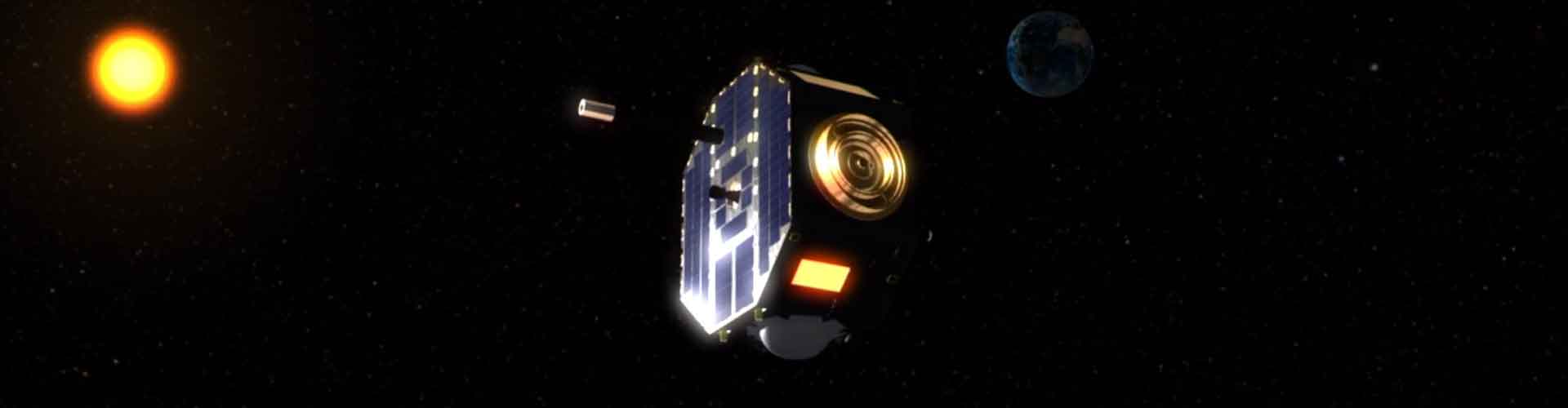 Interstellar Boundary Explorer (NASA Satellite)
 Juno (NASA Spacecraft)
 IRIS (NASA Satellite)
 VERITAS (NASA Spacecraft)
 Parker Solar Probe (NASA spacecraft)
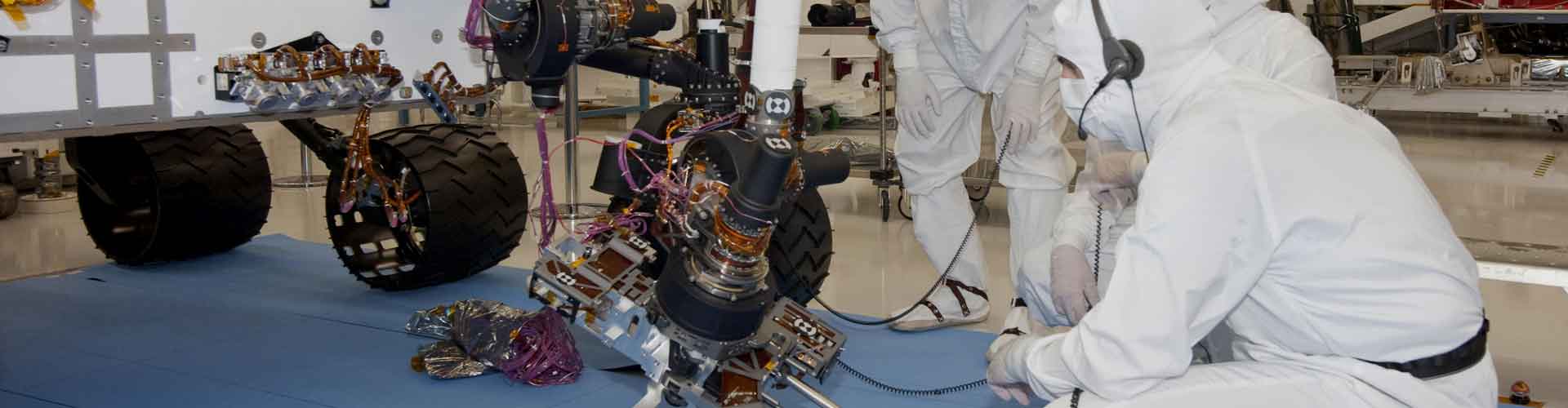 NASA JET PROPULSION LABORATORY
 DAWN (NASA SPACECRAFT)
 NASA
 Mars Reconnaissance Orbiter (NASA Spacecraft)
 Psyche (NASA Spacecraft)
 UAHiRISE (NASA MRO)
 CURIOSITY (NASA ROVER)
 DAVINCI+ (NASA Probe)
 NEW HORIZONS (NASA SPACECRAFT)
 NEO Surveyor (NASA Spacecraft)
 HUYGENS (ESA/NASA CASSINI PROBE)
 DART (NASA Spacecraft)




