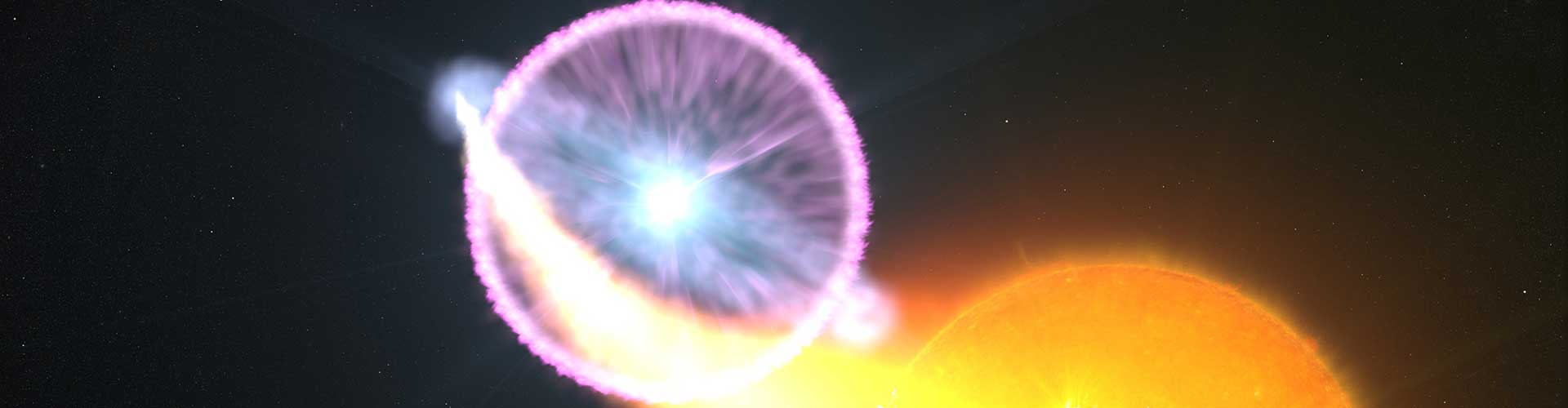
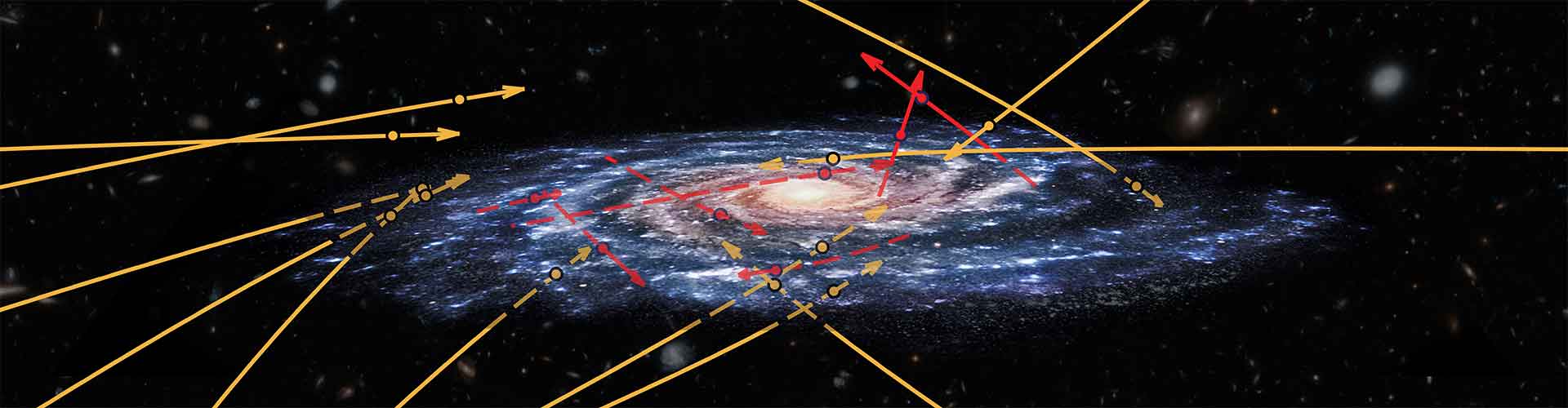
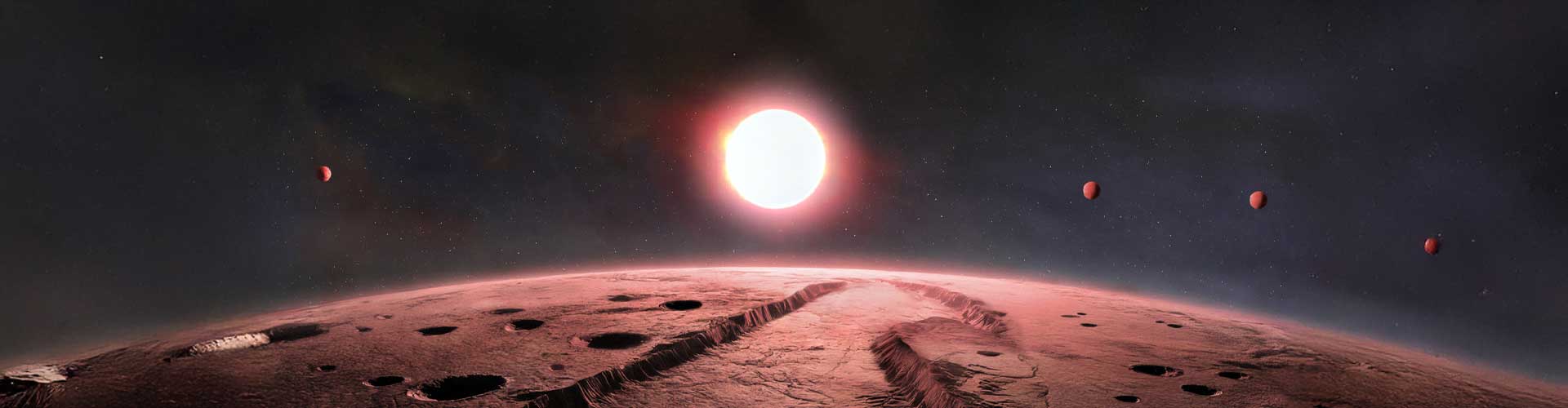
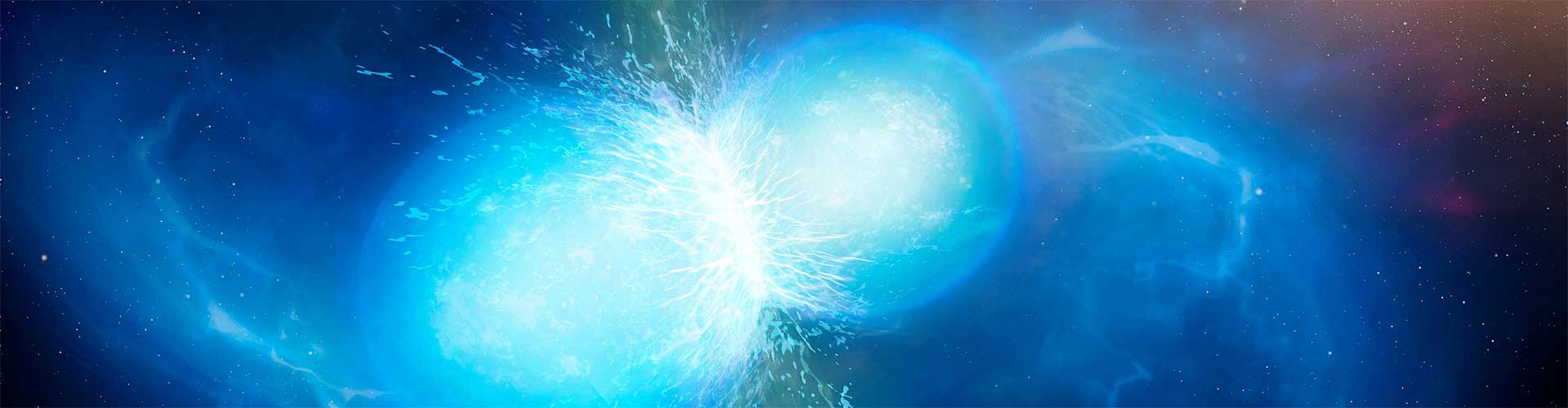
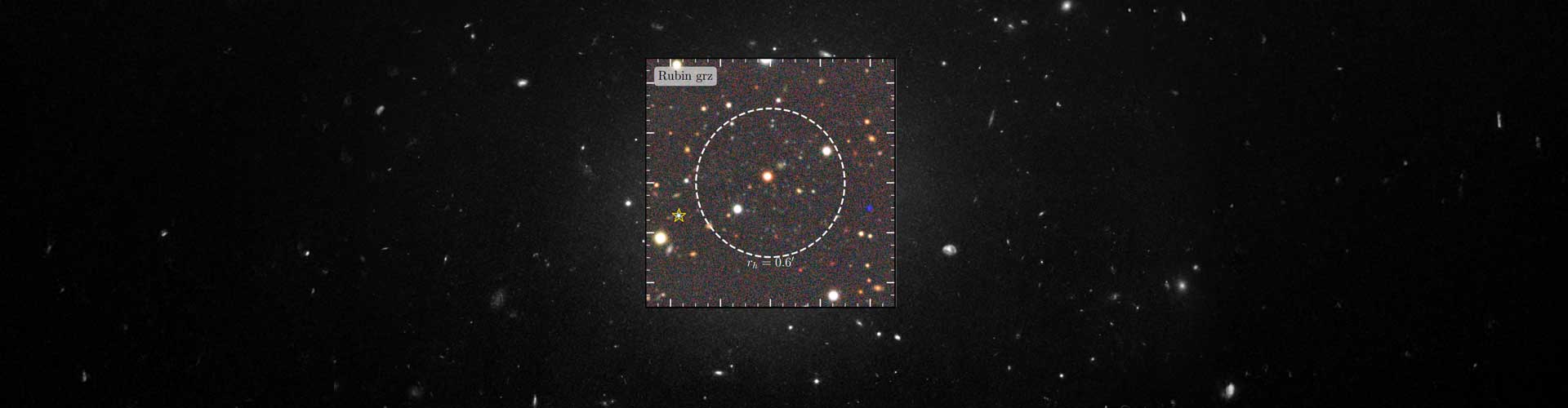
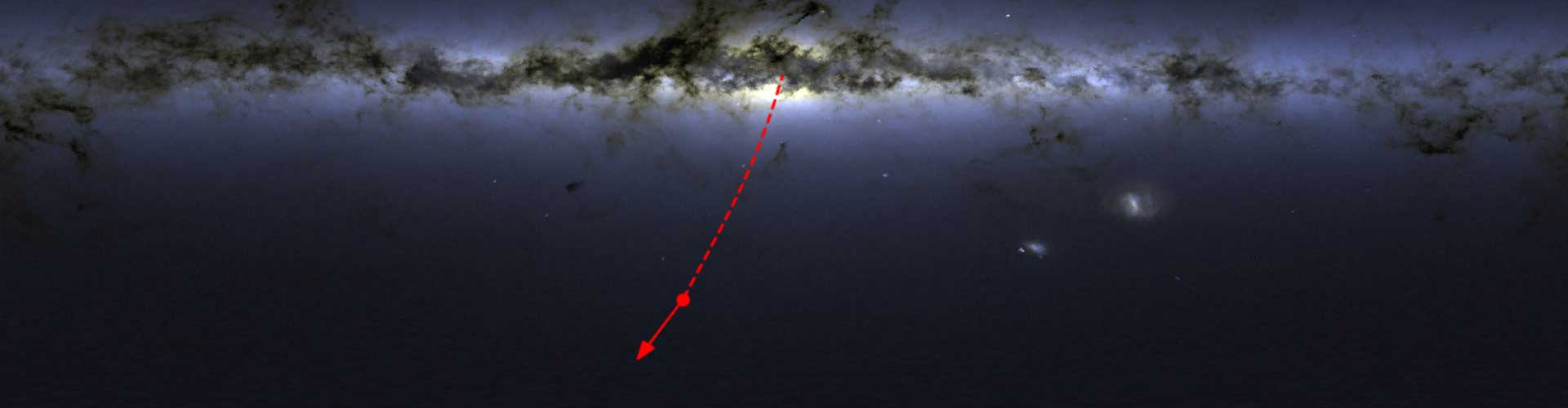
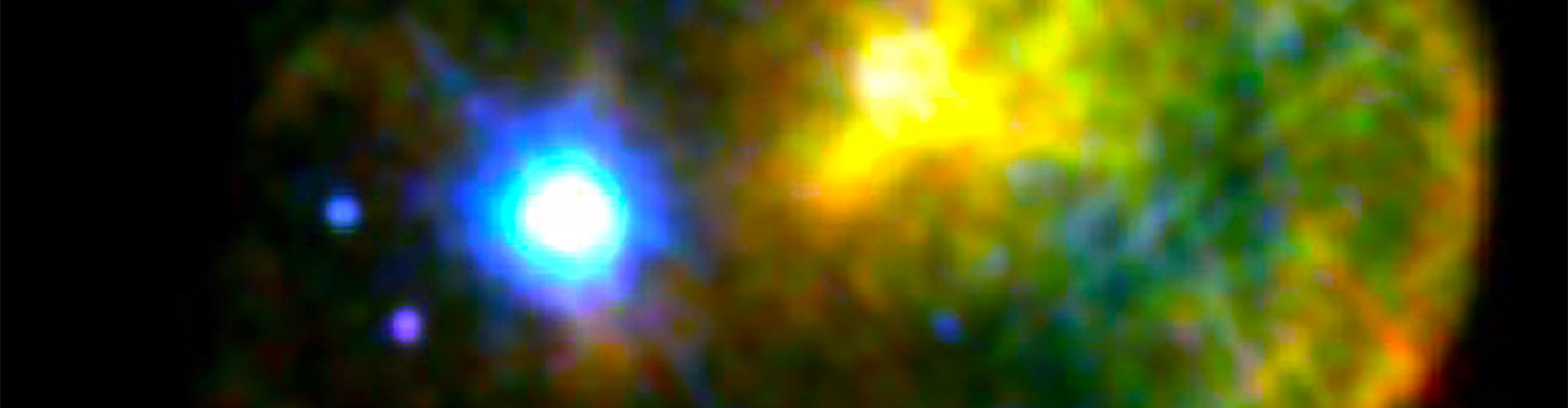
A white dwarf, also called a degenerate dwarf, is a stellar core remnant composed mostly of electron-degenerate matter. A white dwarf is very dense: its mass is comparable to that of the Sun, while its volume is comparable to that of Earth. Image credit: NASA’s Goddard Space Flight Center/S. Wiessinger
Related channels: NOVAE, STARS, THE SUN, PULSARS, QUASARS, NEUTRON STARS, BROWN DWARFS
Latest White Dwarfs news


The White Dwarf Spinning So Fast It Defies Physics
Support this channel on Patreon to help me make this a full time job: https://www.patreon.com/whatdamath (Unreleased videos, extra footage, DMs, no ads)
Alternatively, PayPal donations can be sent here: http://paypal.me/whatdamath
Get a Wonderful Person Tee: Amazon: https://amzn.to/3QFIrFX
Hello and welcome! My name is Anton and in this video, we will talk about a white dwarf "propeller"
Links:
https://arxiv.org/pdf/2610.10689
https://www.physics.ox.ac.uk/news/white-dwarf-pulsar-discovery-sheds-light-star-evolution
Green stars: https://www.youtube.com/watch?v=D-oQGDzmS5A
2nd generation planets: https://youtu.be/1oiRbXeEpKY
#whitedwarf #astronomy #science
0:00 Bizarre white dwarfs
1:25 Magnetic white dwarf propeller
5:15 How this probably formed
6:25 Colored white dwarfs
7:25 White dwarf pulsars
9:35 Hidden white dwarfs
10:30 Planets
11:10 Implications
Enjoy and please subscribe
Bitcoin/Ethereum to spare? Donate them here to help this channel grow!
bc1qnkl3nk0zt7w0xzrgur9pnkcduj7a3xxllcn7d4
or ETH: 0x60f088B10b03115405d313f964BeA93eF0Bd3DbF
The hardware used to record these videos:
New Camera: https://amzn.to/4pCVINS
CPU: https://amzn.to/4qXIaxC
Video Card: https://amzn.to/2M1W26C
Motherboard: https://amzn.to/2JYGiQQ
RAM: https://amzn.to/2Mwy2t4
PSU: https://amzn.to/2LZcrIH
Case: https://amzn.to/2MwJZz4
Microphone: https://amzn.to/2t5jTv0
Mixer: https://amzn.to/2JOL0oF
Recording and Editing: https://amzn.to/2LX6uvU
Some of the above are affiliate links, meaning I would get a (very small) percentage of the price paid.
Thank you to all Patreon supporters of this channel
Special thanks also goes to all the wonderful supporters of the channel through YouTube Memberships
Credit:
Mark Garlick www.markgarlick.com
Licenses used:
https://creativecommons.org/licenses/by/4.0/
and relevant Creative Commons licenses
Every Type Of Star Explained in 10 minutes
In this video I cover every type of star, from red dwarfs that burn for trillions of years to blue supergiants that die in a few million, neutron stars dense enough that a teaspoon weighs six billion tonnes, magnetars with magnetic fields strong enough to wipe every credit card on Earth from halfway to the moon, and finally black holes and the hypothetical quark star that might exist between neutron stars and total collapse.
More space videos → https://www.youtube.com/watch?v=GHBDYgjX_Lc&list=PLgVMYQ8bgdj4q741CEJ1yTANAgFGsvWUl&pp=sAgC
⏱ Chapters:
0:00 Red Dwarf
0:36 Orange Dwarf
1:08 Yellow Dwarf
1:46 White Dwarf
2:24 Blue Dwarf
2:45 Brown Dwarf
3:26 Subdwarf
3:51 Blue Giant
4:22 Red Giant
5:01 Blue Supergiant
5:40 Red Supergiant
6:19 Hypergiant
6:59 Wolf-Rayet Star
7:35 Neutron Star
8:14 Pulsar
8:54 Magnetar
9:31 Black Hole
10:10 Quark Star
For business inquiries: [email protected]
— DISCLAIMER —
This video is made for entertainment and educational purposes. Some details have been simplified to keep things accessible and certain points may not be perfectly accurate. The goal is to spark your curiosity, not replace proper research.
White Dwarfs Form Exceptional Habitable Conditions for Exoplanets
Get a Wonderful Person Tee: https://teespring.com/stores/whatdamath
More cool designs are on Amazon: https://amzn.to/3QFIrFX
Alternatively, PayPal donations can be sent here: http://paypal.me/whatdamath
Hello and welcome! My name is Anton and in this video, we will talk about habitable white dwarfs
Links:
https://arxiv.org/abs/2501.06613
https://iopscience.iop.org/article/10.3847/2041-8213/ad2348
https://arxiv.org/abs/2411.18934
https://academic.oup.com/mnras/article/511/2/1647/6524236?login=false
https://academic.oup.com/mnras/article/530/1/117/7642259
https://iopscience.iop.org/article/10.3847/1538-4357/ad9827
#whitedwarf #habitable #exoplanet
0:00 Habitable white dwarfs?
0:30 Evolution of stars in the Milky Way
1:40 Polluted white dwarfs
2:20 White dwarf collisions
3:35 Planets around white dwarfs
4:30 How habitable zone would work here
5:30 Special case of white dwarfs known as Q branch stars
7:20 What this means
8:40 Conclusions
Support this channel on Patreon to help me make this a full time job:
https://www.patreon.com/whatdamath
Bitcoin/Ethereum to spare? Donate them here to help this channel grow!
bc1qnkl3nk0zt7w0xzrgur9pnkcduj7a3xxllcn7d4
or ETH: 0x60f088B10b03115405d313f964BeA93eF0Bd3DbF
Space Engine is available for free here: http://spaceengine.org
Enjoy and please subscribe.
Twitter: https://twitter.com/WhatDaMath
Facebook: https://www.facebook.com/whatdamath
Twitch: http://www.twitch.tv/whatdamath
The hardware used to record these videos:
New Camera: https://amzn.to/34DUUlv
CPU: https://amzn.to/2LZFQCJ
Video Card: https://amzn.to/2M1W26C
Motherboard: https://amzn.to/2JYGiQQ
RAM: https://amzn.to/2Mwy2t4
PSU: https://amzn.to/2LZcrIH
Case: https://amzn.to/2MwJZz4
Microphone: https://amzn.to/2t5jTv0
Mixer: https://amzn.to/2JOL0oF
Recording and Editing: https://amzn.to/2LX6uvU
Some of the above are affiliate links, meaning I would get a (very small) percentage of the price paid.
Thank you to all Patreon supporters of this channel
Special thanks also goes to all the wonderful supporters of the channel through YouTube Memberships
Credit:
Roberto Molar Candanosa/Johns Hopkins University.
Mark A. Garlick www.markgarlick.com
Licenses used:
https://creativecommons.org/licenses/by/4.0/
https://creativecommons.org/licenses/by-sa/4.0/
https://creativecommons.org/licenses/by/3.0/
https://creativecommons.org/licenses/by-sa/3.0/
https://creativecommons.org/licenses/by/2.5/
https://creativecommons.org/licenses/by-sa/2.5/
https://creativecommons.org/licenses/by/2.0/
https://creativecommons.org/licenses/by-sa/2.0/
Some Stars That Appear Older Than the Universe Explained In a New Study
Good telescope that I've used to learn the basics: https://amzn.to/35r1jAk
Get a Wonderful Person shirt: https://teespring.com/stores/whatdamath
Alternatively, PayPal donations can be sent here: http://paypal.me/whatdamath
Hello and welcome! My name is Anton and in this video, we will talk about a new study about white dwarfs and why some appear extremely low in mass and thus very old
Links:
https://arxiv.org/pdf/2108.04255.pdf
https://www.ztf.caltech.edu/
https://en.wikipedia.org/wiki/Cataclysmic_variable_star
Support this channel on Patreon to help me make this a full time job:
https://www.patreon.com/whatdamath
Bitcoin/Ethereum to spare? Donate them here to help this channel grow!
bc1qnkl3nk0zt7w0xzrgur9pnkcduj7a3xxllcn7d4
or ETH: 0x60f088B10b03115405d313f964BeA93eF0Bd3DbF
Space Engine is available for free here: http://spaceengine.org
Enjoy and please subscribe.
Twitter: https://twitter.com/WhatDaMath
Facebook: https://www.facebook.com/whatdamath
Twitch: http://www.twitch.tv/whatdamath
The hardware used to record these videos:
New Camera: https://amzn.to/34DUUlv
CPU: https://amzn.to/2LZFQCJ
Video Card: https://amzn.to/2M1W26C
Motherboard: https://amzn.to/2JYGiQQ
RAM: https://amzn.to/2Mwy2t4
PSU: https://amzn.to/2LZcrIH
Case: https://amzn.to/2MwJZz4
Microphone: https://amzn.to/2t5jTv0
Mixer: https://amzn.to/2JOL0oF
Recording and Editing: https://amzn.to/2LX6uvU
Some of the above are affiliate links, meaning I would get a (very small) percentage of the price paid.
Thank you to all Patreon supporters of this channel
Special thanks also goes to all the wonderful supporters of the channel through YouTube Memberships:
Tybie Fitzhugh
Viktor Óriás
Les Heifner
theGrga
Steven Cincotta
Mitchell McCowan
Partially Engineered Humanoid
Alexander Falk
Drew Hart
Arie Verhoeff
Aaron Smyth
Mike Davis
Greg Testroet
John Taylor
EXcitedJoyousWorldly !
Christopher Ellard
Gregory Shore
maggie obrien
Matt Showalter
Tamara Franz
R Schaefer
diffuselogic
Grundle Muffins
Images/Videos:
M.Weiss/Center for Astrophysics | Harvard & Smithsonian
http://NOIRLab/NSF/AURA/J. da Silva Image processing: M. Zamani and M. Kosari (NSF's NOIRLab) CC BY 4.0 https://en.wikipedia.org/wiki/White_dwarf#/media/File:Illustration_of_Rocky_Debris_around_a_White_Dwarf.jpg
Mark Garlick, https://www.youtube.com/watch?v=rlMK4HmN7IM
https://www.youtube.com/watch?v=774B8-9B4Ow
Licenses used:
https://creativecommons.org/licenses/by/4.0/
https://creativecommons.org/licenses/by-sa/4.0/
https://creativecommons.org/licenses/by/3.0/
https://creativecommons.org/licenses/by-sa/3.0/
https://creativecommons.org/licenses/by/2.5/
https://creativecommons.org/licenses/by-sa/2.5/
https://creativecommons.org/licenses/by/2.0/
https://creativecommons.org/licenses/by-sa/2.0/
For Some Unknown Reason a White Dwarf Turns On/Off Every 30 Minutes
Good telescope that I've used to learn the basics: https://amzn.to/35r1jAk
Get a Wonderful Person shirt: https://teespring.com/stores/whatdamath
Alternatively, PayPal donations can be sent here: http://paypal.me/whatdamath
Hello and welcome! My name is Anton and in this video, we will talk about an unusual white dwarf here in the Milky Way that seems to turn on and off regularly and for unknown reasons
Links: https://arxiv.org/pdf/2110.09124.pdf
https://en.wikipedia.org/wiki/Cataclysmic_variable_star
Support this channel on Patreon to help me make this a full time job:
https://www.patreon.com/whatdamath
Bitcoin/Ethereum to spare? Donate them here to help this channel grow!
bc1qnkl3nk0zt7w0xzrgur9pnkcduj7a3xxllcn7d4
or ETH: 0x60f088B10b03115405d313f964BeA93eF0Bd3DbF
Space Engine is available for free here: http://spaceengine.org
Enjoy and please subscribe.
Twitter: https://twitter.com/WhatDaMath
Facebook: https://www.facebook.com/whatdamath
Twitch: http://www.twitch.tv/whatdamath
The hardware used to record these videos:
New Camera: https://amzn.to/34DUUlv
CPU: https://amzn.to/2LZFQCJ
Video Card: https://amzn.to/2M1W26C
Motherboard: https://amzn.to/2JYGiQQ
RAM: https://amzn.to/2Mwy2t4
PSU: https://amzn.to/2LZcrIH
Case: https://amzn.to/2MwJZz4
Microphone: https://amzn.to/2t5jTv0
Mixer: https://amzn.to/2JOL0oF
Recording and Editing: https://amzn.to/2LX6uvU
Some of the above are affiliate links, meaning I would get a (very small) percentage of the price paid.
Thank you to all Patreon supporters of this channel
Special thanks also goes to all the wonderful supporters of the channel through YouTube Memberships:
Tybie Fitzhugh
Viktor Óriás
Les Heifner
theGrga
Steven Cincotta
Mitchell McCowan
Partially Engineered Humanoid
Alexander Falk
Drew Hart
Arie Verhoeff
Aaron Smyth
Mike Davis
Greg Testroet
John Taylor
EXcitedJoyousWorldly !
Christopher Ellard
Gregory Shore
maggie obrien
Matt Showalter
Tamara Franz
R Schaefer
diffuselogic
Grundle Muffins
Images/Videos:
NASA/CXC/M.Weiss https://www.nasa.gov/mission_pages/chandra/images/double-trouble-a-white-dwarf-surprises-astronomers.html
Helena Uthas
Simone Scaringi
NASA, https://www.youtube.com/watch?v=UNPj7e6XJCQ
NASA/JPL-Caltech
ESA/Hubble & NASA, B. Nisini
Licenses used:
https://creativecommons.org/licenses/by/4.0/
https://creativecommons.org/licenses/by-sa/4.0/
https://creativecommons.org/licenses/by/3.0/
https://creativecommons.org/licenses/by-sa/3.0/
https://creativecommons.org/licenses/by/2.5/
https://creativecommons.org/licenses/by-sa/2.5/
https://creativecommons.org/licenses/by/2.0/
https://creativecommons.org/licenses/by-sa/2.0/
Fastest Spinning White Dwarf Ever Found Surprised The Scientists
Good telescope that I've used to learn the basics: https://amzn.to/35r1jAk
Get a Wonderful Person shirt: https://teespring.com/stores/whatdamath
Alternatively, PayPal donations can be sent here: http://paypal.me/whatdamath
Hello and welcome! My name is Anton and in this video, we will talk about the discovery of a new record holder: the fastest spinning white dwarf in the universe.
Links:
https://arxiv.org/abs/2108.11396
https://arxiv.org/pdf/2109.12707.pdf
Support this channel on Patreon to help me make this a full time job:
https://www.patreon.com/whatdamath
Bitcoin/Ethereum to spare? Donate them here to help this channel grow!
bc1qnkl3nk0zt7w0xzrgur9pnkcduj7a3xxllcn7d4
or ETH: 0x60f088B10b03115405d313f964BeA93eF0Bd3DbF
Space Engine is available for free here: http://spaceengine.org
Enjoy and please subscribe.
Twitter: https://twitter.com/WhatDaMath
Facebook: https://www.facebook.com/whatdamath
Twitch: http://www.twitch.tv/whatdamath
The hardware used to record these videos:
New Camera: https://amzn.to/34DUUlv
CPU: https://amzn.to/2LZFQCJ
Video Card: https://amzn.to/2M1W26C
Motherboard: https://amzn.to/2JYGiQQ
RAM: https://amzn.to/2Mwy2t4
PSU: https://amzn.to/2LZcrIH
Case: https://amzn.to/2MwJZz4
Microphone: https://amzn.to/2t5jTv0
Mixer: https://amzn.to/2JOL0oF
Recording and Editing: https://amzn.to/2LX6uvU
Some of the above are affiliate links, meaning I would get a (very small) percentage of the price paid.
Thank you to all Patreon supporters of this channel
Special thanks also goes to all the wonderful supporters of the channel through YouTube Memberships:
Tybie Fitzhugh
Viktor Óriás
Les Heifner
theGrga
Steven Cincotta
Mitchell McCowan
Partially Engineered Humanoid
Alexander Falk
Drew Hart
Arie Verhoeff
Aaron Smyth
Mike Davis
Greg Testroet
John Taylor
EXcitedJoyousWorldly !
Christopher Ellard
Gregory Shore
maggie obrien
Matt Showalter
Tamara Franz
R Schaefer
diffuselogic
Grundle Muffins
Images/Videos:
Mark Garlick (www.markgarlick.com) and University of Warwick/ESO CC BY 4.0 https://www.youtube.com/watch?v=0rQ0iyosWmI
http://eso/L.%20Cal%C3%A7ada%20CC%20BY%204.0%20https://www.youtube.com/watch?v=PtXf5MYsqpE
NASA's Goddard Space Flight Center CC BY 4.0 https://www.youtube.com/watch?v=Et5YoYaKa1U
W. M. Keck Observatory/Adam Makarenko CC BY 4.0 https://www.youtube.com/watch?v=eTO7be2ZbQE
NASA Goddard/NASA-JPL
Giuseppe Parisi https://keckobservatory.org/massive-white-dwarf/ https://giuparisi.com/a-white-dwarf-living-on-the-edge
http://eso/L.%20Cal%C3%A7ada%20CC%20BY%204.0%20https://www.youtube.com/watch?v=m1Wl_UtTEj0
NASA https://imagine.gsfc.nasa.gov/science/objects/cataclysmic_variables.html
Philip D. Hall CC BY-SA 4.0 https://en.wikipedia.org/wiki/Cataclysmic_variable_star#/media/File:Cataclysmic_variable.svg
NASA, ESA, and G. Bacon (STScI)
Licenses used:
https://creativecommons.org/licenses/by/4.0/
https://creativecommons.org/licenses/by-sa/4.0/
https://creativecommons.org/licenses/by/3.0/
https://creativecommons.org/licenses/by-sa/3.0/
https://creativecommons.org/licenses/by/2.5/
https://creativecommons.org/licenses/by-sa/2.5/
https://creativecommons.org/licenses/by/2.0/
https://creativecommons.org/licenses/by-sa/2.0/
White dwarfs
White dwarfs represent the final evolutionary state of most stars in the universe. The Sun itself is destined to become one.
My other YouTube channels:
The Science Fiction Rock Experience ( the music show I produce):
https://www.youtube.com/@ScienceFictionRockExperience
Discover Maths (with Juan Medina):
https://www.youtube.com/@discovermaths
Science World (with Emrah Polat):
https://www.youtube.com/@ScienceWorld1
My website: https://www.daviddarling.info
Music: https://www.purple-planet.com
Smallest Yet Most Massive White Dwarf Ever Found Surprised Scientists
Good telescope that I've used to learn the basics: https://amzn.to/35r1jAk
Get a Wonderful Person shirt: https://teespring.com/stores/whatdamath
Alternatively, PayPal donations can be sent here: http://paypal.me/whatdamath
Hello and welcome! My name is Anton and in this video, we will talk about a discovery of a strangest and smallest white dwarf to date.
Paper: https://authors.library.caltech.edu/108632/5/v1_stamped.pdf
https://www.nature.com/articles/s41586-021-03615-y
Support this channel on Patreon to help me make this a full time job:
https://www.patreon.com/whatdamath
Bitcoin/Ethereum to spare? Donate them here to help this channel grow!
bc1qnkl3nk0zt7w0xzrgur9pnkcduj7a3xxllcn7d4
or ETH: 0x60f088B10b03115405d313f964BeA93eF0Bd3DbF
Space Engine is available for free here: http://spaceengine.org
Enjoy and please subscribe.
Twitter: https://twitter.com/WhatDaMath
Facebook: https://www.facebook.com/whatdamath
Twitch: http://www.twitch.tv/whatdamath
The hardware used to record these videos:
New Camera: https://amzn.to/34DUUlv
CPU: https://amzn.to/2LZFQCJ
Video Card: https://amzn.to/2M1W26C
Motherboard: https://amzn.to/2JYGiQQ
RAM: https://amzn.to/2Mwy2t4
PSU: https://amzn.to/2LZcrIH
Case: https://amzn.to/2MwJZz4
Microphone: https://amzn.to/2t5jTv0
Mixer: https://amzn.to/2JOL0oF
Recording and Editing: https://amzn.to/2LX6uvU
Some of the above are affiliate links, meaning I would get a (very small) percentage of the price paid.
Thank you to all Patreon supporters of this channel
Special thanks also goes to all the wonderful supporters of the channel through YouTube Memberships:
Tybie Fitzhugh
Viktor Óriás
Les Heifner
theGrga
Steven Cincotta
Mitchell McCowan
Partially Engineered Humanoid
Alexander Falk
Drew Hart
Arie Verhoeff
Aaron Smyth
Mike Davis
Greg Testroet
John Taylor
EXcitedJoyousWorldly !
Christopher Ellard
Gregory Shore
maggie obrien
Matt Showalter
Tamara Franz
R Schaefer
diffuselogic
Grundle Muffins
Images/Videos:
Giuseppe Parisi, https://caltech-prod.s3.amazonaws.com/main/images/ZTF_nature_whitedwarf_vs_moon-05-WEB.max-1400x800.jpg
NASA and G. Bacon (STScI) , https://commons.wikimedia.org/wiki/File:White_Dwarf_Ages.ogv
Licenses used:
https://creativecommons.org/licenses/by/4.0/
https://creativecommons.org/licenses/by-sa/4.0/
https://creativecommons.org/licenses/by/3.0/
https://creativecommons.org/licenses/by-sa/3.0/
https://creativecommons.org/licenses/by/2.5/
https://creativecommons.org/licenses/by-sa/2.5/
https://creativecommons.org/licenses/by/2.0/
https://creativecommons.org/licenses/by-sa/2.0/
Stellar explosion you can see with your own eyes
All you need is a small backyard telescope or a pair of binoculars, dark clear skies away from a city, and you can see this new nova. But it won't be visible for long! Japanese amateur astronomer, Yuji Nakamura discovered V1405 Cas on March 18. Its coordinates are; right ascension 23 24 47.73, declination +61 11 14.8. Happy viewing!
Learn more:
NOVA https://www.spacetv.net/nova/
WHITE DWARFS https://www.spacetv.net/white-dwarfs/
STARS https://www.spacetv.net/stars/
AMATEUR ASTRONOMY https://www.spacetv.net/amateur-astronomy/
Written and hosted by Cambrie Caldwell
https://twitter.com/CambrieCaldwell
Sources:
https://www.sciencealert.com/a-star-just-exploded-near-cassiopeia
https://www.sciencetimes.com/articles/30277/20210324/cassiopeia-astronomer-captures-brightest-nova-explosion-yet.htm
https://www.nao.ac.jp/en/news/topics/2021/20210319-nova.html
https://www.vice.com/en/article/m7a873/theres-a-new-exploding-star-in-the-sky
Follow SPACETV on Twitter https://twitter.com/SPACETVnet
Join us on Facebook https://www.facebook.com/spacetv.net
We're now on Tiktok https://www.tiktok.com/@spacetvnet
Credits:
NASA's Goddard Space Flight Center/Chris Smith (USRA)
NASA/JPL-Caltech/NASA's Goddard Space Flight Center
European Southern Observatory (ESO)
European Space Agency (ESA)
Northwestern University Academic & Research Technologies/Matthew McCrory
Dom Le Roy
Dmitry Varennikov
Roy U Ivonne
Thumbnail image credit:
NASA's Goddard Space Flight Center/S. Wiessinger https://svs.gsfc.nasa.gov/11608
SPACETV.NET 2021
What are White Dwarfs? - Ask a Spaceman!
Full podcast episodes: http://www.askaspaceman.com
Support: http://www.patreon.com/pmsutter
Follow: http://www.twitter.com/PaulMattSutter and http://www.facebook.com/PaulMattSutter
It’s time for school! The Astro101 series will cover some of the most important questions in astronomy. In today’s lesson, we’ll have: What is a white dwarf? What is a neutron star? What is a black hole? I discuss these questions and more in today’s Ask a Spaceman!
Follow all the show updates at http://www.askaspaceman.com, and help support the show at http://www.patreon.com/pmsutter
Keep those questions about space, science, astronomy, astrophysics, and cosmology coming to #AskASpaceman for COMPLETE KNOWLEDGE OF TIME AND SPACE! Music by Jason Grady and Nick Bain.
These White Dwarfs Orbit Around One Another in 8 Minutes
You can buy Universe Sandbox 2 here: http://amzn.to/2yJqwU6
Or get a shirt: https://teespring.com/stores/whatdamath
Hello and welcome! My name is Anton and in this video, we will talk about a strange white dwarf binary with stars orbiting around one another in 8 minutes.
Paper: https://arxiv.org/pdf/2010.03555.pdf
Support this channel on Patreon to help me make this a full time job:
https://www.patreon.com/whatdamath
Alternatively, PayPal donations can be sent here: paypal.me/whatdamath
Space Engine is available for free here: http://spaceengine.org
Enjoy and please subscribe.
Twitter: https://twitter.com/WhatDaMath
Facebook: https://www.facebook.com/whatdamath
Twitch: http://www.twitch.tv/whatdamath
Bitcoins to spare? Donate them here to help this channel grow!
1GFiTKxWyEjAjZv4vsNtWTUmL53HgXBuvu
The hardware used to record these videos:
CPU: https://amzn.to/2LZFQCJ
Video Card: https://amzn.to/2M1W26C
Motherboard: https://amzn.to/2JYGiQQ
RAM: https://amzn.to/2Mwy2t4
PSU: https://amzn.to/2LZcrIH
Case: https://amzn.to/2MwJZz4
Microphone: https://amzn.to/2t5jTv0
Mixer: https://amzn.to/2JOL0oF
Recording and Editing: https://amzn.to/2LX6uvU
Some of the above are affiliate links, meaning I would get a (very small) percentage of the price paid.
Thank you to all Patreon supporters of this channel
Specifically, great thanks to the following members:
Morrison Waud
Vlad Manshin
Mark Teranishi
TheHuntress
Ralph Spataro
Albert B. Cannon
Lilith Dawn
Greg Lambros
adam lee
Gabriel Seiffert
Henry Spadoni
J Carter
Jer
Silver surfer
Konrad Kummli
Nick Dolgy
UnexpectedBooks.com
Mario Rahmani
George Williams
Shinne
Jakub Glos
Johann Goergen
Jake Salo
LS Greger
Lyndon Riley
Lauren Smith
Michael Tiganila
Russell Sears
Vinod sethi
Dave Blair
Robert Wyssbrod
Randal Masutani
Michael Mitsuda
Assaf Dar Sagol
Liam Moss
Timothy Welter MD
Barnard Rabenold
Gordon Cooper
Tracy Burgess
Douglas Burns
Jayjay Volz
Anataine Deva
Kai Raphahn
Sander Stols
Bodo Graßmann
Daniel Charles Smith
Daniel G.
Eugene Sandulenko
gary steelman
Max McNally
Michael Koebel
Sergio Ruelas
Steven Aiello
Victor Julian Castillo
xyndicate
Honey Suzanne Lyons
Olegas Budnik
Dale Andrew Darling
Niji
Peter Hamrak
Matthew Lazear
Alexander Afanasyev
Anton Newman
Anton Reed
What Are White Dwarf Stars?
White dwarfs are basically the burned-out cores of stars. When a red giant expels most of its outer material it becomes a planetary nebula and what remains is the core of the star which becomes a very hot white dwarf with a temperature over 100,000 Kelvin.
SUBSCRIBE ► https://goo.gl/PLLFPz
----
Website ► cosmoknowledge.com
Facebook ► https://facebook.com/cosmoknowledgee
Instagram ► https://www.instagram.com/itscosmoknowledge
Twitter ► https://www.twitter.com/cosmoknowledge
Narrator:
Russell Archey
https://www.ravonmedia.com/
Credits & Graphics:
NASA, ESA, and K. Noll (STScI)
Space Engine
Music:
Outer Space Revelations - Miles Avida
-
Cosmoknowledge brings news from space.
We love you, explorers!
White Dwarf Stars And Black Dwarf Stars: The Last Stage Before Darkness!
White Dwarf Stars And Black Dwarf Stars
From what they are, to whether our sun will become like them one day, join me as I show you white and black dwarf stars!
Subscribe for more videos:https://www.youtube.com/c/InsaneCuriosity?sub_confirmation=1?
There are MANY stars in the universe, that's part of the reason why the universe is so special. There are stars of massive sizes, there are ones that are massive and yet don't shine brightly, or ones that are so small that they can't be seen outside of a certain distance. This variety makes our universe even more special as a whole.
White Dwarfs are also known "degenerate dwarfs", and that's because they are a stellar core remnant that is made up of highly dense matter of an electron-degenerate variety. In short, the star is one that is very small, and yet very dense in terms of its makeup. A great way of thinking about it is that a White Dwarf can have the size of our planet, but its mass is more equivalent to that of our own sun. And if you didn't know, you could fit 1.3 MILLION of our Earths into the sun. So imagine having that much mass in something the size of the Earth. That's one of the major reasons why White Dwarfs are so special.
Here's the rub though, despite having all of that mass and energy, a White Dwarf honestly doesn't shine that brightly. This is because unlike most other stars in the universe, it doesn't have any nuclear fusion going on within itself (our own sun does this for the record). Instead, the light it produces is Thermal Energy built up from the stores of it from within the core.
What might surprise you though is that while there are only said to be about 8 White Dwarf stars within the hundred star systems nearest our own sun...many believe that the White Dwarf is the "final fate" of many dying stars. Specifically, "White dwarfs are thought to be the final evolutionary state of stars whose mass is not high enough to become a neutron star."
If you're curious, that definition would apply to about 97% of the stars in the Milky Way Galaxy! Which means that having that many White Dwarf stars would cause some serious problems down the road, but that's something we'll get into a bit later. It should be noted though that one of the 8 White Dwarf stars we know about is only 8.6 light years away at SIrius B. Which is one of the main reasons we even known about it at all.
So how does something like our own sun go from being like that to a White Dwarf? Well it's not an instant thing if that's what you're wondering. It's very much a thing of "phases."
"After the hydrogen-fusing period of a main-sequence star of low or medium mass ends, such a star will expand to a red giant during which it fuses helium to carbon and oxygen in its core by the triple-alpha process. If a red giant has insufficient mass to generate the core temperatures required to fuse carbon (around 1 billion K), an inert mass of carbon and oxygen will build up at its center. After such a star sheds its outer layers and forms a planetary nebula, it will leave behind a core, which is the remnant white dwarf.
So as you can see, this is something that takes billions of years to complete, and considering our sun (which is a Yellow Dwarf star if you recall) has likely a couple billion years before it goes into the Red Giant phase of its life (which will eradicate the Earth, Mars and many other things until it gets WAY closer to Jupiter), we'll be fine, and thus we won't get to see a White Dwarf in our lifetime. That's not to say that other star systems won't get to see it happening sooner, and it's possible if we find the right star that we could watch a White Dwarf being born...theoretically of course.
Speaking of theoretically...let's dive into the other side of the spectrum...the Black Dwarf stars because this may not be exactly what you're thinking it is.
Before we dive into that Black Star topic and such, be sure to like our video and subscribe to the channel! That way you don't miss ANY of our weekly videos!
Ok, so what exactly is a Black Dwarf Star? To answer that, we actually have to go back to the White Dwarf star, don't worry though...it won't be that long though. You see, because of the fact that White Stars don't do nuclear fusion to maintain its heat and shine, and thus relies on stored Thermal Energy, that means that eventually...they're going to run out of power.
In this case, they gradually cool over time. Granted, because of the density of White Dwarfs that's a long, LONG, time, but when they do, their surfaces will start to crystalize until eventually...they're a Black Dwarf star...theoretically.
Video Chapters:
00:00 Introduction
00:16 Understanding White Dwarfs
02:24 Evolution of White Dwarf Stars
04:15 Characteristics of Black Dwarf Stars
05:57 Theoretical Existence and Predictions
07:30 Impact on the Universe
09:10 Future Observations and Studies
#insanecuriosity #whitedwarf #star
What Are White Dwarf Stars?
White dwarfs are a type of stellar corpse, the mass left over when fusion stops in a star. They would collapse on themselves under gravity if it wasn't for quantum mechanics, the Pauli exclusion principle, and electron degeneracy pressure. Here's how they work.
________________________________
VIDEO ANNOTATIONS/CARDS
What are Black Holes?
http://youtu.be/ACCeFVeT984
Nuclear Fusion Explained:
https://youtu.be/LKUPAk5049M
Crookes Radiometer:
https://youtu.be/Li_nmKw4Buc
Periodic Table Explained:
https://youtu.be/r40g-lurgHI
________________________________
RELATED YOUTUBE VIDEOS
Kurz Gesagt on White Dwarfs:
https://youtu.be/qsN1LglrX9s
Crash Course on White Dwarfs:
https://youtu.be/Mj06h8BeeOA
Socratica on White Dwarfs:
https://youtu.be/ITD8s-bLXSk
________________________________
HUGE THANK YOU TO THESE PATRONS
** Clint Cloys, Rick Finn, Nikko Lai, Evgeny, Preston From, Christian McCracken **
________________________________
SUPPORT THE SCIENCE ASYLUM
Patreon:
http://www.patreon.com/ScienceAsylum
Advanced Theoretical Physics (eBook):
https://gumroad.com/l/ubSc
Merchandise:
https://www.scienceasylum.com
________________________________
OTHER SOURCES
Chandrasekhar 1931 Papers:
http://adsabs.harvard.edu/abs/1931ApJ....74...81C
http://adsabs.harvard.edu/abs/1994JApA...15..105C
Red Dwarf Stats:
http://www.astrobio.net/alien-life/red-dwarf-stars-might-best-places-discover-alien-life/
________________________________
LINKS TO COMMENTS
qbslug - Featured Comment:
https://www.youtube.com/watch?v=r40g-lurgHI&lc=z12gudlj4mazwpbzk04cctnxsz3fgtlx40k
________________________________
IMAGE CREDITS
NASA Big Bang Animation:
https://youtu.be/LeUcjqqhNxM
Sirius A and B:
https://commons.wikimedia.org/wiki/File:Sirius_A_and_B_Hubble_photo.jpg
Chandrasekhar:
http://chandra.harvard.edu/resources/illustrations/chandraPortraits.html
Seven Dwarfs:
https://s-media-cache-ak0.pinimg.com/736x/e8/7f/65/e87f65251a081e6ccd3e84d84b5f6d78--disney-disney-disney-love.jpg
The Last Light Before Eternal Darkness – White Dwarfs & Black Dwarfs
Everything will end. Even the universe. But in a future so far away that it defies description, there will still be light and therefore a chance for life. It will be around White Dwarfs, the corpses of stars. But even they will fade one day..
Check out Epic Mountain Music: http://www.epic-mountain.com/ OUR CHANNELS
▀▀▀▀▀▀▀▀▀▀▀▀▀▀▀▀▀▀▀▀▀▀▀▀▀▀
German Channel: https://kgs.link/youtubeDE
Spanish Channel: https://kgs.link/youtubeES HOW CAN YOU SUPPORT US?
▀▀▀▀▀▀▀▀▀▀▀▀▀▀▀▀▀▀▀▀▀▀▀▀▀▀
This is how we make our living and it would be a pleasure if you support us!
Get Merch designed with ❤ from https://kgs.link/shop
Join the Patreon Bird Army 🐧 https://kgs.link/patreon DISCUSSIONS & SOCIAL MEDIA
▀▀▀▀▀▀▀▀▀▀▀▀▀▀▀▀▀▀▀▀▀▀▀▀▀▀
Reddit: https://kgs.link/reddit
Instagram: https://kgs.link/instagram
Twitter: https://kgs.link/twitter
Facebook: https://kgs.link/facebook
Discord: https://kgs.link/discord
Newsletter: https://kgs.link/newsletter OUR VOICE
▀▀▀▀▀▀▀▀▀▀▀▀▀▀▀▀▀▀▀▀▀▀▀▀▀▀
The Kurzgesagt voice is from
Steve Taylor: https://kgs.link/youtube-voice OUR MUSIC ♬♪
▀▀▀▀▀▀▀▀▀▀▀▀▀▀▀▀▀▀▀▀▀▀▀▀▀▀
700+ minutes of Kurzgesagt Soundtracks by Epic Mountain:
Spotify: https://kgs.link/music-spotify
Soundcloud: https://kgs.link/music-soundcloud
Bandcamp: https://kgs.link/music-bandcamp
Youtube: https://kgs.link/music-youtube
Facebook: https://kgs.link/music-facebook
The Soundtrack of this video:
Soundcloud: http://bit.ly/2q1sVt2
Bandcamp: http://bit.ly/2qHYmF1
Facebook: https://www.facebook.com/epic-mountain-music 🐦🐧🐤 PATREON BIRD ARMY 🐤🐧🐦
▀▀▀▀▀▀▀▀▀▀▀▀▀▀▀▀▀▀▀▀▀▀▀▀▀▀
Many Thanks to our wonderful Patreons from http://kgs.link/patreon who support us every month and made this video possible:
Whangam, Sanghyun Park, Brian Boerner, iffn, Michael Andersen, Patrick Haugh, Stephan Broek, Zach Keith, Shaun, Danny Lo, Andre Szarmach, YL Kang, Maaike, vivian james, Kevin LI, darkmage0707077, Teruki Ito, Tovi Sonnenberg, Chandan Grayson-Pattar, Robert Holloway, oscar schreuder, Toni Tadolini, Dakota Vadimsky, Sapphire, Jon Adams, Matt, Gavin Kirby, ANIRUDH PATEL, Alfonso Ortiz, Adam Wiggins, Arvid Tunvall, Stefan Lˆrwald, Sean Fujiwara, ”lafur Reynir, Rayan Mestiri, Jason Heath, Shane, Michael Odom, Joost Uitdehaag, Bradley Thomas, Vladimir Fleurima, Ivan Kanev, Juan Marchetto, James Gemelli, Jamie Denysek, Zbigniew, Rolandas Brazauskas, Skylar Dodds, Duncan Lewis, Ivan Avdeev, Marc Watine, Mitchell Hulick, Christopher Meyers, Gavin Sellers, Maggie Siu, ANTIcarrot, Dan Buchoff, Daniel Ploch, Gabriele Michieletto, Sean Boone, Hayden Froehlich, Jakub Furicka, Snakes!, Benjamin Wood, Alexander Vocaet, Beth Notturno, John Wiggains, Guy Shtainer, Ursa Oannes, Patrick Duthie, Ami Noo, Ryan Dougherty, David Darko, Jun, Jon Tidd, Zach Smith, Susanne Seibt, Zane Bacon, Thibault Siouffi, MF RUCKUS, Jonathan Tseng, Zach Donnell, Andrew Cafourek, Mitchel Laihinen, Ginette Ng, adam lenk, Jay Buys, Jaben Cargman, Tizian Danzinger, Nick Hutcherson, Julia Robak, James Seckelman, Hristo Dimitrov, Gary Wong, DR EBERLE, Janico Greifenberg, Bobby Biswal, David Reddy, Aykin «akaloz, Steve Downing, Andy Carlson, Jesse Richards, Jason Michaels, Dillon Laster, Mikel Serralde
Help us caption & translate this video!
http://www.youtube.com/timedtext_cs_panel?c=UCsXVk37bltHxD1rDPwtNM8Q&tab=2
The Last Light Before Eternal Darkness – White Dwarfs & Black Dwarfs
What are white dwarfs? (Astronomy)
FREE class notes when you sign up on Patreon (that's free, too!)
🔗 https://www.patreon.com/socratica/posts/white-dwarfs-172751120
Our Socratica Astronomy series is back! Bookmark the playlist here:
✷ https://socratica.link/Astro_Playlist
We also ask you join our STELLAR email list so we can notify you when new videos go live:
✷ https://snu.socratica.com/astronomy
(Don’t rely on the YT algorithm to show you what you’re really interested in!)
✵✵✵✵✵What are white dwarfs? (Astronomy)
White dwarfs are dead stars that continue to glow because of heat, not nuclear fusion. Most stars in our universe will end up as a white dwarf star. Join us to learn how white dwarfs are made, what they’re like, how long they’ll shine, and how astronomers detect them.
✵✵✵✵✵ CHAPTERS
You can jump to chapters in the video here:
0:00 Introduction - Life cycle of stars
0:50 Fusion in stars and Stellar Evolution
1:40 Creation of a White Dwarf
2:20 Black Dwarf
2:40 Chandrasekhar Limit
3:00 Pauli Exclusion Principle and Degenerate Electron Pressure
3:30 Looking for White Dwarfs
3:55 Helium shell flash, Thermal pulse
4:30 Planetary Nebula (Herschel)
✵✵✵✵✵ CONNECT WITH US
We hope you will share our videos on social media—that really helps us grow. Be sure to tag Socratica so we can come say hi!
✷ Facebook: https://www.facebook.com/SocraticaStudios/
✷ Instagram: https://www.instagram.com/SocraticaStudios/
✷ Twitter: https://twitter.com/Socratica
✵✵✵✵✵ SUPPORT SOCRATICA
You can support our channel by making purchases using our affiliate links. These are books and other resources we have used ourselves, and can personally recommend. A small percent of your purchase (usually 1-2%) will be shared with Socratica by the vendor.
We highly recommend the Astronomy textbook “Universe” by Roger Freedman et al:
✷ 9th Edition http://amzn.to/2so6Ums
✷ 10th Edition http://amzn.to/2tfBjUe
✷ 11th Edition https://amzn.to/3mhxqvv
Carl Sagan's COSMOS
✷ Video series https://amzn.to/3EtoysH
✷ Book https://amzn.to/3CrfsfJ
Moon Globe with explorations
✷ https://amzn.to/3me3kZM
Celestron 6-inch computerized telescope
✷ https://amzn.to/3mhdysk
Our STUDY TIPS BOOK is now available!
How To Be a Great Student
✷ e-book: https://amzn.to/2Lh3XSP
✷ Paperback: https://amzn.to/3t5jeH3
Or read for free when you sign up for Kindle Unlimited:
✷ https://amzn.to/3atr8TJ
Shop Amazon Used Textbooks - Save up to 90%
✷ http://amzn.to/2pllk4B
✵✵✵✵✵ MORE WAYS TO SUPPORT SOCRATICA
JOIN this channel for cute owl badges:
✷ https://bit.ly/SocraticaBadges
SUBSCRIBE to Socratica:
✷ http://bit.ly/SocraticaSubscribe
SUPPORT Socratica on Patreon:
✷ https://www.patreon.com/socratica
DONATE with Paypal:
✷ https://www.paypal.me/socratica
GIFT CRYPTO with Bitcoin:
✷ Our address is bc1qda47tgfyk67lxa7yqn8y5m02hjcglghsd5c58n
✵✵✵✵✵ CREDITS
Presented by Liliana de Castro
Written and Produced by Kimberly Hatch Harrison & Michael Harrison
#Astronomy #WhiteDwarfs #StellarEvolution
White Dwarfs & Planetary Nebulae: Crash Course Astronomy #30
Today Phil follows up last week’s look at the death of low mass stars with what comes next: a white dwarf. White dwarfs are incredibly hot and dense objects roughly the size of Earth. They also can form planetary nebulae: huge, intricately detailed objects created when the wind blown from the dying stars is lit up by the central white dwarf. They only last a few millennia. The Sun probably won’t form one, but higher mass stars do.
Check out the Crash Course Astronomy solar system poster here: http://store.dftba.com/products/crashcourse-astronomy-poster
--
Chapters:
Introduction 00:00
White Dwarfs 1:26
Planetary Nebulae 3:59
How Do Planetary Nebulae Get Their Shape? 5:56
Structure and Color of Planetary Nebulae 8:12
Will the Sun Become a Planetary Nebula? 9:35
Review 10:16
--
PBS Digital Studios: http://youtube.com/pbsdigitalstudios
Follow Phil on Twitter: https://twitter.com/badastronomer
Want to find Crash Course elsewhere on the internet?
Facebook - http://www.facebook.com/YouTubeCrashCourse
Twitter - http://www.twitter.com/TheCrashCourse
Tumblr - http://thecrashcourse.tumblr.com
Support CrashCourse on Patreon: http://www.patreon.com/crashcourse
--
PHOTOS/VIDEOS
Journey to the center of the Sun http://www.spacetelescope.org/videos/astro_ac/ [credit: ESA/Hubble (M. Kornmesser & L. L. Christensen)]
Blowing Bubbles http://chandra.harvard.edu/resources/animations/pne.html [credit: (NASA/CXC/April Jubett)]
Artist's impression of the sizes of Sirius B and the Earth http://www.spacetelescope.org/images/heic0516c/ [credit: ESA and NASA]
The Dog Star, Sirius A, and its tiny companion http://www.spacetelescope.org/images/heic0516a/ [credit: NASA, ESA, H. Bond (STScI), and M. Barstow (University of Leicester)]
The Spirograph Nebula https://www.spacetelescope.org/images/opo0028a/ [credit: NASA/ESA and The Hubble Heritage Team STScI/AURA]
M27, NGC6853, Dumbbell Nebula https://www.noao.edu/image_gallery/html/im0688.html [credit: REU program/NOAO/AURA/NSF]
Soap Bubble Nebula, PN G75.5+1.7 https://www.noao.edu/image_gallery/html/im1059.html [credit: T. A. Rector/University of Alaska Anchorage, H. Schweiker/WIYN and NOAO/AURA/NSF]
Hubble Sees Supersonic Exhaust From Nebula http://www.spacetelescope.org/images/opo9738a/ [credit: Bruce Balick (University of Washington), Vincent Icke (Leiden University, The Netherlands), Garrelt Mellema (Stockholm University), and NASA/ESA]
Hubble snaps NGC 5189 http://www.spacetelescope.org/images/heic1220a/ [credit: NASA, ESA and the Hubble Heritage Team (STScI/AURA)]
A dying star’s toxic legacy http://www.spacetelescope.org/images/potw1110a/ [credit: ESA/Hubble & NASA]
Eskimo Nebula http://www.nasa.gov/multimedia/imagegallery/image_feature_762.html [credit: NASA/Andrew Fruchter (STScI)]
Planetary nebula Abell 39 http://www.noao.edu/image_gallery/html/im0636.html [credit: WIYN/NOAO/NSF]
The Butterfly Hunter http://chandra.harvard.edu/resources/animations/pne.html [credit: (NASA/CXC/April Jubett)]
Red Giant Sun (video) http://www.spacetelescope.org/videos/hst15_red_giant_sun/ [credit: ESA/Hubble (M. Kornmesser & L. L. Christensen)]
The planetary nebula Abell 33 captured using ESO's Very Large Telescope https://commons.wikimedia.org/wiki/File:The_planetary_nebula_Abell_33_captured_using_ESO%27s_Very_Large_Telescope.jpg [credit: ESO, Wikimedia Commons]
ESO's VLT images the planetary nebula IC 1295 http://www.eso.org/public/usa/images/eso1317a/ [credit: ESO]
Looking Down a Barrel of Gas at a Doomed Star http://hubblesite.org/newscenter/archive/releases/1999/01/image/a/ [credit: The Hubble Heritage Team (AURA/STScI/NASA)]
The Stellar Evolution and Physical Properties of White Dwarfs
Degenerate Matter and Electron Degeneracy Pressure Realities
- White dwarfs represent the final evolutionary stage for low- to medium-mass stars, including our Sun, stripping away outer atmospheric envelopes to expose an incredibly dense, planet-sized stellar core.
- Because the core lacks thermonuclear fuel to generate outward radiation pressure, the remaining stellar mass is structurally supported against catastrophic gravitational collapse exclusively by electron degeneracy pressure.
- This quantum mechanical phenomenon occurs when electrons are compressed so tightly into identical low-energy states that the Pauli exclusion principle forces them to exert a powerful outward pressure.
- The Chandrasekhar limit establishes the absolute mathematical ceiling for this quantum configuration, dictating that no non-rotating white dwarf can exceed approximately 1.44 solar masses without collapsing further.
- This extreme compression causes the matter to become highly degenerate, meaning a single teaspoon of white dwarf material would weigh several metric tonnes if measured under Earth’s standard gravitational pull.
Atmospheric Spectral Classifications and Thermonuclear Crystallisation
- Astrophysicists classify white dwarf atmospheres into distinct spectral categories based on their elemental compositions, with DA types showing strong hydrogen lines and DB types displaying neutral helium.
- Because the extreme surface gravity separating elements causes heavier ions to sink rapidly into the core, the visible atmosphere often consists of a pristine, mathematically thin outer shell of light gases.
- Lacking an internal energy source, these compact stellar remnants undergo a multi-billion-year cooling sequence, slowly radiating away their immense residual thermal energy into the vacuum of space.
- As the core temperature drops below critical thermodynamic thresholds, the dense carbon and oxygen plasma begins a phase transition, slowly solidifying into a massive metallic crystal lattice.
- This crystalline transition releases latent thermal energy that temporarily slows down the star’s cooling rate, an evolutionary milestone extensively mapped by modern space observatories tracking stellar distributions.
Binary System Interactions and Type Ia Supernova Triggers
- When a white dwarf resides within a close binary star system, its intense gravitational field can actively siphon hydrogen-rich matter away from its companion star through an accretion disk.
- If the accreted surface layer reaches critical temperature and pressure parameters, it triggers a runaway thermonuclear explosion known as a nova, violently shedding the outer layer while leaving the core intact.
- If the stellar remnant steadily accumulates mass until it officially breaches the Chandrasekhar limit, internal carbon fusion ignites catastrophically throughout the degenerate core, completely destroying the star in a Type Ia supernova.
- Because these specific explosions always ignite at a uniform mass threshold, they release an identical, highly predictable peak luminosity that astronomers utilize as reliable cosmic standard candles.
- By measuring the apparent brightness of these explosions across distant galaxies, cosmologists can calculate precise acceleration rates for the expansion of the universe and map dark energy dynamics.