Space Station Collision - Mir Crash with Progress Supply Vessel
Of all the 100’s of thousands of pieces of space junk and nearly 1500 satellites in orbit around the earth, it may come as a surprise that so far there has been only one major collision involving a manned craft and it affected both Russians and Americans.
This is the almost forgotten story of the only major collision to involve a manned space vehicle, in this case, the Russian space station Mir and a Progress resupply cargo vessel in 1997.
Patreon : https://www.patreon.com/curiousdroid
Paypal.me : https://www.paypal.me/curiousdroid
Sponsors: Symon Hamer, Florian Hesse, Georgi Dobrev,
Pyloric, Seb Stoodley, Oscar Anderson, Peter Cote, Cody Belichesky, Mogoreanu Daniel, Douglas Gustafson, Marcus Chiado, Mitchell payce, Skalgrin, Jorn Magnus Karlsen, John Rosco.
This episodes shirt was the Trip Flames by Madcap England and is available at https://www.atomretro.com/madcap_england with worldwide shipping from the UK.
Presented By
Paul Shillito
Written and Researched By
Andy Munzer
Addition Material by
Paul Shillito
Footage & Images
NASA, ESA, Roscosmos
Galaxy 2005 The Return by Frank Dorittke is licensed under a Attribution (aka Music Sharing) 3.0 International License.
Source: http://freemusicarchive.org/music/Frank_Dorittke/Mare_Tranquillitatis/pcr018_cd02_02_fd_project_galaxy_2005_the_return
The Hot Mess That Was the Mir Space Station
Mir taught us a lot, but most days, it was also a mess of mold and electrical problems... even when it wasn’t literally on fire.
Host: Reid Reimers
----------
Support SciShow by becoming a patron on Patreon: https://www.patreon.com/scishow
----------
Dooblydoo thanks go to the following Patreon supporters:
Kevin Bealer, Mark Terrio-Cameron, KatieMarie Magnone, Patrick Merrithew, D.A. Noe, Charles Southerland, Fatima Iqbal, Sultan Alkhulaifi, Nicholas Smith, Tim Curwick, Alexander Wadsworth, Scott Satovsky Jr, Philippe von Bergen, Bella Nash, Chris Peters, Patrick D. Ashmore, Piya Shedden, Charles George
----------
Like SciShow? Want to help support us, and also get things to put on your walls, cover your torso and hold your liquids? Check out our awesome products over at DFTBA Records: http://dftba.com/scishow
----------
Looking for SciShow elsewhere on the internet?
Facebook: http://www.facebook.com/scishow
Twitter: http://www.twitter.com/scishow
Tumblr: http://scishow.tumblr.com
Instagram: http://instagram.com/thescishow
----------
Sources:
https://history.nasa.gov/SP-4225/mir/mir.htm?
https://www.space.com/19650-mir-space-station.html
https://www.universetoday.com/57063/mir-space-station/
https://motherboard.vice.com/en_us/article/bmvn44/the-mir-space-station-was-a-marvel-a-clusterfuck-and-an-underdog-hero
https://www.britannica.com/topic/Mir-Soviet-Russian-space-station
http://www.sciencemag.org/news/2015/10/international-space-station-home-potentially-dangerous-bacteria
https://science.nasa.gov/science-news/science-at-nasa/2007/11may_locad3
https://www.nasa.gov/pdf/602090main_44s_international_life_support.pdf
https://www.universetoday.com/100229/fire-how-the-mir-incident-changed-space-station-safety/
http://www.jamesoberg.com/mirlessons.html
https://www.theguardian.com/science/2001/mar/14/spaceexploration.education
https://phys.org/news/2015-10-international-space-station.html
https://spaceflight.nasa.gov/history/shuttle-mir/spacecraft/s-mir-spektr-main.htm
http://www.fia.uk.com/news/how-does-the-international-space-station-deal-with-fire-safety-.html
-------
Images:
https://www.nasa.gov/content/overhead-view-of-skylab-from-orbit
https://spaceflight.nasa.gov/history//shuttle-mir/multimedia/diagrams/salyut/salyut-4.htm
https://commons.wikimedia.org/wiki/File:Mir_Space_Station_viewed_from_Endeavour_during_STS-89.jpg#/media/File:Mir_Space_Station_viewed_from_Endeavour_during_STS-89.jpg
https://commons.wikimedia.org/wiki/File:Salyut_program_insignia.jpg
https://spaceflight.nasa.gov/history/shuttle-mir/multimedia/m-diagram-main.htm
https://www.nasa.gov/image-feature/astronauts-at-work-on-the-international-space-station
https://www.nasa.gov/offices/oct/images/office-of-the-chief-technologist-history-nasa-is-with-you-when-you-fly/nasa-is-with-you-when-you-fly-successful-partnership
https://spaceflight.nasa.gov/history/shuttle-mir/multimedia/sts-86-photos/86p-051-low.htm
https://spaceflight.nasa.gov/history/shuttle-mir/multimedia/sts-86-photos/86p-032-low.htm
https://spaceflight.nasa.gov/history/shuttle-mir/multimedia/sts-86-photos/86p-057-low.htm
https://spaceflight.nasa.gov/history/shuttle-mir/multimedia/linenger-photos/linenger-p-003.htm
https://en.wikipedia.org/wiki/File:Chemical_Oxygen_Generator,_Cut-away_View.gif
https://spaceflight.nasa.gov/history/shuttle-mir/multimedia/sts-86-photos/86p-066-low.htm
Mir Spacecraft Worst collision in the history of space flight BBC News
In June 1997, an unmanned supply vessel crashed into the Mir space station.
The collision meant that the station began to leak air.
The astronauts on board desperately tried to seal the leak.
Michael Foale was one of the astronauts on board at the time. He spoke to Witness about surviving a crash in space.
What Was the Mir Space Station?
***I've got a PATREON PAGE! Want to listen to a Vintage Space Podcast!? Consider becoming a patron! I've set up a Patreon account so I can raise money to buy the gear I'll need to make an awesome podcast!! https://www.patreon.com/amyshirateitel
***There's loads of other olde timey space to dig into on Vintage Space, too! http://www.popsci.com/blog-network/vi...
Breaking the Chains of Gravity, is available now in the UK, US, Canada, Australia, and India! You can order your copy on Amazon: http://www.amazon.com/Breaking-Chains...
I'm also selling signed hardcover editions of my book on my website! Get your copy here: http://amyshirateitel.com/shop/ (My website is still getting fixed after getting hacked - check back! Sorry guys!)
Connect on Facebook: https://www.facebook.com/amyshirateitel/
Google+: https://plus.google.com/u/0/+AmyShiraTeitel/posts
Instagram: https://www.instagram.com/astvintagespace/
Twitter: https://twitter.com/astVintageSpace
RUSSIA/SPACE: MIR SPACE STATION COLLISION INVESTIGATION LATEST
(4 Sep 1997) Natural Sound
Russian space officials said on Thursday that ground controllers and the Mir's former crew share responsibility for June's collision, in contrast to an earlier report that blamed only the cosmonauts.
Several space agencies took part in the latest investigation which spread the blame more widely than a panel that reported its conclusions on Tuesday.
Meanwhile on Mir, the three-man crew prepared for Saturday's spacewalk, in which they will try to find and patch the holes caused by the collision.
NASA has finally given official permission for British-American astronaut Michael Foale to take part in the dangerous operation.
On the eve of the spacewalk to inspect the damaged Spektr module, cosmonauts on board the Russian space station Mir have been testing their spacesuits.
NASA astronaut Michael Foale climbed into the Orlan suit before practising the risky repairs.
His Russian colleague, Mir commander Anatoly Solovyov, also took part in the training session.
The six-hour spacewalk is due to take place early Saturday morning Moscow time and is expected to be the first in a series of spacewalks needed to spot and patch holes in the Spektr module.
Solovyov and Mir's engineer, Pavel Vinogradov, failed to discover any punctures during last month's spacewalk inside the Spektr, but they succeeded in reconnecting power cables that have helped restore the Mir's energy supply.
At Russian mission control, NASA officials including specialist spacewalk trainers gathered for an E-V-A (extra-vehicular activity) conference to finalise details for the operation.
The decision by the U-S space agency NASA to let Michael Foale perform Saturday's mission with Mir commander Anatoly Solovyov has long been expected barring a last-minute emergency.
Foale's only previous spacewalk was from a U-S shuttle.
Find out more about AP Archive: http://www.aparchive.com/HowWeWork
Twitter: https://twitter.com/AP_Archive
Facebook: https://www.facebook.com/APArchives
Instagram: https://www.instagram.com/APNews/ You can license this story through AP Archive: http://www.aparchive.com/metadata/youtube/3a6c11458bf85bafdeed55327ae06625
Can Astronauts Drink in Space?
It's something a lot of us do, so it's a natural question to ask: do astronauts drink in space?
For more on alcohol in space:
http://cosmiclog.nbcnews.com/_news/2010/10/14/5291711-alcohol-in-space-da
http://www.amazon.com/Homesteading-Space-Outward-Odyssey-Peoples/dp/0803236395
For more on Ground Control, and where you can find it in stores: http://www.ninkasibrewing.com/blogs/press-blog/2015/03/17/ninkasi-brewing-company-introduces-ground-control/?ageVerified=defaultValue
And more on the Ninkasi Space Program: http://nsp.ninkasibrewing.com/
Title image via NASA. Music "The Coup" by AudioQuattro from Music Loops.
For more Vintage Space, add me on Facebook, Google+, and Twitter as @astVintageSpace. And subscribe to Vintage Space on Popular Science all kinds of space history: http://www.popsci.com/blog-network/vintage-space
Life on a Space Station (The Mir Chronicles)
A compelling documentary about the exciting 15-year journey of the Mir Space Station. Launched in an effort to keep pace with the U.S. space program by the Soviet Union. Mir was assembled in space into a 135-ton precursor to the international space station. It was visited by Cosmonauts and Astronauts. One of the meanings of the Russian word "Mir" is peace.
Made available by Jones International University.
Inside the REAL MIR SPACE STATION!
A walk-through of the REAL MIR SPACE STATION! This is one of 3 MIR Stations built by Russia. 1 Went into Space, one is in deep storage in a Russian Warehouse, and the third has been purchased by Tom Diehl to be put on Display at the Tommy Bartlett Robot World & Exploratory. This was a fully functioning Core Module now converted into a Walk-Through Museum. It is a VERY educational stop in the Wisconsin Dells.
-~-~~-~~~-~~-~-
Please watch: "Tesla Accident-Car Summoned into Semi Trailer--- How It Most Likely Happened! Tesla Autopilot Crash"
https://www.youtube.com/watch?v=IQyrPXPKvlI
-~-~~-~~~-~~-~-
Mir Space Station Re-Entry And Burnup Over The Pacific Ocean
This is footage of the forced re-entry and burnup of the Mir space station over the Pacific Ocean
Space Station MIR Reentry - CNN Live Coverage 2001 / Станция МИР - Затопление
I recorded this coverage on my VCR on March 23, 2001.
CNN and Miles O'Brien did excellent job.
1997 MIR Space Station fire - CNN report
CNN report on Russia sending a cargo ship to MIR Space Station after the February fire (CNN - 4th july 1997 - approx. 4.5 months after fire)
Initial news item: Fire Doused On Mir Space Station - February 24, 1997
A small fire broke out on Russia's Mir orbiting space station, but the crew--which includes an American astronaut--quickly put it out, space officials said Monday. An air purification unit caught fire Sunday night and the crew doused it with fire extinguishers, said Rufina Amosova, a spokeswoman for the Russian Space Mission Control Center. It wasn't immediately clear what caused the fire, although space officials believe a manufacturing flaw was to blame, Amosova said. She said the fire did not interrupt the space station's electric supply or cause any serious damage. A similar fire in 1994 led to an electrical blackout that lasted several hours on the space station, now 11 years old and currently home to four Russians, one American and a German.
Music Playing on the Mir Space Station (1989)
This audio was received from the Mir space station on October 13, 1989 on a downlink frequency of 143.625 MHz FM.
Normally, this frequency was used by Mir as a voice downlink between the space station cosmonauts and Russian ground controllers through relay stations located along the east coast of the United States.
But on this day, there were no voices of cosmonauts heard, only the faint sound of music playing in the background.
Even fainter is another radio signal that can be heard in the background. It must have been extremely strong to have been heard this high in frequency (through intermod products), yet it was hundreds of miles away.
Who will be the first to identify it? :-)
Mir Space Station Tour
Mir Space Station (and space shuttle) Tour
Inside MIR Space Station
Inside a MIR core module at the Tommy Bartlett Exploratory in the Wisconsin Dells. 3 core modules were made; the one that went to space and burnt up in re-entry, one that is in storage in Russia, and this one that the Russians sold due to lack of money. Sorry about the darkness but the lighting was just that bad, what is it with museums and their dark lighting.
CT1EAT fala com a Estação Espacial MIR
Reportagem da SIC, do dia 24/05/1999, do Jornal da Noite, sobre os meus contactos diários em fonia com a Estação Orbital MIR. Os QSOs foram efectuados na banda de 2m (VHF) com o cosmonauta Jean-Pierre Haigneré.
Dentro da estação Espacial
Imagens dentro da MIR
MIR Music Video - Music by Muata Produced by Robert Galinsky
A musical/video remix of Irina Danilova and Steven Ausbury's "MIR is Here!". This video is produced by Robert Galinsky through Franklin Furnace and was produced in January of 1999.
The original project "MIR is here!" is a city-wide performance/human installation project using Space Station MIR (and "outer space") as a means of investigating the delineation and containment of public and private space on Earth. MIR is Here! appropriates such paradigms as the "space walk," and "astronaut training exercises" and redeploys them in urban situations: training to become the first artist astronauts to go to MIR, Danilova and Ausbury supplant their hi-tech gear with everyday equipment such as sidewalks (moving and stationary), revolving doors, escalators, and elevators. The project also explores a cultural dialogue between Russian artist/cosmonaut Danilova and American artist/astronaut Ausbury. MIR is Here! is their first collaboration.
More info on the original project here: http://www.franklinfurnace.org/grants/tfotp99/text2.html
1995 Space Shuttle and Space Station Mir Docking
1995 Space Shuttle and Space Station Mir Docking
Mir in Second Life (Orphansofapollo.com)
The Russian Mir space station lives on in Second Life. Virtual Space Explorer, Robin Snelson gives us the lay of the land.
A Simulation of Mir Space Station Deorbiting and crashing
A computer-generated video by NASA of the Mir Space Station de-orbiting and crashing into the Pacific Ocean. From WikiPedia:
Mir's deorbit was conducted in three stages. The first stage was waiting for atmospheric drag to decay Mir's orbit an average of 220 kilometers (137 mi). This began with the docking of Progress M1-5, a modified version of the Progress M carrying 2.5 times more fuel in place of supplies. The second stage of the deorbit was the transfer of the station into a 165 x 220 km (103 x 137 mi) orbit. This was achieved with two burns of the Progress M1-5's control engines at 00:32 UTC and 02:01 UTC on March 23, 2001. After a two-orbit pause, the third and final stage of Mir's deorbit began with the burn of Progress M1-5's control engines and main engine at 05:08 UTC, lasting a little over 22 minutes. Reentry into the Earth's atmosphere (100 km/60 mi) of the 15-year-old Russian space station occurred at 05:44 UTC near Nadi, Fiji. Major destruction of the station began around 05:52 UTC and the unburned fragments fell into the South Pacific Ocean around 06:00 UTC.
Follow me on Twitter: http://twitter.com/dmuth



 Axiom Space Station
 Tiangong Space Station (CNSA)
 Skylab (NASA Space Station)
 Lunar Gateway (Space Station)
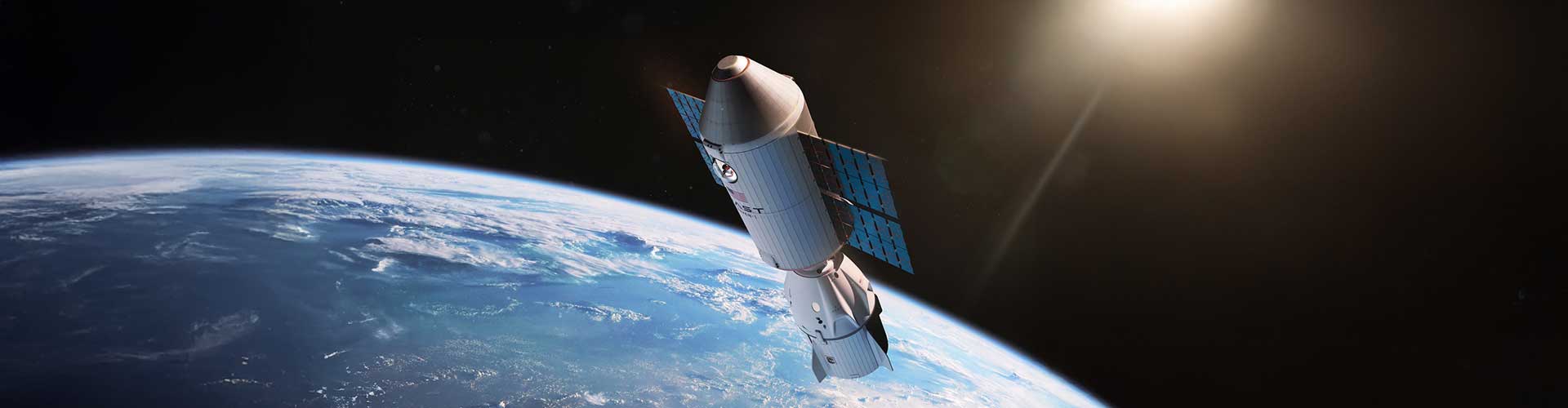 Haven-1 (VAST Space Station)
 International Space Station (ISS)
 Haven-2 (VAST Space Station)
 Orbital Reef (Space Station)
 Starlab (Space Station)
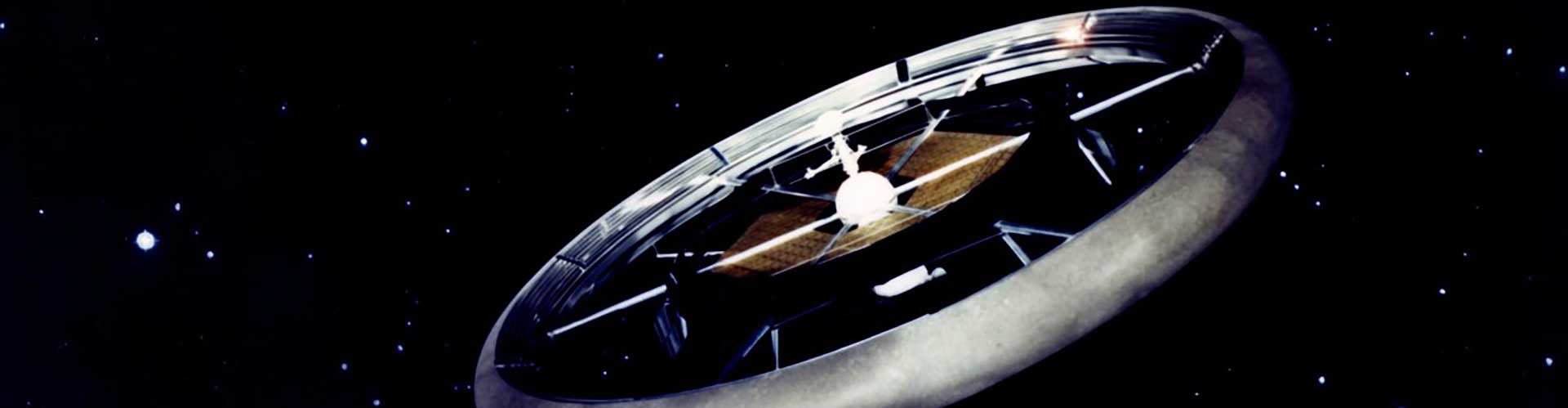 VON BRAUN STATION
 Thales Alenia Space
 State Space Agency of Ukraine (SSAU)
 Space Shuttle Orbiter (NASA Spaceplane)
 Roscosmos Progress Rocket Space Centre
 NASA’s Johnson Space Center
 Buran (spacecraft)
 The Vintage Space