
Seth Shostak is an American astronomer and author, and is currently the senior astronomer for the SETI Institute. Shostak hosts SETI’s weekly radio show/podcast Big Picture Science, has played himself numerous times in TV and internet film dramas, and has acted in several science fiction films.
Related channels: SETI INSTITUTE, ALIEN CIVILIZATIONS, RADIO ASTRONOMY
Latest videos of Seth Shostak
1
/
2


The Search for Aliens with Seth Shostak
Our chat with Dr Seth Shostak from our live show to ease the boredom of covid lockdowns.
We talk about:
• The latest in the search for alien signals
• Using the large New Mexico telescope array to search for ET
• How ancient seafaring and watchmaking nations make good astronomers
• Scanning every known exoplanet for alien signals
• Which is going to be the most exciting telescope, the James Webb Space Telescope or the Square Kilometre Array?
• What is the most exciting discovery we can expect from the James Webb Space Telescope and the Square Kilometre Array?
• How we will find hints of alien life
Seth Shostak is an author and senior astronomer for the SETI Institute (Search for Extraterrestrial Intelligence). Seth hosts SETI's weekly radio show/podcast Big Picture Science and regularly appears on radio, TV and anywhere he can spread the astronomy word.
SETI: Looking Back, Looking Forward
We've almost reached the end of 2021, and it was... a year. While everyone dealt with the pandemic and an uncertain future, we continued our outreach efforts to keep bringing science directly to the public. To close out an amazing calendar of SETI Live events, we are excited to speak with Dr. Nathalie Cabrol, Director of the Carl Sagan Center for Research, and Dr. Seth Shostak, Senior Astronomer, about the advances and progress made on our search for life beyond Earth this past year. They'll also share their thoughts on what we can look forward to in the upcoming year, both with regards to SETI and space science. Beth Johnson will moderate. If you like science, support the SETI Institute! We're a non-profit research institution whose focus is understanding the nature and origins of life in the universe. Donate here: https://seti.org/donate
Learn more about the SETI Institute and stay up-to-date on awesome science:
- Subscribe to our YouTube channel at https://www.youtube.com/c/SETIInstitute/
- Watch our streams over on Twitch at https://www.twitch.tv/setiinstitute
- Listen to our podcast, Big Picture Science http://www.bigpicturescience.org/
- Subscribe to our newsletter https://seti.org/signup
- Buy merchandise from Chop Shop https://www.chopshopstore.com/collections/seti-institute/SETI
Don't forget to like and subscribe! Ring the bell for notifications of when we go live.
#SETILive #SETI #YearinReview #Space #Science #AreWeAlone
[Urdu Subtitles] Impact of an alien signal: Seth Shostak
What will happen if we detect an alien signal? Who are the people who are taking a scientific approach to the search for extraterrestrial intelligence (SETI)? What do we know about the famous WOW! signal? Dr. Seth Shostak is a prominent scientist in this field and is a Senior Astronomer at the SETI Institute. He has received Carl Sagan Award for the Popularization of Science and Klumpke Roberts Award for Astronomy Popularization. Here Salman Hameed and Dr. Shostak have a conversation about aliens.
Please also listen to Dr. Shostak's podcast, Big Picture Science: https://bigpicturescience.org
And you can join the SETI Institute here: https://www.seti.org/
For more information about Kainaat Studios:
https://www.kainaatstudios.com/
Host: Salman Hameed has a PhD in astronomy and is Charles Taylor Chair of Integrated Science & Humanities at Hampshire College and a member of the Five College Astronomy Department (FCAD) in Massachusetts, USA. He is also the CEO of the non-profit Kainaat Studios
Credits:
Editor: Shehryar Shaikh
Music: Zohaib Kazi
Subtitles: DigiCircle ([email protected])
Looking for Intelligence in the Cosmos by Seth Shostak
An online presentation hosted by Skyscrapers, Inc. on Zoom
Saturday, May 1, 2021
It has been nearly 60 years since the first attempt to sift the skies for radio signals that would betray the existence of intelligent beings beyond Earth. So far, nothing has been heard.
Why? Could it be that we simply need to give these experiments more time to examine additional star systems? Or should we put more emphasis on other strategies?
In this talk, we discuss the fundamental assumptions that underlie our current SETI searches, and how we might expand our efforts to lessen their inherent limitations. What else should we be doing to look for ET?
We will also consider the anthropocentric nature of the experiments so far, and suggest how our conservative assumptions about ET.’s nature and behavior may be hindering our attempts to find him.
Seth Shostak is the Senior Astronomer at the SETI Institute in Mountain View, California, and the Director of the Institute's Center for SETI Research.
He has an undergraduate degree in physics from Princeton University, and a doctorate in astronomy from the California Institute of Technology. For much of his career, Seth conducted radio astronomy research on galaxies, and has published approximately 60 papers in professional journals. During more than a decade, he worked at the Kapteyn Astronomical Institute, in Groningen, The Netherlands, using the Westerbork Radio Synthesis Telescope. He also founded and ran a company producing computer animation for TV.
Seth has written nearly 500 popular magazine and Web articles on various topics in astronomy, technology, film, and television. He lectures on astronomy and other subjects at various academic venues, and gives approximately 60 talks annually at both educational and corporate institutions. Seth has been a Distinguished Speaker for the American Institute of Aeronautics and Astronautics. He was also Chair of the International Academy of Astronautics’ SETI Permanent Committee for a decade.
Frequently interviewed for radio and TV, Seth has been seen or heard on Discovery Channel, Learning Channel, History Channel, the BBC, “Nightline,” “The O’Reilly Factor,” “Good Morning America,” “Larry King Live,” “Coast to Coast AM,” NPR, CNN News, and National Geographic Television. He is the host of a one-hour weekly radio program on astrobiology entitled “Big Picture Science.”
Seth has edited and contributed to nearly a dozen books. His first popular tome, Sharing the Universe: Perspectives on Extraterrestrial Life (Berkeley Hills Books), appeared in March 1998, followed by Cosmic Company (Cambridge University Press) in 2002. He has also co-authored an astrobiology text, Life in the Universe (Pearson), and his latest trade book is Confessions of an Alien Hunter (National Geographic). In 2004, he won the Klumpke-Roberts Award for the popularization of astronomy.
Science Bites: The Fermi Paradox
SETI Institute Senior Astronomer Seth Shostak explains the Fermi Paradox and some possible explanations for why we don't find evidence of intelligent life everywhere. Maybe it simply takes too much energy and too many resources... If you like science, support the SETI Institute! We're a non-profit research institution whose focus is understanding the nature and origins of life in the universe. Donate here: https://seti.org/donate
Learn more about the SETI Institute and stay up-to-date on awesome science:
- Subscribe to our YouTube channel at https://www.youtube.com/c/SETIInstitute/ The
- Watch our streams over on Twitch at https://www.twitch.tv/setiinstitute
- Listen to our podcast, Big Picture Science http://www.bigpicturescience.org/
- Subscribe to our newsletter https://seti.org/signup
- Buy merchandise from Chop Shop https://www.chopshopstore.com/collections/seti-institute/SETI
Don't forget to like and subscribe! Ring the bell for notifications of when we go live. #SETI #Science #ScienceBites
Cosmic Conversation with Seth Shostak | California Academy of Sciences
Seth Shostak, senior astronomer at the SETI Institute, is our guest on this Cosmic Conversation. He discusses new approaches to looking for E.T., including the latest efforts to uncover signals from extraterrestrial intelligence, as well as some disturbing ideas that could change the way we hunt for cosmic company. Also, what happens if we actually manage to detect someone or something out there? Would that radically change our own society, or merely be an interesting story for a week or two?
- - -
🙌 Now More Than Ever, We Need Your Support.
The Academy’s critical work continues even while our museum doors remain temporarily closed. Please consider a donation to https://bit.ly/cas-relief — any amount helps. Thank you!
- - -
The California Academy of Sciences is a renowned scientific and educational institution dedicated to exploring, explaining, and sustaining life on Earth. Based in San Francisco’s Golden Gate Park, it's the only place in the world to house an aquarium, planetarium, rainforest, and natural history museum—plus cutting-edge research programs—all under one living roof.
Connect with us:
• Facebook: https://facebook.com/calacademy
• Twitter: https://twitter.com/calacademy
• Instagram: https://instagram.com/calacademy
• Tumblr: https://heycalacademy.tumblr.com
Where should we look for ET? Avi Loeb, Seth Shostak
Finding intelligence in the cosmos might be done simply by paying attention. While SETI scientists look for radio or optical signals, the astronomy community is perennially on the lookout for all types of cosmic phenomena. One example of the latter is the discovery, three years ago, of what was thought to be a previously unknown asteroid. While asteroids are enormously commonplace in our solar system, this object, christened Oumuamua, is clearly from someone else’s solar system. Harvard astronomer Avi Loeb has suggested that Oumuamua might not be an asteroid at all, but a type of interstellar craft, sent our way by extraterrestrials. Why does he think this, and what is the larger lesson we should heed in our search for alien intelligence? If you like SETI Live, or just like science, support the SETI Institute! We're a non-profit research institution whose focus is understanding the nature and origins of life in the universe. Donate here: https://seti.org/donate
Learn more about the SETI Institute and stay up-to-date on awesome science:
- Subscribe to our YouTube channel at https://www.youtube.com/c/SETIInstitute/
- Watch our streams over on Twitch at https://www.twitch.tv/setiinstitute
- Listen to our podcast, Big Picture Science http://www.bigpicturescience.org/
- Subscribe to our newsletter https://seti.org/signup
- Buy merchandise from Chop Shop https://www.chopshopstore.com/collections/seti-institute/SETI
Don't forget to like and subscribe! Ring the bell for notifications of when we go live.
#SETILive #SearchforLife #AreWeAlone
What Could Alien Worlds Really Be Like?
Are we too Earth-centric when we search for alien life? Life and the planetary bodies on which it can thrive may be much more diverse than we can imagine. Our Solar System and the exoplanets discovered so far provide us with a first glimpse of what is possible. Seth Shostak explores with Dirk Schultze-Makuch. If you like SETI Live, or just like science, support the SETI Institute! We're a non-profit research institution whose focus is understanding the nature and origins of life in the universe. Donate here: https://seti.org/donate
Learn more about the SETI Institute and stay up-to-date on awesome science:
- Subscribe to our YouTube channel at https://www.youtube.com/c/SETIInstitute/
- Watch our streams over on Twitch at https://www.twitch.tv/setiinstitute
- Listen to our podcast, Big Picture Science http://www.bigpicturescience.org/
- Subscribe to our newsletter https://seti.org/signup
- Buy merchandise from Chop Shop https://www.chopshopstore.com/collections/seti-institute/SETI
Don't forget to like and subscribe! Ring the bell for notifications of when we go live. #SETILive #SearchforLife #AreWeAlone
Searching for SETI Artifacts
For six decades, most SETI experiments have relied on picking up signals reaching Earth. However, such schemes have limitations that can be avoided by searching for artifacts: constructions or rearrangements of nature attributable to highly advanced intelligence.
Join Senior Director Simon Steel and Senior Astronomer Seth Shostak, who will talk about the advantages of hunting for artifacts and what such searches might uncover.
Interview: Seth Shostak from the SETI Institute
This week I'll be talking Dr. Seth Shostak from the SETI Institute about his work searching the Universe for evidence of extraterrestrials.
Our Book is out!
https://www.amazon.com/Universe-Today-Ultimate-Viewing-Cosmos/dp/1624145442/
Audio Podcast version:
ITunes: https://itunes.apple.com/us/podcast/universe-today-guide-to-space-audio/id794058155?mt=2
RSS: https://www.universetoday.com/audio
What Fraser's Watching Playlist:
https://www.youtube.com/playlist?list=PLbJ42wpShvmkjd428BcHcCEVWOjv7cJ1G
Weekly email newsletter:
https://www.universetoday.com/newsletter
Weekly Space Hangout:
https://www.youtube.com/channel/UC0-KklSGlCiJDwOPdR2EUcg/
Astronomy Cast:
https://www.youtube.com/channel/UCUHI67dh9jEO2rvK--MdCSg
Support us at: https://www.patreon.com/universetoday
More stories at: https://www.universetoday.com/
Twitch: https://twitch.tv/fcain
Follow us on Twitter: @universetoday
Like us on Facebook: https://www.facebook.com/universetoday
Instagram - https://instagram.com/universetoday
Team: Fraser Cain - @fcain / [email protected]
Karla Thompson - @karlaii / https://www.youtube.com/channel/UCEItkORQYd4Wf0TpgYI_1fw
Chad Weber - [email protected]
International Observe the Moon Night with Seth Shostak
International Observe the Moon Night is an annual event in the fall near a first-quarter Moon. A first-quarter Moon offers excellent viewing opportunities along the terminator (the line between night and day), where shadows enhance the Moon’s cratered landscape. Everyone on Earth is invited to learn about lunar science and exploration, take part in celestial observations, and honor personal and cultural connections to the Moon.
This year, IOMN is on Saturday, September 26, here in the United States.
For more information, visit NASA's official IOMN website: http://moon.nasa.gov/observe and make sure you share your photos, videos, and artwork with us on social media. Tag us and use #ObserveTheMoon!
What Aliens Might Be Like
Co-hosted by the SETI Institute and Chabot Space & Science Center
With Seth Shostak, SETI Institute
When most people think of aliens, they figure that they’re probably little gray guys with big eyes and no hair. And they never smile. After all, that’s what you see on TV and in the movies. But as scientists seek evidence of real aliens, do they have any idea of what they might find? Join us for an exciting talk with Seth Shostak to learn all about what aliens might be like! This event will be great for people of all ages, but especially families with kiddos 8-12 years old!
Want to Search for ET for a Living?
If you're wondering what it takes to become a scientist whose job is to search for ET, SETI Institute Senior Astronomer, Seth Shostak has something to say about that.
New Approaches to Finding ET with Seth Shostak
Seth Shostak, senior astronomer at the SETI Institute, will discuss new approaches to looking for E.T., including the latest efforts to uncover signals from extraterrestrial intelligence, as well as some disturbing ideas that could change the way we hunt for cosmic company.
Should we be introducing ourselves to the Universe? | Seth Shostak | TEDxMarin
Are we ready for what’s out there? An irreverent look at whether we should in fact, be announcing ourselves to the universe. Seth Shostak directs the search for extraterrestrials at the SETI Institute in California—trying to find evidence of intelligent life in space. He is also committed to getting the public, especially young people, excited about astrobiology and science in general.
Seth is also the host of “Big Picture Science,” the SETI Institute’s weekly radio show. The one-hour program uses interviews with leading researchers and lively and intelligent storytelling to tackle such big questions as: What came before the big bang? How does memory work? Will our descendants be human or machine? What’s the origin of humor? Big Picture Science can be found in iTunes and other podcast sites. This talk was given at a TEDx event using the TED conference format but independently organized by a local community. Learn more at https://www.ted.com/tedx
We'll Find Aliens by 2040, Here's How (feat SETI's Seth Shostak)
Aliens are out there, and we're going to find them before today's kids graduate college.
Try Brilliant here ➡ http://brilliant.org/Trace and when you sign up with this link it tells them you came from Uno Dos of Trace.
That means you'll get 20% off the premium subscription (I have it, it's awesome) AND you'll help support me so we can do even more.
Fast radio bursts from deep #space may be explained by #extraterrestrials, the U.S. military released footage of possible #alienspacecraft, and the interstellar object from 2017 behaved weirdly - maybe it was aliens! We have lots of examples of alien encounters in the news today, but there's really only one way we're going to *know* aliens are out there… and I've got the answer directly from the senior SETI astronomer himself, Seth Shostak.
Quick note: My goal in every video is to make you *feel* something, *think* something, or *talk to a friend* about what you learned. If any of those apply to you, please consider subscribing to the channel, or sharing the video with your friends on social media! A few seconds of effort on your end really goes a long way, and thanks for even reading this paragraph, it means a lot.
Much of the stock footage provided by talented artists who graciously posted their work for open access on Pixabay, Pexels, and Unsplash. Thank you!
The appearance of U.S. Department of Defense (DoD) visual information does not imply or constitute DoD endorsement.
~~~ SOCIALS ~~~
Join the patreon and get your name in the video, any help goes a LONG way!
:: http://patreon.com/tracedominguez
Follow me on the tweet-machine, insta and the network for babies and your aunt's far-wing posting.
:: http://instagram.com/tracedominguez
:: http://twitter.com/tracedominguez
:: http://facebook.com/official.tracedominguez
:: twitch.tv/mrtraced
~~~ LYNX ~~~
There are so many habitable planets that we know of, here's a couple of the catalogs so you can pick your new home
http://phl.upr.edu/projects/habitable-exoplanets-catalog
https://exoplanetarchive.ipac.caltech.edu/docs/counts_detail.html
Watch Seth's full TED talk here
https://blog.ted.com/contact-with-aliens-by-2036-astronomer-seth-shostak-wants-to-believe-and-does/
Want to watch the full US military videos? The successful New York Times has them here
https://www.nytimes.com/video/us/100000006525294/ufo-video-navy.html
=== SPECIAL THANKS ===
To ALL my patrons, and to YOU for taking the time to watch this video! Please, if you have just a second, share the video or the channel with your friends so we can grow and do even more!
~~~~~ EASTER EGGS FOR READERS ~~~~~
P.S - I dug through the New York Times archive (wonderfully named, the Times Machine) you can find numerous stories about UFOs. I put a few together that I cut from the piece. In 1947, a pilot saw a flying formation that just exceeded the speed of sound at a time that wasn't yet reality, in the 50s flying saucers didn't seem to have propulsion systems which were well known at the time, and in the 80s abductees and spotters said the aliens told them they want to 'make peace' and 'help us rebuild' -- you know because of the Cold War. They sure are keeping pace with technology and politics.
P.P.S - Then, in the 80s, a tool maker in Michigan took pictures of alien craft and showed them to the Times -- and yet, today our modern Naval officers chased down the radar blips and said the craft must be invisible or cloaked or something. Why would crafts that lit up the night skies like 'Yankee Stadium' as one spotter said, suddenly invisible to everything but the most advanced radar! How convenient.
What do you think? Tell me! You can always find me on Twitter and in the comments!
Love you, #nerdfam! Stay #curious!
How Does SETI Search for Alien Civilizations? With Seth Shostak
Are we alone? The Search for Extraterrestrial intelligence
An exploration into the concept of searching for extraterrestrial intelligence in the universe with Dr. Seth Shostak of SETI and discussing the use of the Allen Telescope array. Dr. Shostak has long been a major player in SETI and predicts that we very well find signs of alien civilizations within the next 20 years. Also discussed are new avenues for SETI such as biosignatures and technosignatures, and how exocivilizations might choose to try to communicate.
Seth Shostak:
http://sethshostak.com/
https://twitter.com/SethShostak
Confessions of an Alien Hunter: A Scientist's Search for Extraterrestrial Intelligence by Seth Shostak: https://amzn.to/2KYe6iC
SETI: https://www.seti.org/
You can now support us on Patreon! https://www.patreon.com/EventHorizonShow
Website:
https://www.eventhorizonshow.com/
Follow us on Twitter!
https://twitter.com/jmgeventhorizon
10 Reasons Why Oumuamua Will Blow Your Mind: https://youtu.be/N-3cy_Pbx1M
Follow us on Instagram!
https://www.instagram.com/jmgeventhorizon/
MUSIC (Track names on screen in credits)
Chris Zabriskie: https://chriszabriskie.bandcamp.com/
Kai Engel: https://kaiengel.bandcamp.com/
Stellardrone: https://stellardrone.bandcamp.com/
Miguel Johnson: https://migueljohnson.bandcamp.com
THANK YOU
To all of our subscribers and Patrons
To Dr. Seth Shostak
Seth Shostak on SETI (Search for Extra Terrestrial Intelligence) | Singularity University
Dr Seth Shostak explains the mission and outlook for SETI, a non-profit organization that looks for evidence of life beyond earth. This lecture was given at Singularity University, in NASA Ames, California, in August 2010.
Subscribe: http://bit.ly/1Wq6gwm
Connect with Singularity University:
Website: http://singularityu.org
Singularity HUB:http://singularityhub.com
Facebook: https://www.facebook.com/singularityu
Twitter: https://twitter.com/singularityu
Linkedin: https://www.linkedin.com/company/singularity-university
Google+: https://plus.google.com/+singularityu
About Singularity University:
Singularity University is a benefit corporation headquartered at NASA's research campus in Silicon Valley. We provide educational programs, innovative partnerships and a startup accelerator to help individuals, businesses, institutions, investors, NGOs and governments understand cutting-edge technologies, and how to utilize these technologies to positively impact billions of people.
Seth Shostak on SETI (Search for Extra Terrestrial Intelligence) | Singularity University
http://www.youtube.com/user/SingularityU
SETI Astronomer Seth Shostak talks about the signal
Keep up with the SETI Institute's work by signing up for a our newsletter http://eepurl.com/bWCYRP
Weekly Space Hangout - May 27, 2016: Dr. Seth Shostak
Host: Fraser Cain (@fcain)
Special Guest:
Dr. Seth Shostak is the Senior Astronomer at the SETI Institute. He also heads up the International Academy of Astronautics’ SETI Permanent Committee. In addition, Seth is keen on outreach activities: interesting the public – and especially young people – in science in general, and astrobiology in particular. He’s co-authored a college textbook on astrobiology, and has written three trade books on SETI. In addition, he’s published more than 400 popular articles on science — including regular contributions to both the Huffington Post and Discover Magazine blogs — gives many dozens of talks annually, and is the host of the SETI Institute’s weekly science radio show, “Big Picture Science.”
Guests:
Paul M. Sutter (pmsutter.com / @PaulMattSutter)
Kimberly Cartier (@AstroKimCartier )
Jolene Creighton (fromquarkstoquasars.com / @futurism)
Nicole Gugliucci (cosmoquest.org / @noisyastronomer)
Brian Koberlein (@briankoberlein / briankoberlein.com)
Their stories this week:
“Fresh” Lunar Craters
Faintest early-universe galaxy detected
Update on NASA’s Juno Mission
Europa’s ocean may have Earth-like chemical balance
Do Primordial Black Holes Solve Dark Matter?
India Successfully Launches Tiny Reusable Space Shuttle
30 KM Wide Asteroid Impacted Australia 3.4 Billion Years Ago
MeerKAT First Images
We’ve had an abundance of news stories for the past few months, and not enough time to get to them all. So we’ve started a new system. Instead of adding all of the stories to the spreadsheet each week, we are now using a tool called Trello to submit and vote on stories we would like to see covered each week, and then Fraser will be selecting the stories from there. Here is the link to the Trello WSH page (http://bit.ly/WSHVote), which you can see without logging in. If you’d like to vote, just create a login and help us decide what to cover!
We record the Weekly Space Hangout every Friday at 12:00 pm Pacific / 3:00 pm Eastern. You can watch us live on Google+, Universe Today, or the Universe Today YouTube page.
You can also join in the discussion between episodes over at our Weekly Space Hangout Crew group in G+!
1
/
2
Also Recommended
 METI INTERNATIONAL
 UC Berkeley SETI Research Center
 Breakthrough Listen SETI Institute
 Dr. Lauren Sgro
 Ohio State University Radio Observatory (Big Ear)
 Arecibo Radio Telescope
 Wow! signal
 Green Bank Telescope
 Tabby’s Star (KIC 8462852)
 FAST RADIO BURSTS (FRB)
 Jodrell Bank Observatory
 RADIO TELESCOPES
 FAST RADIO TELESCOPE
 RADIO ASTRONOMY
 ASTROBIOLOGY
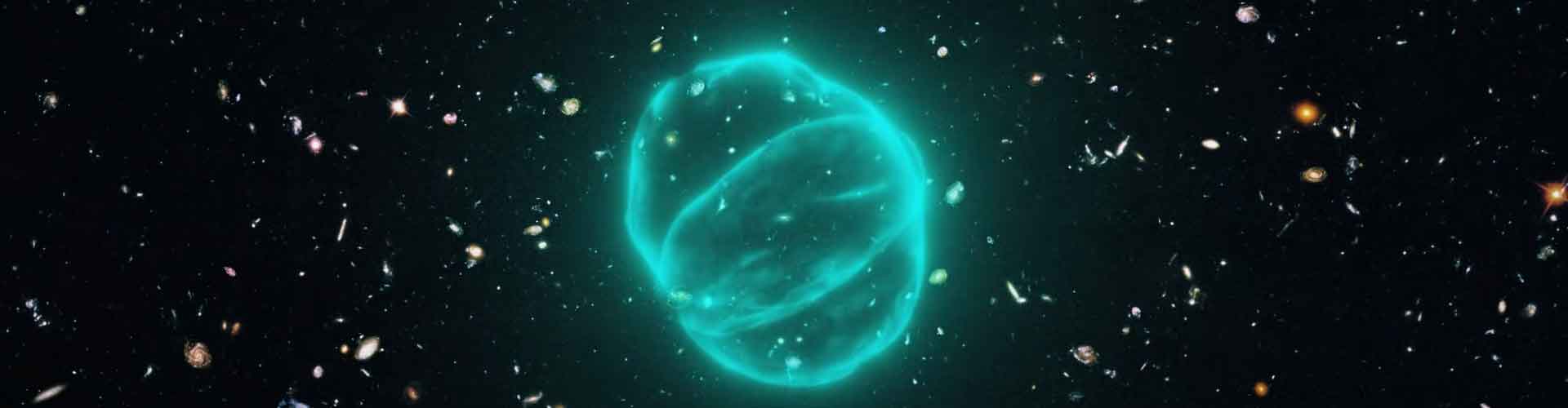 Odd Radio Circle (ORC)
 CARL SAGAN




