NASA's SpaceX Crew-12 Re-Entry & Splashdown
Welcome Crew-12 back to Earth with us!
NASA astronauts Jessica Meir and Jack Hathaway, ESA (European Space Agency) astronaut Sophie Adenot, and Roscosmos cosmonaut Andrey Fedyaev are scheduled to splash down off the coast of California at 11:34 a.m. EDT (1534 UTC) on Thursday, Oct. 8.
We'll have live coverage from re-entry to recovery. Crew-12 spent 235 days on the International Space Station and orbited Earth nearly 3,800 times.
Learn more about what Crew-12 studied during their time in space: https://go.nasa.gov/4z5jVl6
Get the latest updates from the space station: https://www.nasa.gov/blogs/spacestation/
NASA's SpaceX Crew-12 Undocking
Watch the four members of NASA's SpaceX Crew-12 mission — NASA astronauts Jessica Meir and Jack Hathaway, ESA (European Space Agency) astronaut Sophie Adenot, and Roscosmos cosmonaut Andrey Fedyaev — set off to return to Earth. The SpaceX Dragon spacecraft will undock from the International Space Station at approximately 8:05 a.m. EDT (1205 UTC).
Splashdown is scheduled to occur off the coast of California on Thursday, Oct. 8 at 11:34 a.m. EDT (1534 UTC).
During their nearly eight months aboard the space station, Crew-12 conducted hundreds of hours of scientific research. Their work included testing stem cell production for cell‑based therapies, examining how physical characteristics may affect blood flow during spaceflight, and demonstrating the on‑demand generation of IV fluid for future missions.
Learn more about the Crew-12 mission: https://www.nasa.gov/mission/nasas-spacex-crew-12/
Follow the latest Crew-12 updates: https://www.nasa.gov/blogs/crew-12/
NASA's SpaceX Crew-12 Hatch Close
Watch as NASA astronauts Jessica Meir and Jack Hathaway, ESA (European Space Agency) astronaut Sophie Adenot, and Roscosmos cosmonaut Andrey Fedyaev begin final preparations for their return to Earth aboard a SpaceX Dragon spacecraft.
After the four enter the spacecraft, the hatch is scheduled to close at 6:20 a.m. EDT (1020 UTC). The Dragon is scheduled to undock at 8:05 a.m. EDT (1205 UTC).
Crew-12’s splashdown is targeted for Thursday, Oct. 8 at 11:34 a.m. EDT (1534 UTC).
Learn more about the Crew-12 mission: https://www.nasa.gov/mission/nasas-spacex-crew-12/
Follow the latest Crew-12 updates: https://www.nasa.gov/blogs/crew-12/
NASA’s SpaceX Crew-12 Farewell and International Space Station Change of Command
Watch as the members of NASA's SpaceX Crew-12 mission – NASA astronauts Jessica Meir and Jack Hathaway, ESA (European Space Agency) astronaut Sophie Adenot, and Roscosmos cosmonaut Andrey Fedyaev – sum up their experiences aboard the International Space Station and say goodbye to the space station crew. Meir will also transfer command of the orbiting laboratory to Roscosmos cosmonaut Pyotr Dubrov.
Learn more about Crew-12: https://www.nasa.gov/mission/nasas-spacex-crew-12/
Orbital: SpaceX Crew-13 Docking
Join us live for Orbital, as Sen brings you the arrival of SpaceX’s Crew-13 mission at the International Space Station in real time, captured in 4K from orbit.
Watch the Dragon spacecraft approach and dock with the ISS, with unique live views from Sen’s cameras aboard the space station. Sen's Space TV Director, Liam Kennedy, will take you behind the scenes of our live space coverage, sharing insight and answering questions on how we capture and broadcast orbital operations from space.
🎥 Livestream begins: 21:30 UTC / 22:30 BST
📅 1 October 2026
🚀 SpaceX Crew-13 docking: 23:00 UTC / 00:00 BST
Crew-13 is carrying NASA astronauts Jessica Watkins and Luke Delaney, CSA astronaut Joshua Kutryk, and Roscosmos cosmonaut Sergey Teteryatnikov to the International Space Station for a long-duration science mission.
Please note: Event timings are subject to change. The docking time and livestream schedule may be adjusted depending on launch, spacecraft operations and mission conditions.
Watch live in 4K and experience Crew-13’s arrival at the ISS from a unique orbital perspective.
🌌 ABOUT SEN
Sen delivers the world’s first continuous 4K livestream of Earth from space.
📡 WATCH EARTH LIVE
Watch Sen’s 24/7 4K livestream of Earth from cameras aboard the International Space Station on our channel now.
#Crew13 #SpaceX #ISS #NASA #Dragon #SpaceStation #Sen #SpaceLive #LiveFromSpace
NASA's SpaceX Crew-13 Arrival & Welcome Remarks
Watch as four explorers arrive at the International Space Station.
After lifting off from Cape Canaveral Space Force Station on Thursday, Oct. 1, at 11:10 a.m. EDT (1510 UTC), Crew-13's spacecraft is scheduled to dock at the orbiting lab at 7 p.m. EDT (2300 UTC), with hatches opening at about 8:45 p.m. EDT (0045 UTC Oct. 2). The crew will also give welcome remarks around 9:20 p.m. EDT (0120 UTC Oct. 2).
NASA astronauts Jessica Watkins and Luke Delaney, CSA (Canadian Space Agency) astronaut Joshua Kutryk, and Roscosmos cosmonaut Sergey Teteryatnikov will spend the next several months in low Earth orbit on NASA's SpaceX Crew-13 mission.
While there, they will conduct various science experiments and technology demonstrations to benefit life on Earth and in orbit, furthering humanity's journey back to the Moon, to Mars, and beyond.
Learn more about the Crew-13 mission: https://www.nasa.gov/mission/nasas-spacex-crew-13/
Read daily updates from the space station: https://www.nasa.gov/blogs/spacestation/
Meet NASA Astronaut Luke Delaney, Crew-13 Pilot
NASA astronaut Luke Delaney is the pilot of NASA’s SpaceX Crew-13 mission. This is his first spaceflight. Upon his arrival to the International Space Station, he will join Expedition 75, kicking off a long-duration science expedition aboard the orbiting laboratory. He was selected as a NASA astronaut in 2021. The Florida native, earned a bachelor’s degree in mechanical engineering at the University of North Florida and a master’s degree in aerospace engineering at the Naval Postgraduate School. He is a distinguished naval aviator who participated in exercises throughout the Asia Pacific region and conducted missions in support of Operation Enduring Freedom. As a test pilot, Delaney evaluated developmental aircraft systems and served as a test pilot instructor. He also worked as a research pilot at NASA’s Langley Research Center in Hampton, Virginia, where he supported airborne science missions.
Meet CSA Astronaut Joshua Kutryk, Crew-13 Mission Specialist
CSA (Canadian Space Agency) astronaut Joshua Kutryk is a mission specialist for NASA’s SpaceX Crew-13 mission. This is his first spaceflight. Upon her arrival to the International Space Station, he will join Expedition 75, kicking off a long-duration science expedition aboard the orbiting laboratory. He was selected as a CSA astronaut in 2017. The Fort Saskatchewan, Alberta native, earned a bachelor’s degree in mechanical engineering from the Royal Military College of Canada in Kingston, Ontario, and is a distinguished graduate of the United States Air Force Test Pilot school in Edwards, California. He also has master’s degrees in space studies, flight test engineering, and defense studies. He served as a CF-18 fighter pilot, flying missions in support of Canada’s NATO, U.N., and North American Aerospace Defense Command commitments, and also worked as an experimental and operational test pilot at the Aerospace Engineering Test Establishment in Cold Lake, Alberta.
Meet Roscosmos Cosmonaut Sergey Teteryatnikov, Crew-13 Mission Specialist
Roscosmos cosmonaut Sergey Teteryatnikov is a mission specialist for NASA’s SpaceX Crew-13 mission. This is his first spaceflight. Upon his arrival to the International Space Station, he will join Expedition 75, kicking off a long-duration science expedition aboard the orbiting laboratory. He was selected for the Gagarin Research and Test Cosmonaut Training Center Cosmonaut Corps in 2021 and has served as a test cosmonaut since 2023. He graduated from the Naval Academy, St. Petersburg, Russia, in 2011 as an engineer specializing in ship power plant operations. He also served in various naval engineering roles, including undersea vessels and specialized engine room operations.
NASA’s SpaceX Crew-13 Mission Overview
NASA’s SpaceX Crew-13 mission will take NASA astronauts Jessica Watkins and Luke Delaney, CSA (Canadian Space Agency) astronaut Joshua Kutryk, and Roscosmos cosmonaut Sergey Teteryatnikov to and from the International Space Station. Their SpaceX Dragon spacecraft “Grace” launched at 11:10 a.m. EDT Thursday, Oct. 1 from Space Launch Complex 40 at Cape Canaveral Space Force Station, arriving at the space station later the same day to kick off their long-duration science expedition. Learn more about this crew and their mission: https://www.nasa.gov/mission/nasas-spacex-crew-13/
Meet NASA Astronaut Jessica Watkins, Crew-13 Commander
NASA astronaut Jessica Watkins is the commander of NASA’s SpaceX Crew-13 mission. This is her second spaceflight. Upon arrival to the International Space Station, she will join Expedition 75, kicking off a long-duration science expedition aboard the orbiting laboratory. She was selected as a NASA astronaut in 2017. The Lafayette, Colorado native, earned an undergraduate degree in geological and environmental sciences from Stanford University, and a doctorate in geology from the University of California, Los Angeles. As a geologist, she studied the Martian surface and was a member of the Curiosity rover science team at NASA’s Jet Propulsion Laboratory in Southern California. Watkins first launched to the space station as a crew member aboard NASA’s SpaceX Crew-4 mission, spending a total of 170 days in space across Expeditions 67/68 in 2022. She is the first NASA astronaut to launch aboard a SpaceX Dragon spacecraft twice.
NASA's SpaceX Crew-13 Launch Highlights
The SpaceX Dragon spacecraft carrying NASA astronauts Jessica Watkins and Luke Delaney, CSA (Canadian Space Agency) astronaut Joshua Kutryk, and Roscosmos cosmonaut Sergey Teteryatnikov to the International Space Station launch from Space Launch Complex 40 at Cape Canaveral Space Force Station on Thursday, Oct. 1, 2026.
To learn more about NASA and the Kennedy Space Center please visit: https://www.nasa.gov https://www.nasa.gov/kennedy
Credit: NASA
Follow NASA's Kennedy Space Center!
X: x.com/NASAKennedy
Facebook: facebook.com/NASAKennedy
Instagram: instagram.com/nasakennedy/
YouTube: / nasakennedy
NASA's SpaceX Crew-13 Spacecraft Separation
The SpaceX Dragon spacecraft carrying NASA astronauts Jessica Watkins and Luke Delaney, CSA (Canadian Space Agency) astronaut Joshua Kutryk, and Roscosmos cosmonaut Sergey Teteryatnikov to the International Space Station has safely reached orbit, separated from the Falcon 9’s second stage, and the spacecraft’s nosecone has opened.
To learn more about NASA and the Kennedy Space Center please visit: https://www.nasa.gov https://www.nasa.gov/kennedy
Credit: NASA
Follow NASA's Kennedy Space Center!
X: x.com/NASAKennedy
Facebook: facebook.com/NASAKennedy
Instagram: instagram.com/nasakennedy/
YouTube: / nasakennedy
NASA's SpaceX Crew-13 Prelaunch News Conference (Sept. 30, 2026)
Mission experts give a preview of NASA's SpaceX Crew-13 mission to the International Space Station ahead of its launch.
Participants include:
- Dr. Lori Glaze, associate administrator, Human Spaceflight Mission Directorate, NASA Headquarters
- Dana Weigel, manager, Low Earth Orbit Program, NASA Johnson
- Mathieu Caron, director, Astronauts, Life Sciences, and Space Medicine, CSA
- William Gerstenmaier, vice president, Build and Flight Reliability, SpaceX
Crew-13 is scheduled to launch at 11:10 a.m. EDT (1510 UTC), Thursday, Oct. 1, from Space Launch Complex 40 at Cape Canaveral Space Force Station in Florida, with docking planned for about 7 p.m. EDT (2300 UTC).
The SpaceX Dragon spacecraft will carry Jessica Watkins and Luke Delaney, CSA (Canadian Space Agency) astronaut Joshua Kutryk, and Roscosmos cosmonaut Sergey Teteryatnikov to the International Space Station for a long-duration science mission.
Learn more about Crew-13: https://www.nasa.gov/mission/nasas-spacex-crew-13
NASA's SpaceX Crew-13 Mission (Official NASA Trailer)
NASA astronauts Jessica Watkins and Luke Delaney, CSA (Canadian Space Agency) astronaut Joshua Kutryk, and Roscosmos cosmonaut Sergey Teteryatnikov are scheduled to lift off to the International Space Station on Thursday, Oct. 1.
Once they arrive, they'll spend the next several months in orbit, helping us learn how to live in space while running scientific experiments to make life better back on Earth. Watch the live launch with us here on YouTube.
More info on our Crew-13 launch schedule: https://go.nasa.gov/3V9NKT0
Download this video: https://go.nasa.gov/4zaz3Of
NASA's SpaceX Crew-13 Arrival at Kennedy Space Center
NASA's SpaceX Crew-13 NASA astronauts Jessica Watkins and Luke Delaney, CSA (Canadian Space Agency) astronaut Joshua Kutryk, and Roscosmos cosmonaut Sergey Teteryatnikov will arrive Saturday, September 26, 2026 at the Shuttle Landing Facility at NASA’s Kennedy Space Center in Florida to prepare for their mission to the International Space Station.
Credit: NASA
Follow NASA's Kennedy Space Center!
X: x.com/NASAKennedy
Facebook: facebook.com/NASAKennedy
Instagram: instagram.com/nasakennedy/
YouTube: / @nasakennedy
#NASA #Crew13 #SpaceX
NASA’s SpaceX Crew-12 Arrival & Welcome Remarks
Watch as the next four explorers arrive at the International Space Station.
After lifting off from Cape Canaveral Space Force Station on Friday, Feb. 13, at 5:15 a.m. EST (1015 UTC), Crew-12's SpaceX Dragon spacecraft is scheduled to dock at the orbiting lab at 3:15 p.m. EST (2015 UTC) on Saturday, Feb. 14.
NASA astronauts Jessica Meir and Jack Hathaway, ESA (European Space Agency) astronaut Sophie Adenot, and Roscosmos cosmonaut Andrey Fedyaev will spend the next several months in low Earth orbit on NASA's SpaceX Crew-12 mission. While there, they will conduct various science experiments and technology demonstrations to benefit life on Earth and in orbit, furthering our journey back to the Moon, to Mars, and beyond.
Learn more about the Crew-12 mission: https://www.nasa.gov/commercialcrew
Read daily updates from the space station: https://www.nasa.gov/blogs/spacestation/
Credit: NASA
SpaceX Crew-12 hatch opening
The hatch of SpaceX’s Crew-12 “Freedom” Crew Dragon spacecraft, with NASA astronauts Jessica Meir and Jack Hathaway, ESA astronaut Sophie Adenot and Roscosmos cosmonaut Andrey Fedyaev (Андрей Федяев), was opened on 14 February 2026, at 22:14 UTC (17:14 EST). Crew-12 is SpaceX’s 12th operational mission for NASA’s Commercial Crew Program. The “Freedom” Crew Dragon previously supported the Crew-4, Ax-2, Ax-3, and Crew-9 missions.
Credits: ESA/NASA/SpaceX
“Freedom” Crew Dragon hatch opening
#Crew12
SpaceX Crew-12 docking
SpaceX’s Crew-12 “Freedom” Crew Dragon spacecraft, with NASA astronauts Jessica Meir and Jack Hathaway, ESA astronaut Sophie Adenot and Roscosmos cosmonaut Andrey Fedyaev (Андрей Федяев), autonomously docked to the space-facing port of the International Space Station’s Harmony module, on 14 February 2026, at 20:15 UTC (15:15 EST). Crew-12 is SpaceX’s 12th operational mission for NASA’s Commercial Crew Program. The “Freedom” Crew Dragon previously supported the Crew-4, Ax-2, Ax-3, and Crew-9 missions.
Credits: NASA/SpaceX
“Freedom” Crew Dragon docking
Music: “Blue Danube by Strauss” courtesy of YouTube Audio Library
#Crew12
NASA’s SpaceX Crew-12 Mission: Broadcast Highlights
Highlights from the broadcast of NASA's SpaceX Crew-12 mission launch to the International Space Station. The SpaceX Falcon 9 rocket and Dragon spacecraft carrying NASA astronauts Jessica Meir and Jack Hathaway, ESA (European Space Agency) astronaut Sophie Adenot, and Roscosmos cosmonaut Andrey Fedyaev lifted off from Space Launch Complex 40 at Cape Canaveral Space Station in Florida at 5:15 a.m. EST Friday, Feb. 13, 2026.
To learn more about NASA and the Kennedy Space Center please visit:
https://www.nasa.gov
https://www.nasa.gov/kennedy
Credit: NASA
Follow NASA's Kennedy Space Center!
X: x.com/NASAKennedy
Facebook: facebook.com/NASAKennedy
Instagram: instagram.com/nasakennedy/
YouTube: youtube.com/nasakennedy



 BOEING STARLINER SPACECRAFT
 Arianespace Space Rider Spacecraft
 Lockheed Martin Orion Spacecraft
 Proba-3 (ESA spacecraft)
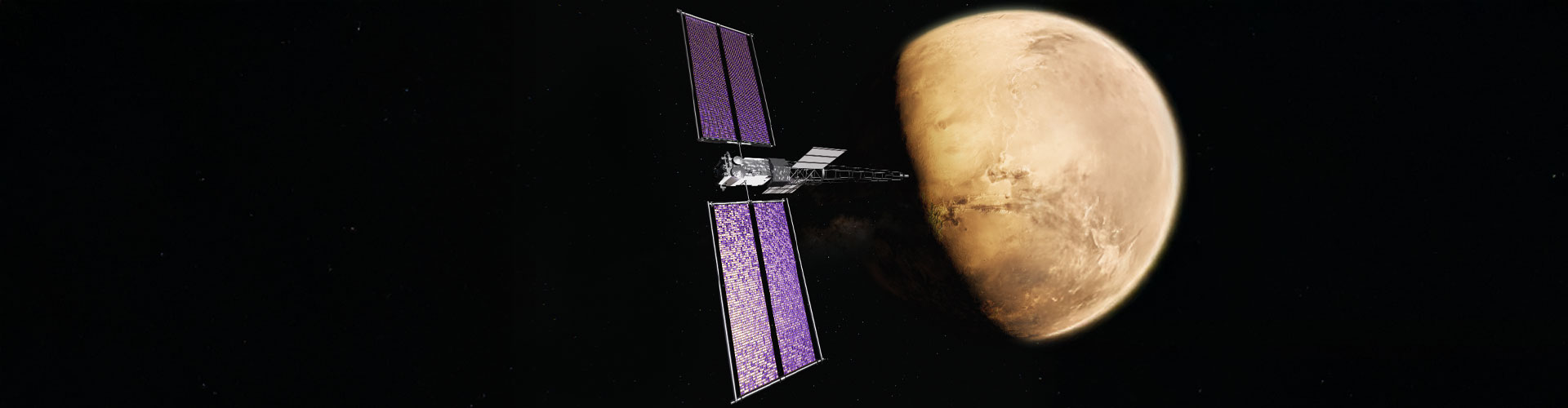 Space Reactor-1 Freedom (NASA Spacecraft)
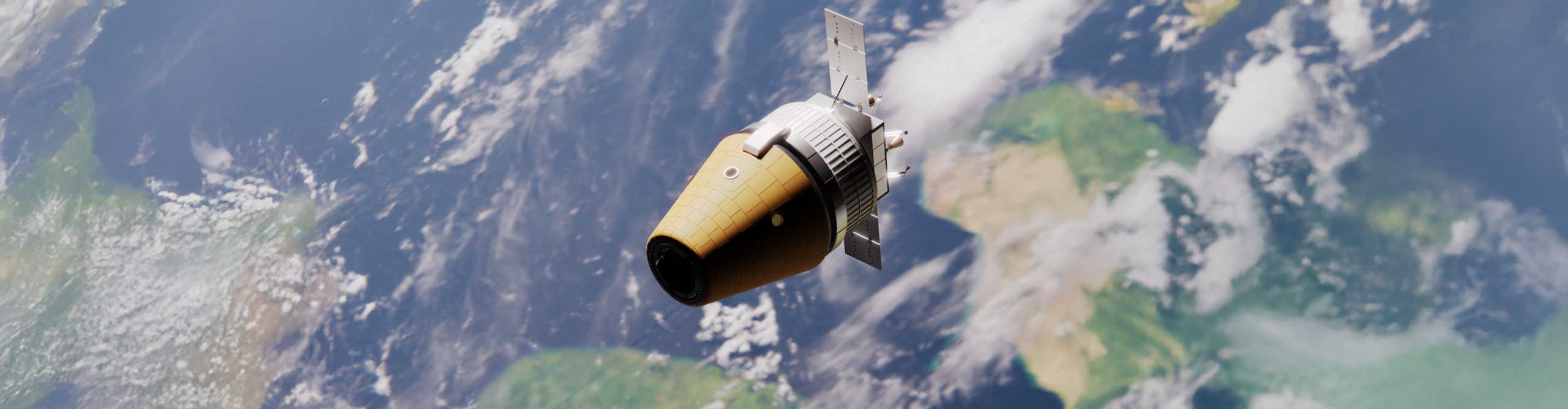 Gaganyaan (ISRO spacecraft)
 SpaceX Starship Artemis Lunar Lander
 EnVision (ESA Spacecraft)
 SPACETV’s Crew
 Aditya-L1 (ISRO Spacecraft)
 Juno (NASA Spacecraft)
 DAWN (NASA SPACECRAFT)
 OSIRIS-REx / OSIRIS-APEX (NASA Spacecraft)
 VERITAS (NASA Spacecraft)
 DART (NASA Spacecraft)
 JUICE (ESA SPACECRAFT)
 EUROPA CLIPPER (NASA SPACECRAFT)
 Psyche (NASA Spacecraft)