
This wide-field view of the Orion Nebula (Messier 42), lying about 1350 light-years from Earth, was taken with the VISTA (Visible and Infrared Survey Telescope for Astronomy) infrared survey telescope at ESO’s Paranal Observatory in Chile. – ESO/J. Emerson/VISTA
Related channels: ASTRONOMY, STARS, NEBULAE, GALAXIES
1
/
2


Stars and Dust in the Carina Nebula (4K UHD)
The VISTA telescope has allowed us to peer through the hot gas and dark dust shrouding the spectacular Carina nebula to show us myriad stars, both newborn and in their death throes.
The ESOcast Light is a series of short videos bringing you the wonders of the Universe in bite-sized pieces. The ESOcast Light episodes will not be replacing the standard, longer ESOcasts, but complement them with current astronomy news and images in ESO press releases.
Credit: ESO.
Directed by: Nico Bartmann.
Editing: Nico Bartmann.
Web and technical support: Mathias André and Raquel Yumi Shida.
Written by: Ivana Kurecic and Calum Turner.
Music: tonelabs.
Footage and photos: ESO, G. Hüdepohl (atacamaphoto.com), DSS, N. Risinger (skysurvey.org), M. Kornmesser.
Executive producer: Lars Lindberg Christensen
Messier 78 Nebula - Visible vs. Infrared Views Reveals Hidden Stars | VIdeo
The European Southern Observatory's Visible and Infrared Survey Telescope for Astronomy (VISTA) captured imagery of the the nebula and it acts like a "dustbuster" revealing new stars. The imagery was compared to visible light imagery from the ESO’s Wide Field Imager at the La Silla Observatory, The nebula resides in the Orion constellation. -- Full Story: https://goo.gl/cMO3a3
Credit: ESO/S. Brunier/Chris Johnson, (cuttinedgeobservatory.com)/N. Risinger (skysurvey.org)/Igor Chekalin/mash mix: Space.com
Massive galaxies discovered in the early Universe
ESO’s VISTA survey telescope has spied a horde of previously hidden massive galaxies that existed when the Universe was in its infancy. By discovering and studying more of these galaxies than ever before, astronomers have for the first time found out exactly when such monster galaxies first appeared.
The newly discovered massive galaxies are marked on this image of the UltraVISTA field.
More information and download options: http://www.eso.org/public/videos/eso1545a/
Credit:
ESO/UltraVISTA team. Acknowledgement: TERAPIX/CNRS/INSU/CASU. Music: Johan Monell (www.johanmonell.com)
New Disk of Stars Found in the Milky Way's Center | Space Video
More space news and info at: http://www.coconutsciencelab.com - astronomers using the VISTA telescope at ESO’s Paranal Observatory have discovered a previously unknown component of the Milky Way.
By mapping out the locations of a class of stars that vary in brightness called Cepheids, a disk of young stars buried behind thick dust clouds in the central bulge has been found.
This video shows the locations of the newly discovered Cepheids (red dots) in an artist’s rendering of the Milky Way.
Please rate and comment, thanks!
Credits: European Southern Observatory, Microsoft Worldwide Telescope
ESO's VISTA telescope spies hidden Milky Way component
An international team of astronomers has discovered a previously unknown component of the Milky Way – a thin disk of variable stars hidden in the galactic bulge. The observations, made using the ESO's Visible and Infrared Survey Telescope for Astronomy (VISTA) telescope conflict with current theories regarding the composition of the center of our galaxy.
As we understand it, the Milky Way is a barred spiral galaxy, with four main spiral arms extending from a galactic core with a supermassive black hole known as Sagittarius A at its heart. Earth sits roughly two thirds out from the center of the Milky Way in the Orion Spur, an offshoot of the Perseus spiral arm.
Our view to the galactic center is obscured by vast choking clouds of dust and gas, which hamper our efforts to form a unified view of the Milky Way. Therefore, the potential discovery of a new galactic component in spite of these impediments is of great importance in understanding the characteristics and evolution of the vast cosmic structure that we call home.
Astronomers used the VISTA telescope's infrared imaging capabilities to peer through the clouds of dust and gas that would ordinarily mask the interior of our galaxy, capturing multiple shots of the central region of the Milky Way in order to search for variable stars known as Cepheids.
Cepheids are stars that fluctuate dramatically in observable brightness of the course of days, or months, as they expand and contract. It has been discovered that, by observing the rhythmic fluctuations of one of the unusual stellar bodies, that astrophysicists can estimate the star's age.
Variable stars like Cephids are particularly useful tools for astronomers attempting to trace out vast galactic structures, as the relatively well understood precise nature of the pulsations allow scientists to accurately discern their distance relative to Earth.
In all, VISTA sampled 655 Cephids in the galactic bulge, of which 35 were found to belong to a subgroup known as Classical Cepheids, which in turn where discovered to be significantly younger than their more prevalent cousins.
“All of the 35 classical Cepheids discovered are less than 100 million years old" states co-author of a paper on the research, Dante Minniti, of the Universidad Andres Bello, Santiago, Chile. "The youngest Cepheid may even be only around 25 million years old, although we cannot exclude the possible presence of even younger and brighter Cepheids,”
The team then used the accurately defined positions of the Cepheids to trace out the position of a thin disk of younger stars residing in the central bulge – an entirely new component for our galactic model.
Furthermore, the relative youth of these stars shakes up the current model we have the Milky Way, which dictates that the galactic bulge consists of enormous quantities of very ancient stars. Instead, the results of the study hint at a previously undetected source creating new, young stars for the past 100 million years.
Moving forward, the team hopes to establish whether the newly detected stars where born in their presently observed locations, or whether they migrated inward from regions outside of the galactic bulge.
VISTA finds hidden feature of Milky Way
Astronomers using the VISTA telescope at ESO’s Paranal Observatory have discovered a previously unknown component of the Milky Way. By mapping out the locations of a class of stars that vary in brightness called Cepheids, a disc of young stars buried behind thick dust clouds in the central bulge has been found.
This video shows the locations of the newly discovered Cepheids (red dots) in an artist’s rendering of the Milky Way.
More information: http://www.eso.org/public/videos/eso1542b/
Credit:
ESO/Microsoft Worldwide Telescope
VISTA finds hidden feature of Milky Way
Astronomers using the VISTA telescope at ESO’s Paranal Observatory have discovered a previously unknown component of the Milky Way. By mapping out the locations of a class of stars that vary in brightness called Cepheids, a disc of young stars buried behind thick dust clouds in the central bulge has been found.
This video shows the locations of the newly discovered Cepheids (red dots) in an artist’s rendering of the Milky Way.
More information: http://www.eso.org/public/videos/eso1542a/
Credit:
ESO/Microsoft Worldwide Telescope
Powerful New Telescopes Are Mapping the Skies | Space Science Video
More space news and info at: http://www.coconutsciencelab.com - ESOcast 74 looks at ESO’s pair of survey telescopes at Paranal: the Visible and Infrared Survey Telescope for Astronomy (VISTA) and the VLT Survey Telescope (VST).
Please rate and comment, thanks!
Video Credits:
European Southern Observatory
Editing: Herbert Zodet
Web and technical support: Mathias André and Raquel Yumi Shida
Written by: Christopher Marshall, Richard Hook and Herbert Zodet
Narration: Sara Mendes da Costa
Music: Toomas Erm
Footage and photos: ESO, S. Guisard (www.eso.org/~sguisard), Y. Beletsky (LCO), G. Hüdepohl (atacamaphoto.com), L. Calçada, B. Tafreshi (twanight.org), VISTA, J. Emerson and Digitized Sky Survey 2, N. Risinger (skysurvey.org), INAF-VST/OmegaCAM/G. Lombardi (glphoto.it)
Acknowledgements: Cambridge Astronomical Survey Unit, Martin Pugh, OmegaCen/Astro-WISE/Kapteyn Institute, Davide De Martin
Directed by: Herbert Zodet
Executive producer: Lars Lindberg Christensen
This Telescope Can See Right Through a Nebula | Space Video
More space news and info at: http://www.coconutsciencelab.com - ESO’s VISTA survey telescope reveals the famous Trifid Nebula in a new and ghostly light.
Using infrared light, astronomers can now see right through the dust-filled central parts of the Milky Way and spot many previously hidden objects - including two unknown and very distant Cepheid variable stars that lie almost directly behind the nebula. These are the first such stars found that lie in the central plane of the Milky Way beyond its central bulge.
Using infrared light, VISTA can see far beyond the Trifid and detect objects on the other side of the galaxy that have never been seen before.
Please rate and comment, thanks!
Image Credits: ESO, VVV consortium, D. Minniti, Gábor Tóth, N. Risinger (skysurvey.org)
Hidden Objects Discovered Behind Trifid Nebula
The VVV survey (VISTA Variables in the Via Lactea) of the VISTA telescope at ESO’s Paranal Observatory in Chile has allowed astronomers to see the central parts of the Milky Way in a new way.
Using infrared light, the VVV imaged the Trifid Nebula and revealed that the gas cloud has been hiding two Cepheid variable stars directly behind it.
This zoom video takes the viewer deep into the spectacular central regions of the Milky Way. The final sequence closes in on the famous Trifid Nebula, as seen in a new infrared image from the VISTA telescope at ESO’s Paranal Observatory.
Credit:
ESO/VVV consortium
D. Minniti
Gábor Tóth (http://astro.i-net.hu/)
N. Risinger (http://skysurvey.org/)
Usage of ESO Images and Videos: http://www.eso.org/public/outreach/copyright/
A Wide Angle View of Space
More telescope tours with Brady: http://bit.ly/telescopetours
The VISTA telescope, at ESO's Paranal site in Chile, takes a wider angle look at the sky.
More on VISTA from ESO: http://www.eso.org/vista
Deep Sky Videos website: http://www.deepskyvideos.com/
Twitter: https://twitter.com/#!/DeepSkyVideos
Facebook: http://www.facebook.com/DeepSkyVideos
Flickr: http://www.flickr.com/photos/68847473@N02/
More about the astronomers in our videos: http://www.deepskyvideos.com/pages/contributors.html
Video by Brady Haran
Paranal time-lapse "VISTA telescope"
Paranal time-lapse "VISTA telescope"
This time-lapse video shows the night falling on ESO's VLT as seen from the VISTA telescope.
VISTA, or the Visible and Infrared Survey Telescope for Astronomy, is housed at Paranal, on the peak adjacent to the one hosting the VLT, and shares the same exceptional observing conditions.
As the night proceeds, the Milky Way and other wonders of the southern sky make their appearance on top of the observatories.
This sequence is available in 1080p and stereoscopic 3D from José Francisco Salgado (josefrancisco.org). Dvir Malka Channel:
https://www.youtube.com/channel/UCrGnPlrGmCt1y7AqdLhlZJw Credit:
ESO/José Francisco Salgado (josefrancisco.org)
Star Space Observatory Telescopes: Ultra Modern Observatory Telescopes - Star Space - ESO 10
Star Space Observatory Telescopes: Ultra Modern Observatory Telescopes - Star Space - ESO 10
The European Southern Observatory, named ESO for short, is a cutting edge space observatory with some of the world's most technologically advanced telescopes for astronomy. It allows scientists to track, monitor, and observe stars, planets, space, galaxies, and our universe like never before.
Located in the Northern part of Chile, ESO is a monumental collaboration of over 15 nations employing more than 730 staff members. Despite having its headquarters in Germany, its strategic location in the baron deserts grants unprecedented access to the southern hemisphere where some of the best astronomical observations can take place.
ESO consists of a vast collection of mind blowing telescopes spread out across four regions. The first of which is La Silla, known for its clear, unpolluted, and extremely dark skies. It is home to the New Technology Telescope, NTT, the Max-Plack ESO and a 3.6 meter telescope. The second region of Paranal hosts the Very Large Telescope, VLT, the Visible and Infrared Survey Telescope for Astronomy, VISTA, and the VLT Survey Telescope, VST. The third site of Chajnantor holds the Atacama Pathfinder Experiment, APEX, and the Atacama Large Millimeter/submillimeter Arrray, ALMA. A fourth site located in Cerro Armazones is currently under construction and will house the European Extremely Large Telescope, E-ELT, once known as the Overwhelmingly Large Telescope for its massive size.
The purpose of ESO is not only to examine and take picture of planets, stars, galaxies, and space but also to examine the supermassive black holes, dark energy, dark matter and the Milky Way. Since its inception, many black-holes, extrasolar planets and orbiting brown dwarf stars have been discovered. Over 2000 requests are made each year to use the ESO telescopes. Resulting in more than 650 reviewed papers published on ESO Data.
Resource:
http://en.wikipedia.org/wiki/European_Southern_Observatory#Paranal
More Content:
My Channel: https://www.youtube.com/channel/UC9ZxYhL4ZhTZnvoYkcTNu4w
Giga Galaxy Zoom Project: http://www.eso.org/public/usa/images/eso0936b/
ESO website: http://www.eso.org/public/
Large Video Collection: https://www.youtube.com/view_all_playlists
Orion Nebula and VISTA telescope views of the Orion Nebula
Orion Nebula and VISTA telescope views of the Orion Nebula:
The Orion Nebula reveals many of its hidden secrets in a dramatic image taken by ESO's new VISTA survey telescope. VISTA — the Visible and Infrared Survey Telescope for Astronomy — is the latest addition to ESO's Paranal Observatory. It is the largest survey telescope in the world and is dedicated to mapping the sky at infrared wavelengths. The telescope's huge field of view can show the full splendour of the Orion Nebula and VISTA's infrared vision also allows it to peer deeply into dusty regions that are normally hidden and expose the curious behaviour of the very active young stars buried there.
The Orion Nebula (also known as Messier 42, M42, or NGC 1976) is a diffuse nebula situated south of Orion's Belt in the constellation of Orion (from temperate zones in the Northern Hemisphere, the nebula appears below the Belt of Orion; from temperate zones in the Southern Hemisphere the nebula appears above the Belt). It is one of the brightest nebulae, and is visible to the naked eye in the night sky. M42 is located at a distance of 1,344 ± 20 light years[3][6] and is the closest region of massive star formation to Earth. The M42 nebula is estimated to be 24 light years across. It has a mass of about 2000 times the mass of the Sun. Older texts frequently refer to the Orion Nebula as the Great Nebula in Orion or the Great Orion Nebula.[7]
The Orion Nebula is one of the most scrutinized and photographed objects in the night sky, and is among the most intensely studied celestial features.[8] The nebula has revealed much about the process of how stars and planetary systems are formed from collapsing clouds of gas and dust. Astronomers have directly observed protoplanetary disks, brown dwarfs, intense and turbulent motions of the gas, and the photo-ionizing effects of massive nearby stars in the nebula.
From Wikipedia: en.wikipedia.org/wiki/Orion_Nebula
[3] Reid, M. J.; et al. (2009). "Trigonometric Parallaxes of Massive Star Forming Regions: VI. Galactic Structure, Fundamental Parameters and Non-Circular Motions". Astrophysical Journal 700: 137. arXiv:0902.3913. Bibcode:2009ApJ...700..137R. doi:10.1088/0004-637X/700/1/137.
[6] Hirota, Tomoya; Bushimata; Choi; Honma; Imai; Iwadate; Jike; Kameno; Kameya; et al. (2007). "Distance to Orion KL Measured with VERA". Publications of the Astronomical Society of Japan 59 (5): 897--903. arXiv:0705.3792. Bibcode:2007PASJ...59..897H. doi:10.1093/pasj/59.5.897.
[7] "Nebula". The American Cyclopædia. 1879.
[8] Press release, "Astronomers Spot The Great Orion Nebula's Successor", Harvard-Smithsonian Center for Astrophysics, 2006.
[9] Clark, Roger (2004-03-28). "Surface Brightness of Deep Sky Objects". Retrieved 2013-06-29.
ESO. Zooming in on a VISTA infrared image of NGC 6357. HD
This zoom video sequence starts with a broad view of the Milky Way. We close in on one of the regions of active star formation in the constellation of Scorpius (The Scorpion) and a curious landscape of vast numbers of stars, glowing gas and dust is revealed. The final view shows an infrared view of NGC 6357 from the VISTA telescope.
Credit: ESO/VVV Survey/D. Minniti/Digitized Sky Survey 2/Nick Risinger (skysurvey.org). Music: movetwo
http://www.eso.org/public/news/eso1309/
Vista Survey Telescope Image of Star cluster NGC 6520 and the dark cloud Barnard 86
Article Here: http://www.quantumday.com/2013/02/bok-globule-barnard-86-dark-cloud.html
The Wide Field Imager takes a picture of Barnard 86, a Bok Globule, set against a sea of stars from The Large Sagittarius Star Cloud.
This video sequence starts with a view of the spectacular Milky Way. As we zoom in towards the centre we see a huge cloud of faint stars, this is the Large Sagittarius Star Cloud. On top of this cloud there is a much smaller dark feature called Barnard 86 and in the final view from the MPG/ESO 2.2-metre telescope at ESO's La Silla Observatory in Chile we see not only the gecko-shaped dark cloud but also its neighbouring star cluster NGC 6520.
Credit:
ESO/Digitized Sky Survey 2/Nick Risinger (http://skysurvey.org/). Music: Disasterpeace (http://disasterpeace.com/)
Usage of ESO Images and Videos: http://www.eso.org/public/outreach/copyright.html
Vista Telescope Infrared & visible-light View of NGC 6520 and Barnard 86
Article Here: http://www.quantumday.com/2013/02/bok-globule-barnard-86-dark-cloud.html
The Wide Field Imager takes a picture of Barnard 86, a Bok Globule, set against a sea of stars from The Large Sagittarius Star Cloud.
This sequence compares views of the region around the dark cloud Barnard 86 in infrared and visible light. The infrared view comes from the VISTA survey telescope (eso1242) and the visible light view is a new image from the MPG/ESO 2.2-metre telescope at ESO's La Silla Observatory in Chile. In the infrared the cloud is more transparent and less prominent and the bright star cluster NGC 6520 becomes almost invisible.
Credit:
ESO/VVV Survey
Usage of ESO Images and Videos: http://www.eso.org/public/outreach/copyright.html
Zooming in on Globular Star Cluster 47 Tucanae | ESO Vista Space Science HD Video
Visit my website at http://www.junglejoel.com - the video starts with a pan of the Small Magellanic Cloud, before zooming in on the nearby globular cluster, 47 Tucanae. At the end we see a detailed infrared view of the cluster, taken by the ESO's VISTA telescope, located at Paranal, in Chile. Please rate and comment, thanks!
Video Credits: ESO Digitized Sky Survey 2, M.-R. Cioni, VISTA Magellanic Cloud Survey, Stanislav Volskiy
Acknowledgment: Cambridge Astronomical Survey Unit
Music: movetwo
Infrared/visible light comparison of VISTA's gigapixel view of the centre of the Milky Way
This pan video gives a closer look at a huge new image of the central parts of the Milky Way made by combining thousands of images from ESO's VISTA telescope on Paranal in Chile and compares it with the view in visible light. These infrared data, which come from the VVV public survey, have been used to study a much larger number of individual stars in the central parts of the Milky Way than ever before. Because VISTA has a camera sensitive to infrared light it can see through much of the dust blocking the view in visible light, although many more opaque dust filaments still show up well in this picture.
More information and download-options:
http://www.eso.org/public/videos/eso1242a/
Credit:
ESO/VVV Consortium/Nick Risinger (skysurvey.org)
Music: Delmo -- Acoustic (disasterpeace.com)
Acknowledgement: Ignacio Toledo
Science Bulletins: New VISTA Telescope Exposes Orion Nebula
The new VISTA telescope is taking a fresh survey of the Southern Hemisphere sky by examining infrared radiation. Some of the first images released from the powerful telescope focus on the Orion Nebula. From Earth, the nebula is visible to the naked eye, but cosmic dust blocks much of the view in visible wavelengths of light. VISTA's infrared view has revealed what glows beneath the dark, dusty regions in the famous nebula.
1
/
2
Also Recommended
 Giant Magellan Telescope
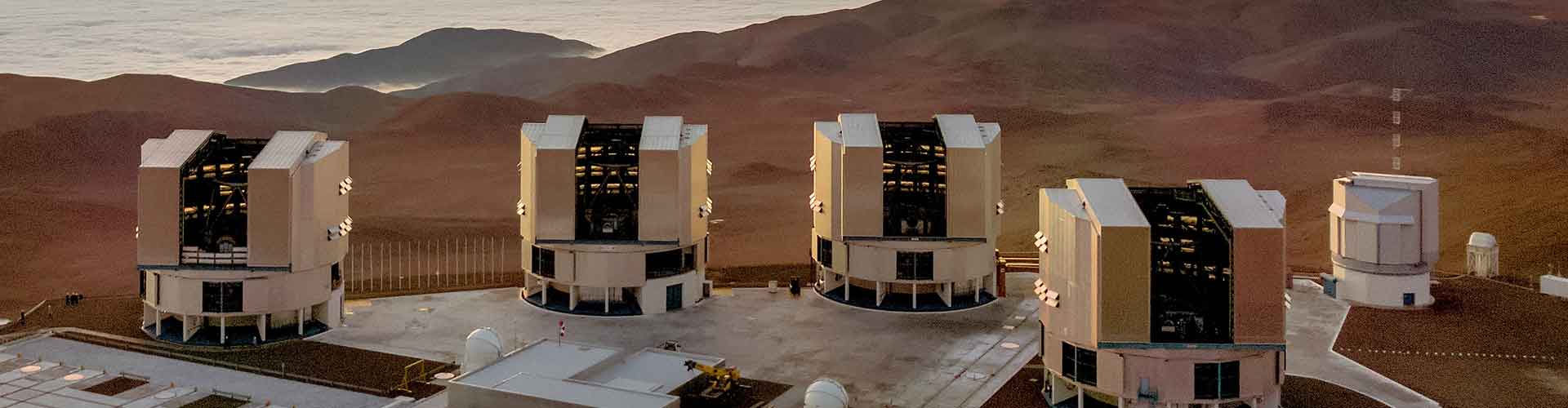 Very Large Telescope
 Extremely Large Telescope
 Euclid Space Telescope
 Nancy Grace Roman Space Telescope
 Event Horizon Telescope
 KEPLER SPACE TELESCOPE
 eROSITA Space Telescope
 IXPE Space Telescope
 ARIEL SPACE TELESCOPE
 Subaru Telescope
 SOFIA TELESCOPE
 Xuntian Space Telescope
 XPoSat Space Telescope
 Arecibo Radio Telescope
 CHEOPS SPACE TELESCOPE
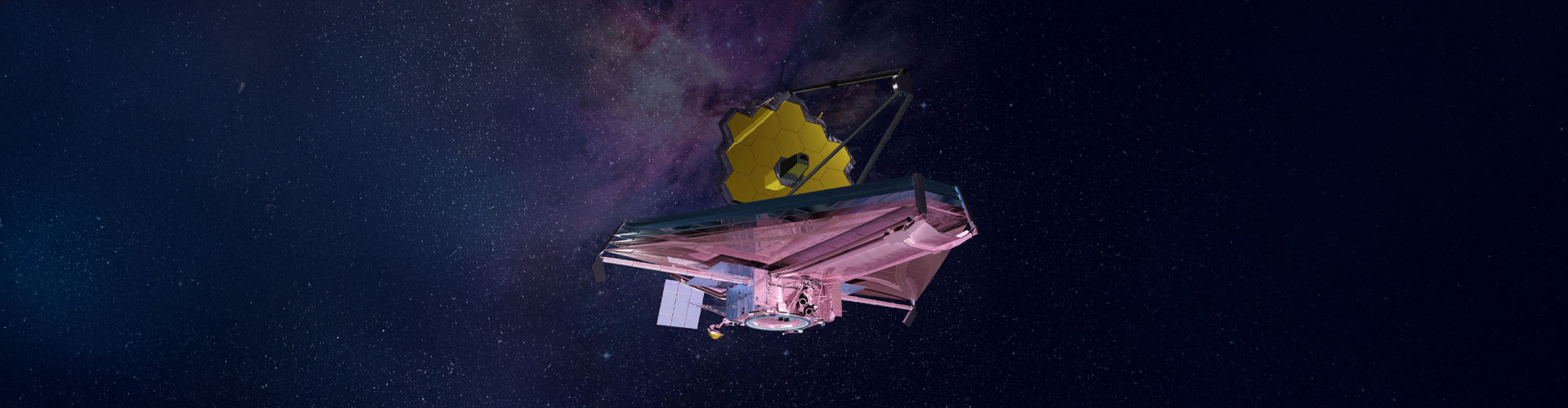 James Webb Space Telescope
 SPITZER SPACE TELESCOPE