Life with rockets nearby 🌴🚀
This is French Guiana, home to Europe’s Spaceport, where Ariane 6 and Vega-C launch into space.
#ESA #Rocket #Career
Join us live for Gaia’s biggest data release yet (Teaser)
After more than a decade surveying the sky, ESA's Gaia mission is unveiling its most comprehensive map of our galaxy yet.
Join ESA and the international Gaia scientific community for the unveiling of Gaia Data Release 4 (DR4) – an extraordinary new dataset containing 1.5 trillion observations of around 2 billion stars and other celestial objects.
Gathered over 66 months of observations, this remarkable dataset brings an unprecedented view of the Milky Way and its surroundings.
Watch live on 2 December 2026, from 14:45 to 16:30 CET, on ESA Web TV and YouTube.
★ Subscribe: http://bit.ly/ESAsubscribe and click twice on the bell button to receive our notifications.
We are Europe's gateway to space. Our mission is to shape the development of Europe's space capability and ensure that investment in space continues to deliver benefits to the citizens of Europe and the world. Check out https://www.esa.int/ to get up to speed on everything space related.
Copyright information about our videos is available here: https://www.esa.int/ESA_Multimedia/Terms_and_Conditions
Ozone hole grows to one of the largest in decades
In contrast to the 2025 seasonal ozone hole above Antarctica, which was the fifth smallest since 1992, this year’s ozone hole ranks as one of the largest in 48 years, based on long-term atmospheric observations, including data from the Copernicus Sentinel-5P satellite.
The animation shows how the size of ozone hole increased between 15 September and 22 October based on measurements from Sentinel-5P.
Read more: https://www.esa.int/articles/about-us/directorates/earth-observation-programmes/copernicus/sentinel-5p/ozone-hole-one-of-the-largest-in-decades
Credits: @DLRSpaceAgency
Access the video on the ESA video library: https://www.esa.int/articles/about-us/directorates/earth-observation-programmes/copernicus/sentinel-5p/ozone-hole-one-of-the-largest-in-decades
★ Subscribe: http://bit.ly/ESAsubscribe and click twice on the bell button to receive our notifications.
We are Europe's gateway to space. Our mission is to shape the development of Europe's space capability and ensure that investment in space continues to deliver benefits to the citizens of Europe and the world. Check out https://www.esa.int/ to get up to speed on everything space related.
Copyright information about our videos is available here: https://www.esa.int/ESA_Multimedia/Terms_and_Conditions
8 months in space… what would you miss most about Earth? 🌍
We asked our astronaut Sophie Adenot to choose between two alternatives.
Which answer surprised you most?
#ESA #Astronaut #ISS
Unveiling Gaia’s biggest data release yet
After more than a decade surveying the sky, ESA's Gaia mission is unveiling its most comprehensive map of our galaxy yet.
Join ESA and the international Gaia scientific community for the unveiling of Gaia Data Release 4 (DR4) – an extraordinary new dataset containing 1.5 trillion observations of around 2 billion stars and other celestial objects.
Gathered over 66 months of observations, this remarkable dataset brings an unprecedented view of the Milky Way and its surroundings.
Watch live on 2 December 2026, from 14:45 to 16:30 CET, on ESA Web TV and YouTube.
★ Subscribe: http://bit.ly/ESAsubscribe and click twice on the bell button to receive our notifications.
We are Europe's gateway to space. Our mission is to shape the development of Europe's space capability and ensure that investment in space continues to deliver benefits to the citizens of Europe and the world. Check out https://www.esa.int/ to get up to speed on everything space related.
Copyright information about our videos is available here: https://www.esa.int/ESA_Multimedia/Terms_and_Conditions
Revealing Hera's first images of asteroid Dimorphos
Join us live for the Hera Mission's first images of her destination - the asteroid Dimorphos! Four years ago, humans impacted an asteroid for the very first time with @NASA's DART mission, and the European Space Agency sent the Hera mission to find out exactly what happened.
This livestream, broadcast live from Berlin’s Museum für Naturkunde, will reveal Hera's first images of Dimorphos. The binary asteroid system of Didymos and its moonlet Dimorphos will be seen up-close, and the photos will reveal how DART's impact affected the 151m diameter asteroid.
You'll hear from Hera’s leading scientists as they discuss whether DART and Hera have proved if asteroid deflection is a viable planetary defence method, and how the up-close look at an asteroid allows them to peek at what these celestial bodies tell us about our universe.
With Hera's arrival after her two-year journey, planetary defence takes another step towards a future where we can protect the Earth from asteroids - and avoid the fate of the dinosaurs 66 million years ago!
Join us Wednesday 25 November starting at 19:45 CET.
Want to learn more about the Hera mission? Check out the Hera Companion and dive into data, diagrams, and exclusive dispatches: https://hera.esa.int/
★ Subscribe: http://bit.ly/ESAsubscribe and click twice on the bell button to receive our notifications.
We are Europe's gateway to space. Our mission is to shape the development of Europe's space capability and ensure that investment in space continues to deliver benefits to the citizens of Europe and the world. Check out https://www.esa.int/ to get up to speed on everything space related.
Copyright information about our videos is available here: https://www.esa.int/ESA_Multimedia/Terms_and_Conditions
Hera sees Dimorphos orbiting Didymos from the south
This animation shows one orbit of Dimorphos around Didymos with one new image acquired every 2 minutes. Note the tumbling of Dimorphos, made obvious by its large impact crater, and the smaller moonlet briefly passing into shadow then later casting a shadow onto the face of Didymos. The average distance between Hera and the asteroids is 28.6 km and the spatial resolution around 2.7 km per pixel.
Credits: European Space Agency (ESA)
★ Subscribe: http://bit.ly/ESAsubscribe and click twice on the bell button to receive our notifications.
We are Europe's gateway to space. Our mission is to shape the development of Europe's space capability and ensure that investment in space continues to deliver benefits to the citizens of Europe and the world. Check out https://www.esa.int/ to get up to speed on everything space related.
Copyright information about our videos is available here: https://www.esa.int/ESA_Multimedia/Terms_and_Conditions
Hera sees Dimorphos orbiting Didymos from the north
This animation shows one orbit of Dimorphos around Didymos, with one observation every 15 minutes (there is a single one-hour gap in the movie, due to spacecraft operations). Note the impact crater left by DART’s impact becoming visible on Dimorphos as it orbits, and the smaller asteroid passing into Didymos’s shadow at one point. The average distance between Hera and the asteroids is 31.6 km and the spatial resolution around 3 m per pixel.
Credits: European Space Agency (ESA)
★ Subscribe: http://bit.ly/ESAsubscribe and click twice on the bell button to receive our notifications.
We are Europe's gateway to space. Our mission is to shape the development of Europe's space capability and ensure that investment in space continues to deliver benefits to the citizens of Europe and the world. Check out https://www.esa.int/ to get up to speed on everything space related.
Copyright information about our videos is available here: https://www.esa.int/ESA_Multimedia/Terms_and_Conditions
Hera arrival at Didymos binary asteroids: from 270 280 km to 52 km away
As ESA's Hera mission for planetary defence closed in on its destination, this is what its main Asteroid Framing Camera saw. The spacecraft closed in on the 730-m-diameter Didymos asteroid and its 151-m Dimorphos moonlet, the latter the first object in the Solar System to have had its orbit measurably changed by human action, after NASA's DART spacecraft impacted it in 2022 (leaving a large crater!).
Credits: European Space Agency (ESA)
★ Subscribe: http://bit.ly/ESAsubscribe and click twice on the bell button to receive our notifications.
We are Europe's gateway to space. Our mission is to shape the development of Europe's space capability and ensure that investment in space continues to deliver benefits to the citizens of Europe and the world. Check out https://www.esa.int/ to get up to speed on everything space related.
Copyright information about our videos is available here: https://www.esa.int/ESA_Multimedia/Terms_and_Conditions
36 satellites, one Ariane 6. 🚀🛰️
On 24 November at 12:14 CET, Ariane 6 launched 36 satellites for Amazon Leo from Europe’s Spaceport in French Guiana to low Earth orbit.
📹 ESA/@CnesFrance/@arianespace/@ArianeGroup
#ESA #Ariane6 #Rocket
Launch of Ariane 6 Flight VA271
Replay of the tenth flight of Europe’s heavy-lift rocket Ariane 6, and the fourth mission where Ariane 6 was equipped with four boosters.
Flight VA271 took 36 satellites for Amazon Leo’s constellation from Europe’s Spaceport in French Guiana to low Earth orbit. Liftoff was on 24 November 12:14 CET.
The mission further demonstrates Ariane 6’s growing capabilities and its ability to meet the needs of major commercial customers, strengthening Europe’s independent access to space.
P160C-based boosters increase Ariane 6’s performance by up to 15% depending on the orbit. The P160C solid rocket motor was developed by Europropulsion. Its structure is made in Italy, the rocket engine nozzle in France and the igniter in Norway. The boosters are loaded with fuel and finalised for Ariane 6 at Europe’s Spaceport in French Guiana.
The development of Ariane 6 is another stellar example of European cooperation. The European Space Agency works with an industrial network in 13 European countries, led by prime contractor and design authority ArianeGroup. French space agency CNES manages the range operations at Europe’s Spaceport in French Guiana. Arianespace was the launch service provider for this flight for Amazon.
Credits: ESA/CNES/ArianeGroup/Arianespace
★ Subscribe: http://bit.ly/ESAsubscribe and click twice on the bell button to receive our notifications.
We are Europe's gateway to space. Our mission is to shape the development of Europe's space capability and ensure that investment in space continues to deliver benefits to the citizens of Europe and the world. Check out https://www.esa.int/ to get up to speed on everything space related.
Copyright information about our videos is available here: https://www.esa.int/ESA_Multimedia/Terms_and_Conditions
What do you think an asteroid looks like after being hit by a spacecraft? ☄️
In 2022, NASA hit the asteroid Dimorphos and successfully changed its path. Now our Hera mission is there to see what it looks like up close.
What do you think we’ll see? Join us live on 25 November from 19:45 CET on YouTube as we reveal Hera’s first close-up images of Dimorphos.
#ESA #Asteroid #HeraMission
Join us live for the first images of asteroid Dimorphos
In 2022, NASA’s DART spacecraft deliberately struck Dimorphos, changing the asteroid’s orbit for the first time in history. But the impact left scientists with a mystery: what really happened, and why was the deflection so much greater than predicted?
Now, ESA’s Hera mission has arrived to investigate. After two years travelling through deep space, Hera is ready to reveal more about the asteroid we changed.
Join us live on 25 November, from 19:45 CET, as we unveil the first close-up images of Dimorphos and explore the next chapter in this historic planetary defence mission.
Explore the Hera Space Companion AI: https://hera.esa.int
Credits: European Space Agency (ESA)
★ Subscribe: http://bit.ly/ESAsubscribe and click twice on the bell button to receive our notifications.
We are Europe's gateway to space. Our mission is to shape the development of Europe's space capability and ensure that investment in space continues to deliver benefits to the citizens of Europe and the world. Check out https://www.esa.int/ to get up to speed on everything space related.
Copyright information about our videos is available here: https://www.esa.int/ESA_Multimedia/Terms_and_Conditions
What happens when you crash a spacecraft into an asteroid on purpose? ☄️
In 2022, @NASA hit Dimorphos and successfully changed its path. But the impact had a bigger effect than scientists expected.
Now our Hera mission has arrived to take a closer look at what happened.
Join us live on 25 November from 19:45 CET as we reveal Hera’s first close-up images of Dimorphos and see what they can tell us.
★ Subscribe: http://bit.ly/ESAsubscribe and click twice on the bell button to receive our notifications.
We are Europe's gateway to space. Our mission is to shape the development of Europe's space capability and ensure that investment in space continues to deliver benefits to the citizens of Europe and the world. Check out https://www.esa.int/ to get up to speed on everything space related.
Copyright information about our videos is available here: https://www.esa.int/ESA_Multimedia/Terms_and_Conditions
#ESA #Asteroid #HeraMission
Can hydrogen make Ariane 6 greener? | Hyguane project
The Hyguane project is developing and deploying an industrial-scale pilot plant for low-carbon hydrogen production at Europe’s Spaceport in French Guiana, with the long-term ambition of sourcing the hydrogen used to fuel Ariane 6 rockets through a carbon-free method.
The European Space Agency (ESA) and French space agency @CnesFrance are committed to reducing the footprint of rocket launches and ground operations at Europe’s Spaceport. Hyguane will deliver low-carbon hydrogen generated by solar-powered electrolysis. Beyond launch operations, Hyguane will also lay the foundations for new uses of low-carbon hydrogen in French Guiana.
The Hyguane project includes a new energy storage solution, deploying hydrogen fuel cells as a more sustainable alternative to the batteries used for backup power at the Europe’s Spaceport and providing electricity to infrastructure such as telecommunications antennas. The project, offering low carbon mobility, will also kick-start hydrogen-powered transport in French Guiana with a hydrogen refuelling station and the introduction of hydrogen-powered trucks.
More than an energy project, Hyguane is a strategic step towards greater European autonomy in accessing space. By reducing the reliance on external supplies, the project will help strengthen the resilience and increase sovereign European launch capabilities, ensuring greater control over the fuel that powers Ariane 6.
Hyguane will help foster a new hydrogen industry in French Guiana, building on strong partnerships with local academic institutions and creating opportunities for skill development and innovation. A key part of this ambition is the creation of the Hydrogen Competence Centre at the entrance to the Europe’s Spaceport in French Guiana, which will develop hydrogen expertise and innovation by hosting start-ups and fostering collaboration between local stakeholders.
Credits: ESA/CNES
★ Subscribe: http://bit.ly/ESAsubscribe and click twice on the bell button to receive our notifications.
We are Europe's gateway to space. Our mission is to shape the development of Europe's space capability and ensure that investment in space continues to deliver benefits to the citizens of Europe and the world. Check out https://www.esa.int/ to get up to speed on everything space related.
Copyright information about our videos is available here: https://www.esa.int/ESA_Multimedia/Terms_and_Conditions
What’s actually hardest to do in space?
We asked our astronaut Sophie Adenot to rank seven everyday activities based on how difficult they are in space, without knowing what was coming next. Once she made her choice, there was no going back!
🎞️ ESA/ @NASA /Don Pettit
★ Subscribe: http://bit.ly/ESAsubscribe and click twice on the bell button to receive our notifications.
We are Europe's gateway to space. Our mission is to shape the development of Europe's space capability and ensure that investment in space continues to deliver benefits to the citizens of Europe and the world. Check out https://www.esa.int/ to get up to speed on everything space related.
Copyright information about our videos is available here: https://www.esa.int/ESA_Multimedia/Terms_and_Conditions
After almost eight months in space, how does your brain learn to live with gravity again? 🧠
Following her return from the International Space Station, our astronaut Sophie Adenot is undergoing neurological tests to check her coordination, reflexes and cranial nerve function.
These tests are taking place at :envihab, the @DLRde research facility in Cologne, Germany, helping scientists understand how the nervous system readjusts to life on Earth.
Share this with someone who’s curious about what spaceflight does to the human body!
Our map of the Universe just got bigger 🌌
Our Euclid space telescope has revealed new areas of its huge survey of the sky, capturing millions of stars and galaxies.
The northern patch alone, which we zoom into in the video, is nearly 500 gigapixels! Hiding inside this enormous view is Messier 81, a spiral galaxy around 12 million light-years away.
Share this with someone who could spend hours zooming through the Universe
Credits: ESA/Gaia/DPAC ESA/Planck Collaboration, Euclid Consortium/NASA, J.-C. Cuillandre and E. Bertin
Access the video on the ESA video library:
★ Subscribe: http://bit.ly/ESAsubscribe and click twice on the bell button to receive our notifications.
We are Europe's gateway to space. Our mission is to shape the development of Europe's space capability and ensure that investment in space continues to deliver benefits to the citizens of Europe and the world. Check out https://www.esa.int/ to get up to speed on everything space related.
Copyright information about our videos is available here: https://www.esa.int/ESA_Multimedia/Terms_and_Conditions
Zoom into Euclid’s 500 gigapixel mosaic of the Universe
On 12 November 2026, ESA’s Euclid space telescope released its first major batch of data: DR1-Foundation. As part of this very large data release Euclid has captured the light of more than a billion objects over an area of sky as big as 9500 full Moons, laying the foundation for its largest ever 3D map of the cosmos.
In this video, we zoom into the northern mosaic, which is nearly 500 gigapixels in size. This mosaic comprises 740 observations collected in autumn 2024 and spring 2025 as part of the Euclid Wide Survey, and covers 367 deg2 of the northern sky.
Read more: https://www.esa.int/articles/about-us/directorates/science/euclid/euclid-lays-the-foundation-for-its-best-ever-3d-map-of-the-universe
Credit: ESA/Euclid/Euclid Consortium/NASA, image processing by J.-C. Cuillandre and E. Bertin; ESA/GaiaDPAC; ESA/Planck Collaboration
CC BY-SA 3.0 IGO
★ Subscribe: http://bit.ly/ESAsubscribe and click twice on the bell button to receive our notifications.
We are Europe's gateway to space. Our mission is to shape the development of Europe's space capability and ensure that investment in space continues to deliver benefits to the citizens of Europe and the world. Check out https://www.esa.int/ to get up to speed on everything space related.
Copyright information about our videos is available here: https://www.esa.int/ESA_Multimedia/Terms_and_Conditions
Zoom into Cat's Head Nebula 🔎✨
The NASA/ESA Hubble and NASA/ESA/CSA James Webb Space Telescopes reveal two very different views of the Cat’s Head Nebula, a star-forming region around 7500 light-years away. Hubble captures its shadowy clouds of dust in visible light, while Webb peers through the dust in infrared, revealing young stars and hidden details.
📹 NASA, ESA, CSA, STScI, J. Depasquale (STScI), ESO, Digitized Sky Survey 2, N. Bartmann (ESA/Webb), J. Emerson, M. Irwin, J. Lewis, E. Slawik, N. Risinger, D. De Martin
🎶 FOGGY VIEW - Charlie Valentine
#ESA #Webb #Hubble



 South African National Space Agency (SANSA)
 Canadian Space Agency (CSA)
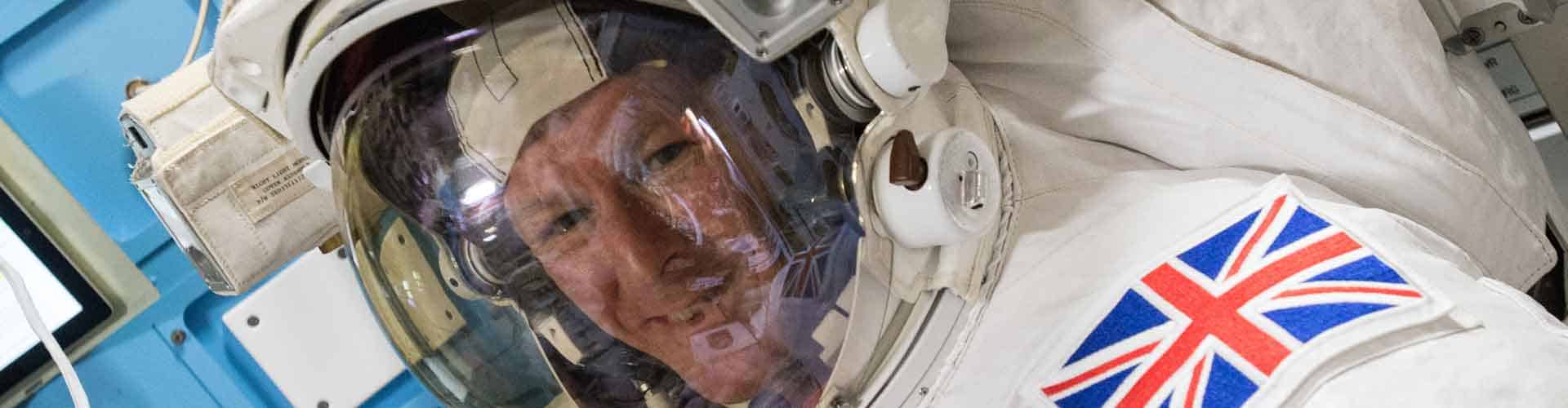 UK SPACE AGENCY
 African Space Agency (AfSA)
 Israel Space Agency
 Luxembourg Space Agency
 UAE Space Agency
 State Space Agency of Ukraine (SSAU)
 European Southern Observatory (ESO)
 EU Defence and Space (DG DEFIS)
 Arianespace Space Rider Spacecraft
 EURONEWS SPACE MAGAZINE
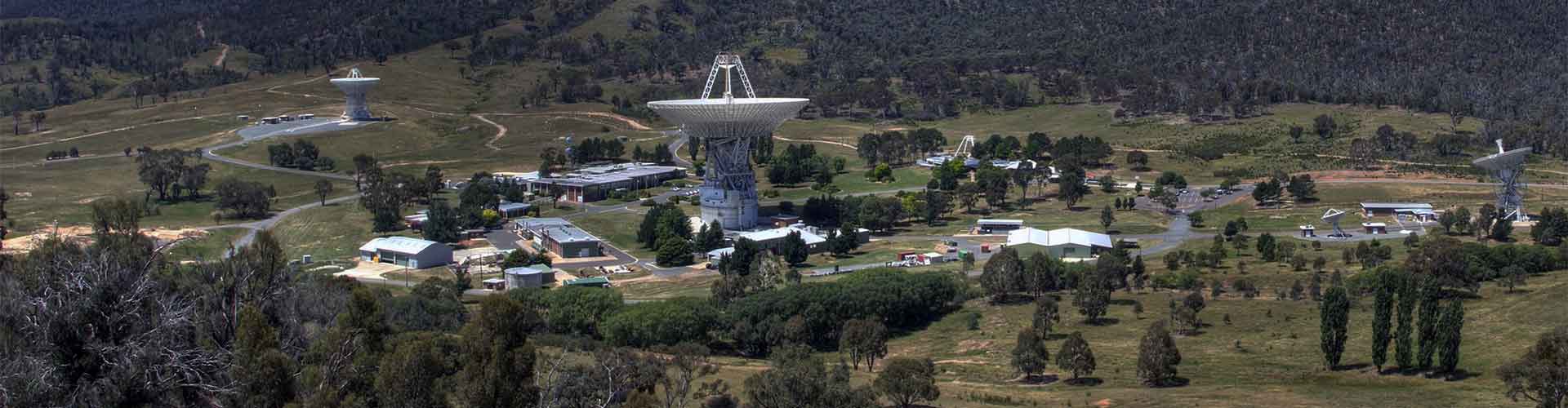 Deep Space Network
 Modul8 Space Innovations
 CHEOPS SPACE TELESCOPE
 ARIEL SPACE TELESCOPE
 UK Space News
 Roscosmos Progress Rocket Space Centre




