Astrobiologist Answers Mars Questions
Space scientist and astrobiologist Erika DeBenedictis joins WIRED to answer the internet's burning questions about The Red Planet. How long does the trip to Mars take with current technology? Why is it red? How realistic was the movie 'The Martian?' How long would it take to effectively terraform Mars to sustain human life? Does Mars have seasons? Did the conditions for life exist on Mars at one time? What lies just below the surface? Answers to these questions and more await on Mars Support.
0:00 Mars Support
0:16 Explaining why Mars is red (without sorcery)
0:44 Why did Elon Musk say "You can only depart to Mars once every two years"?
1:39 How realistic were the crop growing scenes in ‘The Martian?’
2:43 Terraforming Mars
3:25 Scientific inaccuracies in ‘The Martian’
3:50 How long is the trip to Mars? What about the return leg?
5:03 Mountains on Mars
6:07 Does Mars have seasons?
6:43 Why is everyone obsessed with colonizing Mars?
7:17 Didn’t we find water on Mars a while back?
7:53 What kind of batteries do the Mars rovers use?
9:01 Take deep breaths
10:17 How much would you weigh on Mars?
10:54 How fast would you die on Mars without a spaceship?
11:37 How old is Mars?
12:18 If the conditions for life existed on Mars at one time, why is there no evidence of life?
14:56 Have we learned anything new about Mars after landing there with a rover?
16:01 Staying fit in microgravity
16:50 What type of material is the surface of Mars primarily made of?
18:33 Nice place you’ve got here
Still haven’t subscribed to WIRED on YouTube? ►► http://wrd.cm/15fP7B7
Listen to the Uncanny Valley podcast ►► https://podcasts.apple.com/us/podcast/uncanny-valley-wired/id266391367
Want more WIRED? Get the magazine ►► https://subscribe.wired.com/subscribe/splits/wired/WIR_YouTube?source=EDT_WIR_YouTube_0_Video_Description_ZZ
Follow WIRED:
Instagram ►►https://instagram.com/wired
Twitter ►►http://www.twitter.com/wired
Facebook ►►https://www.facebook.com/wired
Tik Tok ►►https://www.tiktok.com/@wired
Get more incredible stories on science and tech with our daily newsletter: https://wrd.cm/DailyYT
ABOUT WIRED
WIRED is where tomorrow is realized. Through thought-provoking stories and videos, WIRED explores the future of business, innovation, and culture.
Artificial magnetic field particle ring to help terraform Mars
A magnetic field around Mars would be very helpful, as it would protect the planet from the sun's solar wind and cosmic rays, allowing it to potentially retain a thicker atmosphere and liquid water, making it more habitable. A novel idea came from a paper published by Ruth A Bamford and her team consists of creating an artificially charged particle ring around Mars. This would be achieved by ejecting matter from the moon Phobos as it orbits the planet.
Learn more:
TERRAFORMING https://www.spacetv.net/terraforming/
PLANET MARS https://www.spacetv.net/mars/
PHOBOS MOON https://www.spacetv.net/phobos-moon/
COLONIZING MARS https://www.spacetv.net/colonizing-mars/
SPACE COLONIZATION https://www.spacetv.net/space-colonization/
Written by Paul McCracken https://paulsmccracken.com/
Senior Fact Checker Natalia Kissova https://www.linkedin.com/in/natalia-kissova-5a9473143/
Narrated by Sarah Jupp https://www.sarahjupp.com/
Technical support by TheseWorlds Media https://theseworlds.com
Sources:
https://www.sciencealert.com/scientists-reveal-crazy-plan-to-terraform-mars-with-an-artificial-magnetic-field
https://www.universetoday.com/153368/an-absolutely-bonkers-plan-to-give-mars-an-artificial-magnetosphere/
https://arxiv.org/abs/2111.06887
Credits:
Paul Jean UniverseUnique
NASA/JPL-Caltech/UArizona
NASA's Scientific Visualization Studio and NASA DRIVE Science Center for Geospace Storms / AJ Christensen
NASA Goddard/SVS/Greg Shirah, Horace Mitchell, Tom Bridgman
NASA's Scientific Visualization Studio and the MAVEN Science Team
NASA/Apollo 17 crew/ESA/MPS/UPD/LAM/IAA/RSSD/INTA/UPM/DASP/IDA
Renato Peixoto RPXStudio
NASA's Goddard Space Flight Center Conceptual Image Lab
NASA, ESA, CSA, Jupiter ERS Team; image processing by Ricardo Hueso (UPV/EHU) and Judy Schmidt
Contact SPACETV https://www.spacetv.net/contact-us/
SPACETV.NET 2025
Could we use nukes to terraform Mars? | Q&A | Space NOW! Podcast
NSC Film Club is showing 'The Martian' on 4th July. View the film and see the spacesuit worn by Matt Damon and Jessica Chastain. Book tickets: https://www.spacecentre.co.uk/whats-on/film-club/
ON THIS EPISODE
Join Josh Barker and David Southworth for this mailbag episode of Space NOW! where we're answering YOUR space questions. Including: Can we use nukes to terraform Mars? Does space have a North, South, East and West? And how far could the Voyager probes get from the Earth?
Have a question you want answered on a future episode? Send it to
[email protected]
Listen to this episode: https://spacenow.podbean.com/
Spotify: https://open.spotify.com/episode/6M1zQeY9xboYan5ivswOJk
EPISODE LINKS
The Martian spacesuit at the National Space Centre: https://www.spacecentre.co.uk/collections/categories/spacesuits-and-clothing/matt-damons-eva-spacesuit-from-the-ridley-scott-film-the-martian/
GET IN TOUCH
Visit the National Space Centre: https://www.spacecentre.co.uk
Send us your space question! Email
[email protected]
FOLLOW US ON SOCIALS
Facebook: facebook.com/@NationalSpaceCentre
Instagram: instagram.com/spacecentre
TikTok: tiktok.com/@spacecentre
Bluesky: bsky.app/profile/spacecentre.bsky.social
Threads: threads.com/@spacecentre
TIMESTAMPS
00:00 Introduction
00:28 Space WOWs!
03:00 Is there a North, South, East and West in Space?
06:05 Sci-fi Book Recommendations?
08:15 Can we use nukes to terraform Mars?
13:18 Why do we look at Earth-like planets to find life?
18:04 What is happening with the Lunar Gateway?
21:57 Will Voyager 1 ever leave the galaxy?
24:48 Astrophotography shout-out!
3 Key Technologies to Start Terraforming Mars in Our Lifetime
😍 [Interview+] Same video. No YT ads.
https://www.patreon.com/posts/129953976
Terraforming Mars is usually considered in the realm of science fiction. But actually we have technology to start doing it in our lifetime and achieve some meaningful results it a timescale of tens of years, not thousands. What are they? Finding out in this interview.
🟣 Guest: Dr. Erika Alden DeBenedictis
https://www.erikadebenedictis.com/
📜 The Case for Mars Terraforming Research
https://www.nature.com/articles/s41550-025-02548-0
00:00 Intro
01:34 Why Mars sucks
02:23 Old ideas to terraform Mars
11:00 New technologies
31:52 Timescales
37:00 Ethical consequences
46:39 Current obsessions
53:39 Final thoughts 📰 GUIDE TO SPACE NEWSLETTER
Read by 70,000 people every Friday. Written by Fraser. No ads.
Subscribe for Free: https://universetoday.com/newsletter
🎧 PODCASTS
Universe Today: https://www.patreon.com/rss/universetoday?auth=AVVbyU4I7aGrU0z_fv7ZtyZjx7w8a0Aw&show=1438186
Astronomy Cast: http://www.astronomycast.com/
📩 CONTACT FRASER
[email protected]
⚖️ LICENSE
Creative Commons Attribution 4.0 International (CC BY 4.0)
You are free to use my work for any purpose you like, just mention me as the source and link back to this video.
Worldhouses: How We Could Live on Dead Worlds
Why spend centuries terraforming a planet when you could build a livable world in days?
In this episode, we explore Worldhouses and paraterraforming—planet-spanning domes that let us colonize hostile worlds by enclosing them beneath engineered skies. From Mars to icy moons and beyond, we look at how entire planets could be made habitable without ever changing their underlying environment.
Instead of reshaping a world, we simply build one over it.
Watch my exclusive video Antimatter Propulsion: Harnessing the Power of Annihilation - https://nebula.tv/videos/isaacarthur-antimatter-propulsion-harnessing-the-power-of-annihilation
Get Nebula using my link for 40% off an annual subscription: https://go.nebula.tv/isaacarthur
Get a Lifetime Membership to Nebula for only $300: https://go.nebula.tv/lifetime?ref=isaacarthur
Use the link gift.nebula.tv/isaacarthur to give a year of Nebula to a friend for just $30.
Visit our Website: http://www.isaacarthur.net
Join Nebula: https://go.nebula.tv/isaacarthur
Support us on Patreon: https://www.patreon.com/IsaacArthur
Support us on Subscribestar: https://www.subscribestar.com/isaac-arthur
Facebook Group: https://www.facebook.com/groups/1583992725237264/
Reddit: https://www.reddit.com/r/IsaacArthur/
Twitter: https://twitter.com/Isaac_A_Arthur on Twitter and RT our future content.
SFIA Discord Server: https://discord.gg/53GAShE
Credits:
Worldhouses
Episode 499; May 15, 2025
Written, Produced & Narrated by: Isaac Arthur
Graphics: Fishy Tree & Ken York YD Visual
Select imagery/video supplied by Getty Images
Music Courtesy of Epidemic Sound http://epidemicsound.com/creator
Chris Zabriskie, "Unfoldment, Revealment", "A New Day in a New Sector"
Taras Harkavyi, "Alpha and..."
Stellardrone, "Red Giant", "Billions and Billions"
Chapters:
0:00 Intro
2:47 The Worldhouse Concept
7:04 How Would a Worldhouse Be Built?
15:19 The Quilt Approach: Expanding a Worldhouse Over Time
20:22 Antimatter Propulsion
21:42 Partial Enclosures: Mega-Domes Over Key Regions
23:56 Enclosing Asteroids: The Micro-Worldhouse
28:07 Earth as a Worldhouse: Could We Enclose Our Own Planet?
30:43 The Future of Worldhouses
Terraforming Mars On the Cheap? New Solution Proposed by Scientists
Get a Wonderful Person Tee: https://teespring.com/stores/whatdamath
More cool designs are on Amazon: https://amzn.to/3QFIrFX
Alternatively, PayPal donations can be sent here: http://paypal.me/whatdamath
Hello and welcome! My name is Anton and in this video, we will talk about another intriguing proposition on how we could maybe terraform Mars
Links:
https://www.science.org/doi/10.1126/sciadv.adn4650
Cody's lab video: https://www.youtube.com/shorts/TG7gstXCt1A
Mars terraforming: https://youtu.be/zQJ9C_jzT64
https://youtu.be/ur3Pyuzjsuw
Mars magnetosphere videos:
https://www.youtube.com/watch?v=l9shZxvtujg
https://youtu.be/d4T-Nltq_vk
#mars #terraform #astronomy
0:00 Mars terraforming ideas
2:00 Magnetosphere and other ideas
3:20 Recent idea is a lot more feasible
5:00 Effects this would create
6:30 Problems that need to be solved
Support this channel on Patreon to help me make this a full time job:
https://www.patreon.com/whatdamath
Bitcoin/Ethereum to spare? Donate them here to help this channel grow!
bc1qnkl3nk0zt7w0xzrgur9pnkcduj7a3xxllcn7d4
or ETH: 0x60f088B10b03115405d313f964BeA93eF0Bd3DbF
Space Engine is available for free here: http://spaceengine.org
Enjoy and please subscribe.
Twitter: https://twitter.com/WhatDaMath
Facebook: https://www.facebook.com/whatdamath
Twitch: http://www.twitch.tv/whatdamath
The hardware used to record these videos:
New Camera: https://amzn.to/34DUUlv
CPU: https://amzn.to/2LZFQCJ
Video Card: https://amzn.to/2M1W26C
Motherboard: https://amzn.to/2JYGiQQ
RAM: https://amzn.to/2Mwy2t4
PSU: https://amzn.to/2LZcrIH
Case: https://amzn.to/2MwJZz4
Microphone: https://amzn.to/2t5jTv0
Mixer: https://amzn.to/2JOL0oF
Recording and Editing: https://amzn.to/2LX6uvU
Some of the above are affiliate links, meaning I would get a (very small) percentage of the price paid.
Thank you to all Patreon supporters of this channel
Special thanks also goes to all the wonderful supporters of the channel through YouTube Memberships
Credit:
Daein Ballard CC BY-SA 3.0 https://en.wikipedia.org/wiki/Terraforming_of_Mars#/media/File:MarsTransitionV.jpg
Ittiz CC BY-SA 3.0 https://en.wikipedia.org/wiki/Terraforming_of_Mars#/media/File:TerraformedMars.jpg
Licenses used:
https://creativecommons.org/licenses/by/4.0/
https://creativecommons.org/licenses/by-sa/4.0/
https://creativecommons.org/licenses/by/3.0/
https://creativecommons.org/licenses/by-sa/3.0/
https://creativecommons.org/licenses/by/2.5/
https://creativecommons.org/licenses/by-sa/2.5/
https://creativecommons.org/licenses/by/2.0/
https://creativecommons.org/licenses/by-sa/2.0/
Could We Really Terraform Mars?
Humans have long dreamt of terraforming mars, but is it even possible? Building a mars colony would require technological leaps that we can only dream of at the moment. But if we could terraform the red planet, what might that process look like?
Sources:
https://pastebin.com/raw/bGhxNfJg
Founder & Director: Peter Schumaker
Chief Editor: Tristan Reed
Original soundtrack by Joseph McDade
New Idea From NASA: Trillions of Floating Balloons To Terraform Venus
Good telescope that I've used to learn the basics: https://amzn.to/35r1jAk
Get a Wonderful Person shirt: https://teespring.com/stores/whatdamath
Alternatively, PayPal donations can be sent here: http://paypal.me/whatdamath
Hello and welcome! My name is Anton and in this video, we will talk about new interesting proposition on how to terraform Venus using floating continents
Links:
https://en.wikipedia.org/wiki/Terraforming_of_Venus
https://arxiv.org/pdf/2203.06722.pdf
#venus #terraforming #nasa
Support this channel on Patreon to help me make this a full time job:
https://www.patreon.com/whatdamath
Bitcoin/Ethereum to spare? Donate them here to help this channel grow!
bc1qnkl3nk0zt7w0xzrgur9pnkcduj7a3xxllcn7d4
or ETH: 0x60f088B10b03115405d313f964BeA93eF0Bd3DbF
Space Engine is available for free here: http://spaceengine.org
Enjoy and please subscribe.
Twitter: https://twitter.com/WhatDaMath
Facebook: https://www.facebook.com/whatdamath
Twitch: http://www.twitch.tv/whatdamath
The hardware used to record these videos:
New Camera: https://amzn.to/34DUUlv
CPU: https://amzn.to/2LZFQCJ
Video Card: https://amzn.to/2M1W26C
Motherboard: https://amzn.to/2JYGiQQ
RAM: https://amzn.to/2Mwy2t4
PSU: https://amzn.to/2LZcrIH
Case: https://amzn.to/2MwJZz4
Microphone: https://amzn.to/2t5jTv0
Mixer: https://amzn.to/2JOL0oF
Recording and Editing: https://amzn.to/2LX6uvU
Some of the above are affiliate links, meaning I would get a (very small) percentage of the price paid.
Thank you to all Patreon supporters of this channel
Special thanks also goes to all the wonderful supporters of the channel through YouTube Memberships.
Images/Videos:
Ittiz CC BY-SA 3.0 https://en.wikipedia.org/wiki/Terraforming_of_Venus#/media/File:TerraformedVenus.jpg
Licenses used:
https://creativecommons.org/licenses/by/4.0/
https://creativecommons.org/licenses/by-sa/4.0/
https://creativecommons.org/licenses/by/3.0/
https://creativecommons.org/licenses/by-sa/3.0/
https://creativecommons.org/licenses/by/2.5/
https://creativecommons.org/licenses/by-sa/2.5/
https://creativecommons.org/licenses/by/2.0/
https://creativecommons.org/licenses/by-sa/2.0/
Nuclear Terraforming: Using Nukes to Bring Life to Mars
In the Future, we may use nuclear bombs to help turn dead worlds into living ones, in this episode we'll discuss several different methods of atomic terraforming. Open up a Wealthfront investment account through my link https://invest.wealthfront.com/isaacarthur and get your first $5,000 managed for free. Thanks to Wealthfront for sponsoring this video!
Visit our Website: http://www.isaacarthur.net
Join this channel to get access to perks:
https://www.youtube.com/channel/UCZFipeZtQM5CKUjx6grh54g/join
Visit our Website: http://www.isaacarthur.net
Join Nebula: https://go.nebula.tv/isaacarthur
Support us on Patreon: https://www.patreon.com/IsaacArthur
Support us on Subscribestar: https://www.subscribestar.com/isaac-arthur
Facebook Group: https://www.facebook.com/groups/1583992725237264/
Reddit: https://www.reddit.com/r/IsaacArthur/
Twitter: https://twitter.com/Isaac_A_Arthur on Twitter and RT our future content.
SFIA Discord Server: https://discord.gg/53GAShE
Credits:
Nuclear Terraforming: Using Nukes to Bring Life to Mars
Science & Futurism with Isaac Arthur
Episode 327, January 27, 2022
Written, Produced & Narrated by Isaac Arthur
Editors:
Alberto Imbrosciano
A.T. Long
Jerry Guern
Cover Art:
Jakub Grygier https://www.artstation.com/jakub_grygier
Graphics:
Jeremy Jozwik https://www.artstation.com/zeuxis_of_losdiajana
Sam McNAmara of Rapid Thrash
Music by:
Markus Junnikkala, https://markusjunnikkala.com
"Mobilize the Fleets"
"We Roam the Stars"
Stellardrone, https://stellardrone.bandcamp.com
"The Earth is Blue"
"A Moment of Stillness"
Aerium, https://aeriumambient.bandcamp.com
"Fifth Star of Aldebaran"
Disclaimer: Isaac Arthur receives cash compensation from Wealthfront Advisers LLC (“Wealthfront Advisers”) for sponsored advertising materials. Isaac Arthur is not a client and this is a paid endorsement. Isaac Arthur and Wealthfront Advisers are not associated with one another and have no formal relationship outside of this arrangement. Nothing in this communication should be construed as a solicitation, offer, or recommendation, to buy or sell any security. Any links provided by Isaac Arthur are not intended to imply that Wealthfront Advisers or its affiliates
endorses, sponsors, promotes and/or is affiliated with the owners of or participants in those.
sites, or endorses any information contained on those sites, unless expressly stated otherwise.
Investment management and advisory services are provided by Wealthfront, an SEC registered
investment adviser. All investing involves risk, including the possible loss of money you invest,
and past performance does not guarantee future performance.
Lecture: Mars Terraforming
SAASST - Sharjah Academy for Astronomy, Space sciences & Technology
Institute for Terraforming Earth and Mars - Tony Muscatello - 2021 Mars Society Virtual Convention
The Institute for Terraforming Earth and Mars (ITEM)
Track Code: XA-7
Abstract:
Recent success by SpaceX in launching a prototype Starship and plans for an orbital test of Starship/Super Heavy encourage optimism that people from various walks of life and not just professional astronauts will be traveling to Mars in the next several years, some of them to stay permanently on the Red Planet. Martians will turn their attention to terraforming Mars once they have established viable living facilities. At the same time the climate change crisis is causing serious concerns about the future of humanity on Earth. On first examination, the two problems seem to be opposite: Earth has too much CO2 in its atmosphere and Mars has too little to reach clement temperatures. However, both require thinking on a global level and some of the technologies needed for Mars exploration, such as in situ propellant production (ISPP), require CO2 as a starting material along with water to make methane and oxygen. Several methods have been studied over the years to obtain CO2, with one, i.e. compression, being demonstrated on Mars on a small scale by the MOXIE oxygen production experiment on the Mars Perseverance Rover. Others include freezing with cryocoolers and sorption/desorption from molecular sieves, though the latter is usually considered to be impractical. However, work on using Metal-Oxide Frameworks (MOFs) have shown promise for CO2 capture and sequestration on Earth. Thus, there is a natural synergy between Mars ISRU and addressing climate change, which can be called terraforming Earth since the Earth needs to be restored to earlier conditions. Fortunately, government and private funding from billionaires and multimillionaires to combat climate change is increasingly available. We propose to found the The Institute for Terraforming Earth and Mars (ITEM) to pursue the intersection of Mars and Earth technologies to benefit both planets.
From the 24th Annual International Mars Society Convention, held as a Virtual Convention worldwide on the Internet from October 14-17, 2021. The four-day International Mars Society Convention, held every year since 1998, brings together leading scientists, engineers, aerospace industry representatives, government policymakers and journalists to talk about the latest scientific discoveries, technological advances and political-economic developments that could help pave the way for a human mission to the planet Mars.
Conference Papers and some presentations will be available on www.MarsPapers.org
For more information on the Mars Society, visit our website at www.MarsSociety.org
#MarsSociety #MarsSocCon2021
Could we really terraform Mars? - Ask a Spaceman!
Full podcast episodes: http://www.askaspaceman.com
Support: http://www.patreon.com/pmsutter
Follow: http://www.twitter.com/PaulMattSutter and http://www.facebook.com/PaulMattSutter
What killed Mars billions of years ago? How can we kickstart a warming trend to transform Mars to look like Earth? What kind of technology do we need, and how well will it work? I discuss these questions and more in today’s Ask a Spaceman!
Follow all the show updates at http://www.askaspaceman.com, and help support the show at http://www.patreon.com/pmsutter
Keep those questions about space, science, astronomy, astrophysics, and cosmology coming to #AskASpaceman for COMPLETE KNOWLEDGE OF TIME AND SPACE! Music by Jason Grady and Nick Bain.
00:00 What Went Wrong with Mars
02:55 Creating an Artificial Greenhouse Effect
07:22 Radical Ideas
09:33 Recreating the Martian Magnetic Field
11:13 Technological Challenges
Image credits: NASA, JPL, ESA, Rigel Woida, Steve Bowers
Terraforming: Forging New Worlds
Our galaxy likely contains trillions of worlds, and perhaps none we could live on without great effort to make them like Earth. To colonize these worlds, to make them settlements for our descendants in the future, we must first terraform them.
Visit our sponsor, Brilliant: https://brilliant.org/IsaacArthur/
National Space Society Roadmap:
https://space.nss.org/nss-roadmap-to-space-settlement-3rd-edition-2018-contents/
Join this channel to get access to perks:
https://www.youtube.com/channel/UCZFipeZtQM5CKUjx6grh54g/join
Visit our Website: http://www.isaacarthur.net
Join Nebula: https://go.nebula.tv/isaacarthur
Support us on Patreon: https://www.patreon.com/IsaacArthur
Support us on Subscribestar: https://www.subscribestar.com/isaac-arthur
Facebook Group: https://www.facebook.com/groups/1583992725237264/
Reddit: https://www.reddit.com/r/IsaacArthur/
Twitter: https://twitter.com/Isaac_A_Arthur on Twitter and RT our future content.
SFIA Discord Server: https://discord.gg/53GAShE
Credits:
Terraforming: Forging New Worlds
Science & Futurism with Isaac Arthur
Episode 268a: December 13, 2020
Written, Produced & Narrated by Isaac Arthur
Editors:
Jerry Guern
Jason Burbank
Keith Blockus
S. Kopperud
Cover Art:
Jakub Grygier https://www.artstation.com/jakub_grygier
Graphics:
Bryan Versteeg http://spacehabs.com
Jeremy Jozwik https://www.artstation.com/zeuxis_of_losdiajana
Ken York https://www.facebook.com/YDVisual/
Sam McNamara
Sergio Botero https://www.artstation.com/sboterod?fref=gc
Udo Schroeter
Music Courtesy of Epidemic Sound http://epidemicsound.com/creator
Open Space 87: What Would It Take to Terraform Venus, And More...
In this week's live QA, I answer more questions about the discovery of phosphine on Venus, does Russia own Venus? And more...
00:00 Intro
07:30 Does Russia Own Venus
08:35 How much life would be on Venus?
10:39 Are there missions planned to go to Venus?
12:38 Why is phosphine such a big deal?
16:00 Could we harvest hydrogen from the gas giants?
18:12 Does life really find a way?
19:22 How do we terraform Venus?
22:02 What do I think about the TicTac UFOs?
24:10 Does China release pictures from the Moon?
26:24 What do I think of Away?
29:07 Best rocket fuel?
31:26 Biggest telescope I've looked through?
32:54 Do nearby parallel Universe exist?
36:40 Do I think there's life in the Solar System?
39:20 What historical person would I like to meet?
40:38 Do we contact scientists when working on a story?
42:30 How can we be certain Earth won't be hit by an asteroid?
44:50 What famous science people know me?
45:08 What will LISA be able to detect?
47:30 Are we still mapping the Van Allen Belt?
49:14 Am I worried about Starlink?
53:14 How is the Decadal Survey going?
54:07 Balloon missions to Venus?
55:00 Will satellite megaconstellations make spaceflight difficult? Our Book is out!
https://www.amazon.com/Universe-Today-Ultimate-Viewing-Cosmos/dp/1624145442/
Audio Podcast version:
ITunes: https://itunes.apple.com/us/podcast/universe-today-guide-to-space-audio/id794058155?mt=2
RSS: https://www.universetoday.com/audio
What Fraser's Watching Playlist:
https://www.youtube.com/playlist?list=PLbJ42wpShvmkjd428BcHcCEVWOjv7cJ1G
Weekly email newsletter:
https://www.universetoday.com/newsletter
Weekly Space Hangout:
https://www.youtube.com/channel/UC0-KklSGlCiJDwOPdR2EUcg/
Astronomy Cast:
https://www.youtube.com/channel/UCUHI67dh9jEO2rvK--MdCSg
Support us at: https://www.patreon.com/universetoday
More stories at: https://www.universetoday.com/
Twitch: https://twitch.tv/fcain
Follow us on Twitter: @universetoday
Like us on Facebook: https://www.facebook.com/universetoday
Instagram - https://instagram.com/universetoday
Team: Fraser Cain - @fcain /
[email protected]
Karla Thompson - @karlaii / https://www.youtube.com/channel/UCEItkORQYd4Wf0TpgYI_1fw
Chad Weber -
[email protected]This Is How We Can Make Mars Habitable
Mars is a very unwelcoming place and NASA said we can’t just terraform the entire planet. But researchers have a new idea which includes silica aerogel.
Support us on Patreon and help Cosmoknowledge become the number one destination for science: https://www.patreon.com/cosmoknowledge
SUBSCRIBE ► https://goo.gl/PLLFPz
----
Website ► https://cosmoknowledge.com/
TikTok ► https://www.tiktok.com/@cosmoknowledge
Instagram ► https://www.instagram.com/itscosmoknowledge
Facebook ► https://facebook.com/cosmoknowledgee
Edited by:
Ardit Bicaj
Narrated by:
Russell Archey
https://www.ravonmedia.com/
Graphics & Credits:
Space Engine
NASA/JPL-Caltech
Music:
Austafjord - DEX 1200
Thank you to our Patrons:
DonPig
-
Cosmoknowledge brings news from space.
We love you, explorers!
Terraforming Mars with Neil deGrasse Tyson
Should we terraform Mars? How would we do it? Why would we do it? Neil deGrasse Tyson and Chuck Nice are here to break down the logistics of putting humans on the Red Planet. You’ll learn why, if we want to warm Mars out of permafrost, it would be a BYOGHG event. You’ll also learn about Elon Musk’s plan to warm up Mars. Chuck ponders the benefits of being a two-planet species. All that, plus, Neil explains why the day we have the power to terraform Mars is the same day we have the power to terraform Earth.
Support us on Patreon: https://www.patreon.com/startalkradio
Subscribe to StarTalk: https://www.youtube.com/user/startalkradio?sub_confirmation=1
Follow StarTalk:
Twitter: http://twitter.com/startalkradio
Facebook: https://www.facebook.com/StarTalk
Instagram: https://www.instagram.com/startalkradio/
About StarTalk:
Science meets pop culture on StarTalk! Astrophysicist & Hayden Planetarium director Neil deGrasse Tyson, his comic co-hosts, guest celebrities & scientists discuss astronomy, physics, and everything else about life in the universe. Keep Looking Up!
#StarTalk #NeildeGrasseTyson #Mars
0:00 - Introduction
0:11 - Habitats on Mars
1:02 - Qualities of Mars
2:53 - Warming Mars
6:41 - Is Mars The Best Planet To Terraform?
7:29 - Focusing on Earth
9:27 - Closing Notes
Winter on Venus
Venus is a desolate scorching world on which no life can exist. Yet if it can be cooled down, there is no other planet we know of more suitable for terraforming and colonization. We will examine methods of cooling Venus down and preparing it to be settled in the future.
Visit our sponsor, Brilliant: https://brilliant.org/IsaacArthur/
Join this channel to get access to perks:
https://www.youtube.com/channel/UCZFipeZtQM5CKUjx6grh54g/join
Visit our Website: http://www.isaacarthur.net
Join Nebula: https://go.nebula.tv/isaacarthur
Support us on Patreon: https://www.patreon.com/IsaacArthur
Support us on Subscribestar: https://www.subscribestar.com/isaac-arthur
Facebook Group: https://www.facebook.com/groups/1583992725237264/
Reddit: https://www.reddit.com/r/IsaacArthur/
Twitter: https://twitter.com/Isaac_A_Arthur on Twitter and RT our future content.
SFIA Discord Server: https://discord.gg/53GAShE
Credits:
Winter on Venus
Episode 207, Season 5 E41
Written by:
Isaac Arthur
Editors:
Darius Said
Jerry Guern
S. Kopperud
Cover Art
Jakub Grygier https://www.artstation.com/jakub_grygier
Graphics by
Jarred Eagley
Jeremy Jozwik https://www.artstation.com/zeuxis_of_losdiajana
Kris Holland (Mafic Studios) www.maficstudios.com
Kristijan Tavcar https://www.miragedereve.com
Sam McNamara of Rapid Thrash
Sergio Botero https://www.artstation.com/sboterod?fref=gc
Tristan3D
Produced & Narrated by
Isaac Arthur
Music Manager
Luca DeRosa -
[email protected]
Music:
Markus Junnikkala, "Hail the Victorious Dead" https://www.markusjunnikkala.com/
Aerium, "The Islands moved while I was asleep" https://www.youtube.com/channel/UCRnUJY3l5vIJFGsY3XvW4dQ
Dan MacLeod, "Lucky" https://soundcloud.com/neptuneuk
Markus Junnikkala, "The Men Would love a good fight" https://www.markusjunnikkala.com/
Lombus, "Doppler Shores" https://lombus.bandcamp.com
Paradox Interactive, "In Search of Life" https://www.paradoxplaza.com
Ross Bugden, "Revelation" https://www.youtube.com/channel/UCQKGLOK2FqmVgVwYferltKQ
Could We Terraform Mars?
To discover more go to http://lego.build/CITYSpace
PBS Member Stations rely on viewers like you. To support your local station, go to: http://to.pbs.org/DonateSPACE
Humanity’s future is glorious. As we master space travel, we’ll hop from one lifeless world to the next. Life will blossom in our path and the galaxy with shimmer with beautiful Earth-like orbs. Hmmm… maybe. This won’t sound so far fetched if we prove we can do it at least once. If we successfully terraform Mars.
Hosted by Matt O'Dowd
Written by Matt O'Dowd
Graphics by Murilo Lopes
Directed by: Andrew Kornhaber
Produced By: Kornhaber Brown
Support Space Time on Patreon
https://www.patreon.com/pbsspacetime
Check out the new Space Time Merch Store!
https://pbsspacetime.com/
We already have the technology to bring humans safely to Mars and set up small settlements - or at least could do within a generation. But those settlements will need to be cocooned - shielded against the deadly cold, intense radiation, and the fatal lack of atmospheric pressure. Surely if we want to thrive on Mars – to make it into our second home – these settlers, or their descendants, will need to be able open the airlocks, shed their spacesuits, and step out onto a survivable surface. We’ll need to terraform Mars, as our first step in terraforming the galaxy.
Red Iris Mars habitat by James Telfer: http://bit.ly/JamesTelferRedIris
Want Even More Great Space Content? Check out the Exciting Summer of Space Playlist
https://www.youtube.com/playlist?list...
Big Bang Supporters:
Alexander Tamas
Anton Lifshits
David Nicklas
Fabrice Eap
Juan Benet
Morgan Hough
Quasar Supporters:
Mark Heising
Mark Rosenthal
Vinnie Falco
Hypernova Supporters:
Chuck Zegar
Danton Spivey
Donal Botkin
Edmund Fokschaner
Hank S
John Hofmann
John R. Slavik
Jordan Young
Joseph Salomone
Matthew
Matthew O'Connor
Syed Ansar
Gamma Ray Burst Supporters:
Adrien Hatch
Adrian Molyneux
Alexey Eromenko
Andreas Nautsch
Bradley Jenkins
Brandon Labonte
Carlo Mogavero
Dan Warren
Daniel Lyons
David Behtala
DFaulk
Dustan Jones
Geoffrey Short
James Flowers
James Quintero
John Funai
John Pollock
Jonah
Jonathan Nesfeder
Joseph Dillman
Josh Thomas
Kevin Lee
Kevin Warne
Kyle Hofer
Malte Ubl
Mark Vasile
Nathan Hitchings
Nicholas Nachefski
Nick Virtue
Paul Rose
Scott Gossett
Sigurd Ruud Frivik
Taras Vozniuk
Tim Jones
Tim Stephani
Yurii Konovaliuk
سلطان الخليفي
Turning Mars into Another Earth
How to turn Mars into another Earth? #Terraforming
For more videos, follow me on Facebook: https://www.facebook.com/ScienceNaturePage/
Albedo - Scientific Concept Essential to Our Survival and Terraforming
You can buy Universe Sandbox 2 game here: http://amzn.to/2yJqwU6
Hello and welcome! My name is Anton and in this video, we will talk about a concept known as albedo - super important but not well understood.
Support this channel on Patreon to help me make this a full time job:
https://www.patreon.com/whatdamath
Space Engine is available for free here: http://spaceengine.org
Enjoy and please subscribe.
Twitter: https://twitter.com/WhatDaMath
Facebook: https://www.facebook.com/whatdamath
Twitch: http://www.twitch.tv/whatdamath
Bitcoins to spare? Donate them here to help this channel grow!
1GFiTKxWyEjAjZv4vsNtWTUmL53HgXBuvu
The hardware used to record these videos:
CPU: https://amzn.to/2LZFQCJ
Video Card: https://amzn.to/2M1W26C
Motherboard: https://amzn.to/2JYGiQQ
RAM: https://amzn.to/2Mwy2t4
PSU: https://amzn.to/2LZcrIH
Case: https://amzn.to/2MwJZz4
Microphone: https://amzn.to/2t5jTv0
Mixer: https://amzn.to/2JOL0oF
Recording and Editing: https://amzn.to/2LX6uvU
Thank you to all Patreon
supporters of this channel
Specifically, great thanks to the
following members:
Mayumi
Tim Sageser
Lilith Dawn
William
Marin Templeton
Mark Teranishi
Sam Reed
Nick Dolgy
Luminger
Unexpectedbooks.com
Greg Lambros
Lauren Smith
Michael Tiganila
Jordan
Michael Mitsuda
Lyndon Riley
Galaxia
Dave Blair
Jer
Alexander Leimbeck
Leo Wehrli
Sander Stols
Konrad Kummli
Kai Raphahn
Sergio Ruelas
Daniel Rosvall
Olegas Budnik
Tracy Burgess
Gordon Cooper
Chase Staggs
Moonic
Jayjay Volz
Jason Neuschmid
Alexander Mahrt
AA
Robert MacDonald
Becky
Steven
Adrian Sierra
Galant Human
George Williams
Shinne
Giovanni Perryman
Zachary Fluke
Justin Fortune
Anataine Deva
Bob Davies
Jakub Glos
Arikkat A Unnikrishnan
Honey Suzanne Lyons
Steve Wotton
Aneliya Pancheva
Angelina Werner
Steve Aiello
Michael Rucker
Tom Warren
Xyndicate
Bodo Graßmann
Liam Moss
Michael Koebel
Gary Steelman
Shelley Passage
Andrey Vesnin
MrR
Rock Howard
Daniel Coleman
Matthew Lazear
Jakub Rychecky
Shaun Cahill
Silvan Wespi
Check the Patreon page to join.



 MARS ONE PROJECT
 The Mars Society
 Magnetospheres
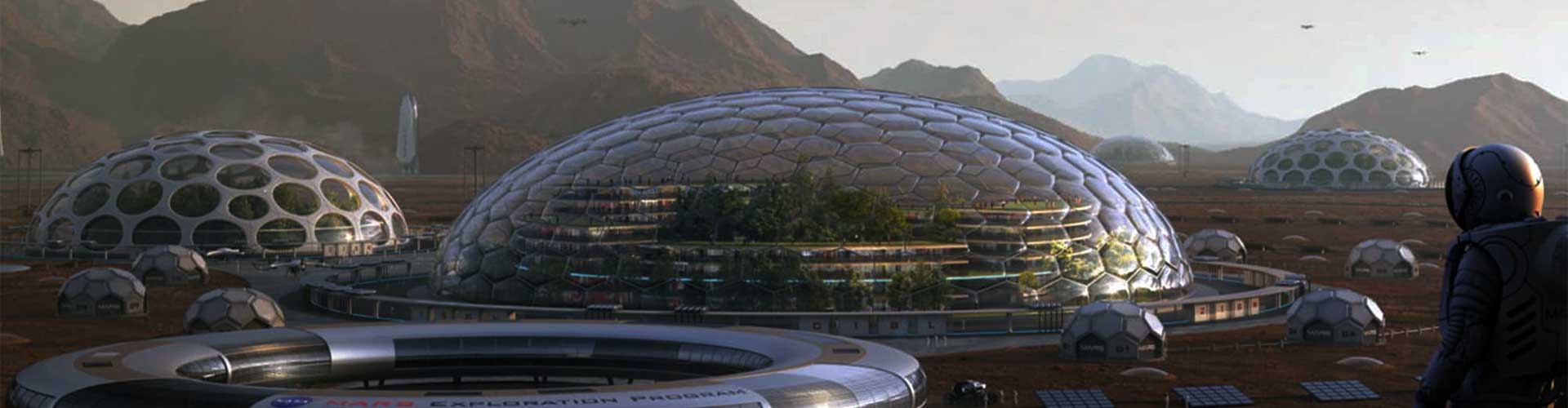 Colonizing Mars
 Mars Reconnaissance Orbiter (NASA Spacecraft)
 MAVEN (NASA SPACECRAFT)
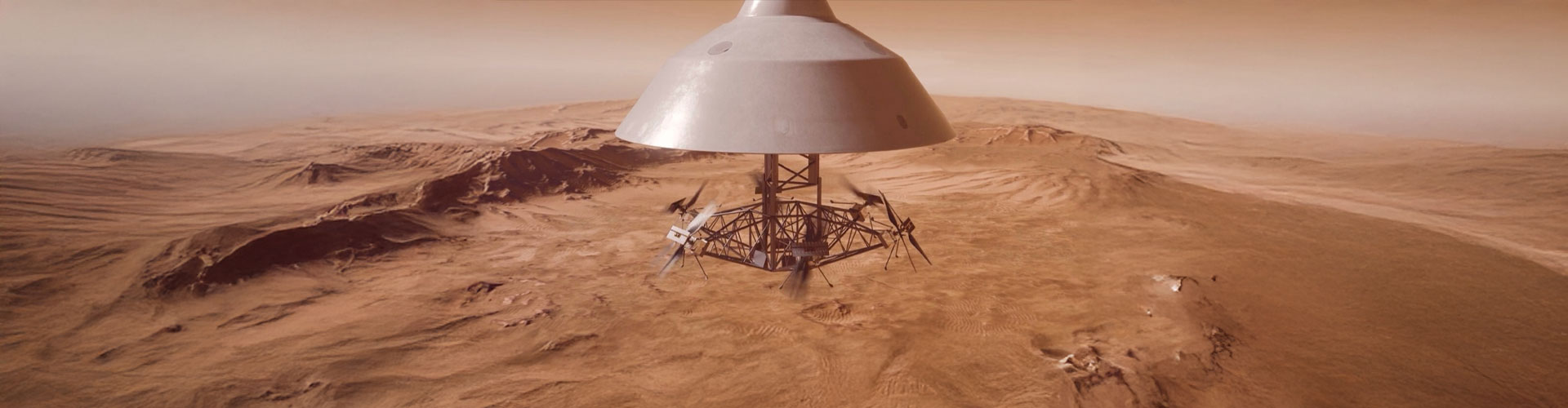 Skyfall (NASA Mars Helicopters)
 Perseverance (NASA Rover)
 Planet Mars
 Ingenuity (NASA Mars Helicopter)
 MARS INSIGHT (NASA LANDER)
 Hope Mars Mission (MBRSC Orbiter)
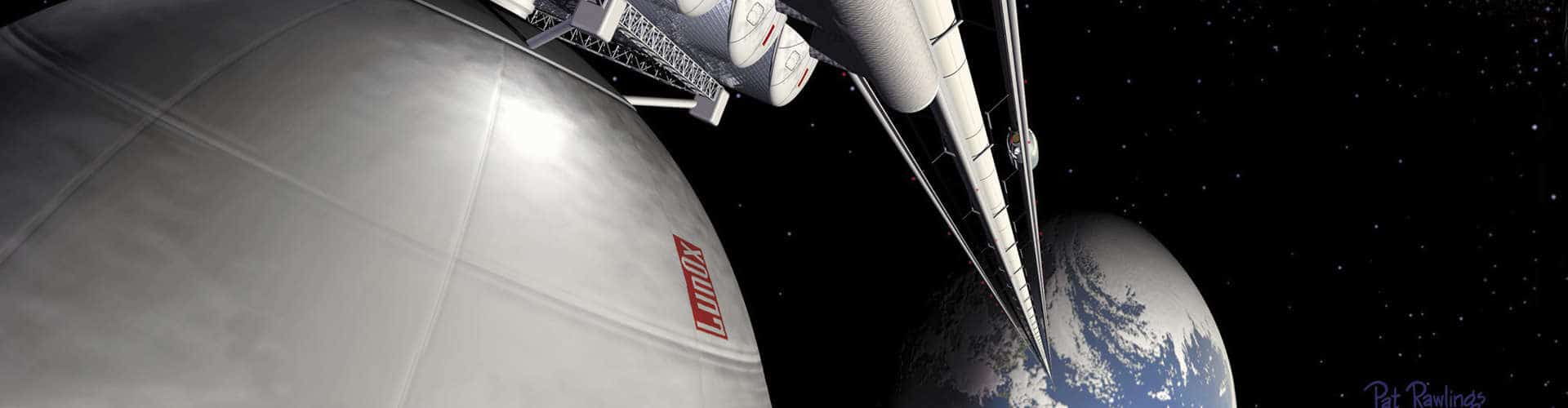 Space Elevators
 Opportunity (NASA Mars Rover)
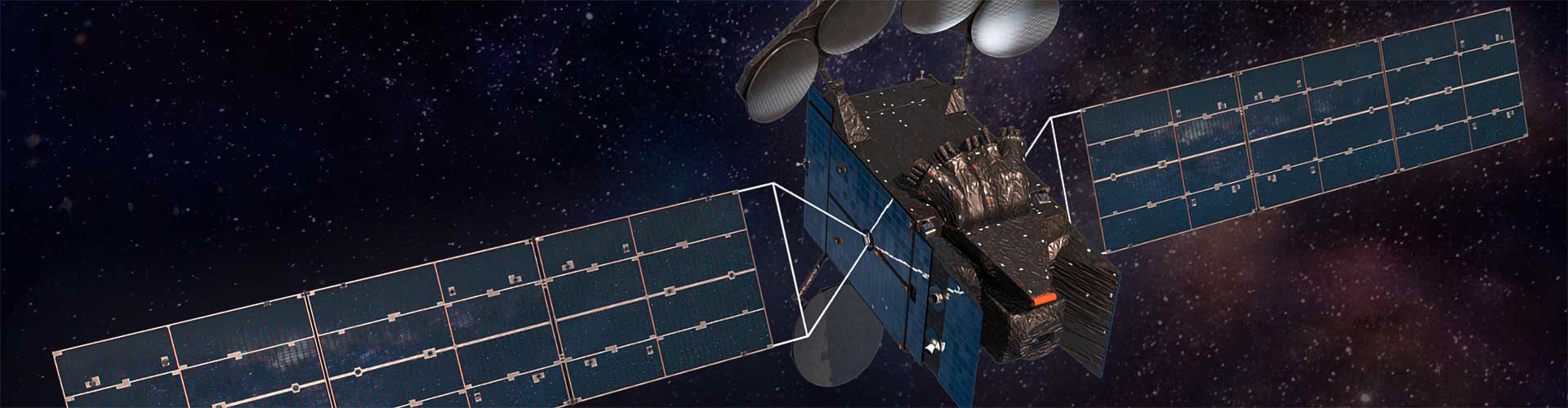 TEMPO (Tropospheric Emissions: Monitoring of Pollution) NASA satellite
 Asteroids
 UAHiRISE (NASA MRO)
 Phobos (Mars Moon)




