
Photo taken with Nikon Coolpix P5000 put in afocal behind a telescope “Celestron C8” of 2000 mm focal distance equipped with an eyepiece of 40 mm focal distance. – Thomas Bresson
[Rich_Web_Video id=”17″]Related channels: ASTRONOMY, ASTROPHOTOGRAPHY, RADIO ASTRONOMY, STARS, THE MOON, THE SUN, THE SOLAR SYSTEM, COSMOLOGY
1
/
17


Celestron Origin Nebula Filter Tutorial with Dr. Sasse
Discover how Celestron Origin's Nebula Filter can enhance your astrophotography!
In this video, Dr. Christian Sasse explores the Celestron Origin Nebula Filter and demonstrates how it helps bring out the details in emission nebulae while reducing the effects of light pollution.
Learn how the filter isolates key wavelengths of light emitted by nebulae, improving contrast and helping you capture more detail in these colorful deep-sky objects.
See how this accessory can help you get even more out of your Celestron Origin Intelligent Home Observatory.
#Celestron #CelestronOrigin #Astrophotography #NebulaFilter #DeepSkyImaging
Celestron Origin Mosaics Step-by-Step Tutorial with Dr. Sasse
Ready to capture more of the night sky? Join Dr. Christian Sasse as he walks you through creating stunning mosaics with the Celestron Origin Intelligent Home Observatory.
In this step-by-step tutorial, learn how to plan, capture, and re-capture mosaic tiles using Origin's Mosaic Mode. Follow along as Dr. Sasse breaks down the process, helping you expand your field of view and capture larger celestial objects in greater detail.
How to Setup StarSense AutoAlign V2 on a German Equatorial Mount
Ready to take the guesswork out of telescope alignment? Celestron Product Manager Erik Kopit walks you through setting up StarSense AutoAlign V2 on an equatorial (EQ) mount.
Follow along as Erik breaks down the setup process step by step, helping you get your telescope aligned and ready for your next observing session.
Using an alt-azimuth (AZ) mount? For step-by-step assistance setting up StarSense AutoAlign with an AZ mount, with or without a wedge, https://www.youtube.com/watch?v=QaKED-U9xWQ
Chapters:
0:00 Introduction
0:41 Chapter 1: Updating the Hand Control Firmware
1:51 Chapter 2: Getting Started
2:30 Chapter 3: Alignment
5:53 Chapter 4: Center Calibration
8:18 Closing
How to Setup StarSense AutoAlign V2 on an Alt-Azimuth Mount with or without a Wedge
Ready to take the guesswork out of telescope alignment? Celestron Product Manager Erik Kopit walks you through setting up StarSense AutoAlign V2 on an alt-azimuth mount, with or without a wedge.
Follow along as Erik breaks down the setup process step by step, helping you get your telescope aligned and ready for your next observing session.
Using an equatorial (EQ) mount? For step-by-step assistance setting up StarSense AutoAlign with an EQ mount, https://www.youtube.com/watch?v=3QoplhzUNW4
Chapters:
0:00 Introduction
0:43 Chapter 1: Updating the Hand Control Firmware
1:54 Chapter 2: Getting Started
2:42 Chapter 3: Aligning Altazimuth Mounts not on a Wedge
3:56 Chapter 4: Aligning Altazimuth Mounts on a Wedge
7:29 Chapter 5: Center Calibration
9:12 Closing
Introducing the CPC Deluxe HD Powered by PrimaLuceLab | NEAF 2026 Presentation
Want to take your CPC Deluxe HD beyond visual observing and into advanced astrophotography? The CPC Deluxe HD powered by PrimaLuceLab system enhances the telescope with integrated motorized focusing, field de-rotation, advanced imaging software, and optional onboard computer control, transforming the proven CPC Deluxe HD platform into a complete imaging solution. Designed specifically for the 8", 9.25", and 11" EdgeHD models, the system combines the simplicity of the CPC’s alt-azimuth mount with tools that enable long-exposure deep-sky imaging, planetary imaging, and streamlined telescope control—all without the complexity of a traditional equatorial setup. Learn more about the available configurations and capabilities on the CPC Deluxe HD powered by PrimaLuceLab.
Learn more https://www.celestron.com/pages/cpc-deluxe-hd-powered-by-primalucelab
Celestron Origin Tutorial: The Magic of Dithering with Dr. Sasse
Join Dr. Christian Sasse as he shows Celestron Origin users how to improve their astrophotography results with dithering. In this walkthrough, Dr. Sasse explains how dithering works to reduce fixed-pattern noise, hot pixels, and walking noise by making small adjustments between exposures. When paired with the StarSense Autoguider, Origin can automatically apply these corrections during imaging sessions for cleaner stacked images and smoother final results. Watch as Christian demonstrates the setup process, recommended settings, and practical tips to help you get the most out of your Origin for deeper, sharper astrophotography.
How to Safely View the Eclipse with EclipSmart Eclipse Kits
The Celestron EclipSmart Eclipse Kits are a must-have for small groups who want to view partial and total solar eclipses like the upcoming Total and Annular Solar Eclipse. Affordable, easy to use, and best of all, Solar Safe, all Celestron EclipSmart Solar Eclipse Glasses feature solar film that conforms to the current ISO standard. With this kit, you’ll be totally prepared for eclipse day.
How to Recapture Flats for Celestron Origin
Are your Celestron Origin flat frames out of date? Don’t worry — this quick tutorial walks you through how to capture new flat frames to ensure your Origin delivers optimal imaging performance. In just a few minutes, you’ll have your system ready for clean, evenly illuminated astrophotos!
To follow along with the video, here are the steps:
Option I: Using a Flat-Field Generator (FFG) or EL Panel
1. Turn on your flat-field generator or EL panel.
2. Adjust the brightness to roughly the midpoint of its range (exact brightness isn’t critical).
3. Remove Origin’s dust cap.
4. Power on Origin and connect to it using your smartphone or tablet. You can let it complete initialization or tap Cancel Initialization in the app.
5. Attach your FFG or EL panel to Origin’s dew shield as instructed.
6. In the Origin app, go to Menu → Settings → Advanced, then tap Capture Flat Frames.
7. When capture is complete, remove the FFG or EL panel — your new flat frame is ready for use!
Option II: Using the Sky at Dusk (Sky Flat)
1. Wait about 20–30 minutes after sunset.
2. Power on Origin — initialization will fail since stars aren’t visible (this is expected).
3. Manually point Origin toward a clear, uniform section of twilight sky (about 60°–75° altitude, opposite the Sun).
4. In the app, go to Menu → Settings → Advanced and select Capture Flat Frames.
5. Once complete, you’re ready to begin imaging with your updated flat frame.
How to Recapture Dark Frames for the Celestron Origin
Is your Celestron Origin showing a dark frame warning? No worries — this quick tutorial walks you through how to recapture dark frames to restore peak imaging performance. In just a few steps, you’ll have your Origin ready for stunning astrophotography again!
To follow along with the video, here are the steps:
1. Place dust cap on Celestron Origin.
2. Place Celestron Origin in a dark location. If it is not completely dark, consider covering Origin with a blanket.
3. Turn on Origin and connect with your smartphone or tablet as usual. Cancel initialization, if needed.
4. In the Origin app, navigate to Menu→Settings→Advanced, and tap “Recapture Complete Set of Dark Frames.” The process takes about 20 minutes.
5. If you are using the optional equatorial wedge and know you will be using sub-exposures longer than 30 seconds, you should capture additional dark frames manually. In the app, enter the Dark Frame ISO and Dark Frame Exposure that match the manual camera settings you intend to use.
6. You have now recaptured a complete set of dark frames, and you are ready to Origin again. The warning message should no longer appear.
How to Install the Celestron Origin 678C Camera Upgrade (Step-by-Step Guide)
Upgrade your Celestron Origin with the new Origin-678C camera featuring the advanced Sony Starvis 2 CMOS sensor. In this step-by-step guide, we’ll show you how to safely install the upgraded camera, connect it properly, and capture new dark and flat frames for the best astrophotography results. This easy tutorial ensures you’ll get sharper images, higher sensitivity, and stunning detail in galaxies, nebulae, and more with your Origin Intelligent Home Observatory.
Asteroid Mining Explained: TransAstra CEO on Using Celestron RASA Telescopes to Industrialize Space
What if the next industrial revolution takes place in space? Dr. Joel Sercel, CEO and founder of TransAstra, reveals how his team is using technologies such as Celestron RASA telescopes in their mission to detect, capture, and mine asteroids—unlocking resources that could transform life on Earth and enable humanity’s expansion throughout the Solar System. TransAstra’s innovative Sutter TKO (Turn-Key Observatory) system, powered by arrays of Celestron RASA telescopes, is designed to find small, fast, and dark objects that traditional systems miss—enabling real-time asteroid tracking and space domain awareness like never before. Don’t miss this deep dive into the future of space infrastructure, led by one of its pioneering architects.
Learn more about RASA: https://www.celestron.com/pages/rowe-ackermann-schmidt-astrograph-technology
Learn more about TransAstra: https://www.celestron.com/blogs/press-releases/transastra-and-celestron-partner-to-advance-space-domain-awareness-with-uniquely-powerful-and-economical-telescope-systems
#celestron #RASATelescope #TransAstra #AsteroidMining #SpaceTech #JoelSercel #SutterTKO #NewSpace #IndustrializeSpace #SpaceTelescopes
Celestron Origin Tutorial: Adding the Evolution Wedge and StarSense Autoguider with Dr. Sasse
Join Christian Sasse as he demonstrates how to upgrade your Celestron Origin with two powerful accessories: the Evolution Wedge and StarSense Autoguider. These additions unlock equatorial wedge mode, allowing Origin to align with Earth’s rotational axis and eliminate field rotation during tracking. The result? Longer sub-exposures and the ability to image objects near zenith—where the sky is darkest and details are clearest. With the wedge and Autoguider combo, advanced users can fine-tune performance for deeper, more precise astrophotography. Watch as Christian walks through the setup and shares tips to get the most from your Origin’s expanded capabilities.
🍄🧠 Not a video game. Not a TV show. This zombie fungus actually exists.
In this reel, Naturalist and Celestron Product Manager John Riutta uncovers the real-life inspiration behind The Last of Us: Ophiocordyceps unilateralis. While it won’t infect humans, it does take control of ants—turning them into zombie-like hosts in the rainforests of the Amazon and Southeast Asia.
🎥 Watch the reel to discover how this mind-controlling fungus really works.
#TheLastOfUs #ZombieAntFungus #Ophiocordyceps #CelestronScience #RealLifeSciFi #ScienceBehindTheScenes #Mycology #TLOU #ScienceIsStranger
Introducing the RASA 6: Ultra-Fast f/2.2 Imaging in a Compact Design
Meet the newest addition to the Rowe-Ackermann Schmidt Astrograph lineup: the RASA 6". Designed for astroimagers who want maximum speed and performance in a compact package, the RASA 6" delivers stunning widefield results with an incredibly fast f/2.2 optical system.
In this video, we walk you through the key features, imaging capabilities, and ideal use cases for the RASA 6. Whether you're capturing expansive nebulae or detailed star fields, the RASA 6" opens up new possibilities for deep-sky astrophotography.
🔭 Ultra-fast f/2.2 optics
📸 6-inch aperture with a wide 16mm image circle
⚙️ Designed for use with modern astroimaging cameras
🧭 Portable, lightweight, and ready for the field
Discover what the RASA 6 can do—and why it belongs in your imaging setup.
Hidden caves on the Moon?
Hidden caves on the Moon? Scientists have been studying lunar caves and lava tubes for years, but new discoveries could change space exploration forever! 🌕🚀
These caves, found beneath the Ocean of Storms and Sea of Tranquility, might be entrances to ancient lava tubes—potential shelters for future astronauts from intense radiation, extreme temperatures, and constant meteor strikes. 🌑👨🚀 #MoonBase #SpaceExploration
How to See the 2025 Planetary Parade
Join Lance Lucero, Product Manager of Astronomy, as he breaks down 2025’s planetary parade! From now until early March, you’ll have the rare opportunity to observe every planet in the night sky. rocket
In this video, Lance covers:
- Which planets are visible and where to find them
- Best times & tips for viewing each planet telescope
- Key celestial events, including a Mercury-Saturn conjunction on February 28 Don’t miss your chance to catch this planetary lineup before it fades!
Celestron Moon Mission Telescope Product Tour
🌕✨ Explore the Moon Like Never Before with Celestron’s Moon Mission Telescopes! 🚀
Celebrate humanity's greatest achievements in lunar exploration with Celestron's special-edition Moon Mission Telescopes. Whether you're a beginner or a seasoned stargazer, these telescopes are designed to bring the wonders of the Moon right to your backyard.
🔭 Features:
- Stunning lunar-themed designs
- High-quality optics for sharp views of the Moon's surface
- Bonus accessories like lunar maps, Moon filters, and educational guides
Get ready to explore craters, maria, and mountains on the Moon with ease. 🌌 Perfect for families, astronomy enthusiasts, or anyone inspired by the cosmos! Shop the Series: https://www.celestron.com/collections/moon-mission-telescopes
💡 Don’t miss out! Check out our Moon Mission Telescopes and start your lunar adventure today!
#Celestron #MoonMission #ExploreTheMoon #Stargazing #Astronomy 8DM3W0RXEOPTSOWY
✨ When can you see the deep-sky objects in your zodiac constellation? 🤔✨
Did you know you can’t see your zodiac constellation on your birthday? 😱 That’s because the Sun is blocking the view! 🌞 But you can catch those deep-sky objects around your half-birthday! 🌌
So, during the months when your constellation is visible, take the opportunity to explore. Whether it’s the sparkling Pleiades cluster in Taurus or the galaxies of the Virgo Cluster, each constellation offers its own array of celestial treasures. 🌠🔭 https://celestron.com/zodiac
#ZodiacStars #Skywatching #AstrologyLovers #StargazingVibes #ZodiacConstellations #AstronomyTips
How to View Comet C/2023 A3 (Tsuchinshan-ATLAS)!
Get ready for the exciting Comet C/2023 A3 (Tsuchinshan-ATLAS)! ☄️ In this video, Product Manager of Astronomy Lance Lucero breaks down everything you need to know about this newly discovered comet—what it is, how to find it in the night sky, tips for observing, and how to capture stunning images of it. Whether you're an amateur stargazer or a seasoned astrophotographer, this guide has you covered. Don't miss out—watch now and get ready for an unforgettable skywatching experience!
Learn about C/2023 A3 (Tsuchinshan-ATLAS): https://bit.ly/3TzOOvE
Ultimate Guide to Observing Comets: https://bit.ly/3FYRD04
View the Comet with these Celestron Products
Cometron Binocular: https://bit.ly/45DlTdP
SkyMaster Binoculars: https://bit.ly/35wjrHZ
Travel Scope 70AZ Telescope: https://bit.ly/33lpwo3
PowerSeeker 114EQ Telescope: https://bit.ly/33Sbtsc
PowerSeeker 127EQ Telescope: https://bit.ly/31VQpy8
AstroMaster 130EQ Telescope: https://bit.ly/35B0LFP
StarSense Explorer DX 130AZ Telescope: https://bit.ly/2JkA9zQ
View the Entire Collection: https://bit.ly/3CQz5Qs
🌕 Explore the Moon's Fiery Past with Robert Reeves! 🌋
Did you know our Moon wasn't always a quiet, crater-filled landscape? 🌑 Once upon a time, it had active volcanoes! Join Robert Reeves as he explores the Moon's volcanic history and uncovers how these fiery forces shaped the lunar surface we see today.
Get ready to see the Moon in a whole new light! 🌙✨
#LunarVolcanoes #MoonHistory #RobertReeves #AstronomyFacts #OurMoon #VolcanicMoon #CelestialHistory #SpaceExploration
1
/
17
Also Recommended
 OPT TELESCOPES
 ORION TELESCOPES & BINOCULARS
 NEWMOON TELESCOPES
 SPACE TELESCOPES
 RADIO TELESCOPES
 Ultraviolet Astronomy
 Sloan Digital Sky Survey
 ESASky
 Euclid Space Telescope
 Subaru Telescope
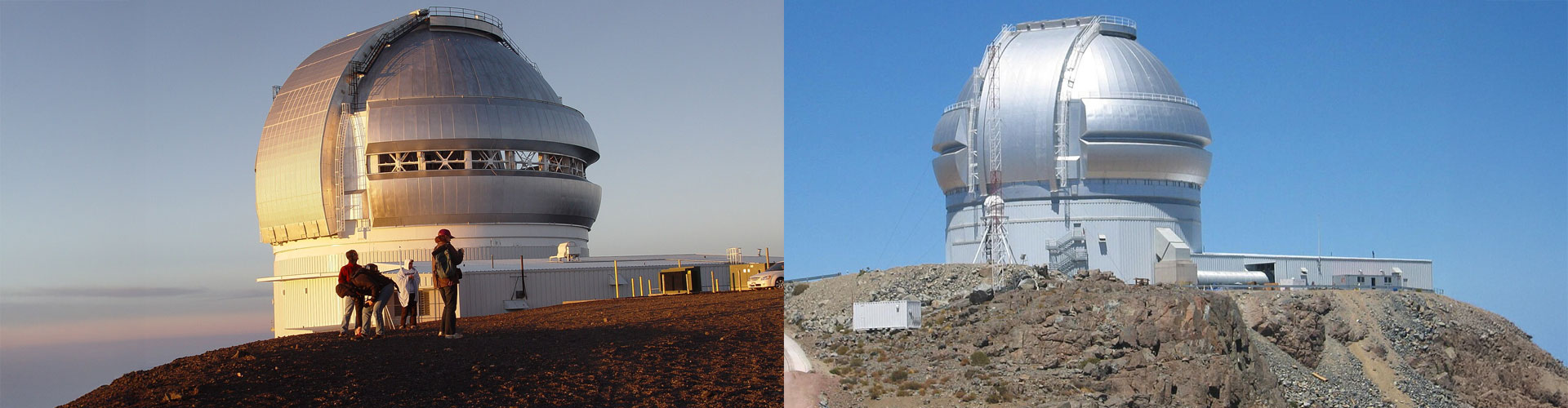 Gemini Observatory
 ASTRONOMY CRASH COURSE
 The Universe
 TELESCOPE BASICS
 Nancy Grace Roman Space Telescope
 The Ultimately Large Telescope
 William Herschel Telescope
 Vera C. Rubin Observatory




