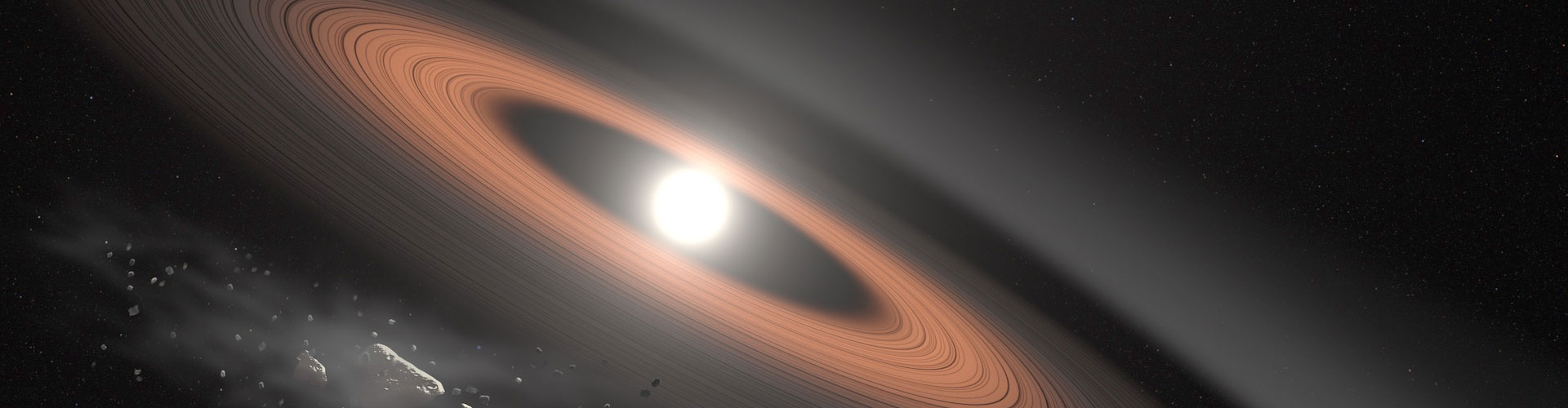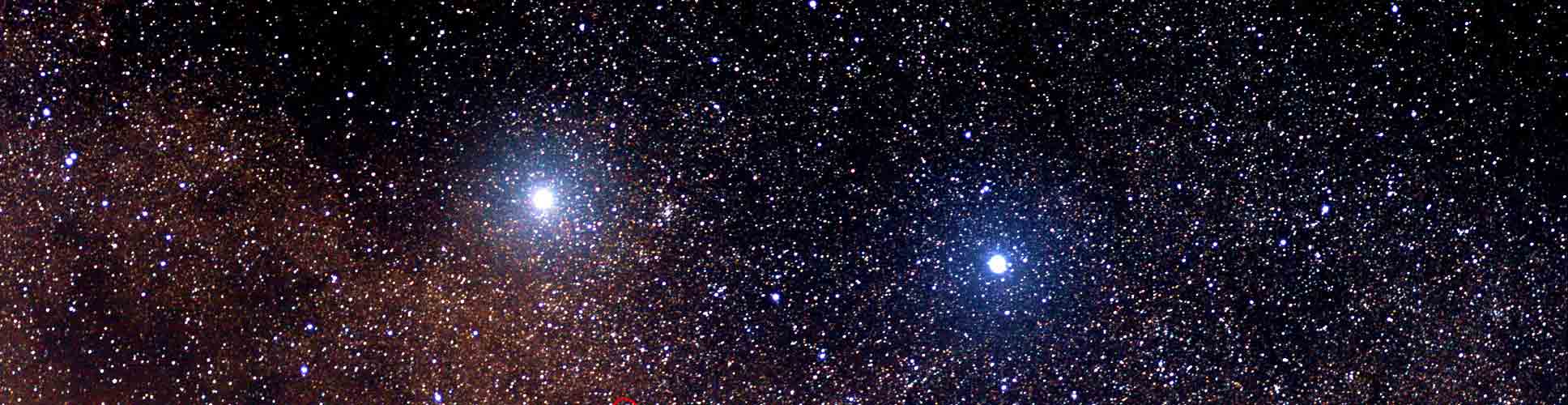
Barnard’s Star is a small red dwarf star in the constellation of Ophiuchus. At a distance of 5.96 light-years from Earth, it is the fourth-nearest-known individual star to the Sun after the three components of the Alpha Centauri system, and is the closest star in the northern celestial hemisphere. Image credit: International Gemini Observatory / NOIRLab / NSF / AURA / P. Marenfeld. / SPACETV
Related channels: STARS, THE SUN, GLOBULAR CLUSTERS, NOVA, WHITE DWARFS, BROWN DWARFS, PULSARS, QUASARS, NEUTRON STARS, BLACK HOLES, ALPHA CENTAURI
Barnard’s Star Latest News


Colonizing Brown Dwarfs – Life Around Failed Stars
Colonizing brown dwarfs: habitats, megastructures, and hidden homes around failed stars. Could these dim embers power civilizations for trillions of years?
Get Nebula using my link for 50% off an annual subscription: https://go.nebula.tv/isaacarthur
Watch my exclusive video Lazarus Protocols: https://nebula.tv/videos/isaacarthur-lazarus-protocols-reviving-civilizations-after-extinction
Check out 17 Pages: https://nebula.tv/17pages?ref=isaacarthur
and A Bit Obscure https://nebula.tv/abitfrank/a-bit-obscure?ref=isaacarthur
🛒 SFIA Merchandise: https://isaac-arthur-shop.fourthwall.com/
🌐 Visit our Website: http://www.isaacarthur.net
❤️ Support us on Patreon: https://www.patreon.com/IsaacArthur
⭐ Support us on Subscribestar: https://www.subscribestar.com/isaac-arthur
👥 Facebook Group: https://www.facebook.com/groups/1583992725237264/
📣 Reddit Community: https://www.reddit.com/r/IsaacArthur/
🐦 Follow on Twitter / X: https://twitter.com/Isaac_A_Arthur
💬 SFIA Discord Server: https://discord.gg/53GAShE
Credits:
Colonizing Brown Dwarfs – Life Around Failed Stars
Written, Produced & Narrated by: Isaac Arthur
Graphics from Fishy Tree, Jeremy Jozwik, Udo Schroeter
Music Courtesy of Chris Zabriskie & Stellardrone
Select imagery/video supplied by Getty Images
Chapters
0:00 Intro
1:56 WHAT A BROWN DWARF IS
7:15 L Dwarfs
11:57 T-Dwarfs
17:04 Nebula
18:15 Habitable Zones
22:12 Megastructures
When Will the Last Star Be Born
The conversation explains how massive stars form in giant molecular clouds (stellar nurseries), why star formation will eventually decline as galaxies lose their gas, and how recurrent novae and close binary systems work—highlighting T Coronae Borealis, a white dwarf that periodically erupts by stealing material from a red giant companion. It also previews a newly detected, huge “super-shell” around that system and what we might (and might not) see when it erupts again.
From 'Answering Questions About Supernovas, with Michael Shara': https://youtu.be/CfNGwgGTUX8?si=B7sMwMEaj5mQmeCK
Get the StarTalk book, 'To Infinity and Beyond: A Journey of Cosmic Discovery' on Amazon: https://amzn.to/3PL0NFn
Support us on Patreon: https://www.patreon.com/startalkradio
FOLLOW or SUBSCRIBE to StarTalk:
Twitter: http://twitter.com/startalkradio
Facebook: https://www.facebook.com/StarTalk
Instagram: https://www.instagram.com/startalk
TikTok: https://www.tiktok.com/@neildegrassetyson
Exoplanets Orbiting Barnard’s Star Animation
This animation shows the orbital dynamics of the Barnard’s Star planetary system. For a century, astronomers have been studying Barnard’s Star in the hope of finding planets around it. First discovered by E. E. Barnard at Yerkes Observatory in 1916, it is the nearest single star system to Earth. Now, using in part the Gemini North telescope, one half of the International Gemini Observatory, partly funded by the U.S. National Science Foundation and operated by NSF NOIRLab, astronomers have discovered four sub-Earth exoplanets orbiting the star. One of the planets is the least massive exoplanet ever discovered using the radial velocity technique, indicating a new benchmark for discovering smaller planets around nearby stars.
More information and download options: http://noirlab.edu/public/videos/noirlab2510a/
Credit:
International Gemini Observatory/NOIRLab/NSF/AURA/R. Proctor/J. Pollard
Barnard’s Star: The ‘Great White Whale’ of Astronomy May Host Four Planets! | Wion Podcast
Barnard’s Star, one of the closest stars to Earth, has long fascinated astronomers, and now, new research suggests it may harbor four planets. Known as the "Great White Whale" of astronomy, this ancient red dwarf could hold clues to planetary formation beyond our solar system.
#planet #solarsystem #wionpodcast
About Channel:
WION The World is One News examines global issues with in-depth analysis. We provide much more than the news of the day. Our aim is to empower people to explore their world. With our Global headquarters in New Delhi, we bring you news on the hour, by the hour. We deliver information that is not biased. We are journalists who are neutral to the core and non-partisan when it comes to world politics. People are tired of biased reportage and we stand for a globalized united world. So for us, the World is truly One.
Please keep discussions on this channel clean and respectful and refrain from using racist or sexist slurs and personal insults.
Subscribe to our channel at https://goo.gl/JfY3NI
Check out our website: http://www.wionews.com
Join our WhatsApp Channel: https://bit.ly/455YOQ0
Connect with us on our social media handles:
Facebook: https://www.facebook.com/WIONews
Twitter: https://twitter.com/WIONews
Instagram: https://www.instagram.com/wionews/
Follow us on Google News for the latest updates
Zee News:- https://bit.ly/2Ac5G60
Zee Business:- https://bit.ly/36vI2xa
DNA India:- https://bit.ly/2ZDuLRY
WION: https://bit.ly/3gnDb5J
Zee News Apps: https://bit.ly/ZeeNewsApps
Barnard’s Star Hosts a Tiny Exoplanet Nearby! | WION Podcast
Barnard’s Star, the closest single star to Earth, hosts a tiny exoplanet named Barnard b. This intriguing discovery highlights a cold, rocky world with potential for further study, despite being inhospitable for life as we know it. Located about six light-years away, this planet is one of the most accessible for research on nearby exoplanets. Scientists are excited by its proximity, which offers a unique opportunity to explore the characteristics of planets orbiting ancient stars.
#star #space #wionpodcast
About Channel:
WION The World is One News examines global issues with in-depth analysis. We provide much more than the news of the day. Our aim is to empower people to explore their world. With our Global headquarters in New Delhi, we bring you news on the hour, by the hour. We deliver information that is not biased. We are journalists who are neutral to the core and non-partisan when it comes to world politics. People are tired of biased reportage and we stand for a globalized united world. So for us, the World is truly One.
Please keep discussions on this channel clean and respectful and refrain from using racist or sexist slurs and personal insults.
Subscribe to our channel at https://goo.gl/JfY3NI
Check out our website: http://www.wionews.com
Join our WhatsApp Channel: https://bit.ly/455YOQ0
Connect with us on our social media handles:
Facebook: https://www.facebook.com/WIONews
Twitter: https://twitter.com/WIONews
Instagram: https://www.instagram.com/wionews/
Follow us on Google News for the latest updates
Zee News:- https://bit.ly/2Ac5G60
Zee Business:- https://bit.ly/36vI2xa
DNA India:- https://bit.ly/2ZDuLRY
WION: https://bit.ly/3gnDb5J
Zee News Apps: https://bit.ly/ZeeNewsApps
Barnard's Star: 'Sub-Earth' exoplanet discovered around the closest solo star to us
Astronomers have discovered a planet orbiting the closest solo star to the solar system, known as Barnard's star. The newly discovered exoplanet has around half the mass of Venus, which classifies it as a 'Sub-Earth'. Watch to know all about the new exoplanet that has been discovered.
#indiatoday #newsmo #astronomers
Subscribe to India Today for NEW VIDEOS EVERY DAY and make sure to enable Push Notifications so you'll never miss a new video.
All you need to do is PRESS THE BELL ICON next to the Subscribe button!
India Today TV is India's leading English News Channel. India Today YouTube channel offers latest news videos on Politics, Business, Cricket, Bollywood, Lifestyle, Auto, Technology, Travel, Entertainment and a lot more.
Stay tuned for latest updates and in-depth analysis of news from India and around the world!
WhatsApp Channel: https://whatsapp.com/channel/0029Va2AnW3JENxxg7OuJv00
Download App: https://indiatoday.link/wHaj
Follow us: Official website: https://www.indiatoday.in/
Twitter: https://twitter.com/IndiaToday
Facebook: https://www.facebook.com/IndiaToday
Finally! Exciting Planet Found Only 6 Light Years Away From Earth (Barnard's Star)
Get a Wonderful Person Tee: https://teespring.com/stores/whatdamath
More cool designs are on Amazon: https://amzn.to/3QFIrFX
Alternatively, PayPal donations can be sent here: http://paypal.me/whatdamath
Hello and welcome! My name is Anton and in this video, we will talk about a discovery of an exciting tiny planet around Barnard's Star
Links:
https://www.aanda.org/10.1051/0004-6361/202451311
Older Barnard star videos:
https://youtu.be/-H9m5aF4Bb8
https://youtu.be/CfWRqX21T_k
Proxima b: https://youtu.be/Gwz1t2NVACY
https://youtu.be/TZH3erp4qjs
https://youtu.be/pmIWzTJYHMI
#barnardstar #astronomy #exoplanet
0:00 Discovery around Barnard Star and why it's exciting
1:00 More about the star and its discovery
2:10 Why this is important
3:30 Missing planets and new discoveries in 1998 and 2019
4:40 Potential planets that never existed
7:10 Something finally discovered
9:20 Conclusions and implications
Support this channel on Patreon to help me make this a full time job:
https://www.patreon.com/whatdamath
Bitcoin/Ethereum to spare? Donate them here to help this channel grow!
bc1qnkl3nk0zt7w0xzrgur9pnkcduj7a3xxllcn7d4
or ETH: 0x60f088B10b03115405d313f964BeA93eF0Bd3DbF
Space Engine is available for free here: http://spaceengine.org
Enjoy and please subscribe.
Twitter: https://twitter.com/WhatDaMath
Facebook: https://www.facebook.com/whatdamath
Twitch: http://www.twitch.tv/whatdamath
The hardware used to record these videos:
New Camera: https://amzn.to/34DUUlv
CPU: https://amzn.to/2LZFQCJ
Video Card: https://amzn.to/2M1W26C
Motherboard: https://amzn.to/2JYGiQQ
RAM: https://amzn.to/2Mwy2t4
PSU: https://amzn.to/2LZcrIH
Case: https://amzn.to/2MwJZz4
Microphone: https://amzn.to/2t5jTv0
Mixer: https://amzn.to/2JOL0oF
Recording and Editing: https://amzn.to/2LX6uvU
Some of the above are affiliate links, meaning I would get a (very small) percentage of the price paid.
Thank you to all Patreon supporters of this channel
Special thanks also goes to all the wonderful supporters of the channel through YouTube Memberships
Credit:
ESO CC BY 4.0 https://www.eso.org/public/news/eso2414/
Marskell, Poppy, User:Richard-59 CC BY-SA 3.0 https://en.wikipedia.org/wiki/Flare_star#/media/File:Barnard'sStarSize_en.jpg
Licenses used:
https://creativecommons.org/licenses/by/4.0/
https://creativecommons.org/licenses/by-sa/4.0/
https://creativecommons.org/licenses/by/3.0/
https://creativecommons.org/licenses/by-sa/3.0/
https://creativecommons.org/licenses/by/2.5/
https://creativecommons.org/licenses/by-sa/2.5/
https://creativecommons.org/licenses/by/2.0/
https://creativecommons.org/licenses/by-sa/2.0/
How I Imaged and Confirmed Barnard's Star
How I confirmed I imaged the fourth closest star and the star with the highest rate of proper motion.
A Super-Earth Around Barnard's Star
In 2018, astronomers have found a candidate super-Earth planet orbiting around one of the closest stars to the Sun, Barnard’s Star. The planet called Barnard’s Star b is at least three times as massive as Earth.
Previous video (Milky Way Died Once - This Is Its Second Life):
https://www.youtube.com/watch?v=hAXx_wfuVi0
Please, support us on Patreon and help Cosmoknowledge become the number one destination for science: https://www.patreon.com/cosmoknowledge
SUBSCRIBE ► https://goo.gl/PLLFPz
----
Website ► https://cosmoknowledge.com/
TikTok ► https://www.tiktok.com/@cosmoknowledge
Instagram ► https://www.instagram.com/itscosmoknowledge
Facebook ► https://facebook.com/cosmoknowledgee
Narrated by:
Russell Archey
https://www.ravonmedia.com/
Graphics & Credits:
Space Engine
Music:
Sedated Cyclone - WHENISEEYOUISEEMYSELF
Straight Fuego - Matt Large
Thank you to our Patrons:
DonPig
-
Cosmoknowledge brings news from space.
We love you, explorers!
Barnard's Runaway Star - Fastest Moving Star in the Sky
The constellation of Ophiuchus, which is represented as a serpent-bearer, contains a fascinating star called Barnard’s Star. It has a magnitude of 9.5 which renders it invisible to the unaided eye. In the past 100 years, scientists have collected fascinating data about this star, and have even discovered evidence of an exoplanet. Barnard’s star is one of the most studied red dwarfs because of its proximity to Earth, and its proper motion is the fastest recorded in the sky.
Discover the 25 brightest stars in the sky—order your copy of Starry Wonders Exploring the 25 Brightest Stars today!
Visit: https://www.learnthesky.com/ ✨
Chapters:
0:00 - Subscribe to Learn the Sky
0:38 - Intro to Barnard's Star
1:22 - Properties of Barnard's Star
2:55 - Proper Motion of Barnard's Star
3:28 - Barnard's Star b Planet
4:45 - Fast Facts about Barnard's Star
6:01 - Photo Attributes
Photo Attributes:
▶ Artist’s Conception of a planet orbiting a red dwarf star: By NASA, ESA and G. Bacon (STScI) - Self-made JPEG version of original TIFF image at Hubble website, Public Domain, https://commons.wikimedia.org/w/index.php?curid=1353613
▶ Edward Emerson Barnard Portrait: By The original uploader was SITCK at Luxembourgish Wikipedia. - Transferred from lb.wikipedia to Commons., Public Domain, https://commons.wikimedia.org/w/index.php?curid=3720872
▶ Barnard’s Star size comparison: By Marskell, Poppy, User:Richard-59 - Based on Image: Barnard'sStarSize fr.jpg, CC BY-SA 3.0, https://commons.wikimedia.org/w/index.php?curid=39653456
▶ Barnard’s Star Movement: By Steve Quirk - http://www.hwy.com.au/~sjquirk/images/film/barnard.html, Public Domain, https://commons.wikimedia.org/w/index.php?curid=1353548
▶ Sun’s Closest Stars: By NASA/Penn State University - http://photojournal.jpl.nasa.gov/catalog/PIA18003 (image link), Public Domain, https://commons.wikimedia.org/w/index.php?curid=32393431
▶ Super-Earth b orbiting Barnard’s Star: By ESO / M. Kornmesser - https://www.eso.org/public/images/eso1837a/, CC BY 4.0, https://commons.wikimedia.org/w/index.php?curid=74405258 Playlists
▶ Stargazing Basics: http://bit.ly/LearntheSky-StargazingBasics
▶ Zodiacal Constellations: http://bit.ly/LearntheSky-ZodiacalConstellations
▶ Circumpolar Constellations: http://bit.ly/LearntheSky-Circumpolar
▶ Winter Constellations: http://bit.ly/LearntheSky-WinterConstellations
▶ Spring Constellations: http://bit.ly/LearntheSky-SpringConstellations
▶ Summer Constellations: http://bit.ly/LearntheSky-SummerConstellations
▶ Autumn Constellations: http://bit.ly/LearntheSky-AutumnConstellations
▶ Stars: http://bit.ly/LearntheSky-Stars
▶ Planets: http://bit.ly/LearntheSky-Planets
▶ Celestial Objects: http://bit.ly/LearntheSky-CelestialObjects
▶ Versus Videos: http://bit.ly/LearntheSky-VersusVideos
▶ Celestial Events: http://bit.ly/LearntheSky-CelestialEvents
▶ Citizen Science: http://bit.ly/LearntheSky-CitizenScience
Support this Channel
▶ Online Classes: https://www.learnthesky.com/store
▶ Access your FREE Stargazing Starter Guide HERE: https://www.learnthesky.com/stargazing_starter_guide
Never Miss a Video
▶ Subscribe to my Channel: https://www.youtube.com/c/learnthesky?sub_confirmation=1
Connect
▶ Website: https://www.learnthesky.com/
#learnthesky #stargazing #constellations #stars #keeplookingup
20190506 - Dr. Jerry Dunifer - Barnard's Star
BARNARD'S STAR by Professor Jerry Dunifer
Barnard's Star is one of our nearest stellar neighbors, a fascinating red dwarf that is practically flying across our sky. Jerry will consider some of the identifying characteristics of this star, as well as its interesting history.
Jerry Dunifer is a Professor Emeritus at Wayne State University. He was a member of the faculty in the Department of Physics & Astronomy for 35 years before retirement, and served as a Professor and Associate Chair of the Department for several years. His research program there involved the study of the electromagnetic properties of high-purity metals at a temperature of 1 Kelvin. He also played an active role in the astronomy programs of the Department, including the WSU Planetarium and telescopic observing facilities.
Since retirement, one of Jerry’s hobbies has been visiting a number of the major and historic astronomy observatories around the World. He has visited dozens of different sites and has traveled as far as the geographic South Pole and the geographic North Pole. And many places in-between.
---
The views expressed in presentations are those of the speakers and do not necessarily represent, and should not be attributed to, the Warren Astronomical Society.
Your Sky Tonight - The Super-Earth Around Barnard's Star
Located in the constellation Ophiuchus, there is an unremarkable red dwarf star some six light years away. After the three stars of the Alpha Centauri system, this is the closest star to us.
Known as Barnard’s star, it is invisible to the unaided eye. It’s name comes from it’s discoverer E.E. Barnard, who in 1916 noticed that this star was wobbling back and forth by some 10.3 arcseconds every year. Astronomers thought there must be some unseen companion orbiting around it, but for over a century, couldn’t find it. Was it a dim star? Or was it a planet? Why was this star wobbling?
Now, we know.
#YourSkyTonight #amateurastronomy #backyardskies
If you like this content, please consider supporting Deep Astronomy on Patreon: https://patreon.com/DeepAstronomy
Listen to Deep Astronomy on Anchor:
https://Anchor.fm/DeepAstronomy
Created with Stellarium Open Source Software:
http://www.stellarium.org/
Original Music - Mark C. Petersen, Lochness Productions:
https://www.lochnessproductions.com/
Follow DeepAstronomy on Twitter:
@DeepAstronomy
Like DeepAstronomy on Facebook:
https://www.facebook.com/DeepAstronomy/
Like Space Fan News on Facebook:
https://www.facebook.com/SpaceFanNews/
What Conditions Would Make Barnard's Star Planet Habitable?
You can buy Universe Sandbox 2 game here: http://amzn.to/2yJqwU6
Hello and welcome to What Da Math!
In this video, we will talk about
Support this channel on Patreon to help me make this a full time job:
https://www.patreon.com/whatdamath
Space Engine is available for free here: http://spaceengine.org
Enjoy and please subscribe.
Twitter: https://twitter.com/WhatDaMath
Facebook: https://www.facebook.com/whatdamath
Twitch: http://www.twitch.tv/whatdamath
Bitcoins to spare? Donate them here to help this channel grow!
1GFiTKxWyEjAjZv4vsNtWTUmL53HgXBuvu
The hardware used to record these videos:
CPU: https://amzn.to/2LZFQCJ
Video Card: https://amzn.to/2M1W26C
Motherboard: https://amzn.to/2JYGiQQ
RAM: https://amzn.to/2Mwy2t4
PSU: https://amzn.to/2LZcrIH
Case: https://amzn.to/2MwJZz4
Microphone: https://amzn.to/2t5jTv0
Mixer: https://amzn.to/2JOL0oF
Recording and Editing: https://amzn.to/2LX6uvU Thank you to all Patreon supporters of this channel
Specifically, great thanks to the following members:
Mayumi
Lilith Dawn
William
Tim Sageser
Nick Dolgy
Luminger
Lauren Smith
Brad Ashmore
Michael Tiganila
Marin Templeton
Jordan
Michael Mitsuda
Mark Teranishi
Greg Lambros
Galaxia
Lyndon Riley
The Amazing Spatterman
Alexander Leimbeck
Sander Stols
Kai Raphahn
Sergio Ruelas
Moonic
Olegas Budnik
Chase Staggs
Robert MacDonald
Jer
Tracy Burgess
Leo Wehrli
Jason Neuschmid
Gordon Cooper
Adrian Sierra
Arikkat A Unnikrishnan
Aneliya Pancheva
Becky
Steven
Jayjay Volz
Alexander Mahrt
AA
Aneliya Pancheva
Andy DeLay
Angelina Werner
Bob Davies
Jakub Glos
Andrey Vesnin
Steve Wotton
MrR
Check the Patreon page to join
Exploring the surface of a super-Earth orbiting Barnard’s Star (Artist’s impression)
The nearest single star to the Sun hosts an exoplanet at least 3.2 times as massive as Earth — a so-called super-Earth. Data from a worldwide array of telescopes, including ESO’s planet-hunting HARPS instrument, have revealed this frozen, dimly lit world. The newly discovered planet is the second-closest known exoplanet to the Earth and orbits the fastest moving star in the night sky..
This artist’s impression pans over the surface of this freezing, shadowy world.
More information and download options: http://www.eso.org/public/videos/barnard-surface2b-v2-cc1/
Credit:
ESO/M. Kornmesser
Barnard’s Star in the Solar neighborhood
The nearest single star to the Sun hosts an exoplanet at least 3.2 times as massive as Earth — a so-called super-Earth. Data from a worldwide array of telescopes, including ESO’s planet-hunting HARPS instrument, have revealed this frozen, dimly lit world. The newly discovered planet is the second-closest known exoplanet to the Earth and orbits the fastest moving star in the night sky..
Named for astronomer E. E. Barnard, Barnard’s Star is the closest single star to the Sun and lies a mere 6 light-years away. This visualisation shows the nearest stars to the Sun, and highlights the location of Barnard’s Star.
More information and download options: http://www.eso.org/public/videos/eso1837d/
Credit:
ESO/L. Calçada/Vladimir Romanyuk (spaceengine.org). Music: Astral Electronics
Barnard’s star might host a super-Earth
Barnard’s star is a red dwarf and the closest solitary star to the Sun. Researchers believe a super-Earth might orbit the star. Barnard b has a minimum mass of 3.2 Earths and its temperature is likely to be about -150 ºC.
Credits
Research:
A candidate super-Earth planet orbiting near the snow line of Barnard’s star
I. Ribas, M. Tuomi, A. Reiners, R. P. Butler, J. C. Morales, M. Perger, S. Dreizler, C. Rodríguez-López, J. I. González Hernández, A. Rosich, F. Feng, T. Trifonov, S. S. Vogt, J. A. Caballero, A. Hatzes, E. Herrero, S. V. Jeffers, M. Lafarga, F. Murgas, R. P. Nelson, E. Rodríguez, J. B. P. Strachan, L. Tal-Or, J. Teske, B. Toledo-Padrón, M. Zechmeister, A. Quirrenbach, P. J. Amado, M. Azzaro, V. J. S. Béjar, J. R. Barnes, Z. M. Berdiñas, J. Burt, G. Coleman, M. Cortés-Contreras, J. Crane, S. G. Engle, E. F. Guinan, C. A. Haswell, Th. Henning, B. Holden, J. Jenkins, H. R. A. Jones, A. Kaminski, M. Kiraga, M. Kürster, M. H. Lee, M. J. López-González, D. Montes, J. Morin, A. Ofir27, E. Pallé, R. Rebolo, S. Reffert, A. Schweitzer, W. Seifert, S. A. Shectman, D. Staab, R. A. Street, A. Suárez Mascareño, Y. Tsapras, S. X. Wang & G. Anglada-Escudé
Nature, DOI:10.1038/s41586-018-0677-y
Video and images: IEEC/Science-Wave - Guillem Ramisa
BARNARD'S STAR - Our Close Neighbor with Potential Exoplanets
Hello and welcome to What Da Math!
In this video, we will talk about Barnard's Star.
Patreon page:
https://www.patreon.com/user?u=2318196&ty=h
Enjoy and please subscribe.
Other videos here: https://www.youtube.com/playlist?list=PL9hNFus3sjE7jgrGJYkZeTpR7lnyVAk-x
Twitter: https://twitter.com/WhatDaMath
Facebook: https://www.facebook.com/whatdamath
Twitch: http://www.twitch.tv/whatdamath
The video introduction made by Daniel Bates
His YouTube channel with more of his work is here: https://www.youtube.com/mroutrochannel
The new music theme made by Bogdan Bratis
Check out his work here: http://www.bratis.uk/
The Last Star in the Universe – Red Dwarfs Explained
The last star in the universe will be a red dwarf. Red dwarfs in general might be great places to look for aliens – or planets for humans to find a new home after our solar system has died. OUR CHANNELS
▀▀▀▀▀▀▀▀▀▀▀▀▀▀▀▀▀▀▀▀▀▀▀▀▀▀
German Channel: https://kgs.link/youtubeDE
Spanish Channel: https://kgs.link/youtubeES HOW CAN YOU SUPPORT US?
▀▀▀▀▀▀▀▀▀▀▀▀▀▀▀▀▀▀▀▀▀▀▀▀▀▀
This is how we make our living and it would be a pleasure if you support us!
Get Merch designed with ❤ from https://kgs.link/shop
Join the Patreon Bird Army 🐧 https://kgs.link/patreon DISCUSSIONS & SOCIAL MEDIA
▀▀▀▀▀▀▀▀▀▀▀▀▀▀▀▀▀▀▀▀▀▀▀▀▀▀
Reddit: https://kgs.link/reddit
Instagram: https://kgs.link/instagram
Twitter: https://kgs.link/twitter
Facebook: https://kgs.link/facebook
Discord: https://kgs.link/discord
Newsletter: https://kgs.link/newsletter OUR VOICE
▀▀▀▀▀▀▀▀▀▀▀▀▀▀▀▀▀▀▀▀▀▀▀▀▀▀
The Kurzgesagt voice is from
Steve Taylor: https://kgs.link/youtube-voice OUR MUSIC ♬♪
▀▀▀▀▀▀▀▀▀▀▀▀▀▀▀▀▀▀▀▀▀▀▀▀▀▀
700+ minutes of Kurzgesagt Soundtracks by Epic Mountain:
Spotify: https://kgs.link/music-spotify
Soundcloud: https://kgs.link/music-soundcloud
Bandcamp: https://kgs.link/music-bandcamp
Youtube: https://kgs.link/music-youtube
Facebook: https://kgs.link/music-facebook
The Soundtrack of this video:
https://epicmountainmusic.bandcamp.com/track/red-dwarfs
https://soundcloud.com/epicmountain/red-dwarfs
http://epic-mountain.com 🐦🐧🐤 PATREON BIRD ARMY 🐤🐧🐦
▀▀▀▀▀▀▀▀▀▀▀▀▀▀▀▀▀▀▀▀▀▀▀▀▀▀
Many Thanks to our wonderful Patreons from http://kgs.link/patreon who support us every month and made this video possible! The Last Star in the Universe – Red Dwarfs Explained
Help us caption & translate this video!
http://www.youtube.com/timedtext_cs_panel?c=UCsXVk37bltHxD1rDPwtNM8Q&tab=2