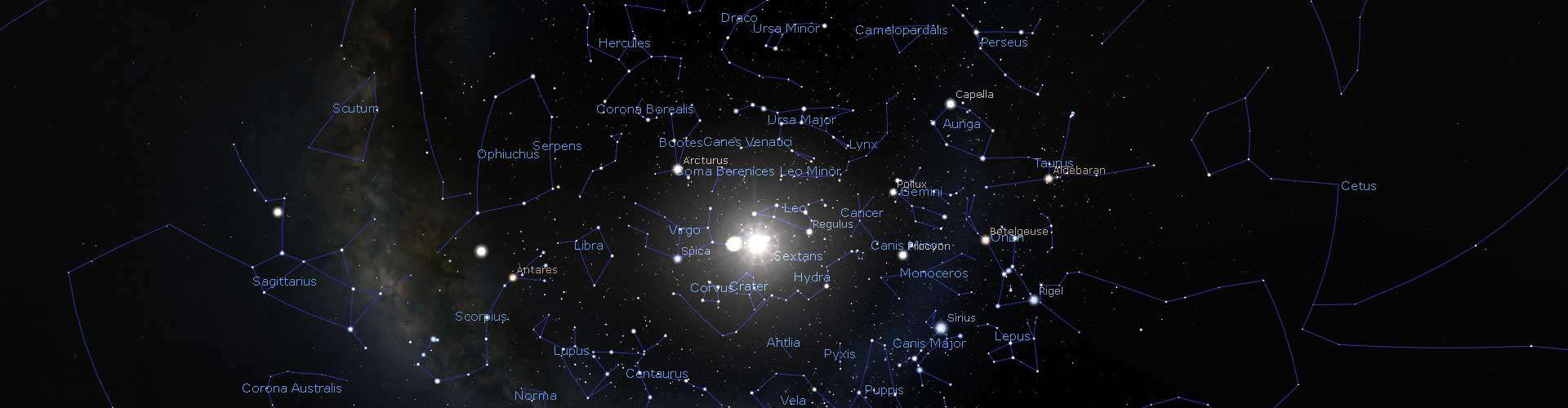
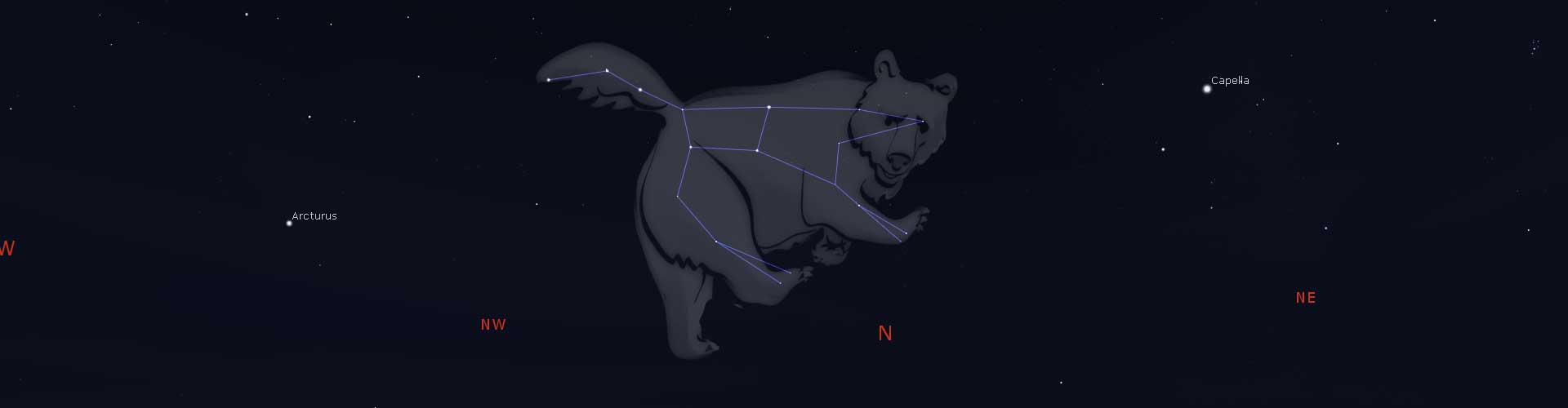
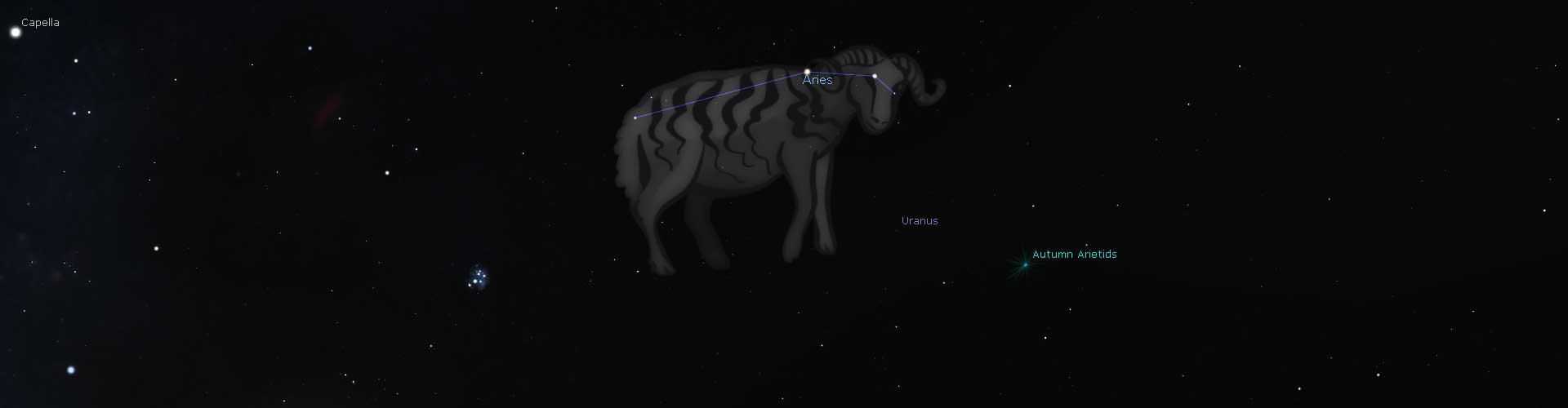
In Western astrology, and formerly astronomy, the zodiac is divided into twelve signs, each occupying 30° of celestial longitude and roughly corresponding to the constellations: Aries, Taurus, Gemini, Cancer, Leo, Virgo, Libra, Scorpio, Sagittarius, Capricorn, Aquarius, and Pisces. – stellarium.org
Related channels: CONSTELLATIONS, ORION CONSTELLATION, CYGNUS CONSTELLATION, CASSIOPEIA CONSTELLATION, URSA MAJOR CONSTELLATION, STARS, ASTRONOMY, ASTROPHOTOGRAPHY, NEBULAE, PULSARS, NEUTRON STARS, BLACK HOLES, GALAXIES
Latest videos about the Celestial Zodiac
1
/
7


What Modern Science Just Discovered in Ancient Art
Support this channel on Patreon to help me make this a full time job: https://www.patreon.com/whatdamath (Unreleased videos, extra footage, DMs, no ads)
Alternatively, PayPal donations can be sent here: http://paypal.me/whatdamath
Get a Wonderful Person Tee: Amazon: https://amzn.to/3QFIrFX
Hello and welcome! My name is Anton and in this video, we will talk about works of art that were hiding scientific knowledge
Links:
https://www.nature.com/articles/s41598-026-73025-5
https://factumfoundation.org/wp-content/uploads/CEn_VanGogh_02122024.pdf
https://www.cidjournal.com/article/S0738-081X(26)00221-X/abstract
https://pmc.ncbi.nlm.nih.gov/articles/PMC8182601/pdf/ACTA-92-44.pdf
https://www.lajpe.org/jun25/19_2_06.pdf
#michelangelo #vangogh #monalisa
0:00 Scientific discoveries found inside art
1:30 Van Gogh's Starry Night
4:20 Irises painting
6:00 Leonardo Da Vinci's Mona Lisa
8:15 Michelangelo's Pieta
10:15 Acoustics of Chichen Itza
14:30 Implications
Enjoy and please subscribe
Bitcoin/Ethereum to spare? Donate them here to help this channel grow!
bc1qnkl3nk0zt7w0xzrgur9pnkcduj7a3xxllcn7d4
or ETH: 0x60f088B10b03115405d313f964BeA93eF0Bd3DbF
The hardware used to record these videos:
New Camera: https://amzn.to/4pCVINS
CPU: https://amzn.to/4qXIaxC
Video Card: https://amzn.to/2M1W26C
Motherboard: https://amzn.to/2JYGiQQ
RAM: https://amzn.to/2Mwy2t4
PSU: https://amzn.to/2LZcrIH
Case: https://amzn.to/2MwJZz4
Microphone: https://amzn.to/2t5jTv0
Mixer: https://amzn.to/2JOL0oF
Recording and Editing: https://amzn.to/2LX6uvU
Some of the above are affiliate links, meaning I would get a (very small) percentage of the price paid.
Thank you to all Patreon supporters of this channel
Special thanks also goes to all the wonderful supporters of the channel through YouTube Memberships
Credit:
Mark Garlick www.markgarlick.com
chdwckvnstrsslhm CC by 2.0https://en.wikipedia.org/wiki/Quetzal#/media/File:Golden-headed_Quetzal.jpg
Licenses used:
https://creativecommons.org/licenses/by/4.0/
and relevant Creative Commons licenses
Everything You Need To Know About the Big Dipper
Neil explains more than you ever needed to know about the Big Dipper...
Check out our second channel, @StarTalkPlus
Get the NEW StarTalk book, 'To Infinity and Beyond: A Journey of Cosmic Discovery' on Amazon: https://amzn.to/3PL0NFn
Support us on Patreon: https://www.patreon.com/startalkradio
FOLLOW or SUBSCRIBE to StarTalk:
Twitter: http://twitter.com/startalkradio
Facebook: https://www.facebook.com/StarTalk
Instagram: https://www.instagram.com/startalk
About StarTalk:
Science meets pop culture on StarTalk! Astrophysicist & Hayden Planetarium director Neil deGrasse Tyson, his comic co-hosts, guest celebrities & scientists discuss astronomy, physics, and everything else about life in the universe. Keep Looking Up!
#StarTalk #NeildeGrasseTyson
Zoom/Reveal on Virgo Cluster (UHD format)
Zoom into NSF–DOE Vera C. Rubin Observatory’s 14-square-degree view of the Virgo Cluster, a large collection of galaxies about 55 million light-years away from Earth. This immense view contains about 10 million galaxies — just 0.05% of the roughly 20 billion galaxies Rubin will image during its 10-year Legacy Survey of Space and Time (LSST).
More information and download options: http://noirlab.edu/public/videos/noirlab2521e/
Credit:
NSF–DOE Vera C. Rubin Observatory/NOIRLab/SLAC/AURA
Music: Konstantino
Star Map: E. Slawik/NOIRLab/NSF/AURA/M. Zamani. Constellation figures based on those developed for the IAU by Alan MacRobert of Sky and Telescope magazine (Roger Sinnott and Rick Fienberg).
Zoom/Reveal on Virgo Cluster (Fulldome format)
This fulldome video starts with a wide view of the sky and zooms into the Virgo region, as imaged by NSF–DOE Vera C. Rubin Observatory. The extreme depth shown here demonstrates the exceptional quality of Rubin’s entire system — from its light-collecting power, to its sensitive camera, to its efficient data transfer and processing system.
More information and download options: http://noirlab.edu/public/videos/noirlab2521j/
Credit:
NSF–DOE Vera C. Rubin Observatory/NOIRLab/SLAC/AURA/
How to Find Corvus the Crow Constellation
Corvus The Crow constellation is easy to find in the night sky. From March to June, Corvus sits right next to Virgo, Crater, and Hydra. This trapezoid-shaped star pattern can be seen from both hemispheres.
Discover the 25 brightest stars in the sky—order your copy of Starry Wonders Exploring the 25 Brightest Stars today! Visit: https://www.learnthesky.com/ ✨
Chapters
0:00 - Intro
2:02 - Finding Corvus
3:13 - Bright Stars
4:52 - Celestial Objects
5:57 - Mythologies of Corvus
7:38 - Review of Corvus
Links and Resources mentioned in this video
▶ Stellarium Online Planetarium: https://stellarium-web.org/
Photo Attributes:
▶ Antennae Galaxies - NGC 4038 and 4039: By By ESA/Hubble, CC BY 4.0, https://commons.wikimedia.org/w/index.php?curid=29570547
▶ Corvus Illustration with Comet: By Anonym (1664) - http://www.atlascoelestis.com/anonimo%20dic%201664%20base.htm, Public Domain, https://commons.wikimedia.org/w/index.php?curid=33812685
▶ Corvus Map: By IAU and Sky & Telescope magazine (Roger Sinnott & Rick Fienberg) - [1], CC BY 3.0, https://commons.wikimedia.org/w/index.php?curid=15406356
▶ Sydney Hall - Urania’s Mirror: By Sidney Hall - This image is available from the United States Library of Congress’s Prints and Photographs division under the digital ID cph.3g10053.This tag does not indicate the copyright status of the attached work. A normal copyright tag is still required. See Commons:Licensing for more information., Public Domain, https://commons.wikimedia.org/w/index.php?curid=31685073
▶ NGC 4361: By Credit Line and Copyright Adam Block/Mount Lemmon SkyCenter/University of Arizona - http://www.caelumobservatory.com/gallery/n4361.shtml, CC BY-SA 3.0 us, https://commons.wikimedia.org/w/index.php?curid=20607639 Check it Out
▶ Access your FREE Stargazing Starter Guide HERE:
https://www.learnthesky.com/stargazing_starter_guide
Playlists
▶ Stargazing Basics: http://bit.ly/LearntheSky-StargazingBasics
▶ Zodiacal Constellations: http://bit.ly/LearntheSky-ZodiacalConstellations
▶ Circumpolar Constellations: http://bit.ly/LearntheSky-Circumpolar
▶ Winter Constellations: http://bit.ly/LearntheSky-WinterConstellations
▶ Spring Constellations: http://bit.ly/LearntheSky-SpringConstellations
▶ Summer Constellations: http://bit.ly/LearntheSky-SummerConstellations
▶ Autumn Constellations: http://bit.ly/LearntheSky-AutumnConstellations
▶ Stars: http://bit.ly/LearntheSky-Stars
▶ Planets: http://bit.ly/LearntheSky-Planets
▶ Celestial Objects: http://bit.ly/LearntheSky-CelestialObjects
▶ Versus Videos: http://bit.ly/LearntheSky-VersusVideos
▶ Celestial Events: http://bit.ly/LearntheSky-CelestialEvents
▶ Citizen Science: http://bit.ly/LearntheSky-CitizenScience
Support this Channel
▶ Online Classes: https://www.learnthesky.com/store
Never Miss a Video
▶ Subscribe to my Channel: https://www.youtube.com/c/learnthesky?sub_confirmation=1
Connect
▶ Website: https://www.learnthesky.com/
▶ Instagram: https://www.instagram.com/learnthesky/
▶ Facebook: https://www.facebook.com/learnthesky/
▶ Business Enquiries: [email protected]
#learnthesky #stargazing #constellations #stars #keeplookingup
Neil deGrasse Tyson's Guide to Skywatching
What does AM or PM mean? Neil deGrasse Tyson walk comedian Chuck Nice through the different lines in the sky, their meanings, and how they are used in science. How do you use the coordinates for a specific star?
Discover the sun’s path along the sky, how far it travels every day, and what Chuck thought AM and PM meant. We explore using right ascension and declination to create coordinates for stars. How does Earth’s precession get factored into this coordinate system? Learn about lines like the meridian, celestial equator, ecliptic, and the galactic equator. Plus, find out why the Zodiac signs are off an entire constellation.
Check out our second channel, @StarTalkPlus
Get the NEW StarTalk book, 'To Infinity and Beyond: A Journey of Cosmic Discovery' on Amazon: https://amzn.to/3PL0NFn
Support us on Patreon: https://www.patreon.com/startalkradio
FOLLOW or SUBSCRIBE to StarTalk:
Twitter: http://twitter.com/startalkradio
Facebook: https://www.facebook.com/StarTalk
Instagram: https://www.instagram.com/startalk
About StarTalk:
Science meets pop culture on StarTalk! Astrophysicist & Hayden Planetarium director Neil deGrasse Tyson, his comic co-hosts, guest celebrities & scientists discuss astronomy, physics, and everything else about life in the universe. Keep Looking Up!
#StarTalk #neildegrassetyson
00:00 - Introduction
00:21 - Ante Meridian & Post Meridian
2:32 - The Solar Ecliptic
5:38 - How Does The Sky’s Coordinate System Factor in Precession?
10:03 - Impact on Zodiac Signs
13:00 - In Closing: The Finish Line
How To Locate Serpens The Serpent Constellation
Serpens is a constellation that is split into two with Ophiuchus in between. Learn how to find this constellation and the legends behind this star pattern.
Discover the 25 brightest stars in the sky
Order your copy of Starry Wonders: Exploring the 25 Brightest Stars today!
Visit: https://www.learnthesky.com/ ✨
Chapters:
0:58 - Overview of Serpens
2:27 - Pattern of Serpens
7:25 - Celestial Objects of Serpens
12:27 - Mythology of Serpens
1612 - Review of Serpens
Check it Out
▶ Access your FREE Stargazing Starter Guide HERE:
https://www.learnthesky.com/stargazing_starter_guide
Playlists
▶ Stargazing Basics: http://bit.ly/LearntheSky-StargazingBasics
▶ Zodiacal Constellations: http://bit.ly/LearntheSky-ZodiacalConstellations
▶ Circumpolar Constellations: http://bit.ly/LearntheSky-Circumpolar
▶ Winter Constellations: http://bit.ly/LearntheSky-WinterConstellations
▶ Spring Constellations: http://bit.ly/LearntheSky-SpringConstellations
▶ Summer Constellations: http://bit.ly/LearntheSky-SummerConstellations
▶ Autumn Constellations: http://bit.ly/LearntheSky-AutumnConstellations
▶ Stars: http://bit.ly/LearntheSky-Stars
▶ Planets: http://bit.ly/LearntheSky-Planets
▶ Celestial Objects: http://bit.ly/LearntheSky-CelestialObjects
▶ Versus Videos: http://bit.ly/LearntheSky-VersusVideos
▶ Celestial Events: http://bit.ly/LearntheSky-CelestialEvents
▶ Citizen Science: http://bit.ly/LearntheSky-CitizenScience
Photo Attributions
▶Pillars of Creation: By Jschulman555 - Own work, CC BY-SA 4.0, https://commons.wikimedia.org/w/index.php?curid=35365576
▶Messier 5: By ESA/Hubble & NASA - http://www.spacetelescope.org/images/potw1118a/, Public Domain, https://commons.wikimedia.org/w/index.php?curid=4485695
▶Serpens Celestial Objects Map: By Roberto Mura - Own work, CC BY-SA 3.0, https://commons.wikimedia.org/w/index.php?curid=7523315
▶NGC 5921 close-up view: By solomon from USA - NGC 5921, CC BY 2.0, https://commons.wikimedia.org/w/index.php?curid=82614877
▶NGC 5921 zoomed out: By Credit Line and Copyright Adam Block/Mount Lemmon SkyCenter/University of Arizona - http://www.caelumobservatory.com/gallery/n5921.shtml, CC BY-SA 3.0 us, https://commons.wikimedia.org/w/index.php?curid=20539162
▶NGC 6535: By NASA on The Commons - Globular Cluster, No restrictions, https://commons.wikimedia.org/w/index.php?curid=56900593
▶Messier 5: By ESA/Hubble & NASA - http://www.spacetelescope.org/images/potw1118a/, Public Domain, https://commons.wikimedia.org/w/index.php?curid=4485695
Hubble and Webb Eagle Nebula Comparison: By NASA, ESA, CSA, STScI; J. DePasquale, A. Koekemoer, A. Pagan (STScI)., CC BY 4.0, https://commons.wikimedia.org/w/index.php?curid=125784360
▶Serpens Celestial Objects Map: By Roberto Mura - Own work, CC BY-SA 3.0, https://commons.wikimedia.org/w/index.php?curid=7523315
▶NGC 5921 close-up view: By solomon from USA - NGC 5921, CC BY 2.0, https://commons.wikimedia.org/w/index.php?curid=82614877
▶NGC 5921 zoomed out: By Credit Line and Copyright Adam Block/Mount Lemmon SkyCenter/University of Arizona - http://www.caelumobservatory.com/gallery/n5921.shtml, CC BY-SA 3.0 us, https://commons.wikimedia.org/w/index.php?curid=20539162
Support this Channel
▶ Patreon: https://www.patreon.com/learnthesky
▶ Online Classes: https://www.learnthesky.com/store
Never Miss a Video
▶ Subscribe to my Channel: https://www.youtube.com/c/learnthesky?sub_confirmation=1
Connect
▶ Website: https://www.learnthesky.com/
▶ Instagram: https://www.instagram.com/learnthesky/
▶ Facebook: https://www.facebook.com/learnthesky/
▶ Twitter: https://twitter.com/learnthesky
▶ Questions: [email protected]
▶ Business Enquiries: [email protected]
#learnthesky #stargazing #constellations #stars #keeplookingup
How to find Leo the Lion Zodiac Constellation
Leo the Lion is an ancient constellation that has been identified for thousands of years in many different cultures. In this video, learn about how to find this constellation, its bright stars, celestial objects in its boundaries (hint: galaxies!), and legends associated with this star pattern.
Discover the 25 brightest stars in the sky
Order your copy of Starry Wonders: Exploring the 25 Brightest Stars today!
Visit: https://www.learnthesky.com/ ✨
Chapters
00:00 - Intro
00:50 - Overview of Leo
02:07 - Constellation Pattern of Leo
03:15 - Practice Finding Leo
07:17 - Bright Star of Leo (Regulus, Denebola)
09:06 - Celestial Objects in Leo
13:01 - Mythology of Leo the Lion
15:20 - Review
16:09 - Thank you @David_A_Cocklin for your permission to use your incredible photos.
Links and Resources mentioned in this video
▶ Ursa Major Constellation: https://bit.ly/LearntheSky-UrsaMajorConstellation
▶ Virgo Constellation: http://bit.ly/LearntheSky-VirgoConstellation
▶ Cancer Constellation: http://bit.ly/LearntheSky-CancerConstellation
Playlists
▶ Stargazing Basics: http://bit.ly/LearntheSky-StargazingBasics
▶ Zodiacal Constellations: http://bit.ly/LearntheSky-ZodiacalConstellations
▶ Circumpolar Constellations: http://bit.ly/LearntheSky-Circumpolar
▶ Winter Constellations: http://bit.ly/LearntheSky-WinterConstellations
▶ Spring Constellations: http://bit.ly/LearntheSky-SpringConstellations
▶ Summer Constellations: http://bit.ly/LearntheSky-SummerConstellations
▶ Autumn Constellations: http://bit.ly/LearntheSky-AutumnConstellations
▶ Stars: http://bit.ly/LearntheSky-Stars
▶ Planets: http://bit.ly/LearntheSky-Planets
▶ Celestial Objects: http://bit.ly/LearntheSky-CelestialObjects
▶ Versus Videos: http://bit.ly/LearntheSky-VersusVideos
▶ Celestial Events: http://bit.ly/LearntheSky-CelestialEvents
▶ Citizen Science: http://bit.ly/LearntheSky-CitizenScience
Support this Channel
▶ Online Classes: https://www.learnthesky.com/store
Never Miss a Video
▶ Subscribe to my Channel: https://www.youtube.com/c/learnthesky?sub_confirmation=1
Connect
▶ Website: https://www.learnthesky.com/
▶ Instagram: https://www.instagram.com/learnthesky/
▶ Facebook: https://www.facebook.com/learnthesky/
▶ TikTok: https://www.tiktok.com/@UCiPlOyqYe7N35RNlKL_yvBA
▶ Business Enquiries: [email protected]
#learnthesky #stargazing #constellations #stars #keeplookingup
Tonight's Sky: January (2023)
About this Video
In January, the northern hemisphere features beautiful views of Capella, a pair of giant yellow stars; Aldebaran, a red giant star; and two star clusters—the Hyades and the Pleiades. Keep watching for the awe-inspiring space-based views of the Crab Nebula, the remains of a star that exploded as a supernova.
About this Series
“Tonight’s Sky” is a monthly video of constellations you can observe in the night sky. The series is produced by the Space Telescope Science Institute, home of science operations for the Hubble Space Telescope, in partnership with NASA’s Universe of Learning. This is a recurring show, and you can find more episodes—and other astronomy videos—at https://hubblesite.org/resource-gallery/learning-resources/tonights-sky.
This product is based on work supported by NASA under award numbers NNX16AC65A to the Space Telescope Science Institute, working in partnership with Caltech/IPAC, Jet Propulsion Laboratory, Smithsonian Astrophysical Observatory, and Sonoma State University. Any opinions, findings, and conclusions or recommendations expressed in this material are those of the author(s) and do not necessarily reflect the views of the National Aeronautics and Space Administration.
How to Find Scutum the Shield Constellation
Scutum the Sheild constellation is a modern constellation that can be found near Aquila. Learn how to find Scutum, its history, the celestial objects in its boundaries, and how to find it in the sky.
Discover the 25 brightest stars in the sky
Order your copy of Starry Wonders: Exploring the 25 Brightest Stars today!
Visit: https://www.learnthesky.com/ ✨
Chapters
00:00 - Intro
00:39 - Overview of Scutum
03:16 - Pattern of Scutum
07:39 - Pioneer 11
08:16 - Bright Stars
12:57 - Celestial Objects in Scutum (M11 and M26)
14:51 - Origin of Scutum
16:53 - Review of Scutum
18:28 - Bloopers
Links and Resources mentioned in this video
▶ Aquila Constellation: http://bit.ly/LearntheSky-AquilaConstellation
▶ Delphinus Constellation: https://bit.ly/LearntheSky-DelphinusConstellation
▶ Summer Triangle: http://bit.ly/LearntheSky-SummerTriangle
▶ Scorpius Constellation: http://bit.ly/LearntheSky-ScorpiusConstellation
Playlists
▶ Stargazing Basics: http://bit.ly/LearntheSky-StargazingBasics
▶ Zodiacal Constellations: http://bit.ly/LearntheSky-ZodiacalConstellations
▶ Circumpolar Constellations: http://bit.ly/LearntheSky-Circumpolar
▶ Winter Constellations: http://bit.ly/LearntheSky-WinterConstellations
▶ Spring Constellations: http://bit.ly/LearntheSky-SpringConstellations
▶ Summer Constellations: http://bit.ly/LearntheSky-SummerConstellations
▶ Autumn Constellations: http://bit.ly/LearntheSky-AutumnConstellations
▶ Stars: http://bit.ly/LearntheSky-Stars
▶ Planets: http://bit.ly/LearntheSky-Planets
▶ Celestial Objects: http://bit.ly/LearntheSky-CelestialObjects
▶ Versus Videos: http://bit.ly/LearntheSky-VersusVideos
▶ Celestial Events: http://bit.ly/LearntheSky-CelestialEvents
▶ Citizen Science: http://bit.ly/LearntheSky-CitizenScience
Photo Attributions:
▶IAU and Sky & Telescope magazine (Roger Sinnott & Rick Fienberg) - [1], CC BY 3.0, https://commons.wikimedia.org/w/index.php?curid=15412404
▶Jan Matejko - http://quantaoflight.wordpress.com/2011/11/13/sobieski-pod-wiedniem/, Public Domain, https://commons.wikimedia.org/w/index.php?curid=18213956
▶Johannes Hevelius - Atlas Coelestis. Johannes Hevelius drew the constellation in Uranographia, his celestial catalogue in 1690., Public Domain, https://commons.wikimedia.org/w/index.php?curid=2713273
▶ pl.pinterest.com, Public Domain, https://commons.wikimedia.org/w/index.php?curid=291525
▶NASA, ESACredit: A. Fujii - http://www.spacetelescope.org/images/heic0720c/, Public Domain, https://commons.wikimedia.org/w/index.php?curid=7016374
▶ Artist: Andreas Stech (1635-1697). Engraver: Isaak Saal. Book author: Johannes Hevelius (1611-1687). Printer: Simon Reiniger. - Edited image from of a digital file retrieved from the Library of Congress, https://www.loc.gov/item/78393624/ ., Public Domain, https://commons.wikimedia.org/w/index.php?curid=79565924
▶Akira Fujii - The Constellations http://www.davidmalin.com/fujii/general/af_const1.html
▶Faren29 - Own work, CC BY-SA 4.0, https://commons.wikimedia.org/w/index.php?curid=97168192
▶Hypatia Alexandria - https://www.flickr.com/photos/deealexandria42/50003700597/, CC BY 2.0, https://commons.wikimedia.org/w/index.php?curid=91717503
▶Aladin Lite: http://aladin.u-strasbg.fr/ - 2MASS: http://aladin.u-strasbg.fr/AladinLite/?target=V*%20UY%20Sct&fov=0.033334&survey=P%2fDSS2%2fcolor, CC BY-SA 3.0, https://commons.wikimedia.org/w/index.php?curid=94999471
▶Faren29 - Own work, CC BY-SA 4.0, https://commons.wikimedia.org/w/index.php?curid=74313611
▶ESO - http://www.eso.org/public/images/eso1430a/, CC BY 4.0, https://commons.wikimedia.org/w/index.php?curid=35836207
▶ESA/Hubble, CC BY 4.0, https://commons.wikimedia.org/w/index.php?curid=77554155
▶Hillary Mathis, Vanessa Harvey, REU program/NOIRLab/NSF/AURA - https://noirlab.edu/public/media/archives/images/large/noao-m26.jpg, CC BY 4.0, https://commons.wikimedia.org/w/index.php?curid=94750717
▶GiovanniMartin16 - Own work, CC BY-SA 4.0, https://commons.wikimedia.org/w/index.php?curid=45000639
▶Aladin Lite: https://aladin.u-strasbg.fr/AladinLite/ - 2MASS survey: http://aladin.u-strasbg.fr/AladinLite/?target=2MASS%20J18390238-0605106&fov=0.033334&survey=P%2fDSS2%2fcolor, CC BY-SA 3.0, https://commons.wikimedia.org/w/index.php?curid=90665937
Support this Channel
▶ Online Classes: https://www.learnthesky.com/store
Never Miss a Video
▶ Subscribe to my Channel: https://www.youtube.com/c/learnthesky?sub_confirmation=1
Connect
▶ Website: https://www.learnthesky.com/
▶ Facebook: https://www.facebook.com/learnthesky/
▶ Business Enquiries: [email protected]
#learnthesky #stargazing #constellations #stars #keeplookingup
Deneb: Brightest Star in Cygnus the Swan Constellation
Deneb is one of the most distant stars we can see with the eye alone. It is also a part of the summer triangle asterism. Learn about how of find Deneb and its general star characteristics and how to find it in the sky.
Discover the 25 brightest stars in the sky
Order your copy of Starry Wonders: Exploring the 25 Brightest Stars today!
Visit: https://www.learnthesky.com/ ✨
Chapters
0:00 - Intro
1:29 - Overview of Deneb
3:54 - Star Characteristics
10:47 - Practice Finding Deneb
15:04 - Bonus Footage of my cat Albireo
Links and Resources mentioned in this video
▶Albireo Star: https://youtu.be/FRQnbLH-W7g
▶Cygnus Constellation: https://youtu.be/1pqeDo0kwng
▶Celestial Objects of Cygnus: https://youtu.be/-NSNaIDlAdY
Photo Attributes:
▶ Akira Fujii: The Constellations http://www.davidmalin.com/fujii/general/af_const1.html
▶ Cygnus Map: By IAU and Sky & Telescope magazine (Roger Sinnott & Rick Fienberg) - [1], CC BY 3.0, https://commons.wikimedia.org/w/index.php?curid=15406373
▶ Albireo Star: CC BY-SA 3.0, https://commons.wikimedia.org/w/index.php?curid=174700
▶ North America Nebula: By Oliver Stein - Homepage of Oliver Stein, CC BY-SA 3.0, https://commons.wikimedia.org/w/index.php?curid=165084
▶ North America Composite: By NASA/JPL-Caltech/L. Rebull (SSC/Caltech) - NASA JPL, Public Domain, https://commons.wikimedia.org/w/index.php?curid=13319820
Solar System: By Beinahegut - https://en.wikipedia.org/wiki/File:Solar-System.pdf, CC BY-SA 4.0, https://commons.wikimedia.org/w/index.php?curid=112744449
▶ From Deben to Sadr: By Giuseppe Donatiello from Oria (Brindisi), Italy - From Deneb to Sadr, CC0, https://commons.wikimedia.org/w/index.php?curid=93363001
▶ Deneb: By Pablo Carlos Budassi - Own work, CC BY-SA 4.0, https://commons.wikimedia.org/w/index.php?curid=94334312
▶ Summer Triangle: By Jiří Bubeníček - http://bubenic.cz/fotky/2018/08_alpy/1/imgp1308-15.jpg, CC BY-SA 4.0, https://commons.wikimedia.org/w/index.php?curid=102328297
▶ Star Map with Summer Triangle: This work has been released into the public domain by its author, Zeist Antilles at the Wikipedia project. This applies worldwide. In case this is not legally possible: Zeist Antilles grants anyone the right to use this work for any purpose, without any conditions, unless such conditions are required by law. - Own work, Public Domain, https://commons.wikimedia.org/w/index.php?curid=2468038
Playlists
▶ Stargazing Basics: http://bit.ly/LearntheSky-StargazingBasics
▶ Zodiacal Constellations: http://bit.ly/LearntheSky-ZodiacalConstellations
▶ Circumpolar Constellations: http://bit.ly/LearntheSky-Circumpolar
▶ Winter Constellations: http://bit.ly/LearntheSky-WinterConstellations
▶ Spring Constellations: http://bit.ly/LearntheSky-SpringConstellations
▶ Summer Constellations: http://bit.ly/LearntheSky-SummerConstellations
▶ Autumn Constellations: http://bit.ly/LearntheSky-AutumnConstellations
▶ Stars: http://bit.ly/LearntheSky-Stars
▶ Planets: http://bit.ly/LearntheSky-Planets
▶ Celestial Objects: http://bit.ly/LearntheSky-CelestialObjects
▶ Versus Videos: http://bit.ly/LearntheSky-VersusVideos
▶ Celestial Events: http://bit.ly/LearntheSky-CelestialEvents
▶ Citizen Science: http://bit.ly/LearntheSky-CitizenScience
Support this Channel
▶ Online Classes: https://www.learnthesky.com/store
Never Miss a Video
▶ Subscribe to my Channel: https://www.youtube.com/c/learnthesky?sub_confirmation=1
Connect
▶ Website: https://www.learnthesky.com/
▶ Instagram: https://www.instagram.com/learnthesky/
▶ Facebook: https://www.facebook.com/learnthesky/
▶ Business Enquiries: [email protected]
#learnthesky #stargazing #constellations #stars #keeplookingup
Vega: Brightest Star in the Lyra the Harp
Discover the 25 brightest stars in the sky
Order your copy of Starry Wonders: Exploring the 25 Brightest Stars today!
Visit: https://www.learnthesky.com/ ✨
▶ Download FREE Stargazing Guide: https://www.learnthesky.com/stargazing_starter_guide
Playlists
▶ Stargazing Basics: http://bit.ly/LearntheSky-StargazingBasics
▶ Zodiacal Constellations: http://bit.ly/LearntheSky-ZodiacalConstellations
▶ Circumpolar Constellations: http://bit.ly/LearntheSky-Circumpolar
▶ Winter Constellations: http://bit.ly/LearntheSky-WinterConstellations
▶ Spring Constellations: http://bit.ly/LearntheSky-SpringConstellations
▶ Summer Constellations: http://bit.ly/LearntheSky-SummerConstellations
▶ Autumn Constellations: http://bit.ly/LearntheSky-AutumnConstellations
▶ Stars: http://bit.ly/LearntheSky-Stars
▶ Planets: http://bit.ly/LearntheSky-Planets
▶ Celestial Objects: http://bit.ly/LearntheSky-CelestialObjects
▶ Versus Videos: http://bit.ly/LearntheSky-VersusVideos
▶ Celestial Events: http://bit.ly/LearntheSky-CelestialEvents
Support this Channel
▶ Online Classes: https://www.learnthesky.com/store
Never Miss a Video
▶ Subscribe to my Channel: https://www.youtube.com/c/learnthesky?sub_confirmation=1
Connect
▶ Website: https://www.learnthesky.com/
▶ Instagram: https://www.instagram.com/learnthesky/
▶ Facebook: https://www.facebook.com/learnthesky/
▶ Business Enquiries: [email protected]
#learnthesky #stargazing #constellations #stars #keeplookingup
Tonight's Sky: August (2022)
About this Video
In August, a flock of star-studded figures soars overhead. Look for the Vega and Lyra constellations, which point to Epsilon Lyrae and the Ring Nebula. You can also spot three bright summer stars: Vega, Deneb, and Altair, which form the Summer Triangle. Keep watching for space-based views of these and other stars and nebulas.
About this Series
“Tonight’s Sky” is a monthly video of constellations you can observe in the night sky. The series is produced by the Space Telescope Science Institute, home of science operations for the Hubble Space Telescope, in partnership with NASA’s Universe of Learning. This is a recurring show, and you can find more episodes—and other astronomy videos—at https://hubblesite.org/resource-gallery/learning-resources/tonights-sky.
This product is based on work supported by NASA under award numbers NNX16AC65A to the Space Telescope Science Institute, working in partnership with Caltech/IPAC, Jet Propulsion Laboratory, Smithsonian Astrophysical Observatory, and Sonoma State University. Any opinions, findings, and conclusions or recommendations expressed in this material are those of the author(s) and do not necessarily reflect the views of the National Aeronautics and Space Administration.
A Constellation Compilation: Exploring the Night Sky with Neil deGrasse Tyson
In this 101 compilation, Neil deGrasse Tyson and his co-hosts gaze up at the constellations and explore the night sky around our world. How many constellations are there anyway? We break down the difference between the constellations in the Northern and Southern hemispheres. Why is the Southern Hemisphere’s sky more beautiful? Is it really? Neil also gives his take on which constellations are the most accurate and why Pegasus is anatomically incorrect. Discover Abbé Nicolas-Louis de Lacaille and his mission to map the sky of the southern hemisphere for the north.
All that and WAY more on this constellation crash course episode!
Full episodes in order of appearance:
Neil deGrasse Tyson Explains the Constellations
https://youtu.be/cZdustxzEIs
Neil deGrasse Tyson Explains Constellations Down Under
https://youtu.be/3BUgE80Dfvo
Native Skywatchers with Neil deGrasse Tyson and Dr. Annette Lee – Cosmic Queries
https://youtu.be/AEj2ea5_ZBE
Neil deGrasse Tyson Explains How Many Stars You Can See In the Night Sky
https://youtu.be/t82Fdsv-bBg
StarTalk Podcast: Cosmic Queries – The Random Edition, with Neil deGrasse Tyson
https://youtu.be/GlUu6YOvDuw
Get the NEW Cosmic Queries book (5/5 ⭐s on Amazon!): https://amzn.to/3dYIEQF
Support us on Patreon: https://www.patreon.com/startalkradio
FOLLOW or SUBSCRIBE to StarTalk:
Twitter: http://twitter.com/startalkradio
Facebook: https://www.facebook.com/StarTalk
Instagram: https://www.instagram.com/startalk
About StarTalk:
Science meets pop culture on StarTalk! Astrophysicist & Hayden Planetarium director Neil deGrasse Tyson, his comic co-hosts, guest celebrities & scientists discuss astronomy, physics, and everything else about life in the universe. Keep Looking Up!
#StarTalk #NeildeGrasseTyson
The positions of stars in Zodiacal constellations
How to Find Canes Venatici the Hunting Dogs Constellation
Canes Venatici is an easy-to-find constellation located next to Ursa Major in the sky. Learn the origin of this modern constellation and how to find it in the sky. Canes Venatici always has some incredible celestial objects within its borders, such as the Whirlpool Galaxy, Cat's Eye Galaxy, Messier 106, and more.
Discover the 25 brightest stars in the sky
Order your copy of Starry Wonders: Exploring the 25 Brightest Stars today!
Visit: https://www.learnthesky.com/ ✨
Chapters
0:00 - Intro
2:17 - Origin
3:46 - Pattern
7:18 - Celestial Objects in Canes Venatici
Links and Resources mentioned in this video
▶ Corona Borealis Constellation: http://bit.ly/LearntheSky-CoronaBorealisConstellation
▶ Bootes Constellation: http://bit.ly/LearntheSky-BootesConstellation
▶ Types of Galaxies: https://youtu.be/EyO0Dv2vp-0 Playlists
▶ Stargazing Basics: http://bit.ly/LearntheSky-StargazingBasics
▶ Zodiacal Constellations: http://bit.ly/LearntheSky-ZodiacalConstellations
▶ Circumpolar Constellations: http://bit.ly/LearntheSky-Circumpolar
▶ Winter Constellations: http://bit.ly/LearntheSky-WinterConstellations
▶ Spring Constellations: http://bit.ly/LearntheSky-SpringConstellations
▶ Summer Constellations: http://bit.ly/LearntheSky-SummerConstellations
▶ Autumn Constellations: http://bit.ly/LearntheSky-AutumnConstellations
▶ Stars: http://bit.ly/LearntheSky-Stars
▶ Planets: http://bit.ly/LearntheSky-Planets
▶ Celestial Objects: http://bit.ly/LearntheSky-CelestialObjects
▶ Versus Videos: http://bit.ly/LearntheSky-VersusVideos
▶ Celestial Events: http://bit.ly/LearntheSky-CelestialEvents
▶ Citizen Science: http://bit.ly/LearntheSky-CitizenScience
Photo Attributes:
▶Canes Venatici Constellation Photographs and Maps: Akira Fujii - The Constellations http://www.davidmalin.com/fujii/general/af_const1.html
▶Canes Venatici Map (Sky and Telescope): By IAU and Sky & Telescope magazine (Roger Sinnott & Rick Fienberg) - [1], CC BY 3.0, https://commons.wikimedia.org/w/index.php?curid=15406242
▶Ursa Major and Canes Venatici Star Trail Picture: By Thomas Bresson - Own work, CC BY 3.0, https://commons.wikimedia.org/w/index.php?curid=15948862
▶Canes Venatici Illustration: By Johannes Hevelius - scanned 12:02:08 - Atlas Coelestis. Johannes Hevelius drew the constellation in Uranographia, his celestial catalogue in 1690. Public Domain, https://commons.wikimedia.org/w/index.php?curid=3547055
▶Canes Venatici Constellation Picture: Permission granted by Janine Bonham of Learn the Sky.
▶Messier 94: By R Jay Gabany (Blackbird Obs.) - original: http://www.cosmotography.com/images/small_new_m94.html enhanced: http://jean-baptiste-faure.blogspot.com/2012/01/m94-outer-disk-actively-engaged-in-star.html, CC BY-SA 3.0, https://commons.wikimedia.org/w/index.php?curid=28029444
▶Ursa Major and Canes Venatici Star Trail Photo: By Thomas Bresson - Own work, CC BY 3.0, https://commons.wikimedia.org/w/index.php?curid=15948862
▶Messier 3: By By ESA/Hubble, CC BY 4.0, https://commons.wikimedia.org/w/index.php?curid=77858805
▶Messier 94 Central area: By ESA/Hubble, CC BY 4.0, https://commons.wikimedia.org/w/index.php?curid=44328816
Whirlpool Galaxy X-Ray Data: NASA/CXC/Wesleyan Univ./R.Kilgard et al; NASA/JPL-Caltech
Support this Channel
▶ Online Classes: https://www.learnthesky.com/store
Never Miss a Video
▶ Subscribe to my Channel: https://www.youtube.com/c/learnthesky?sub_confirmation=1
Connect
▶ Website: https://www.learnthesky.com/
▶ Instagram: https://www.instagram.com/learnthesky/
▶ Facebook: https://www.facebook.com/learnthesky/
▶ Business Enquiries: [email protected]
#learnthesky #stargazing #constellations #stars #keeplookingup
How to Find Cetus the Sea Monster
Cetus the Sea Monster is a challenging constellation to find in the sky, but its history is rich and goes back to the first human civilizations. Cetus is most known for its part of the Greek mythology of Andromeda and Perseus, along with family members Queen Cassiopeia and King Cepheus. Learn how to find this constellation, stars in its pattern, and interesting celestial objects that can be found in its boundaries.
Discover the 25 brightest stars in the sky
Order your copy of Starry Wonders: Exploring the 25 Brightest Stars today!
Visit: https://www.learnthesky.com/ ✨
Chapters
0:00 - Intro
0:53 - Overview of Cetus
3:27 - Mythology of Cetus
6:33 - Pattern of Cetus
11:33 - Stars of Cetus
14:37 - Celestial Object of Cetus
17:46 - Review of Cetus
Links and Resources mentioned in this video
▶ Aries Constellation: http://bit.ly/LearntheSky-AriesConstellation
▶ Pegasus Constellation: https://bit.ly/LearntheSky-PegasusConstellation
Playlists
▶ Stargazing Basics: http://bit.ly/LearntheSky-StargazingBasics
▶ Zodiacal Constellations: http://bit.ly/LearntheSky-ZodiacalConstellations
▶ Circumpolar Constellations: http://bit.ly/LearntheSky-Circumpolar
▶ Winter Constellations: http://bit.ly/LearntheSky-WinterConstellations
▶ Spring Constellations: http://bit.ly/LearntheSky-SpringConstellations
▶ Summer Constellations: http://bit.ly/LearntheSky-SummerConstellations
▶ Autumn Constellations: http://bit.ly/LearntheSky-AutumnConstellations
▶ Stars: http://bit.ly/LearntheSky-Stars
▶ Planets: http://bit.ly/LearntheSky-Planets
▶ Celestial Objects: http://bit.ly/LearntheSky-CelestialObjects
▶ Versus Videos: http://bit.ly/LearntheSky-VersusVideos
▶ Celestial Events: http://bit.ly/LearntheSky-CelestialEvents
▶ Citizen Science: http://bit.ly/LearntheSky-CitizenScience
Photo Attributions
▶Akira Fujii - The Constellations: Akira Fujii - The Constellations http://www.davidmalin.com/fujii/general/af_const1.html
▶NGC 246 color version: By Credit Line and Copyright Adam Block/Mount Lemmon SkyCenter/University of Arizona - http://www.caelumobservatory.com/gallery/n246.shtml, CC BY-SA 3.0 us, https://commons.wikimedia.org/w/index.php?curid=20594066
▶Messier 77 (smaller version): By Ngc1535 - Own work, CC BY-SA 4.0, https://commons.wikimedia.org/w/index.php?curid=45660931
▶Cetus Celestial Objects Map: By Roberto Mura - Own work, CC BY-SA 3.0, https://commons.wikimedia.org/w/index.php?curid=7835770
IC 1613 Galaxy: By ESO - ESO website, CC BY 4.0, https://commons.wikimedia.org/w/index.php?curid=46634711
▶Mira’s Tail: By NASA - http://www.galex.caltech.edu/media/glx2007-04r_img01.html, Public Domain, https://commons.wikimedia.org/w/index.php?curid=9791367
▶Tiamat Cylinder Seal: By Ben Pirard at nl.wikipedia, CC BY-SA 3.0
Support this Channel
▶ Online Classes: https://www.learnthesky.com/store
Never Miss a Video
▶ Subscribe to my Channel: https://www.youtube.com/c/learnthesky?sub_confirmation=1
Connect
▶ Website: https://www.learnthesky.com/
▶ Instagram: https://www.instagram.com/learnthesky/
▶ Facebook: https://www.facebook.com/learnthesky/
▶ Business Enquiries: [email protected]
#learnthesky #stargazing #constellations #stars #keeplookingup
Neil deGrasse Tyson Explains the Constellations
What are the constellations supposed to look like? On this explainer, Neil deGrasse Tyson and comic co-host Chuck Nice gaze up at the constellations that surround our world. Who made the constellations?
We break down the mythologies and methods used to paint these shapes in the sky. Are some constellations more accurate than others? Neil gives his take on which constellations are the most accurate and why Pegasus is anatomically incorrect. Discover Abbé Nicolas-Louis de Lacaille and his mission to map the sky of the southern hemisphere for the north. What constellations did he invent? All that, plus, we roast the constellations for their inaccuracy and ask: why is there no reverse centaur?
Support us on Patreon: https://www.patreon.com/startalkradio
FOLLOW or SUBSCRIBE to StarTalk:
YouTube: https://www.youtube.com/user/startalkradio?sub_confirmation=1
Twitter: http://twitter.com/startalkradio
Facebook: https://www.facebook.com/StarTalk
Instagram: https://www.instagram.com/startalk
About StarTalk:
Science meets pop culture on StarTalk! Astrophysicist & Hayden Planetarium director Neil deGrasse Tyson, his comic co-hosts, guest celebrities & scientists discuss astronomy, physics, and everything else about life in the universe. Keep Looking Up!
#StarTalk #NeildeGrasseTyson
Neil deGrasse Tyson Explains the North Star and Why Your Zodiac Sign Might Be Wrong
Why is your zodiac sign probably wrong? On this explainer, Neil deGrasse Tyson and comic co-host Chuck Nice explain astronomy, astrology, and the movement of the north star and zodiac constellations. There’s a 13th zodiac sign?
You'll also learn about Earth’s wobble on its axis and what “precession” is. Was the north star always the north star? We talk about the north star of ancient times and what the night sky will look like in the future. How does precession affect your zodiac sign? We explore how the current zodiac differs from when it was first invented. What is Ophiuchus? And is Cancer really the lamest constellation??? All that and more on another StarTalk explainer! Support us on Patreon: https://www.patreon.com/startalkradio
FOLLOW or SUBSCRIBE to StarTalk:
YouTube: https://www.youtube.com/user/startalkradio?sub_confirmation=1
Twitter: http://twitter.com/startalkradio
Facebook: https://www.facebook.com/StarTalk
Instagram: https://www.instagram.com/startalk
About StarTalk:
Science meets pop culture on StarTalk! Astrophysicist & Hayden Planetarium director Neil deGrasse Tyson, his comic co-hosts, guest celebrities & scientists discuss astronomy, physics, and everything else about life in the universe. Keep Looking Up!
#StarTalk #NeildeGrasseTyson
0:00 - Introduction
0:48 - What Is 'Precession?'
3:26 - How Our North Star Changes
6:30 - How The Zodiac Change
10:47 - Closing Notes
Tonight's Sky: November (2021)
About this Video
In November, hunt for the fainter constellations of fall, including Pisces, Aries, and Triangulum. They will guide you to find several galaxies and a pair of white stars. Stay tuned for space-based views of spiral galaxy M74 and the Triangulum Galaxy, which are shown in visible, infrared, and ultraviolet light.
About this Series
“Tonight’s Sky” is a monthly video of constellations you can observe in the night sky. The series is produced by the Space Telescope Science Institute, home of science operations for the Hubble Space Telescope, in partnership with NASA’s Universe of Learning. This is a recurring show, and you can find more episodes—and other astronomy videos—at https://hubblesite.org/resource-gallery/learning-resources/tonights-sky.
This product is based on work supported by NASA under award numbers NNX16AC65A to the Space Telescope Science Institute, working in partnership with Caltech/IPAC, Jet Propulsion Laboratory, Smithsonian Astrophysical Observatory, and Sonoma State University. Any opinions, findings, and conclusions or recommendations expressed in this material are those of the author(s) and do not necessarily reflect the views of the National Aeronautics and Space Administration.
1
/
7
The Astronomy and Geometry of the Celestial Zodiac
The Ecliptic Plane and Geometric Constellation Mapping
- Defining the mathematical path of the Sun: From a rigorous astronomical perspective, the zodiac is a specific 18-degree wide band of the sky centered on the ecliptic plane. This narrow cosmic corridor traces the exact path that the Sun appears to follow across the celestial sphere from Earth’s perspective over the course of a 365-day orbital year.
- Tracking the movement of planetary bodies: Because the orbital planes of most planets within our solar system rest nearly flat relative to Earth’s trajectory, the Moon and all major planetary bodies remain strictly bounded within this geometric belt. This consistent cosmic alignment allows observational astronomers to locate, track, and predict planetary transits and conjunctions using the background zodiacal constellations as fixed spatial markers.
Axial Precession and the Thirteenth Zodiac Constellation
- Shifting alignments through astronomical precession: While traditional astrological systems utilize a fixed tropical framework established over two thousand years ago, the true astronomical positions of the constellations have drifted. Driven by the Earth’s slow axial precession—a 25,800-year wobble caused by lunar and solar gravitational forces—the real dates the Sun passes through each stellar backdrop have shifted by roughly one full month.
- Integrating Ophiuchus into the modern astronomical path: This continuous physical drift exposes a stark disparity between ancient stellar models and true celestial geometry. Furthermore, the Sun actively transits through a thirteenth constellation along the ecliptic known as Ophiuchus, the Serpent Bearer, meaning the modern astronomical zodiac encompasses thirteen distinct stellar groupings rather than the traditional twelve.
The Physical Physics of Extragalactic Stellar Boundaries
- Differentiating optical groupings from actual astrophysics: To maintain strict observational standardization, the International Astronomical Union (IAU) established absolute, precise coordinates for all constellation boundaries in 1930. Astrophysicists treat the stars within these boundaries not as physically connected systems, but as unrelated deep-space objects sitting at vastly differing light-year distances that happen to form two-dimensional optical line-of-sight alignments.
- Utilizing cosmic markers for advanced stellar mapping: These standardized coordinates help modern automated telescope arrays, like the European Space Agency’s Gaia satellite, efficiently index millions of independent stars, nebulae, and exoplanet systems. By mapping the deep-space physics within these regions, astronomers continue to uncover true stellar velocities, chemical compositions, and galactic expansion dynamics within boundaries historically associated with ancient mythology.