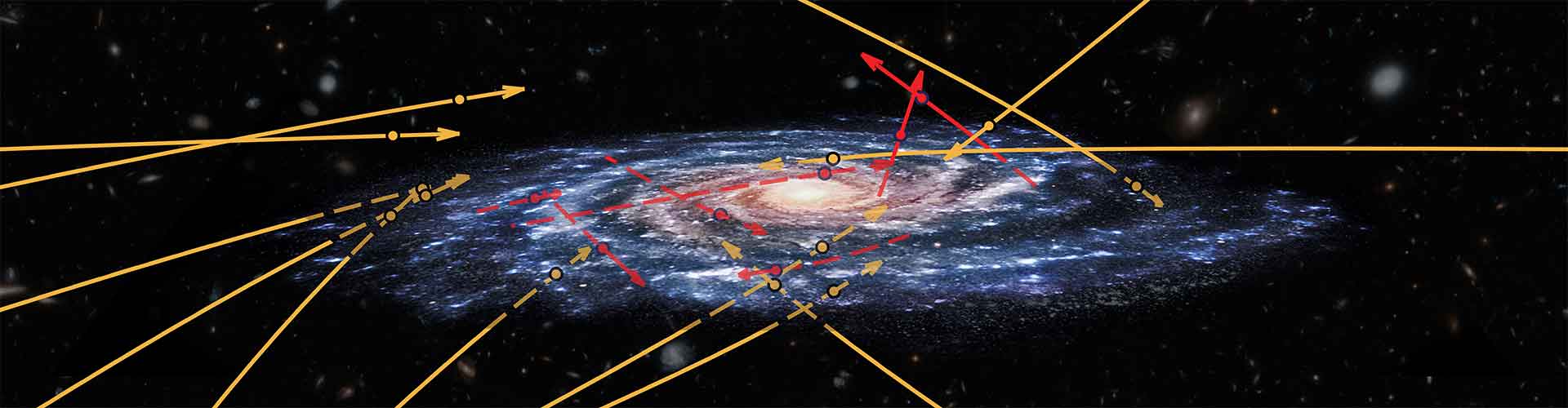
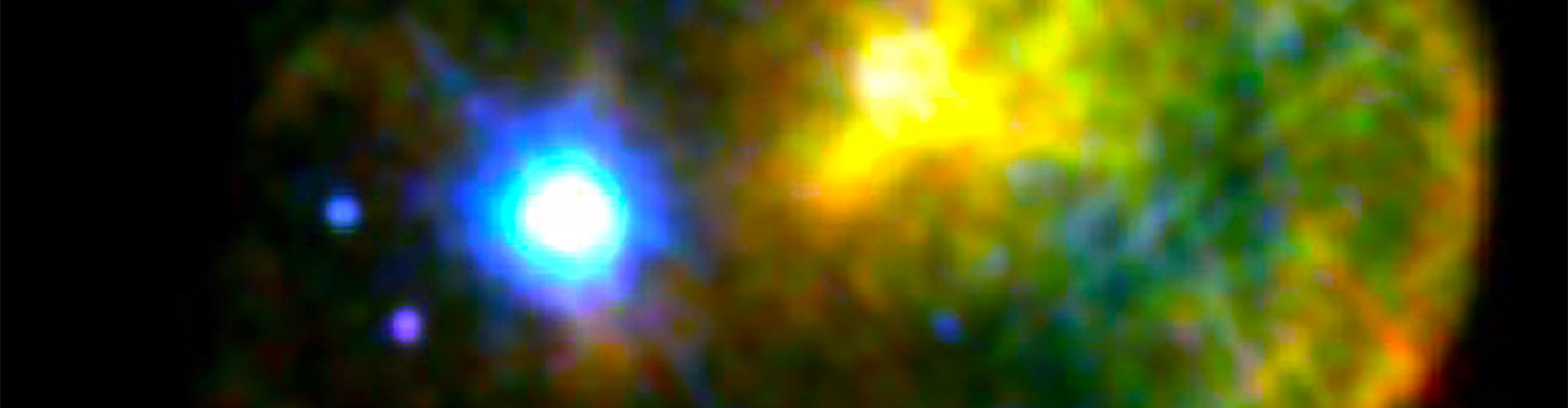
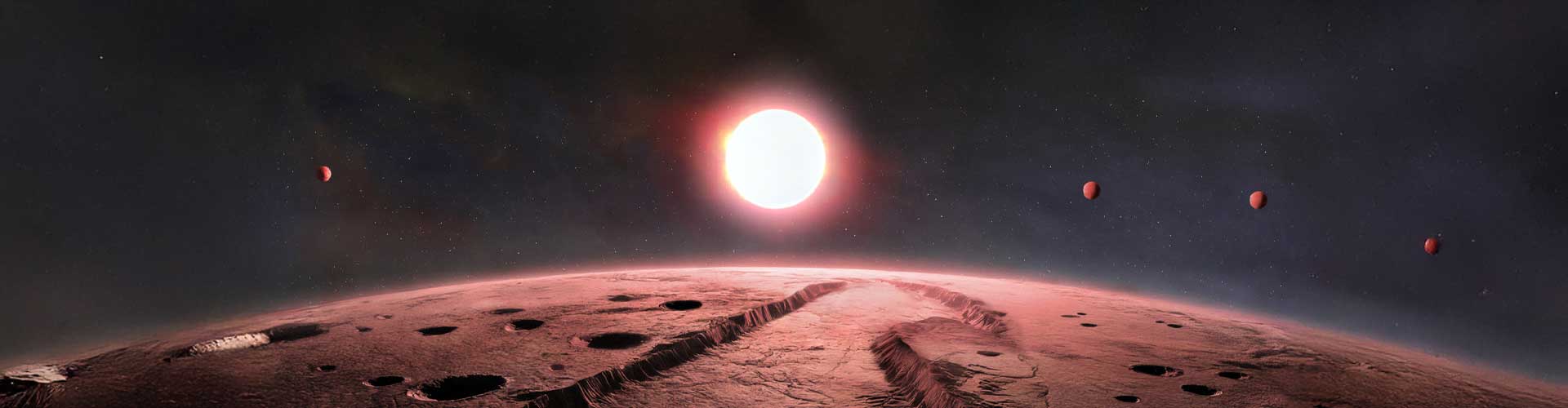
S5-HVS1 is an A-type main-sequence hypervelocity star notable as the fastest one detected as of November 2019, and has been determined to be traveling at 1,755 km/s. The star is in the Grus constellation in the southern sky, and about 29,000 light-years from Earth. Image credit: Sergey Koposov
Related channels: HYPERVELOCITY STARS, STARS, WHITE DWARFS, BROWN DWARFS, THE SUN, PULSARS, QUASARS, NEUTRON STARS, BLACK HOLES, ALPHA CENTAURI
Latest S5-HVS1 videos
The fastest Main-Sequence Star in the Universe
Blasting through space at a record speed of 6 million kilometres per hour (3.7 million mph), S5-HVS1 is known as the fastest Main-Sequence Star in the universe.
Learn more:
HYPERVELOCITY STARS https://www.spacetv.net/hypervelocity-stars/
STARS https://www.spacetv.net/stars/
BLACK HOLES https://www.spacetv.net/black-holes/
Written and narrated for SPACETV by Diedra O’Ree
http://www.dididoesvoices.com/
http://www.linkedin.com/in/dididoesvoices
Follow SPACETV on Twitter https://twitter.com/SPACETVnet
Join us on Facebook https://www.facebook.com/spacetv.net
and on Tiktok https://www.tiktok.com/@spacetvnet
Sources:
https://newatlas.com/space/fastest-star-hypervelocity-ejected-milky-way/
https://www.sciencealert.com/our-bossy-black-hole-kicked-out-a-star-and-it-s-shooting-through-the-galaxy-insanely-fast
https://www.cmu.edu/mcs/news-events/2019/1112_runaway-star.html
https://phys.org/news/2019-03-massive-hyper-runaway-star-ejected-milky.html
https://www.sciencealert.com/a-star-has-been-kicked-out-of-the-milky-way-it-knows-what-it-did
Credits:
James Josephides - Animator and Designer
Sergey Koposov
ESA / Hubble M. Kornmesser & L. L. Christensen
ESO / L. Calçada, INAF-Padua/S. Zaggia
ESO / L. Calçada / M. Kornmesser / spaceengine.org
ESO / Gravity Consortium / L. Calçada / N. Risinger (skysurvey.org)
NASA’s Goddard Space Flight Center
Music: https://www.purple-planet.com
SPACETV.NET 2021
Fastest Star in the Milky Way | Escapes Supermassive Black Hole
This video is about Star S5-SVH1. This star was extremely lucky, when it not only escaped Sagittarius A*, but was ejected from the Supermassive Black Hole in the center of The Milky Way. The ejection of a star from a black hole was already an idea, being invented in 1989 and demonstrated in 2019. The star was part of a Binary Star System, meaning 2 stars orbiting around each-other. The star got its name S5 from extremely fast stars, stars that move at least 2x the speed of other stars.
#S5HVS1 #blackholes #space
Subscribe here👉 https://youtube.com/channel/UCUyxbFMJ
I hope you enjoyed this video! Videos come out 1-3 times per week, so don't miss out by subscribing and hitting the notification bell to know when videos come out!
Black Hole Ejects Star Out Of Our Galaxy
A team of international astronomers has detected a runaway star after it got ejected by the Milky Way’s supermassive black hole. The star is called S5-HVS1.
SUBSCRIBE ► https://goo.gl/PLLFPz
----
Website ► www.cosmoknowledge.com
Facebook ► https://facebook.com/cosmoknowledgee
Instagram ► https://www.instagram.com/itscosmoknowledge
Twitter ► https://www.twitter.com/cosmoknowledge
Graphics & Credits:
Space Engine
Ahilan Parameswaran
Music:
Ocean Call - Ookean
-
Cosmoknowledge brings news from space.
We love you, explorers!
Ejection of star S5-HVS1 from the Milky Way
The view of the ejection of the S5-HVS1 star, as an observer from outside our galaxy would see it. The Sun is marked by an orange sphere, while the ejected star is shown by a blue sphere. Credit: Sergey Koposov (CMU)
Movie of the ejection of the star S5-HVS1 from the centre of the Milky Way
An animation of artist's impressions of the ejection of the star S5-HVS1 by the supermassive black hole at the centre of the Milky Way galaxy. Credit: James Josephides (Swinburne Astronomy Productions)
The numerical simulation of the hyper-velocity star like S5-HVS1 ejection by a black hole.
The video shows how two stars orbit each other in the binary, then approach the super-massive black hole in the center of the galaxy and then one star is ejected with high speed, while the other one is captured by the black hole. The
The Fastest Star Ever Is Going Through Our Galaxy
Unless you’re an astronomer, you probably don’t think of stars as moving all that quickly. You might not even know they move at all. If that’s the case, you’d be surprised to learn that a star called S5-HVS1 is zipping through our galaxy at over ten thousand miles per second.
As with many of the best discoveries, astronomers found this rogue star entirely by accident. One o them was going through some of the survey data when he came across some unusual readings. He was looking for stars with unusually rapid orbits, but was surprised to find one fleeing the galaxy at record speeds...
Other videos you might like:
NASA Has Just Discovered a New Planet! https://www.youtube.com/watch?v=TOGswBzxO54&
A Potentially Habitable Super Earth Has Been Discovered https://www.youtube.com/watch?v=6dUYK41ElO0&
The Real Size of the Universe (Even a Child Understands) https://www.youtube.com/watch?v=T3T08WOlFk4&
TIMESTAMPS:
What's so special about this star? 1:24
Hypervelocity stars 2:02
Why is it getting expelled from the galaxy? 3:10
What a three-body exchange is 3:33
The supermassive black hole at the center of our galaxy 5:57
Two theories about this star 7:05
#space #stars #brightside
SUMMARY:
- It’s hard to tell by looking at them, but stars are in constant motion, orbiting the center of the galaxy just like the Earth orbits the sun.
- S5-HVS1 (you know, let’s just him “Speedy”) is no ordinary star, and its movement isn’t at all normal. This recently discovered star is racing toward the outer edge of our galaxy, having been ejected from its orbit at a velocity never before seen in recorded history.
- Astronomers classify this white-hot ball of plasma as an A-type main-sequence star and have estimated it to be more than two times the size of the Sun.
- When a star goes supernova, it doesn’t always explode evenly. These lopsided detonations not only expel a few dozen Suns worth of gas and plasma, but also hurl what remains of the star through the cosmos at almost half the speed of light.
- But Speedy isn’t a neutron star. So why is it getting expelled from the galaxy like a spare tire improperly secured to the back of a truck?
- Things can get pretty wild when black holes are added to the mix. In this analogy, they’d be somebody’s loud friend who’s always around, leaving dishes in the sink and drinking the last Coke without asking.
- When these binary systems drift too close to a black hole, its mass disrupts the delicate balance of gravity and momentum that keeps the system stable.
- If you ever swung your keychain around your finger only to have it soar out of reach, you’ve seen a version of this in action.
- What differentiates Speedy from the other black hole ejections is the star’s comparatively low mass.
- To generate that much energy with a star that small, the black hole that disrupted Speedy’s orbit would need to be extremely massive.
- Before being batted across the universe, Speedy would’ve been paired with a second, much smaller star.
- Both stars originated in the supermassive black hole’s accretion disk.
- Astronomers may not have a perfect answer yet, but Speedy is still under observation and there’s no doubt more to uncover.
- For now, astronomers are eager to find more hypervelocity stars in hopes of gaining a better understanding of what’s going on in the Galactic Center, and how mass is distributed across the vast collection of stars we call the Milky Way.
Music by Epidemic Sound https://www.epidemicsound.com/
Subscribe to Bright Side : https://goo.gl/rQTJZz
----------------------------------------------------------------------------------------
Our Social Media:
Facebook: https://www.facebook.com/brightside/
Instagram: https://www.instagram.com/brightgram/
5-Minute Crafts Youtube: https://www.goo.gl/8JVmuC
Stock materials (photos, footages and other):
https://www.depositphotos.com
https://www.shutterstock.com
https://www.eastnews.ru
----------------------------------------------------------------------------------------
For more videos and articles visit:
http://www.brightside.me/
We Just Discovered The Fastest Main Sequence Star in the Galaxy
You can buy Universe Sandbox 2 game here: http://amzn.to/2yJqwU6
Hello and welcome! My name is Anton and in this video, we will talk about a newly discovered hyper velocity star known as S5-HVS1 that's now the fastest moving main sequence star in the galaxy.
Paper: https://arxiv.org/abs/1907.11725
Support this channel on Patreon to help me make this a full time job:
https://www.patreon.com/whatdamath
Space Engine is available for free here: http://spaceengine.org
Enjoy and please subscribe.
Twitter: https://twitter.com/WhatDaMath
Facebook: https://www.facebook.com/whatdamath
Twitch: http://www.twitch.tv/whatdamath
Bitcoins to spare? Donate them here to help this channel grow!
1GFiTKxWyEjAjZv4vsNtWTUmL53HgXBuvu
The hardware used to record these videos:
CPU: https://amzn.to/2LZFQCJ
Video Card: https://amzn.to/2M1W26C
Motherboard: https://amzn.to/2JYGiQQ
RAM: https://amzn.to/2Mwy2t4
PSU: https://amzn.to/2LZcrIH
Case: https://amzn.to/2MwJZz4
Microphone: https://amzn.to/2t5jTv0
Mixer: https://amzn.to/2JOL0oF
Recording and Editing: https://amzn.to/2LX6uvU
Thank you to all Patreon supporters of this channel
Specifically, great thanks to the following members:
Mark Teranishi
Mayumi
Morrison Waud
Vlad Manshin
Lilith Dawn
Daniel Rosvall
Greg Lambros
Nick Dolgy
Luminger
UnexpectedBooks.com
Richard Colombo
Bartholomew Macaluso
Jer
Lauren Smith
Michael Tiganila
Albert B Cannon
Konrad Kummli
Lyndon Riley
Michael Mitsuda
Jordan
Dave Blair
Ralph Spataro
George Williams
Shinne
Alexander Leimbeck
Jakub Glos
Johann Goergen
Henry Spadoni
Adam Lee
Jake Salo
Mercei Levi
LS Greger
Gordon Cooper
Tracy Burgess
Kai Raphahn
Sander Stols
Sergio Ruelas
Vinod Sethi
Russell Sears
Jayjay Volz
AA
Olegas Budnik
Robert Wyssbrod
Anataine Deva
Zachary Fluke
Madzor
Daniel S
RandalM
L Joseph Parker
Gary Steelman
Michael Koebel
Shelley Passage
Liam Moss
Bodo Graßmann
Steven Aiello
xyndicate
Honey Suzanne Lyons
Becky
Steven
Chase Staggs
Dale Andrew Darling
James Myers
Peter Hamrak
Niji
Matthew Lazear
Steve Wotton
Timothy Welter MD
Assaf Dar Sagol
Brian Szkotak
Mr Fluffington
Anton Reed
TBPony
Charles Nadeau
Minovsky Man
Anton Newman
George Lincoln Rockwell
Dave A
GrittyFlix
Paul Koploy
Sal Carrera
Doug Baker
Doug MacDonald
Jacob Spencer
Robert MacDonald
Rock Howard
Daniel Coleman
Vincent L. Cleaver
Veronika A. Czebe
Lee Densmore
Sir David Coyne
brian plummer
David Lewis
JohnTaylorWalker
Kyle eagle
Jon Haynes
Tarik Qassem
Claye Griffith
George Naumov
Michael J Fluharty
Howard Zhang
Hampton Tunis
Nathan Egan
Janne Vuorenpää
Lynn Johnson
Rob Law
Scary ASMR
Eric White
Ivan Gallagher
Troy Schmidt
Jordaen Davids
Greyson Flippo
Thierry Ray Jehlen Gasnier
William Warren
Bill Codair
Douglas Burns
Andrée Rosén
Chaos Gamer
Jan Šoulák
Alberto Diaz Saldana
Harry Evett
Rafael Aguila
Kearny Li
Marcin Jan
Adam Smith
Aaron Fineout
Aanand Joshi
Uwe Böhnke
Deanna Korell-Hall
Carla
Samuel Mathison
Josh Shultz
Dipen Bhattacharya
Tedd Speck
rfc1135
gene valle
david jungerman
JL Solidum
Doug Beeferman
Joseph Thompson
Sol Bergeron Beauchemin
Men I Trust
Luis M Gaytan Tovar
Brittany House
Luciano Sanchez
Lisa Stadlbauer
tom g.
Arp Lee
Lisette Ramos-Voigt
Rs Wlms
Reynir Örn Bachmann Guðmundsson
Márton Fülöp
Check the Patreon page to join.
S5-HVS1: The Record-Breaking Hypervelocity Star Ejected from the Milky Way
Are you looking to explore the mysteries of deep space? The star S5-HVS1 is one of the most fascinating celestial objects ever discovered. Classified as a hypervelocity star (HVS), this cosmic runaway is tearing through space at an astonishing speed of 1,755 kilometres per second (roughly 3.9 million miles per hour). This means it is travelling at nearly 0.6% of the speed of light, making it one of the fastest main-sequence stars ever recorded in astronomical history.
Ejected by the Galactic Heart of Darkness
What makes S5-HVS1 truly remarkable is its dramatic origin story. Over 4.8 million years ago—around the time human ancestors were first learning to walk—this star was violently launched from the center of our galaxy. Astronomers tracking its trajectory have conclusively linked its exit to an encounter with Sagittarius A* (Sgr A*), the supermassive black hole lurking at the heart of the Milky Way. This incredible gravitational ejection provides scientists with undeniable proof of a long-theorized astronomical event.
The Hills Mechanism in Action
Astrophysicists believe that S5-HVS1 was originally part of a binary star system. When the pair strayed too close to the immense gravitational pull of Sagittarius A*, a disruptive cosmic event occurred known as the Hills mechanism:
- The Capture: The supermassive black hole captured the companion star into its own tight orbit.
- The Slingshot: S5-HVS1 was violently thrown outward in a powerful gravitational slingshot.
- The Escape: Hurled from the galactic center, the star was sent on a one-way trip into intergalactic space.
How to Find S5-HVS1 in the Night Sky
While you cannot see it with the naked eye, scientists actively study this stellar speedster using advanced equipment. It is located in the southern sky within the Grus constellation (the Crane), sitting approximately 29,000 light-years away from Earth. Because of its unprecedented velocity, it easily overcomes the Milky Way’s gravitational pull. It will inevitably leave our galaxy completely, destined to spend the rest of its life cycle alone in the vast emptiness of intergalactic space.
The Science Behind the Discovery
The star was serendipitously discovered by a team led by Sergey Koposov of Carnegie Mellon University during the Southern Stellar Stream Spectroscopic Survey (S5). By combining data from the Anglo-Australian Telescope and the European Space Agency’s Gaia satellite, researchers mapped its 3D orbit with breathtaking accuracy.
To keep up with the latest deep space breakthroughs, visit the Royal Astronomical Society or learn more about the project via the arXiv Astrophysics Repository today!