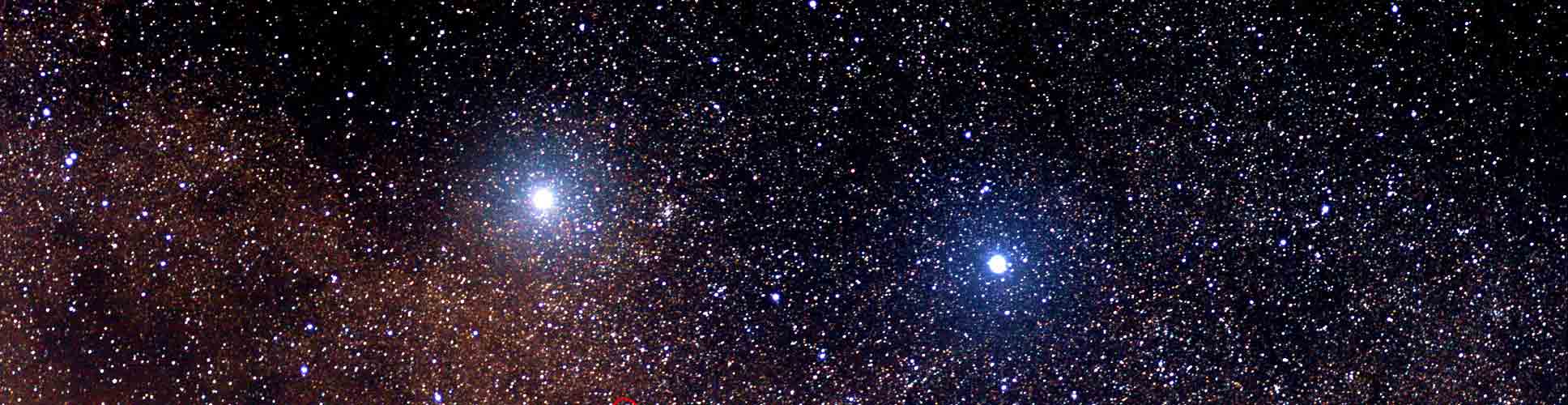
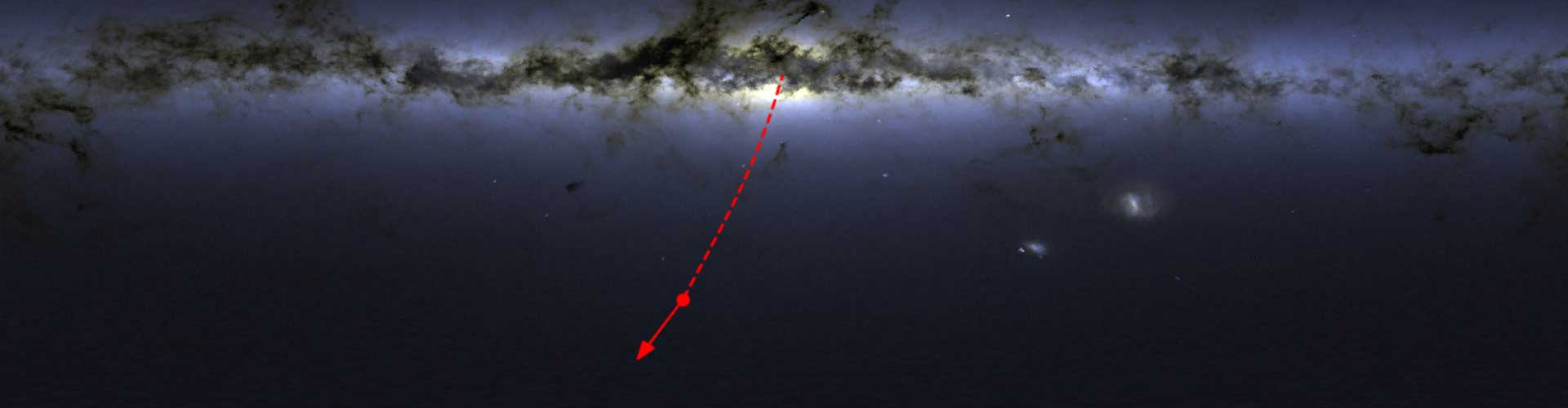
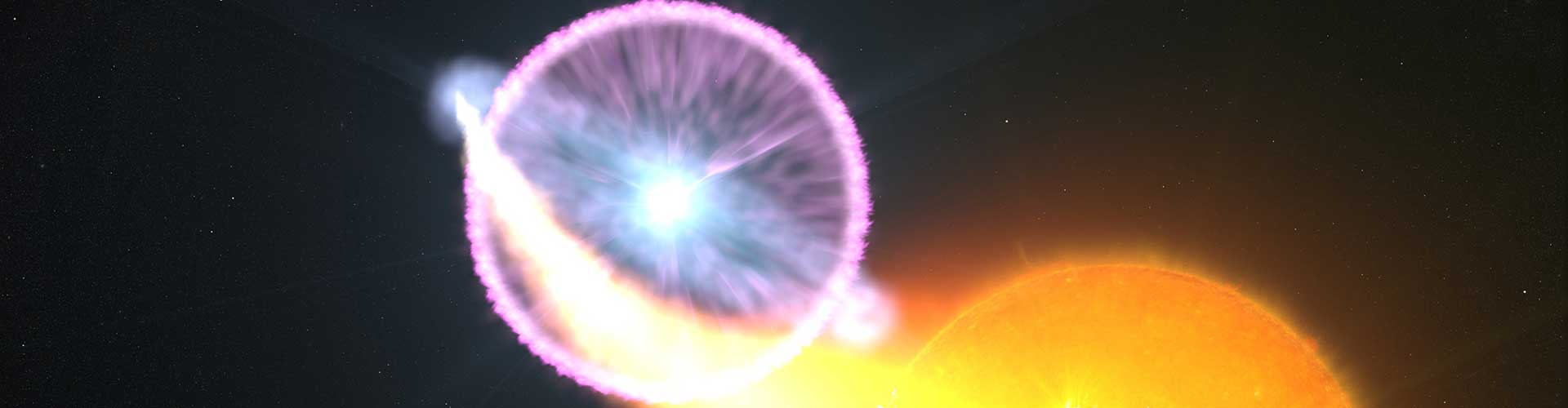
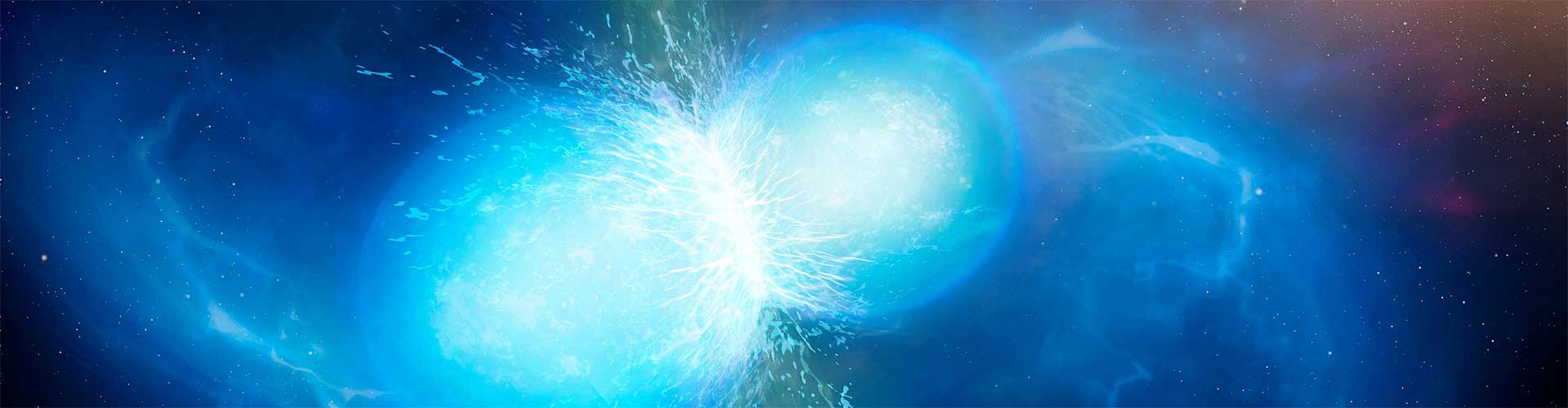
Proxima Centauri is a small, low-mass star located 4.2465 light-years (1.3020 pc) away from the Sun in the southern constellation of Centaurus. It was discovered in 1915 by Robert Innes and is the nearest-known star to the Sun. Image credit: ESO/M. Kornmesser
Related channels: ALPHA CENTAURI, STARS, EXOPLANETS, SPACE COLONIZATION
1
/
4


How We Could Reach Proxima Centauri B in 20 Years
Help us continue to turn down crappy sponsors: https://www.patreon.com/c/realengineering
Thank you to my patreon supporters:
Eric Lyness
Claire
Han C. Tran
Casper Kroon
Sasha Reid
Javier Soto
Ciarán
Eric S.
John Monsees
John C Monsees
Jonathan Mayhew
Grant Grossbier
Alfred Holzheu
That's How We'll Reach Proxima Centauri in 20 years
See Also:
Why is it IMPOSSIBLE to go to Pluto and Proxima Centauri?
https://youtu.be/wqpqG4rTQ9Q
How Long Would a Trip to Proxima Centauri Really Take?
https://youtu.be/BpIXnfyrByo #space #proximab
Thank you for watching and being part of this journey through the cosmos.
What do the ALIEN Worlds of Alpha & Proxima Centauri REALLY look like? | SPACE DOCUMENTARY
🌍 Proxima Centauri and Alpha Centauri are among the most fascinating and studied stars in our galaxy. Located in the Alpha Centauri star system, they represent not only prime observational targets for astronomers, but also sources of inspiration for those who dream of extraterrestrial life and interstellar exploration. The Alpha Centauri system lies around 4.37 light-years from Earth, making it our nearest stellar neighbor.
Alpha Centauri is actually a binary system made up of two main stars, Alpha Centauri A and Alpha Centauri B, which orbit each other. Alpha Centauri A is a G2 spectral-type star, similar to our Sun, but slightly larger and brighter. Alpha Centauri B, on the other hand, is a K1-type star, slightly smaller and less luminous than our own star. The proximity and luminosity of these two stars make them ideal objects of study for astronomers seeking to understand the stellar dynamics and habitability potential of binary systems.
Proxima Centauri, the third star in the system, is a red dwarf of spectral type M5. It is located around 0.21 light-years from the main stars Alpha Centauri A and B, making it the closest star to our solar system. Proxima Centauri is of particular interest to astronomers due to its proximity and the discovery of planets in its habitable zone. In 2016, scientists announced the discovery of Proxima b, an exoplanet orbiting in Proxima Centauri's habitable zone. This planet is of great interest because it could potentially harbor liquid water, an essential condition for life as we know it.
The universe is vast and mysterious, and the possibility of extraterrestrial life has long fascinated scientists and the general public alike. The Alpha Centauri and Proxima Centauri systems are prime targets for the search for extraterrestrial life, due to their relative proximity and the potentially habitable conditions of some of their planets. The Breakthrough Starshot mission, for example, aims to send tiny probes powered by solar sails to Alpha Centauri, in the hope of collecting data on the planets orbiting these stars. If successful, this mission could revolutionize our understanding of these star systems and open up new prospects for the search for extraterrestrial life.
The search for extraterrestrial life is not limited to exoplanets. Scientists are also exploring other ways of detecting signs of life, such as analyzing exoplanet atmospheres for biosignatures, specific molecules that could indicate the presence of life. Technological advances in astronomy, such as next-generation space telescopes like the James Webb Space Telescope, will enable us to peer deeper into the atmospheres of exoplanets and search for clues to life.
The mysteries surrounding Alpha Centauri and Proxima Centauri also fuel speculation about advanced extraterrestrial civilizations. Concepts such as Fermi's paradox, which questions the lack of evidence for extraterrestrial civilizations despite the high statistical probability of their existence, take on a new dimension when we consider the star systems closest to us. Some theorists suggest that if advanced civilizations exist in the universe, they could be using nearby stars as bases for interstellar exploration or even as sources of energy.
Space exploration and the search for extraterrestrial life have profound implications for our understanding of our place in the universe. Discovering signs of life elsewhere could answer some of the most fundamental questions humanity has been asking for millennia: are we alone in the universe? What is the nature of life, and how can it develop in extraterrestrial environments? The answers to these questions could not only satisfy our scientific curiosity, but also transform our perspective on human life and civilization. 🔥 As a reminder, videos are published on SUNDAYS at 9:00 pm.
This channel is an official affiliate of the ORBINEA STUDIO network.
Searching for Habitable Planets at Alpha Centauri with the TOLIMAN Mission
We know about thousands of exoplanets by now. But it's still a mystery, whether there are planets in the Alpha Centauri binary system, which is just next door to us. My guest today, Professor Peter Tuthill, is the Mission Leader for the TOLIMAN Telescope mission, which is designed to find those answers.
🟣 Guest: Professor Peter Tuthill
🦄 Support us on Patreon:
https://patreon.com/universetoday
00:00 Intro
01:29 Are there planets at Alpha Centauri
08:22 How can we know they are there
11:20 TOLIMAN Telescope
30:04 JWST experiments
37:34 Next big telescopes for planet hunting
48:38 Discovering many more exoplanets
51:50 Next generation of instruments
59:05 Outro 📰 EMAIL NEWSLETTER
Read by 60,000 people every Friday. Written by Fraser. No ads.
Subscribe Free: https://universetoday.com/newsletter
🎧 PODCASTS
Universe Today: https://universetoday.fireside.fm/
Astronomy Cast: http://www.astronomycast.com/
🤳 OTHER SOCIAL MEDIA
Twitter: https://twitter.com/fcain
Twitter: https://twitter.com/universetoday
Facebook: https://facebook.com/universetoday
Instagram: https://instagram.com/universetoday
📩 CONTACT FRASER
[email protected]
⚖️ LICENSE
Creative Commons Attribution 4.0 International (CC BY 4.0)
You are free to use my work for any purpose you like, just mention me as the source and link back to this video.
What BLC1 Could Be With Dr. Avi Loeb
BLC1 is a candidate SETI radio signal announced in December 2020, spatially coincident with the star Proxima Centauri.
BLC1 stands for Breakthrough Listen Candidate 1, as it is the first signal to pass the breakthrough listen projects filters. Dr. Avi Loeb of Harvard’s new book ‘Extraterrestrial: The first sign of intelligent life beyond earth’ releases later this month.
Extraterrestrial: The First Sign of Intelligent Life Beyond Earth https://amzn.to/2LiIxoo affiliate link
In Extraterrestrial, Loeb takes readers inside the thrilling story of the first interstellar visitor to be spotted in our solar system. He outlines his controversial theory and its profound implications: for science, for religion, and for the future of our species and our planet. A mind-bending journey through the furthest reaches of science, space-time, and the human imagination, Extraterrestrial challenges readers to aim for the stars—and to think critically about what’s out there, no matter how strange it seems.
ABRAHAM (AVI) LOEB is the Frank B. Baird, Jr., Professor of Science at Harvard University, chair of Harvard’s Department of Astronomy, founding director of Harvard’s Black Hole Initiative, and director of the Institute for Theory and Computation (ITC) within the Harvard-Smithsonian Center for Astrophysics. He also chairs the Advisory Committee for the Breakthrough Starshot Initiative, serves as the science theory director for all Initiatives of the Breakthrough Prize Foundation, as well as chair of the Board on Physics and Astronomy of the National Academies. Author of four books and over 700 scientific papers, Loeb is an elected fellow of the American Academy of Arts & Sciences, the American Physical Society, and the International Academy of Astronautics. In 2012, Time selected Loeb as one of the twenty-five most influential people in space.
Want to support the channel?
Patreon: https://www.patreon.com/EventHorizonShow
Follow us at other places!
Website: https://www.eventhorizonshow.com/
Twitter: https://twitter.com/jmgeventhorizon
Instagram: https://www.instagram.com/jmgeventhorizon/
Music featured on Event Horizon
https://stellardrone.bandcamp.com/
https://migueljohnson.bandcamp.com/
https://leerosevere.bandcamp.com/
https://aeriumambient.bandcamp.com/
FOOTAGE:
NASA
ESA/Hubble
ESO - M.Kornmesser
ESO - L.Calcada
ESO - Jose Francisco Salgado (josefrancisco.org)
NAOJ
University of Warwick
Goddard Visualization Studio
Langley Research Center
Pixabay
The Closest Star to the Solar System: Proxima Centauri with Parallax Nick
Proxima Centauri is a small, low-mass star located 4.2465 light-years away from the Sun in the southern constellation of Centaurus. Last month there was the announcement of BLC1, a possible SETI candidate signal spatially coming from Proxima Centauri. But what is the Proxima Centauri system like? Could life exist on Proxima B? Would intelligent life be able to withstand the solar flares from Proxima?
Parallax Nick, is a science presenter and YouTuber with a channel that focuses on sharing his thoughts and knowledge of science, history and the multiverse at large. Nick looks to our past to place a present understanding in context, and, hopefully a better grasp of the future.
Parallax Nick channel: https://www.youtube.com/channel/UC0QdW-H7_l0zh_CoNhlwoBw
Want to support the channel?
Patreon: https://www.patreon.com/EventHorizonShow
Follow us at other places!
Website: https://www.eventhorizonshow.com/
Twitter: https://twitter.com/jmgeventhorizon
Instagram: https://www.instagram.com/jmgeventhorizon/
Music featured on Event Horizon
https://stellardrone.bandcamp.com/
https://migueljohnson.bandcamp.com/
https://leerosevere.bandcamp.com/
https://aeriumambient.bandcamp.com/
FOOTAGE:
NASA
ESA/Hubble
ESO - M.Kornmesser
ESO - L.Calcada
ESO - Jose Francisco Salgado (josefrancisco.org)
NAOJ
University of Warwick
Goddard Visualization Studio
Langley Research Center
Pixabay
BLC1 the Proxima Centauri SETI Candidate with Jason Wright
BLC1 is a candidate SETI radio signal found by the Breakthrough Listen project, the signal is possibly coming from the star Proxima Centauri and has a frequency of 982.002 MHz.
Jason Wright is a professor of Astronomy and Astrophysics at Penn State.
https://twitter.com/Astro_Wright
https://sites.psu.edu/astrowright/
https://www.nationalgeographic.com/science/2020/12/alien-hunters-detect-mysterious-radio-signal-from-nearby-star/
https://www.scientificamerican.com/article/alien-hunters-discover-mysterious-signal-from-proxima-centauri/
Follow us at other places!
Website: https://www.eventhorizonshow.com/
Twitter: https://twitter.com/jmgeventhorizon
Instagram: https://www.instagram.com/jmgeventhorizon/
Music featured on Event Horizon
https://stellardrone.bandcamp.com/
https://migueljohnson.bandcamp.com/
https://leerosevere.bandcamp.com/
https://aeriumambient.bandcamp.com/
FOOTAGE:
NASA
ESA/Hubble
ESO - M.Kornmesser
ESO - L.Calcada
ESO - Jose Francisco Salgado (josefrancisco.org)
NAOJ
University of Warwick
Goddard Visualization Studio
Langley Research Center
Pixabay
Did We Just Detect a New "Wow" Signal from Proxima Centauri?
News has leaked of the discovery of a radio transmission from our nearest neighboring star, Proxima Centauri. Did we just detect alien communications?! Join us for this special video with Professor Kipping explaining what we know and why some skepticism is warranted.
You can now support our research program and the Cool Worlds Lab at Columbia University: https://www.coolworldslab.com/support
Get Stash here! https://teespring.com/stores/cool-worlds-store
Thank-you to K. Clark, T. Widdowson, D. Smith, S. Hackley, M. Sloan, L. Sanborn, K. Kantor, P. Herman, A. Aganbegyan, C. Bottaccini, D. Brunk, D. Daughaday, S. Fincher, J. Kindred, A. Jones, J. Allen, S. Baldwin, J. Black, S. Brownlee, S. Chaturvedi, D. Denholm, T. Dorais, G. Downton, E. Urrestarazu, G. Fulton, S. Griffiths, P. Halloran, J. Jurcevic, N. Kildal, J. Kobernick, W. Kobernick, V. Kremer, M. Lijoi, S. Loftin, B. Loizides, A. Maslyanchuk, B. Matson, O. Mcintyre, L. Mitchell, A. Pelletier, J. Rivillas, B. Robinson, Z. Star, L. Steely, E. Stefan-Matyus, M. Steven, E. West, B. York, T. Zajonc, P. Gowd, S. Kelsey, P. Kommareddy, C. Wolfred, D. Vennel, E. Dessoi, F. Naeem, F. Rebolledo, H. Laging, J. Falls, J. Adams, M. Gremillion, P. Rutherford, T. Kline, T. Leger, L. Skov, D. Roberts, E. Wilson, I. Baskerville, J. Bassnett, J. Shackleford, M. Undin, M. Kroebel, I. Johnstone, G. Suter, I. Hopcraft, J. Valdes, P. Akrill-Misso, W. Robertson, E. Orman, G. Ingham, D. Hecke, J. Pilloff, T. Bernhard, D. Dianovszki, E. Cook, S. Mass, T. Richards, T. Lancaster, C. Stouffer, G. Benson, A. de Vaal, C. Diamantis, J. Wenzel, M. Elliott, M. Wallstab, S. Bialek, B. Thomson, B. Daniluk, B. Bowen, D. Jacobson & M. Forbes. ::Clips used::
► Parkes timelapse by Angelo Papakostas: https://vimeo.com/66404362
► LEO orbits by NASA/Goddard Space Flight Center Scientific Visualization Studio: https://youtu.be/gF9UlTYR5d0
► Moon transit by NASA/NOAA/EPIC: https://youtu.be/DMdhQsHbWTs
► Satellite orbit animation by ESA: http://www.esa.int/ESA_Multimedia/Images/2006/09/Animation_of_crowding_of_the_GEO
► Molniya orbit animation by Sergey Lemeshencko: https://youtu.be/5wt_2mM4Z1c ::Music::
Music used is licensed via Creative Commons (CC) Attribution License (https://creativecommons.org/licenses/by/4.0/) and/or with permission from the artist.
► "Trace Correction" by Indive licensed under a CC Attribution license: https://indive.bandcamp.com
#BLC1 #Wow2020 #BreakthroughListen
SETI Detected a Strange Radio Signal From Proxima Centauri
Classic t-shirt designs: https://amzn.to/3QFIrFX
Get a Wonderful Person shirt: https://teespring.com/stores/whatdamath
Alternatively, PayPal donations can be sent here: paypal.me/whatdamath
Hello and welcome! My name is Anton and in this video, we will talk about a recent detection of an unusual radio signal referred to as BLC-1 that seems to point at a technosignature coming from Proxima Centauri...But it's also probably not.
Article: https://www.nationalgeographic.com/science/2020/12/alien-hunters-detect-mysterious-radio-signal-from-nearby-star/
Main researcher: https://sites.psu.edu/szs714/
Video used: https://www.youtube.com/watch?v=9E8uwQAros4
Image used: https://upload.wikimedia.org/wikipedia/commons/a/ad/Waterfall_AM.jpg
More about the detection: https://en.wikipedia.org/wiki/BLC-1
Image credit: CSIRO
Support this channel on Patreon to help me make this a full time job:
https://www.patreon.com/whatdamath
Alternatively, PayPal donations can be sent here: paypal.me/whatdamath
Space Engine is available for free here: http://spaceengine.org
Enjoy and please subscribe.
Bitcoins to spare? Donate them here to help this channel grow!
1GFiTKxWyEjAjZv4vsNtWTUmL53HgXBuvu
Twitter: https://twitter.com/WhatDaMath
Facebook: https://www.facebook.com/whatdamath
Twitch: http://www.twitch.tv/whatdamath
The hardware used to record these videos:
New Camera: https://amzn.to/34DUUlv
CPU: https://amzn.to/2LZFQCJ
Video Card: https://amzn.to/2M1W26C
Motherboard: https://amzn.to/2JYGiQQ
RAM: https://amzn.to/2Mwy2t4
PSU: https://amzn.to/2LZcrIH
Case: https://amzn.to/2MwJZz4
Microphone: https://amzn.to/2t5jTv0
Mixer: https://amzn.to/2JOL0oF
Recording and Editing: https://amzn.to/2LX6uvU
Some of the above are affiliate links, meaning I would get a (very small) percentage of the price paid.
Thank you to all Patreon supporters of this channel
Specifically, great thanks to the following members:
Morrison Waud
Vlad Manshin
Mark Teranishi
TheHuntress
Ralph Spataro
Albert B. Cannon
Lilith Dawn
Greg Lambros
adam lee
Gabriel Seiffert
Henry Spadoni
J Carter
Jer
Silver surfer
Konrad Kummli
Nick Dolgy
UnexpectedBooks.com
Mario Rahmani
George Williams
Shinne
Jakub Glos
Johann Goergen
Jake Salo
LS Greger
Lyndon Riley
Lauren Smith
Michael Tiganila
Russell Sears
Vinod sethi
Dave Blair
Robert Wyssbrod
Randal Masutani
Michael Mitsuda
Assaf Dar Sagol
Liam Moss
Timothy Welter MD
Barnard Rabenold
Gordon Cooper
Tracy Burgess
Douglas Burns
Jayjay Volz
Anataine Deva
Kai Raphahn
Sander Stols
Bodo Graßmann
Daniel Charles Smith
Daniel G.
Eugene Sandulenko
gary steelman
Max McNally
Michael Koebel
Sergio Ruelas
Steven Aiello
Victor Julian Castillo
xyndicate
Honey Suzanne Lyons
Olegas Budnik
Dale Andrew Darling
Niji
Peter Hamrak
Matthew Lazear
Alexander Afanasyev
Anton Newman
Anton Reed
#seti #BLC1 #BreakthroughListen #ProximaCentauri
Proxima Centauri Update - Major New Discoveries From Closest Star
I wrote a foreword for this awesome Sci-Fi book here: https://amzn.to/3aGrg0I
Get a Wonderful Person shirt: https://teespring.com/stores/whatdamath
Alternatively, PayPal donations can be sent here: paypal.me/whatdamath
Hello and welcome! My name is Anton and in this video, we will talk about a new discovery coming from the nearby system of Proxima Centauri...a new planet?
Paper: https://arxiv.org/pdf/2005.12114v1.pdf
Support this channel on Patreon to help me make this a full time job:
https://www.patreon.com/whatdamath
Space Engine is available for free here: http://spaceengine.org
Enjoy and please subscribe.
Twitter: https://twitter.com/WhatDaMath
Facebook: https://www.facebook.com/whatdamath
Twitch: http://www.twitch.tv/whatdamath
Bitcoins to spare? Donate them here to help this channel grow!
1GFiTKxWyEjAjZv4vsNtWTUmL53HgXBuvu
Alternatively, PayPal donations can be sent here: https://www.paypal.com/cgi-bin/webscr?cmd=_s-xclick&hosted_button_id=DNKM9SDWU3B3Q&source=url
The hardware used to record these videos:
CPU: https://amzn.to/2LZFQCJ
Video Card: https://amzn.to/2M1W26C
Motherboard: https://amzn.to/2JYGiQQ
RAM: https://amzn.to/2Mwy2t4
PSU: https://amzn.to/2LZcrIH
Case: https://amzn.to/2MwJZz4
Microphone: https://amzn.to/2t5jTv0
Mixer: https://amzn.to/2JOL0oF
Recording and Editing: https://amzn.to/2LX6uvU
Some of the above are affiliate links, meaning I would get a (very small) percentage of the price paid.
Thank you to all Patreon supporters of this channel
Specifically, great thanks to the following members:
Morrison Waud
Vlad Manshin
Mark Teranishi
TheHuntress
Ralph Spataro
Albert B. Cannon
Lilith Dawn
Greg Lambros
adam lee
Gabriel Seiffert
Henry Spadoni
J Carter
Jer
Silver surfer
Konrad Kummli
Nick Dolgy
UnexpectedBooks.com
Mario Rahmani
George Williams
Shinne
Jakub Glos
Johann Goergen
Jake Salo
LS Greger
Lyndon Riley
Lauren Smith
Michael Tiganila
Russell Sears
Vinod sethi
Dave Blair
Robert Wyssbrod
Randal Masutani
Michael Mitsuda
Assaf Dar Sagol
Liam Moss
Timothy Welter MD
Barnard Rabenold
Gordon Cooper
Tracy Burgess
Douglas Burns
Jayjay Volz
Anataine Deva
Kai Raphahn
Sander Stols
Bodo Graßmann
Daniel Charles Smith
Daniel G.
Eugene Sandulenko
gary steelman
Max McNally
Michael Koebel
Sergio Ruelas
Steven Aiello
Victor Julian Castillo
xyndicate
Honey Suzanne Lyons
Olegas Budnik
Dale Andrew Darling
Niji
Peter Hamrak
Matthew Lazear
Alexander Afanasyev
Anton Newman
Anton Reed
The Alpha Centauri System
When we eventually develop the capacity to leave our solar system, we will be ready to visit countless other worlds. Where will we go first? Probably the closest system to ours, since it'll be the fastest. Which system is that? The Alpha Centauri System, with three stars, and at least one planet, which we think may even be habitable. What do they look like? What do we know about them? Let's find out!
Watch the whole Astronomy/Astrophysics playlist: http://bit.ly/ProfDaveAstronomy
Classical Physics Tutorials: http://bit.ly/ProfDavePhysics1
Modern Physics Tutorials: http://bit.ly/ProfDavePhysics2
Mathematics Tutorials: http://bit.ly/ProfDaveMaths
General Chemistry Tutorials: http://bit.ly/ProfDaveGenChem
Organic Chemistry Tutorials: http://bit.ly/ProfDaveOrgChem
Biochemistry Tutorials: http://bit.ly/ProfDaveBiochem
Biology Tutorials: http://bit.ly/ProfDaveBio
EMAIL► [email protected]
PATREON► http://patreon.com/ProfessorDaveExplains
Check out "Is This Wi-Fi Organic?", my book on disarming pseudoscience!
Amazon: https://amzn.to/2HtNpVH
Bookshop: https://bit.ly/39cKADM
Barnes and Noble: https://bit.ly/3pUjmrn
Book Depository: http://bit.ly/3aOVDlT
Search For Habitable Alpha Centauri Planets Gets Boost with New Instrument
A coronagraph has been installed on the European Southern Observatory’s Very Large Telescope to search for planets around nearby star Alpha Centauri. -- The Search for Habitable Alien Worlds in Earth's Backyard Heats Up: https://www.space.com/alien-planets-alpha-centauri-breakthrough-watch.html
Credit: Breakthrough Watch / ESO
The Search for Habitable Alien Worlds in Earth's Backyard Heats Up: https://www.space.com/alien-planets-alpha-centauri-breakthrough-watch.html
SHSSP19 - Interstellar Program Alpha Centauri
Guest Speaker: Dr Simon Peter "Pete" Worden
Can we reach the stars?
No extraterrestrials have yet visited us – but neither have we stepped out onto the galactic stage. Are we destined to belong to Earth for as long as we survive? Or can we reach the stars? Breakthrough Starshot is a $100 million research and engineering program aiming to lay the foundations for a flyby mission to Alpha Centauri, our nearest star system, within a generation. This is one of several privately-funded global initiatives to answer the fundamental science questions surrounding the origin, extent and nature of life in the universe. The Breakthrough Initiatives are managed by the Breakthrough Prize Foundation.
Project Dragonfly. A Laser-Powered Probe to Alpha Centauri
The distances between stars are so vast, it’s hard to wrap your mind around it. Even our far flung Voyagers have barely reached interstellar space, and would take tens of thousands of years to get to even the nearest star.
But scientists and engineers are considering what it would actually take to send a spacecraft to another star. It’s called Project Dragonfly, and would use existing or near future technologies to send a 3,000 kg spacecraft to Alpha Centauri within 100 years.
Project Dragonfly paper
https://www.sciencedirect.com/science/article/pii/S0094576517319136?dgcid=rss_sd_all#!
Audio Podcast version:
ITunes: https://itunes.apple.com/us/podcast/universe-today-guide-to-space-audio/id794058155?mt=2
RSS: https://www.universetoday.com/audio
Video Podcast version:
ITunes: https://itunes.apple.com/bh/podcast/universe-today-video/id794057165?mt=2
RSS: https://www.universetoday.com/video
What Fraser's Watching Playlist:
https://www.youtube.com/playlist?list=PLbJ42wpShvmkjd428BcHcCEVWOjv7cJ1G
Weekly email newsletter:
https://www.universetoday.com/newsletter
Support us at: http://www.patreon.com/universetoday
More stories at: http://www.universetoday.com/
Twitch: https://twitch.tv/fcain
Follow us on Twitter: @universetoday
Like us on Facebook: https://www.facebook.com/universetoday
Google+ - https://plus.google.com/+universetoday/
Instagram - http://instagram.com/universetoday
Team: Fraser Cain - @fcain / [email protected]
Karla Thompson - @karlaii / https://www.youtube.com/channel/UCEItkORQYd4Wf0TpgYI_1fw
Chad Weber - [email protected]
Chloe Cain - Instagram: @chloegwen2001
References:
https://www.sciencedirect.com/science/article/pii/S0094576517319136?dgcid=rss_sd_all#!
https://i4is.org/
https://theconversation.com/worlds-most-powerful-laser-is-2-000-trillion-watts-but-whats-it-for-45891
http://casa.colorado.edu/~danforth/science/magsail/magsail.html
How Will We Get to Alpha Centauri?
Humans are attempting to achieve interstellar travel. Here’s why some of the world’s greatest minds believe a nanocraft is the best way to journey into deep space.
Watch More Space Crafts! | https://bit.ly/2w0YKD1
Read More:
Alpha Centauri: A Triple Star System about 4 Light Years from Earth
https://www.nasa.gov/mission_pages/chandra/images/alpha-centauri-a-triple-star-system-about-4-light-years-from-earth.html
“A new study involving long-term monitoring of Alpha Centauri by NASA’s Chandra X-ray Observatory indicates that any planets orbiting the two brightest stars are likely not being pummeled by large amounts of X-ray radiation from their host stars. This is important for the viability of life in the nearest star system outside the Solar System.”
Engage Warp Drive! Why Interstellar Travel's Harder Than It Looks
https://www.space.com/40507-interstellar-space-travel-and-science-fiction.html
“How hard is it to hop to the nearest star system or soar across the galaxy? A typical "Star Trek" or "Star Wars" movie makes it look easy. When the heroes get a distant distress call, they use "warp drive" or "hyperdrive" and arrive at their destination within minutes or hours. If we got the right propulsion, would it be possible for us to voyage that quickly in real life?”
Building Sails for Interstellar Probes Will Be Tough, but Not Impossible
https://www.scientificamerican.com/article/building-sails-for-interstellar-probes-will-be-tough-but-not-impossible/
“Giant lasers may indeed launch fleets of spacecraft to Alpha Centauri, given breakthroughs in the science behind extraordinarily thin, incredibly reflective sails that can catch this laser light, a new study finds.”
____________________
Seeker inspires us to see the world through the lens of science and evokes a sense of curiosity, optimism and adventure.
Visit the Seeker website http://www.seeker.com/
Subscribe now! http://www.youtube.com/subscription_center?add_user=dnewschannel
Seeker on Twitter http://twitter.com/seeker
Seeker on Facebook https://www.facebook.com/SeekerMedia/
Space Crafts on Facebook https://www.facebook.com/SeekerSpaceCrafts/
Seeker http://www.seeker.com/
A Tour of Alpha Centauri
In humanity's search for life outside our Solar System, one of the best places to look is Alpha Centauri, a system containing the three nearest stars beyond the Sun.
A new study that has involved monitoring of Alpha Centauri for more than a decade by NASA's Chandra X-ray Observatory provides encouraging news about one key aspect of planetary habitability. It indicates that any planets orbiting the two brightest stars in the Alpha Cen system are likely not being pummeled by large amounts of X-ray radiation from their host stars.
Alpha Centauri is a triple star system located just over four light years, or about 25 trillion miles, from Earth. While this is a large distance in terrestrial terms, it is three times closer than the next nearest Sun-like star.
The stars in the Alpha Centauri system include a pair called "A" and "B," that we'll call AB, which orbit relatively close to each other. Alpha Cen A is a near twin of our Sun in almost every way, including age, while Alpha Cen B is somewhat smaller and dimmer but still quite similar to the Sun. The third member, Alpha Cen C (also known as Proxima), is a much smaller red dwarf star that travels around the AB pair in a much larger orbit that takes it more than 10 thousand times farther from the AB pair than the Earth-Sun distance. Proxima currently holds the title of the nearest star to Earth, although AB is a very close second.
The Chandra data reveal that the prospects for life in terms of current X-ray bombardment are actually better around Alpha Cen A than for the Sun, and Alpha Cen B fares only slightly worse. Proxima, on the other hand, is a type of active red dwarf star known to frequently send out dangerous flares of X-ray radiation, and is likely hostile to life.
A Quick Look at Alpha Centauri
At a distance of only 25 trillion miles, the Alpha Centauri star system is a prime target in humanity's search for life outside our Solar System.
Astronomers would like to know what kind of environment exists around the two stars in Alpha Centauri that closely resemble our Sun.
To learn about this, NASA's Chandra X-ray Observatory has been monitoring the Alpha Centauri system every six months for over a decade.
Chandra is the only X-ray observatory capable of resolving the two Sun-like stars to determine which star is doing what.
A new study indicates these two stars are likely not pummeling any orbiting planets with large amounts of X-ray radiation.
This is promising news for the sustainability of life on any planets astronomers find around these two nearby stars in the future.
Proxima B Update for March 5, 2018
An update in my continuing coverage of the exoplanet Proxima B, currently the closest known exoplanet to earth and hit it's subject to severe solar flares.
https://www.patreon.com/johnmichaelgodier
Papers and links:
https://carnegiescience.edu/news/proxima-centauri%E2%80%99s-no-good-very-bad-day-flare-illuminates-lack-dust-ring-puts-habitability
Music:
Cylinder Eight by Chris Zabriskie is licensed under a Creative Commons Attribution license (https://creativecommons.org/licenses/by/4.0/)
Source: http://chriszabriskie.com/cylinders/
Artist: http://chriszabriskie.com/
Outward Bound: Colonizing Alpha Centauri
We've looked at colonizing our own solar system, from Mars to Venus, and all the way inward to the Sun itself and out to the dark edges of the Oort Cloud. In this episode we conclude the Outward Bound Series by heading to our nearest neighboring star system, Alpha Centauri, and look at the trials and tribulations of colonizing binary star systems and red dwarves.
A journey out to the stars to colonize Alpha Centauri
Visit our sponsor, Brilliant: https://brilliant.org/IsaacArthur/
Visit our Website: http://www.isaacarthur.net
Join the Facebook Group: https://www.facebook.com/groups/1583992725237264/
Support the Channel on Patreon: https://www.patreon.com/IsaacArthur
To help us grow your SFIA community, follow https://twitter.com/Isaac_A_Arthur on Twitter and RT our future content.
Visit the sub-reddit: https://www.reddit.com/r/IsaacArthur/
Listen or Download the audio of this episode from Soundcloud: https://soundcloud.com/isaac-arthur-148927746/colonizing-alpha-centauri
Cover Art by Jakub Grygier: https://www.artstation.com/artist/jakub_grygier
Script Editing
Andy P
Finrod Felagund
Gregory Leal
Keith Blockus
Matthew Acker
N Kern
Sigmund Kopperud (Wicked Woxel)
Graphics Team:
Edward Nardella
Jeremy Jozwik
Jarred Eagley
Justin Dixon
Jeremy Jozwik
Katie Byrne
Kris Holland of Mafic Stufios: www.maficstudios.com
Luuk Warringa
Mihail Yordanov
Murat Mamkegh
Nick Talmers Nieuwoudt
Pierre Demet
Sergio Botero: https://www.artstation.com/sboterod?fref=gc
Stefan Blandin
Music Supervisor
Luca De Rosa
Music:
Markus Junnikkala, "Hail the Victorious Dead"
Evan King, "Altered Carbon"
Evan King , "Overwatch"
Ender Guney, "Epic Cinematic Trailer"
NJ Mandaville, "Plagal"
Koalips, "Kvazar"
Phase Shift, "Mystic Forest"
Sergey Cheremisinov, "Jump In Infinity"
Dan MCLeod, "Stargazers"
Aerium, "Waters of Atlantis"
Aerium, "Fifth star of Aldebaran"
In memory of Link
(2008 – Feb 20, 2018)
You will be missed my furry friend
Dr. Godfrey's Intro to Astronomy - Nearest Stellar Neighbor
1
/
4