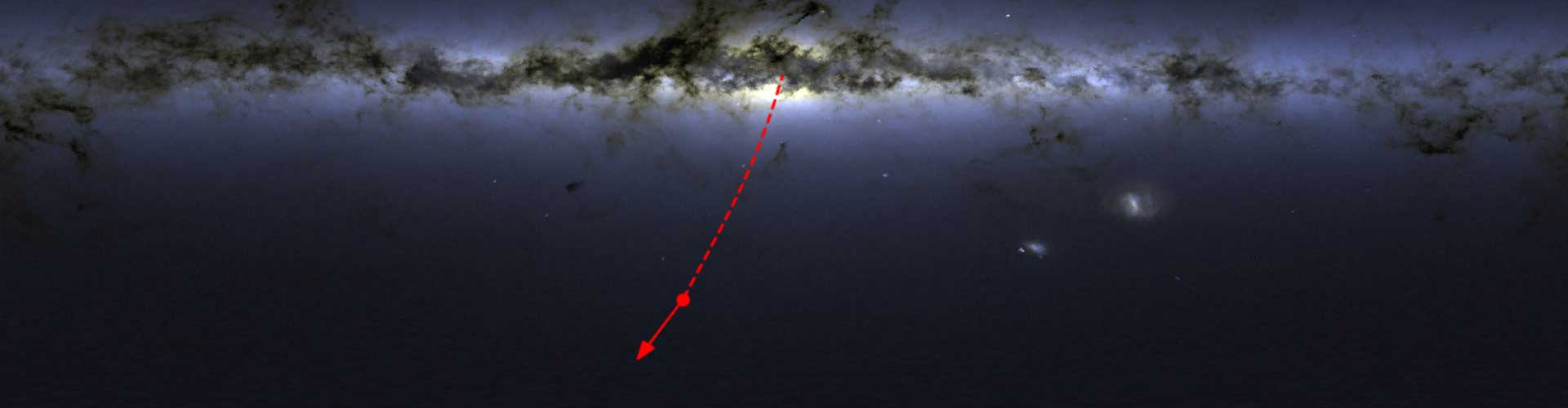
A globular cluster is a spherical collection of stars. Globular clusters are very tightly bound by gravity, with a high concentration of stars towards their centers. Image credit: ESO/D. Minniti/VVV Team
Related channels: STARS, THE SUN, NOVA, WHITE DWARFS, BROWN DWARFS, PULSARS, QUASARS, NEUTRON STARS, BLACK HOLES, ALPHA CENTAURI, THE MILKY WAY, ANDROMEDA GALAXY, HUBBLE SPACE TELESCOPE, GRAVITY, ASTRONOMY, COSMOLOGY, ASTROPHOTOGRAPHY, EXOPLANETS, SETI INSTITUTE
1
/
3


The biggest structures in the universe
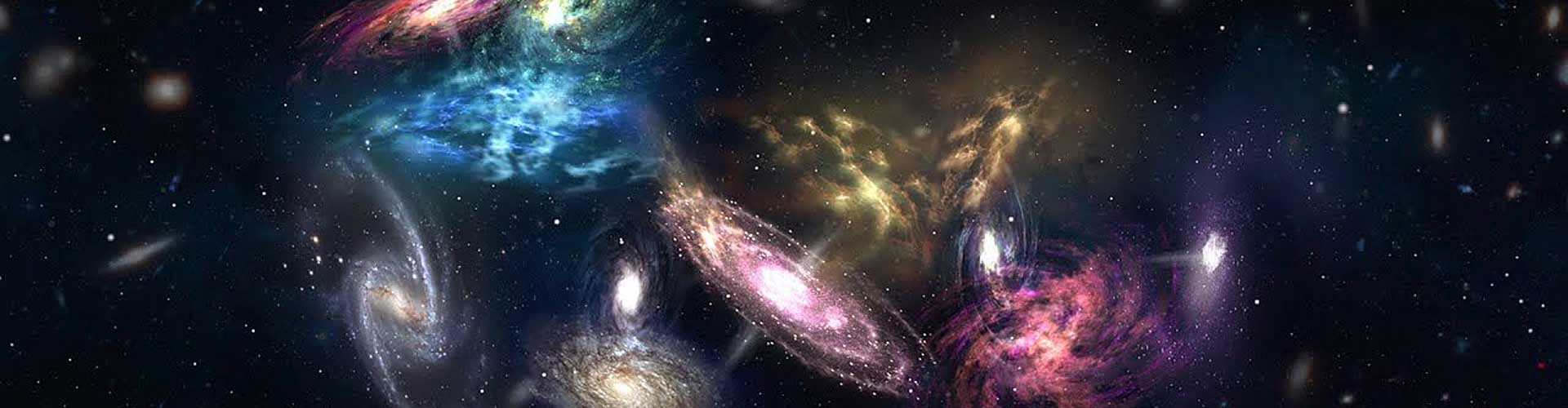
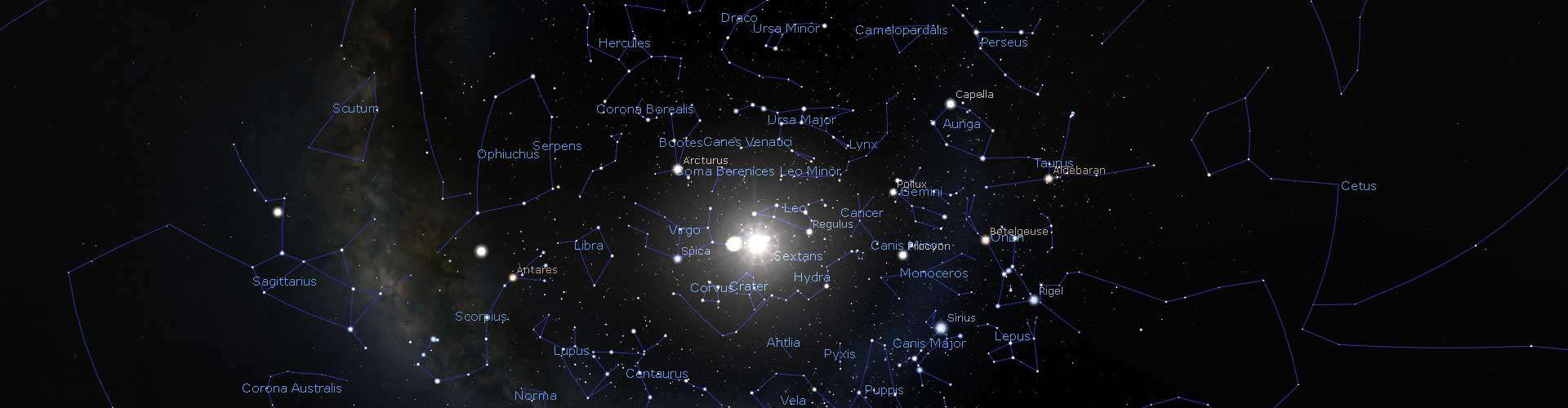
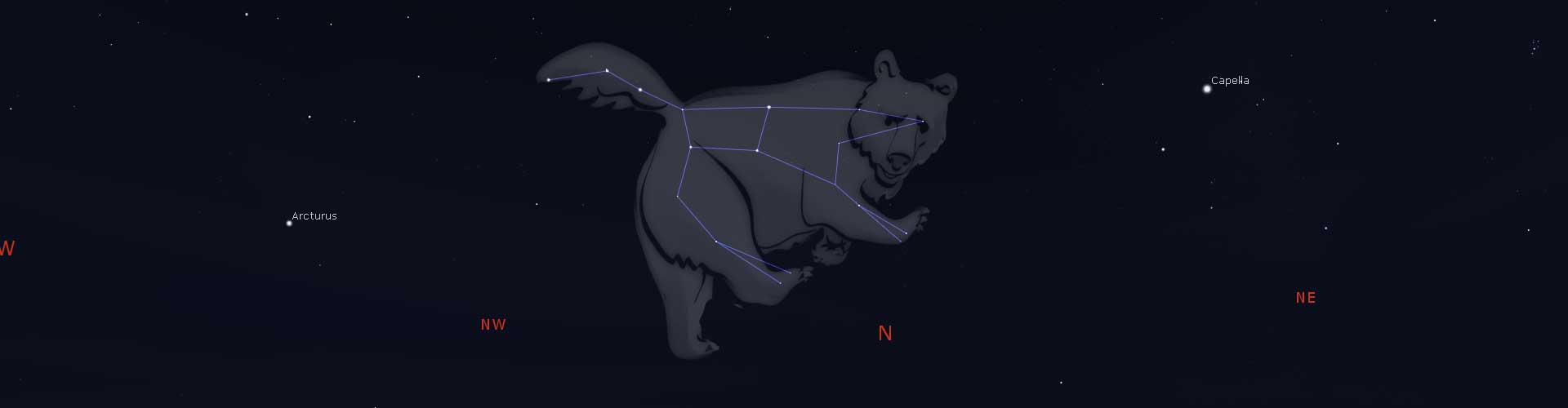
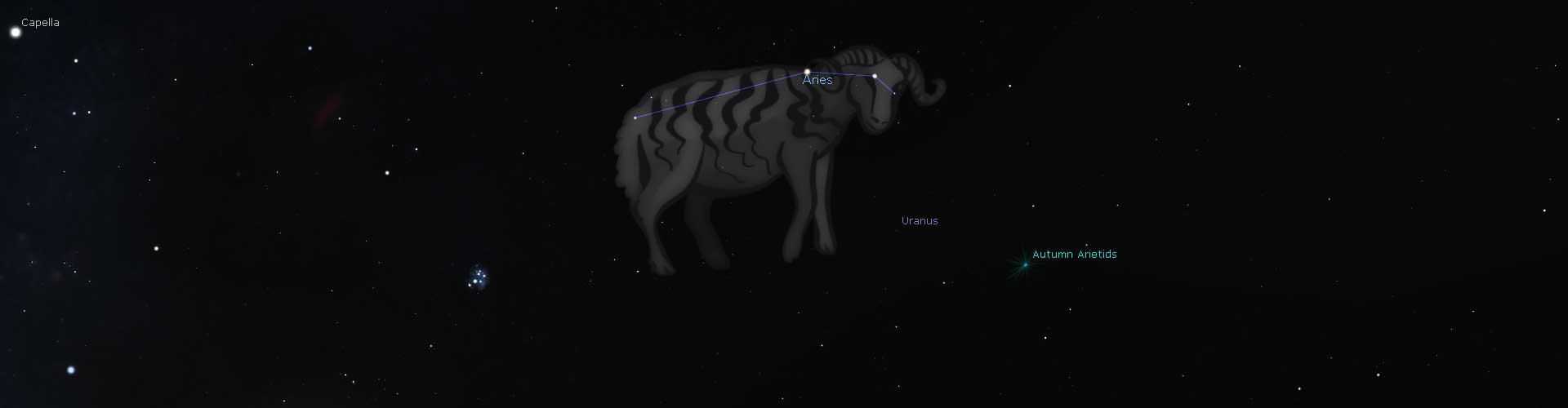
Alexia Lopez - a doctoral candidate at the University of Central Lancashire in the UK - identified The Giant Arc, a cluster of galaxies spanning 3.3 billion lightyears.
Learn more:
GALAXY CLUSTERS https://www.spacetv.net/galaxy-clusters/
X-RAY ASTRONOMY https://www.spacetv.net/x-ray-astronomy/
COSMOLOGY https://www.spacetv.net/cosmology/
THE UNIVERSE https://www.spacetv.net/the-universe/
Written by Luke Madams
https://www.lukemadams.co.uk/
Fact Checker Emily Whitehead
Senior Fact Checker Natalia Kissova
https://www.linkedin.com/in/natalia-kissova-5a9473143/
Narrated by Cherry McIntosh
https://www.cherrymcintoshvo.com/
Technical support by TheseWorlds
https://theseworlds.com
Sources:
https://www.sciencealert.com/a-giant-wall-of-galaxies-has-been-found-stretching-across-the-universe
https://www.livescience.com/giant-arc-in-space.html
https://www.sciencenews.org/article/galaxy-giant-arc-3-billion-light-years-long-cosmology-space
https://en.wikipedia.org/wiki/The_Giant_Arc
https://www.bbc.com/future/article/20230302-the-giant-arcs-that-may-dwarf-everything-in-the-cosmos?utm_source=pocket-newtab
https://www.techexplorist.com/giant-arc-galaxies-discovered-9-2-billion-light-years-away/39713/
https://www.youtube.com/watch?v=DXtmRRXTiSw
https://doi.org/10.1093/mnras/stac2204
https://arxiv.org/pdf/2201.06875.pdf
https://www.star.uclan.ac.uk/~alopez/aas238_press_release.pdf Credits:
NASA/Goddard Space Flight Center Scientific Visualization Studio. Gaia DR2: ESA/Gaia/DPAC. Constellation figures based on those developed for the IAU by Alan MacRobert of Sky and Telescope magazine (Roger Sinnott and Rick Fienberg).
ESA/Hubble & NASA, RELICS
Alexia Lopez/UCLan
The University of Central Lancashire - UCLan
Stellarium/University of Central Lancashire/PA
ESO/B. Tafreshi (twanight.org)
ALMA (ESO/NAOJ/NRAO)/B.Tafreshi
ESO/INAF-VST/OmegaCAM/A. Fujii/Digitized Sky Survey 2.
ESA - European Space Agency
ESA/Vintergatan – Renaud, Agertz et al.
Horv´ath et al. 2015).
ESO/L. Calçada
Dpomarede
ESA/Hubble & NASA
ESO/M. Kornmesser
ESO/Digitized Sky Survey 2/A. Fujii. Acknowledgement: Aniello Grado and Luca Limatola.
Contact SPACETV https://www.spacetv.net/contact-us/
SPACETV.NET 2024
Black Holes in Globular Clusters - Kyle Kremer - 07/15/2022
The dense centers of globular clusters are home to a whole zoo of exotic astrophysical phenomena. In this talk we will describe some of the unexpected events experienced by compact objects — black holes, neutron stars, and white dwarfs — within these dense environments. Join us for a 30-minute lecture followed by a panel Q&A consisting of several astrophysicists. Timestamps below:
00:00 Announcements
04:01 Intro to Globular Cluster Presentation
04:53 Globular Cluster Presentation
30:10 Globular Cluster Q&A
30:50 How hard is it to detect black hole-star binaries?
31:52 Can you observe planets through this same technique?
32:53 Why do neutron stars get ejected from globular clusters?
34:06 Isn't everyone doing modern astronomy a computational scientist?
34:45 How often do we observe supernovae in globular clusters?
36:42 Can quasars form from globular clusters?
37:51 Intermission
46:22 Intro to Q&A Panel
51:23 Why don't globular clusters dissolve? Why don't they form recently?
54:39 What would distant objects observed by JWST look like if we were near them?
59:05 Are the stars and planets on the other side of the universe different from nearby ones?
1:02:11 Can a globular cluster collapse to form a black hole?
1:04:08 Why were the first stars in the universe so massive?
1:09:46 How do we know which direction to look for the Big Bang?
1:16:43 Will binary black hole mergers in globular clusters become the gold standard?
1:20:32 What radio signals do we see from globular clusters?
1:22:44 What is the spatial scale of the expansion of the universe?
1:26:37 How many globular clusters are in the Milky Way?
1:30:50 How do neutron stars get kicked out of globular clusters?
1:33:27 Can JWST resolve globular clusters in distant (high-redshift) galaxies?
1:35:27 Are black hole - pulsar binaries rare? Why?
1:38:32 What is the stellar density of a globular cluster? Would we survive there?
1:44:30 How do globular clusters form?
1:46:58 What is the universe expanding into?
1:49:43 How does LIGO trace a black hole merger back to a target on the sky?
1:53:23 Concluding Remarks
Presenter:
Dr. Kyle Kremer is a theoretical and computational astrophysicist currently working as an NSF Fellow at Caltech and Carnegie Observatories in Pasadena, CA. His research program spans a wide spectrum of topics related to stellar dynamics and compact object physics. Broadly, the main question he aims to answer is: How do dynamical processes relevant in multibody systems lead to evolutionary outcomes not possible for isolated stars or binaries? In addition to his studies in astrophysics conducted at Northwestern, he spent three years pursuing a career as an orchestral musician, earning a master of music degree at the Colburn School in Los Angeles in 2015. http://www.kylekremer.com/
Abstract:
The dense centers of globular clusters are home to a whole zoo of exotic astrophysical phenomena. In this talk I will describe some of the unexpected events experienced by compact objects — black holes, neutron stars, and white dwarfs — within these dense stellar populations. Over the past few years, the groundbreaking detections of gravitational wave signals from merging compact object binaries by LIGO/Virgo have opened a new window to the cosmos. I argue that some of these gravitational wave events very likely originated in globular clusters, made possible by the unique dynamics of compact objects in these systems.
Correction on the Extemporaneous Q&A:
In our discussion of the first stars in the universe being massive (1:04:08), Cameron described the Eddington Limit as a stellar accretion rate limit, as opposed to a total stellar mass limit. While the two are related, they are not identical. For a more detailed discussion of the Eddington Limit, see: https://en.wikipedia.org/wiki/Eddington_luminosity
NASA's Hubble Space Telescope Captured Enigmatic Star Globular Cluster Ruprecht 106
Hubble Investigates an Enigmatic Star Cluster
Hubble Investigates a Mysterious Globular Cluster in Search of Clues
Globular clusters are stable clusters of tens of thousands to millions of stars. This image shows that most of the constituent stars of globular
clusters all formed at approximately the same location and time. It means that almost all globular clusters contain groups of stars with distinct chemical compositions.
Image and information sources:
https://scitechdaily.com/hubble-investigates-a-mysterious-globular-cluster-in-search-of-clues/
https://www.nasa.gov/image-feature/goddard/2022/hubble-investigates-an-enigmatic-star-cluster
https://esahubble.org/images/potw2223a/
Image credit:
ESA/Hubble & NASA, A. Dotter
Please like, comment, share and subscribe to our channel for more interesting videos....
https://www.facebook.com/Physics-Insight-2132144643763018/?modal=admin_todo_tour&_rdc=4&_rdr
For more information email us via
[email protected]
#Hubble #hubblespacetelescope #nasa #esa #Hubbleimages
The Insider's Guide to the Galaxy - Globular Clusters
RASC General Assembly Tickets On Sale NOW! https://www.rascga2022.ca
List of Milky Way Globular Clusters - https://physics.mcmaster.ca/~harris/mwgc.dat
Our Galaxy App - https://otherwise.com/download/
RASC Presentation by Simon Hammer - https://www.simonhanmer52.ca/globular-clusters.html
29 Globular Clusters Distribution - https://www.messier.seds.org/xtra/supp/gc-cltab.html
Gallery of Globular Clusters - http://www.lex.sk.ca/astro/
FSR 584 (Closest GC to us) paper - https://www.aanda.org/articles/aa/pdf/2007/35/aa8029-07.pdf
Messier Minutes Lists, Charts, and Log Pages - https://rasc.ca/messier-minutes
MESSIER 5 - All You Need to Know before Imaging M5 Cluster
Getting ready to photograph the beautiful Messier 5 Globular Cluster? In this video, we give you some astrophotography tips and information on this great Spring target so that you can get the most beautiful image of it possible :)
Go through our full blog post about Messier 5 to learn even more about this target and see our own images: https://www.galactic-hunter.com/post/___m5
Found this helpful? The best way to support us is through Patreon: https://www.patreon.com/Galactic_Hunter
Become a lifetime member of our Premium Astrophotography Course: https://www.galactic-hunter.com/galactic-course
Learn more with our books: https://www.galactic-hunter.com/books
Prints available: https://www.galactic-store.com
#M5 #Messier5 #Cluster
Galactic Hunter was created by Antoine and Dalia Grelin, a stargazing couple from Las Vegas, NV. We do our best to publish entertaining and helpful Astrophotography content, through videos, written tutorials, books, and more. The main goal of this YouTube channel is to help as many beginner astrophotographers as possible in this difficult yet rewarding hobby. We hope our content will help you reach new heights in your deep-sky imaging journey!
Website: http://www.galactic-hunter.com
Facebook: https://www.facebook.com/galactichunter/
Instagram: @galactic.hunter
Starting Astrophotography, a Complete Guide: https://www.galactic-hunter.com/post/starting-astrophotography-a-complete-guide
Beginner DSLR Astrophotography Equipment Guide: https://www.galactic-hunter.com/post/dslr-astrophotography-equipment
The equipment you see in most of our videos: https://www.galactic-hunter.com/blog/our-full-astrophotography-equipment
How to Find the M5 Globular Cluster, and Fascinating Facts (One of the Best Clusters to Observe)
In this episode I am going to look at the beautiful Globular Cluster M5 found in the Constellation Serpens. I will discuss how to find it and cover some interesting facts about the cluster. This cluster is also known as NGC 5904 and GCl 34.
Music from: https://www.zapsplat.com
The Globular Cluster animation was created by European Southern Observatory (ESO): https://www.eso.org/public/outreach/copyright/
If you would like to support my backyard astronomy and astrophotography channel please consider buying some astronomy related merch: https://www.astropioneer.shop/
Get more astronomy content on my blog: https://www.astropioneer.blog/
HERCULES CLUSTER - All You Need to Know before Imaging M13
Getting ready to photograph the beautiful Messier 13 Globular Cluster? In this video, we give you some astrophotography tips and information on this great Spring target so that you can get the most beautiful image of it possible :)
Go through our full blog post about Messier 13 to learn even more about this target and see our own images: https://www.galactic-hunter.com/post/m13-the-great-globular-cluster-in-hercules
Found this helpful? The best way to support us is through Patreon: https://www.patreon.com/Galactic_Hunter
Become a lifetime member of our Premium Astrophotography Course: https://www.galactic-hunter.com/galactic-course
Learn more with our books: https://www.galactic-hunter.com/books
Prints available: https://www.galactic-store.com
#M13 #Messier13 #Cluster
Galactic Hunter was created by Antoine and Dalia Grelin, a stargazing couple from Las Vegas, NV. We do our best to publish entertaining and helpful Astrophotography content, through videos, written tutorials, books, and more. The main goal of this YouTube channel is to help as many beginner astrophotographers as possible in this difficult yet rewarding hobby. We hope our content will help you reach new heights in your deep-sky imaging journey!
Website: http://www.galactic-hunter.com
Facebook: https://www.facebook.com/galactichunter/
Instagram: @galactic.hunter
Starting Astrophotography, a Complete Guide: https://www.galactic-hunter.com/post/starting-astrophotography-a-complete-guide
Beginner DSLR Astrophotography Equipment Guide: https://www.galactic-hunter.com/post/dslr-astrophotography-equipment
The equipment you see in most of our videos: https://www.galactic-hunter.com/blog/our-full-astrophotography-equipment
Fossils in the Galaxy: Globular Clusters - Ask a Spaceman!
Full podcast episodes: http://www.askaspaceman.com
Support: http://www.patreon.com/pmsutter
Follow: http://www.twitter.com/PaulMattSutter and http://www.facebook.com/PaulMattSutter
How are globular clusters so old? Where did they come from, and how are they linked to galaxy formation? What makes them so globular, anyway? I discuss these questions and more in today’s Ask a Spaceman!
Follow all the show updates at http://www.askaspaceman.com, and help support the show at http://www.patreon.com/pmsutter!
Keep those questions about space, science, astronomy, astrophysics, and cosmology coming to #AskASpaceman for COMPLETE KNOWLEDGE OF TIME AND SPACE!
00:00 What is a Globular Cluster?
04:04 Two Kinds of Globular Clusters
08:32 Where Did It Come From?
11:46 Why Do We Care?
Exploring Globular Clusters: Stars Retirement Homes
In this video, we will look into the size comparison of Globular Clusters.
Globular Cluster is a spheroid collection of stars that lives inside a galactic halo above and below the galactic plane.
Globular Clusters are like retirement homes of the universe's senior citizens. Stars that live here are ancient, metal-poor, and less luminous than Population I stars. These retirement homes are ideal as they are dust-free and are located away from the hustle and bustle of the galactic plane.
For more info stay tuned...
_______________________________________________________________
Everything in the video is created from scratch. Background music is from the youtube audio library.
About the Channel:
This channel contains educational videos related to science and other fields of study.
Open Star Clusters versus Globular Star Clusters
Astronomers identify two different types of star clusters: Open star clusters and Globular star clusters. They are classified by their size, shape, age and number of stars, and location in the galaxy. Learn more about the similarities and differences between the two types of star clusters and classic examples of each that can be seen in the night sky.
Discover the 25 brightest stars in the sky
Order your copy of Starry Wonders: Exploring the 25 Brightest Stars today!
Visit: https://www.learnthesky.com/ ✨
Chapters
0:00 - Intro
0:52 - Open Star Cluster Characteristics
5:15 - Globular Star Cluster Characteristics
7:27 - Venn Diagram Comparison
9:03 - Final Review of Star Clusters
Links and Resources mentioned in this video
▶ Taurus Constellation: http://bit.ly/LearntheSky-TaurusConstellation
▶ Cancer Constellation: http://bit.ly/LearntheSky-CancerConstellation
▶ Scorpius Constellation: http://bit.ly/LearntheSky-ScorpiusConstellation
▶ Hercules Constellation: http://bit.ly/LearntheSky-HerculesConstellation
Check it Out
▶ Download Free STARGAZING Guide: https://www.learnthesky.com/opt-in-stargazing-starter-guide
Playlists
▶ Stargazing Basics: http://bit.ly/LearntheSky-StargazingBasics
▶ Zodiacal Constellations: http://bit.ly/LearntheSky-ZodiacalConstellations
▶ Circumpolar Constellations: http://bit.ly/LearntheSky-Circumpolar
▶ Winter Constellations: http://bit.ly/LearntheSky-WinterConstellations
▶ Spring Constellations: http://bit.ly/LearntheSky-SpringConstellations
▶ Summer Constellations: http://bit.ly/LearntheSky-SummerConstellations
▶ Autumn Constellations: http://bit.ly/LearntheSky-AutumnConstellations
▶ Stars: http://bit.ly/LearntheSky-Stars
▶ Planets: http://bit.ly/LearntheSky-Planets
▶ Celestial Objects: http://bit.ly/LearntheSky-CelestialObjects
▶ Versus Videos: http://bit.ly/LearntheSky-VersusVideos
▶ Celestial Events: http://bit.ly/LearntheSky-CelestialEvents
▶ Citizen Science: http://bit.ly/LearntheSky-CitizenScience
Photo Attributes
▶ Messier 13: By ESA/Hubble and NASA - http://www.spacetelescope.org/images/potw1011a/, Public Domain, https://commons.wikimedia.org/w/index.php?curid=10825956
▶ R Corona Borealis Nebula: By NASA, ESA, and STScI - https://www.spacetelescope.org/images/heic1309c/, CC BY-SA 4.0, https://commons.wikimedia.org/w/index.php?curid=61301846
▶ Hyades and Pleiades: By By Giuseppe Donatiello - Iades and Pleiades, CC0, https://commons.wikimedia.org/w/index.php?curid=62037050
▶ Pleiades: By NASA, ESA, AURA/Caltech, Palomar Observatory. The science team consists of: D. Soderblom and E. Nelan (STScI), F. Benedict and B. Arthur (U. Texas), and B. Jones (Lick Obs.) - http://hubblesite.org/newscenter/archive/releases/2004/20/image/a/, Public Domain, https://commons.wikimedia.org/w/index.php?curid=7805481
▶ Hyades Star Cluster: By NASA, ESA, AURA/Caltech, Palomar Observatory. The science team consists of: D. Soderblom and E. Nelan (STScI), F. Benedict and B. Arthur (U. Texas), and B. Jones (Lick Obs.) - http://hubblesite.org/newscenter/archive/releases/2004/20/image/a/, Public Domain, https://commons.wikimedia.org/w/index.php?curid=7805481
Support this Channel
▶ Online Classes: https://www.learnthesky.com/store
Never Miss a Video
▶ Subscribe to my Channel: https://www.youtube.com/c/learnthesky?sub_confirmation=1
Connect
▶ Website: https://www.learnthesky.com/
▶ Instagram: https://www.instagram.com/learnthesky/
▶ Business Enquiries: [email protected]
#learnthesky #stargazing #constellations #stars #keeplookingup
Practical Astronomy - Open & Globular Star Clusters - So Different but so Similar by Chris Benton
Aim – To compare & contrast features of open & globular star clusters discussing their differences & similarities
Open star clusters, situated in star-forming regions of galaxies, are relatively small groups of young stars loosely gravitationally bound. In contrast, globular clusters are large groups of old stars tightly gravitationally bound into compact spherical objects and usually observed in the stellar halos of galaxies.
During this online presentation, Chris Benton discusses these features that make the two types appear so different, how compression density waves propagate through galactic disks to trigger star formation, followed by new ideas on how globular clusters form. You will then see how these two distinct star clusters test theories of stellar evolution and may represent two extremes of the same object created through similar physical processes.
M69 - Globular Cluster - Deep Sky Videos
Dr Maggie Lieu (from the University of Nottingham) discusses Messier 69.More links and info in full description ↓↓↓Messier Objects playlist: http://bit.ly/MessierObjectsDr Lieu's website: https://maggielieu.com
Messier Objects playlist: http://bit.ly/MessierObjects
Deep Sky Videos website: http://www.deepskyvideos.com/
Twitter: https://twitter.com/DeepSkyVideos
Facebook: http://www.facebook.com/DeepSkyVideos
More about the astronomers in our videos: http://www.deepskyvideos.com/pages/contributors.html
Supported by the University of Nottingham
https://www.nottingham.ac.uk/astronomy/
Back us on Patreon: https://www.patreon.com/deepskyvideos
Video by James Hennessy and Brady Haran
M13 Great Hercules Globular Cluster - My First Cluster Attempt!
After seeing Ollie's Astro and Russell's Astrophotography recent videos of their M13 captures, I thought I would head over there myself and have a go at it. I've never looked at a cluster, let alone try to image one.
This was with the Edge HD 11", 0.7x focal reducer and ASI 2600MC-P colour camera.
Russell's video: https://www.youtube.com/watch?v=O_qiHE-pCEg
Ollie's video: https://www.youtube.com/watch?v=LE1nY6LAbaU
I upload my images to Telescopius, and you can find my profile at:
https://telescopius.com/profile/dave-auld
My other social locations are;
https://www.daves-astrophotography.com/
https://www.facebook.com/daves.astrophotography
https://twitter.com/daveauld
https://www.instagram.com/dave_auld/
The main equipment I use is;
Celestron CGX mount
Celestron Edge 11
Celestron RASA 11
Bresser 8" Newtonian
Bresser AR90s/500
ZWO ASI2600MC-P Colour camera
ZWO 60/280 guidescope
ZWO ASI120mm guide camera
ZWO ASI174mini guide camera
Unihedron Sky Quality Meter (SQM)
NexDome Observatory
#Astrophotography #DavesAstrophotography #Cyprus
Dr. Charbonnel: Multiple stellar populations in globular clusters:Properties, origin, open questions
Fecha: 04/03/2021
Conferenciante: Dr. Corinne Charbonnel
Filiación: Université de Genève, Switzerland
Globular clusters (GCs) are fascinating objects nearly as old as the Universe that provide insight on a large variety of astrophysical and cosmological processes. However, their formation and their early dynamical evolution are far from being understood. In particular, the classical paradigm describing GCs as large systems of coeval stars formed out of chemically homogeneous material has been definitively swept away by recent high-precision spectroscopic and deep photometric observations. These data have provided undisputed evidence that GCs host multiple stellar populations, with very peculiar chemical properties. Evidence is also accumulating about the presence of multiple stellar populations in young massive star clusters in Local Group galaxies. In this talk, I will review the properties of these multiple populations, before presenting the different scenarios that have been proposed to explain their formation. I will focus on the (many) current theoretical issues and on the possible relationships between GCs and young massive star clusters observed in the local universe. I will conclude on open questions.
Black Hole "Graveyard" Found in a Globular Cluster
Get your SPECIAL OFFER for MagellanTV here: https://try.magellantv.com/launchpad. It's an exclusive offer for our viewers! Start your free trial today. MagellanTV is a new kind of streaming service run by filmmakers with 3,000+ documentaries! Check out our personal recommendation and MagellanTV’s exclusive playlists: https://www.magellantv.com/genres/space.
A sub-cluster "graveyard" of black holes was detected by astronomers in a core-collapsed globular star cluster. Scientists were expecting to find an intermediate-mass black hole at the heart of the core-collapsed globular cluster NGC 6397, but instead they found evidence of a concentration of smaller black holes lurking there. New data from the NASA/ESA Hubble Space Telescope and ESA's Gaia satellite have led to the first measurement of the extent of a collection of black holes in a core-collapsed globular cluster.
00:00 Intro
01:47 Magellan TV
02:44 Searching for Intermediate mass black holes in globular clusters
03:34 How stars move in globular clusters and mass segregation
04:10 How intermediate mass black holes form in core-collapsed globular clusters
05:05 How to detect black holes
05:50 Previous studies of NGC 6397
07:30 Hubble and Gaia observations of NGC 6397
09:38 The fate of an extended core of black holes
10:58 Future work with Gaia
11:38 Gravitational Waves from merging black holes
11:54 Thanks to my Patrons!
🔔 Subscribe for more: https://www.youtube.com/christianready?sub_confirmation=1
🖖 Share this video with a fellow space traveler: https://youtu.be/_d4lVN3jaW8
🔴 Watch my most recent upload: https://goo.gl/QbRcE2
🚀 Help me improve the channel by joining the community on Patreon
https://patreon.com/launchpadastro
🚀 Check out Launch Pad merchandise!
https://teespring.com/stores/launchpadastro
Disclaimer: Some of these links go to one of my websites and some are affiliate links where I'll earn a small commission if you make a purchase at no additional cost to you.
🧭 References:
Vitral and Mamon 2021: https://doi.org/10.1051/0004-6361/202039650
H. Baumgardt 2017: https://academic.oup.com/mnras/article/464/2/2174/2404627
Kaman et al 2016: https://doi.org/10.1051/0004-6361/201527065
✅ Let's connect:
For business inquiries - chris AT christianready DOT com
Twitter - @launchpadastro
Instagram - @launchpadastro
Facebook - https://www.facebook.com/LaunchPadAstronomy/
Discord - https://discord.gg/yChAuUe
📭 c/o Christian Ready
P.O. Box 66
Westminster, MD 21158
United States
Earth
-~-~~-~~~-~~-~-
Watch next: Solar Orbiter Discovers Surprising new Phenomenon in the Sun
https://www.youtube.com/watch?v=VOrl2QlPCMI
-~-~~-~~~-~~-~-
Black Hole Swarm Found Inside a Globular Cluster Solves a Mystery
I wrote a foreword for this awesome Sci-Fi book here: https://amzn.to/3aGrg0I
Get a Wonderful Person shirt: https://teespring.com/stores/whatdamath
Alternatively, PayPal donations can be sent here: paypal.me/whatdamath
Hello and welcome! My name is Anton and in this video, we will talk about a new discovery coming out of a nearby globular cluster that surprised the scientists.
Press release: https://esahubble.org/news/heic2103/?lang
Paper: https://www.aanda.org/articles/aa/full_html/2021/02/aa39650-20/aa39650-20.html
Support this channel on Patreon to help me make this a full time job:
https://www.patreon.com/whatdamath
Space Engine is available for free here: http://spaceengine.org
Enjoy and please subscribe.
Bitcoins to spare? Donate them here to help this channel grow!
1GFiTKxWyEjAjZv4vsNtWTUmL53HgXBuvu
Twitter: https://twitter.com/WhatDaMath
Facebook: https://www.facebook.com/whatdamath
Twitch: http://www.twitch.tv/whatdamath
The hardware used to record these videos:
New Camera: https://amzn.to/34DUUlv
CPU: https://amzn.to/2LZFQCJ
Video Card: https://amzn.to/2M1W26C
Motherboard: https://amzn.to/2JYGiQQ
RAM: https://amzn.to/2Mwy2t4
PSU: https://amzn.to/2LZcrIH
Case: https://amzn.to/2MwJZz4
Microphone: https://amzn.to/2t5jTv0
Mixer: https://amzn.to/2JOL0oF
Recording and Editing: https://amzn.to/2LX6uvU
Some of the above are affiliate links, meaning I would get a (very small) percentage of the price paid.
Thank you to all Patreon supporters of this channel
Specifically, great thanks to the following members:
Morrison Waud
Vlad Manshin
Mark Teranishi
TheHuntress
Ralph Spataro
Albert B. Cannon
Lilith Dawn
Greg Lambros
adam lee
Gabriel Seiffert
Henry Spadoni
J Carter
Jer
Silver surfer
Konrad Kummli
Nick Dolgy
UnexpectedBooks.com
Mario Rahmani
George Williams
Shinne
Jakub Glos
Johann Goergen
Jake Salo
LS Greger
Lyndon Riley
Lauren Smith
Michael Tiganila
Russell Sears
Vinod sethi
Dave Blair
Robert Wyssbrod
Randal Masutani
Michael Mitsuda
Assaf Dar Sagol
Liam Moss
Timothy Welter MD
Barnard Rabenold
Gordon Cooper
Tracy Burgess
Douglas Burns
Jayjay Volz
Anataine Deva
Kai Raphahn
Sander Stols
Bodo Graßmann
Daniel Charles Smith
Daniel G.
Eugene Sandulenko
gary steelman
Max McNally
Michael Koebel
Sergio Ruelas
Steven Aiello
Victor Julian Castillo
xyndicate
Honey Suzanne Lyons
Olegas Budnik
Dale Andrew Darling
Niji
Peter Hamrak
Matthew Lazear
Alexander Afanasyev
Anton Newman
Anton Reed
Universe ABC Guide: G is for Globular Clusters!
G is for ... Globular Clusters! The "Universe ABC Guide" is the ultimate source for learning amazing facts about the universe for each letter of the alphabet.
Find me: http://galaxy.nora-bailey.com/linktree
Thumbnail images:
Messier 13 (Sid Leach/Adam Block/Mount Lemmon SkyCenter, CC BY-SA 4.0 via Wikimedia Commons)
Messier 13 in Hercules is a magnificent globular star cluster with perhaps as many as one million stars. This image was taken with an SBIG STL-11000M CCD and a RCOS 24-inch telescope at the Mount Lemmon SkyCenter.
Messier 80 (NASA, The Hubble Heritage Team, STScI, AURA)
This stellar swarm is M80 (NGC 6093), one of the densest of the 147 known globular star clusters in the Milky Way galaxy. Located about 28,000 light-years from Earth, M80 contains hundreds of thousands of stars, all held together by their mutual gravitational attraction. Globular clusters are particularly useful for studying stellar evolution, since all of the stars in the cluster have the same age (about 12 billion years), but cover a range of stellar masses. Every star visible in this image is either more highly evolved than, or in a few rare cases more massive than, our own Sun. Especially obvious are the bright red giants, which are stars similar to the Sun in mass that are nearing the ends of their lives.
47 Tucanae (ESA/Hubble)
This NASA/ESA Hubble Space Telescope image shows a globular cluster known as NGC 104 — or, more commonly, 47 Tucanae, since it is part of the constellation of Tucana (The Toucan) in the southern sky. After Omega Centauri it is the brightest globular cluster in the night sky, hosting tens of thousands of stars. Scientists using Hubble observed the white dwarfs in the cluster. These dying stars migrate from the crowded centre of the cluster to its outskirts. Whilst astronomers knew about this process they had never seen it in action, until the detailed study of 47 Tucanae. Credit: NASA, ESA, and the Hubble Heritage (STScI/AURA)-ESA/Hubble Collaboration Acknowledgment: J. Mack (STScI) and G. Piotto (University of Padova, Italy) About the Object Distance: 15000 light years Constellation: Tucana Coordinates Position (RA): 0 24 6.67 Position (Dec): -72° 4' 52.84" Field of view: 2.80 x 2.74 arcminutes Orientation: North is 14.8° left of vertical Colours & filters Band Wavelength Telescope Optical I 814 nm Hubble Space Telescope ACS Optical V 606 nm Hubble Space Telescope ACS Optical B 475 nm Hubble Space Telescope ACS Ultraviolet UV 275 nm Hubble Space Telescope WFC3.
Omega Centauri (ESO)
The globular cluster Omega Centauri — with as many as ten million stars — is seen in all its splendour in this image captured with the WFI camera from ESO's La Silla Observatory. The image shows only the central part of the cluster — about the size of the full moon on the sky (half a degree). North is up, East is to the left. This colour image is a composite of B, V and I filtered images. Note that because WFI is equipped with a mosaic detector, there are two small gaps in the image which were filled with lower quality data from the Digitized Sky Survey. Coordinates Position (RA): 13 26 47.32 Position (Dec): -47° 28' 46.86" Field of view: 31.88 x 29.99 arcminutes Orientation: North is 0.0° right of vertical Colours & filters Band Wavelength Telescope Infrared B 451 nm MPG/ESO 2.2-metre telescope WFI Optical V 539 nm MPG/ESO 2.2-metre telescope WFI Optical I 783 nm MPG/ESO 2.2-metre telescope WFI
#universeabc #astronomy #stars
These Globular Clusters Are a New Type of an Object - Galactic Bulge Fossils
You can buy Universe Sandbox 2 here: http://amzn.to/2yJqwU6
Or get a shirt: https://teespring.com/stores/whatdamath
Hello and welcome! My name is Anton and in this video, we will talk about a discovery of a new type of an object that looks like a globular cluster but seems to be something different.
Paper: https://arxiv.org/ftp/arxiv/papers/2011/2011.09966.pdf
Picture Credit: F. R. Ferraro / C. Pallanca (University of Bologna)
More about Terzan 5: https://en.wikipedia.org/wiki/Terzan_5
Support this channel on Patreon to help me make this a full time job:
https://www.patreon.com/whatdamath
Alternatively, PayPal donations can be sent here: paypal.me/whatdamath
Space Engine is available for free here: http://spaceengine.org
Enjoy and please subscribe.
Bitcoins to spare? Donate them here to help this channel grow!
1GFiTKxWyEjAjZv4vsNtWTUmL53HgXBuvu
Twitter: https://twitter.com/WhatDaMath
Facebook: https://www.facebook.com/whatdamath
Twitch: http://www.twitch.tv/whatdamath
The hardware used to record these videos:
New Camera: https://amzn.to/34DUUlv
CPU: https://amzn.to/2LZFQCJ
Video Card: https://amzn.to/2M1W26C
Motherboard: https://amzn.to/2JYGiQQ
RAM: https://amzn.to/2Mwy2t4
PSU: https://amzn.to/2LZcrIH
Case: https://amzn.to/2MwJZz4
Microphone: https://amzn.to/2t5jTv0
Mixer: https://amzn.to/2JOL0oF
Recording and Editing: https://amzn.to/2LX6uvU
Some of the above are affiliate links, meaning I would get a (very small) percentage of the price paid.
Thank you to all Patreon supporters of this channel
Specifically, great thanks to the following members:
Morrison Waud
Vlad Manshin
Mark Teranishi
TheHuntress
Ralph Spataro
Albert B. Cannon
Lilith Dawn
Greg Lambros
adam lee
Gabriel Seiffert
Henry Spadoni
J Carter
Jer
Silver surfer
Konrad Kummli
Nick Dolgy
UnexpectedBooks.com
Mario Rahmani
George Williams
Shinne
Jakub Glos
Johann Goergen
Jake Salo
LS Greger
Lyndon Riley
Lauren Smith
Michael Tiganila
Russell Sears
Vinod sethi
Dave Blair
Robert Wyssbrod
Randal Masutani
Michael Mitsuda
Assaf Dar Sagol
Liam Moss
Timothy Welter MD
Barnard Rabenold
Gordon Cooper
Tracy Burgess
Douglas Burns
Jayjay Volz
Anataine Deva
Kai Raphahn
Sander Stols
Bodo Graßmann
Daniel Charles Smith
Daniel G.
Eugene Sandulenko
gary steelman
Max McNally
Michael Koebel
Sergio Ruelas
Steven Aiello
Victor Julian Castillo
xyndicate
Honey Suzanne Lyons
Olegas Budnik
Dale Andrew Darling
Niji
Peter Hamrak
Matthew Lazear
Alexander Afanasyev
Anton Newman
Anton Reed
Nate Bastian: The puzzle of multiple populations in globular clusters
Speaker: Nate Bastian, LJMU
Date: 08. Dec. 2020
Abstract: Globular clusters (GCs) exhibit star-to-star variations in specific elements (e.g., He, C, N, O, Na, Al) that bear the hallmark of high-temperature H-burning. These abundance variations can be observed spectroscopically and also photometrically, with the appropriate choice of filters, due to the changing of spectral features within the band pass. This phenomenon is observed in nearly all of the ancient GCs, and has recently been found in many younger clusters as well. Many scenarios have been suggested to explain this phenomenon, with most invoking multiple epochs of star formation within the cluster; however, all have failed to reproduce various key observations. I will review the state of current observations and outline the successes and failures of some of the main proposed models. The traditional idea of using the stellar ejecta from a first generation of stars to form a second generation of stars, while conceptually straightforward, has failed to reproduce an increasing number of observational constraints. I conclude that the puzzle of multiple populations remains unsolved, hence alternative theories are needed, and will present new HST and VLT/MUSE results that suggest that we may be finally closing in on origin of this enigmatic phenomenon.
Star Clusters
John Nejedlo shares images and information about the difference between open and globular star clusters. Primary Source: Sky Safari 6 Pro. John has been a volunteer astronomy member since 2018.
1
/
3