
Deimos is the smaller, outermost, and less irregular of Mars’ two natural satellites. Unlike Earth’s large, spherical Moon, Deimos is a tiny, lumpier object that looks much like a potato. Featured image: Color-enhanced image of Deimos, captured by the HiRISE instrument on the Mars Reconnaissance Orbiter on 21 Feb 2009. Credit: NASA/JPL-caltech/University of Arizona
Related channels: MARTIAN MOONS EXPLORATION (MMX), PLANET MARS, PHOBOS (MARS MOON), MOONS, EXOMARS (SPACECRAFT)
Latest Deimos videos
1
/
2


The Bizarre Mystery of Mars’ Potato-Shaped Moons
Did you know that the moons of Mars look like lumpy, cosmic potatoes? While the rest of the solar system is filled with round spheres, Phobos and Deimos are a bit different and Japan just launched a mission to figure out why! In today's video, I dive into JAXA’s ambitious journey to Mars' two moons, Phobos and Deimos and we'll go over the competing scientific theories behind their chaotic shapes and what a successful sample return by 2031 means for the future of space exploration.
Special thanks to Johns Hopkins APL and JAXA.
0:00 Intro
0:42 Meet MMX
2:03 Space Potatoes
3:30 Idefix
5:27 The Difficulties
6:25 Moon Theories
8:36 Outro
Join this channel to get access to perks:
https://www.youtube.com/channel/UCfj1K3zoNkWYYVko_QJJJrQ/join
🎉Patreon Link: https://patreon.com/MarionKerr
Amazon Links (As an Amazon Associate, I earn from qualifying purchases):
Think Geek Steampunk-style watch: https://amzn.to/43zZttB
Blue Yeti Microphone: https://amzn.to/3GK03LJ
Ring Light: https://amzn.to/3MS830K
Socialz (come say hi):
📸 Insta: https://www.instagram.com/marionrkerr/
🐦Twitter: https://twitter.com/MarionRKerr
📘FB: https://www.facebook.com/MarionRKerr
https://www.marionkerr.com/
#spacexploration #jaxa #marsmission #astronomy #spacenews
Japan's ambitious mission to Mars's moons | 7NEWS
Japan's Martian Moon eXploration mission has launched on a five-year journey to study Mars's moons Phobos and Deimos, aiming to become the first mission to return samples from the Martian system. The half-billion dollar unmanned spacecraft will spend three years studying Phobos, deploy a rover, and collect dust, rock and soil samples before observing Deimos on its return journey. A capsule containing the samples is scheduled to land in Woomera, South Australia in 2031, potentially providing breakthrough insights into how Mars's moons formed and the origins of life in our solar system.
Subscribe and set 🔔 » https://7news.link/YTSubscribe |
For the latest Australian news and breaking news alerts, connect with 7NEWS online:
Visit » https://7news.com.au
7Plus » https://7plus.com.au/
7NEWS Podcast » https://open.spotify.com/user/dm9fk9hzoe68ibpttheragdgi
Facebook » https://www.facebook.com/7NewsAustralia
TikTok » https://www.tiktok.com/@7newsaustralia
Instagram » https://www.instagram.com/7newsaustralia/
X » https://x.com/7NewsAustralia
7NEWS combines the trusted and powerful news brands including Sunrise, The Morning Show, Spotlight and 7NEWS.com.au, delivering unique, engaging and continuous coverage on the issues that matter most to Australians. Watch 7 News Australia full broadcasts and full episodes at 6pm and weekdays at 12pm and 4pm on Channel 7 and 7plus.
#BREAKINGNEWS #7NEWS
The Two Moons That Could Unlock Mars: Phobos & Deimos
The Red Planet beckons us toward it, and the day draws closer when humans will walk on its dusty surface, and the moons of Mars, Phobos & Deimos, may be our gateway to that future.
Learn more about the game and see it in action at https://upperstory.com/turingtumble/?utm_source=YouTube&utm_medium=XXXX
Use the coupon code ISAACARTHUR for 10% off your total purchase
Visit our Website: http://www.isaacarthur.net
Join Nebula: https://go.nebula.tv/isaacarthur
Support us on Patreon: https://www.patreon.com/IsaacArthur
Support us on Subscribestar: https://www.subscribestar.com/isaac-arthur
Facebook Group: https://www.facebook.com/groups/1583992725237264/
Reddit: https://www.reddit.com/r/IsaacArthur/
Twitter: https://twitter.com/Isaac_A_Arthur on Twitter and RT our future content.
SFIA Discord Server: https://discord.gg/53GAShE
Credits:
Settling Mars: Phobos & Deimos
Episode 438; March 14, 2024
Produced, Written & Narrated by: Isaac Arthur
Editors: Israel Debro
Graphics:
Fishy Tree
Jarred Eagley
Jeremy Jozwik
LITE / Ian Long
Katie Byrne
Udo Schroeter
Sergio Botero
Select imagery/video supplied by Getty Images
Music Courtesy of
Epic Mountain, "Wave", "Zero Gravity"
Frank Dorittke, "Morninglight"
Taras Harkavyi, "Alpha and..."
Ross Bugeden, "Interstellar"
Marcus Warner, "Dance of the River Spirits"
Stellardrone, "A Moment of Stillness", "Blinking Star", "Red Giant"
'Unprecedented' images of Martian moon Deimos sent from space probe just 62 miles from its surface
Detailed images of Mars' moon Deimos have been released after a probe flew just 100km (62 miles) from its surface. Researchers from the UAE Space Agency say the images help challenge the long-standing theory that Mars' moons are asteroids captured by the planet's gravity.
#mars #space #skynews
SUBSCRIBE to our YouTube channel for more videos: http://www.youtube.com/skynews
Follow us on Twitter: https://twitter.com/skynews
Like us on Facebook: https://www.facebook.com/skynews
Follow us on Instagram: https://www.instagram.com/skynews
Follow us on TikTok: https://www.tiktok.com/@skynews
For more content go to http://news.sky.com and download our apps:
Apple https://itunes.apple.com/gb/app/sky-news/id316391924?mt=8
Android https://play.google.com/store/apps/details?id=com.bskyb.skynews.android&hl=en_GB
Sky News Daily podcast is available for free here: https://podfollow.com/skynewsdaily/
Sky News videos are now available in Spanish here/Los video de Sky News están disponibles en español aquí: https://www.youtube.com/channel/UCzG5BnqHO8oNlrPDW9CYJog
Sky News videos are also available in German here/Hier können Sie außerdem Sky News-Videos auf Deutsch finden: https://www.youtube.com/channel/UCHYg31l2xrF-Bj859nsOfnA
To enquire about licensing Sky News content, you can find more information here: https://news.sky.com/info/library-sales
UAE spacecraft sends back most detailed images of Mars’ moon Deimos
A spacecraft from the United Arab Emirates Space Agency has sent back high resolution images of Mars’ second moon Deimos.
The probe, called Amal, Arabic for Hope, flew 100 kilometres from its surface to take the pictures, and shows a rare glimpse into the far side of the moon.
NASA described the moon as ‘small and lump’ and just 15 kilometres long, while the UAE Space Agency is among a string of countries to launch recent missions to Mars.
Watch Martian moon Deimos pass in front of Jupiter & its moons
ESA's Mars Express orbiter captured footage of the Mars' moon Deimos pass in front of Ganymede, Europa, Jupiter, Io and Callisto (in that order) on Feb 14, 2022.
Credit: Space.com | footage credit: ESA/DLR/FU Berlin – CC BY-SA 3.0 IGO, K.-D. Matz | edited by Steve Spaleta (https://twitter.com/stevespaleta)
Music: Unlimited by Megan Wofford / courtesy of http://www.epidemicsound.com
Perseverance rover spots Martian moon Deimos
Deimos was recently captured by NASA's Perseverance rover in the Martian sky. The moon orbits the planet about every 30 hours. Full Story: https://www.space.com/perseverance-rover-mars-moon-deimos-video
Credit: Space.com | imagery & audio courtesy: NASA/JPL-Caltech | produced & edited by [Steve Spaleta](http://www.twitter.com/stevespaleta)
A New Origin Story for Mars's Moons
New research is changing our ideas about the history of Mars's moons and we might have found the most active region of space.
Host: Hank Green
For special, curated artifacts of this universe, check out https://scishowfinds.com/
----------
Support SciShow by becoming a patron on Patreon: https://www.patreon.com/scishow
----------
Dooblydoo thanks go to the following Patreon supporters:
Jerry Perez, Lazarus G, Kelly Landrum Jones, Sam Lutfi, Kevin Knupp, Nicholas Smith, D.A. Noe, alexander wadsworth, سلطان الخليفي, Piya Shedden, KatieMarie Magnone, Scott Satovsky Jr, Charles Southerland, Bader AlGhamdi, James Harshaw, Patrick D. Ashmore, Candy, Tim Curwick, charles george, Saul, Mark Terrio-Cameron, Viraansh Bhanushali, Kevin Bealer, Philippe von Bergen, Chris Peters, Justin Lentz
----------
Like SciShow? Want to help support us, and also get things to put on your walls, cover your torso and hold your liquids? Check out our awesome products over at DFTBA Records: http://dftba.com/scishow
----------
Looking for SciShow elsewhere on the internet?
Facebook: http://www.facebook.com/scishow
Twitter: http://www.twitter.com/scishow
Tumblr: http://scishow.tumblr.com
Instagram: http://instagram.com/thescishow
----------
Sources:
Mars Moons:
http://advances.sciencemag.org/content/4/4/eaar6887.full
http://adsabs.harvard.edu/abs/1992mars.book.1283B
https://www.space.com/9201-mars-moon-phobos-forged-catastrophic-blast.html
https://www.sciencedirect.com/science/article/pii/0019103580901402
https://www.sciencedaily.com/releases/2016/07/160704144236.htm
https://www.sciencedirect.com/science/article/pii/S0019103583710596
http://www.planetary.brown.edu/planetary/geo287/PhobosDeimos/papers/Criton2015Icarus-giantimpact.pdf
https://www.nature.com/articles/ngeo2742
https://phys.org/news/2018-04-swri-martian-moons-formation-large.html
https://www.sciencedirect.com/science/article/pii/S0019103583711759
https://arxiv.org/pdf/0903.3434.pdf
http://www.esa.int/Our_Activities/Space_Science/Phobos_flyby_success
http://meetingorganizer.copernicus.org/EPSC2010/EPSC2010-211.pdf
SPT2349-56:
http://nature.com/articles/doi:10.1038/s41586-018-0025-2
https://arxiv.org/abs/1610.05201
https://arxiv.org/abs/1705.01634
https://pole.uchicago.edu/public/southpole.html
http://firstgalaxies.org/explore.html
http://www.astronomynotes.com/galaxy/s9.htm
------
Images:
https://mars.nasa.gov/allaboutmars/extreme/moons/phobos/
https://www.nasa.gov/multimedia/imagegallery/image_feature_1302.html
https://www.spacetelescope.org/videos/opo1729a/
https://www.jpl.nasa.gov/spaceimages/details.php?id=PIA02820
https://www.swri.org/press-release/swris-martian-moons-model-indicates-formation-following-large-impact
https://www.nasa.gov/press-release/nasa-selects-instrument-for-future-international-mission-to-martian-moons
https://commons.wikimedia.org/wiki/File:South_pole_telescope_nov2009.jpg
https://www.eso.org/public/usa/images/eso1812b/
https://www.eso.org/public/usa/images/?search=SPT2349-56
Martian Moons Seen by Orbiter
The Mars Odyssey orbiter's Thermal Emission Imaging System (THEMIS) camera captured imagery of the moons on Feb. 15, 2018.
Credit: Space.com / imagery courtesy: NASA/JPL-Caltech/ASU/SSI / produced and edited by Steve Spaleta http://www.twitter.com/stevespaleta
Standing on Martian Moons Phobos and Deimos
My Twitter: https://twitter.com/Dreksler_Astral
Phobos and Deimos are two very small Martian moons, they also have some very interesting surfaces. So what would standing on these small moons be like? Watch the video to find out.
Intro and outro footage made with Space Engine.
Music: Clouds by Huma-Huma
Dreksler Astral
Target: The Moons of Mars
How and Why should we explore the moons of Mars?
Senior NASA leadership has often observed that humans are closer to their first mission to Mars than ever before in history. As part of current thinking of human exploration of the Red Planet, a number of scientists and engineers argue that the planet’s moons are exciting goals in their own right.
Join Tony Darnell, Harley Thronson and Alberto Conti as they discuss with Pascal Lee (Mars Institute, SETI Institute, & NASA Ames Research Center) the ‘how’ and ‘why’ of exploring the moons of Mars.
The best place to watch the hangout will be on YouTube, broadcast on the Deep Astronomy Channel.
Follow DeepAstronomy on Twitter:
@DeepAstronomy
Like DeepAstronomy on Facebook:
https://www.facebook.com/DeepAstronomy/
Like Space Fan News on Facebook:
https://www.facebook.com/SpaceFanNews/
Follow DeepAstronomy on Google+
http://google.com/+DeepAstronomy
http://google.com/+TonyDarnell
We also have a great Google+ Community, come share your thoughts and join the discussion!
https://plus.google.com/communities/109849939648748938781
Deimos Mars,Anaglyph 3D rotation
voici une petite vidéo du satellite naturel de mars "Deimos" en rotation en version 3D anaglyphe.
here's a video of the natural satellite mars "Deimos" in rotation in 3D anaglyph versions.
Thanks For Watching My Friends and Thanks for subscribing to our channel . ,,,;-)
Merci d'avoir regardé Mes amis (amies) et mes remerciements pour l'abonnement à ma chaîne. ,,,;-)
le 8 AOUT 2016
RP-0 Tutorial Campaign Part 65: Phobos and Deimos Satellites
In this video we continue our operations around Mars, setting up the SAR altimetry probes and the Phobos and Deimos orbiters and landers. However we have an even worse Kraken attack than last episode. -- Watch live at https://www.twitch.tv/nathankell
2016-05-24 Mars with Moon Deimos, 300x timelapse
Mars and moon Deimos as 300xtimelapse. Film is centered at mars, so that the both stars and wandering from right to left. The moon Deimos is fixed to Mars, but slightly moving north due to rotation around Mars.
The film is repeated with a grid to show this and then both 5x repeated to show it better.
About 500 images, each 1s with about 12s download time at C95 station in southern France with a 0.60-m(f3.2 and STL-11000, bin1.
A Trip to Deimos
An animated tour of the Martian moon of Deimos!
Mars and its Moons
An AstroGrav video that shows a simulation of Mars and its two moons, Phobos and Deimos, from 2015 to 2021.
You can watch the changing size, brightness, and phase of Mars, as well as the changing aspect of the moons' orbits. In particular, Mars appears much bigger and brighter than usual at the three oppositions in May 2016, July 2018, and October 2020. The Sun can be seen flashing past when Mars is at conjunction - on the opposite side of the Sun to the Earth - in July 2017 and September 2019. To give an idea of scale, the apparent diameter of the full moon would be about twelve times the width of this video.
Phobos and Deimos may have been created by a giant asteroid the size of Pluto hitting the red planet
Martian moon mystery: Phobos and Deimos may have been created by a giant asteroid the size of Pluto hitting the red planet
The Red Planet's tiny, misshapen moons Phobos and Deimos are widely believed to be captured asteroid - but a new theory claims they may once been part of the red planet.
Researchers modelled the effect of a giant impact on the red planet - and now believe it may have formed the moons.
Where did the Martian Moons Come From?
One of the greatest unresolved mysteries in Planetary Science is how the moons of Mars, Phobos and Deimos, formed. What theories are there? How can we tell which one is right? How might a sample return mission to the moons of Mars work?
-----Further information and references-----
*ESA CDF-145(A) Phobos sample return mission feasibility study:
sci.esa.int/science-e/www/object/doc.cfm?fobjectid=55322
*A recent review of the composition of Phobos and Deimos:
Pieters, C.M., Murchie, S., Thomas, N., Britt, D. (2014), Composi-tion of surface materials on the Moons of Mars, Planet. Sp, Sci., 102, 144-151, doi:10.1016/j.pss.2014.02.008.
(Google doi reference to find pdf of papers)
*Review of Phobos formation theories:
Rosenblatt, P. (2011), The origin of the Martian moons revisited, Astron. Astrophys. Rev, 19, 1–26, doi:10.1007/s00159-011-0044-6.
*The value of Phobos sample return:
Murchie, S.L., Britt, D.T., Pieters, C.M. (2014), The value of Phobos sample return, Planet. Space Sci., 102, 176-182, doi:10.1016/j.pss.2014.04.014.
******Figure references in video*****
*Early observation of Phobos:
Tolson, R.H., et al. (1978), Viking first encounter of Phobos: Pre-liminary results, Science 199, 61-64, doi:10.1126/science. 199.4324.61
Pang, K., Pollack, J., Veverka, J., Lane, A., Ajello, J. (1978), The composition of Phobos: evidence for carbonaceous chondrite surface from spectral analysis, Science, 199, 64–66, doi:10.1126/science.199.4324.64.
Thomas, P. (1979), Surface features of Phobos and Deimos, Icarus, 40, 223–243, doi:10.1016/0019-1035(79)90069-1.
*Phobos 1 and 2:
Avanesov, A., et al. (1989), Television observations of Phobos: first results, Nature, 341, 585–587, doi:10.1038/341585a0.
Ksanfomality, L.V., Moroz, V.I., Bibring, J.P., Combes, M., Soufflot, A., Ganpantzerova, O.F., Goroshkova, N.V., Zharkov, A.V., Nikitin, G.E., Petrova, E.V (1989), Spatial variations in thermal and al-bedo properties of Phobos's surface, Nature, 341 , 588–591, doi:10.1038/341588a0.
*Phobos-Grunt:
Marov, M.Ya., Avduevsky, V.S., Akim, E.L., Eneev, T.M., Kremnev, R.S., Kulikov, S.D., Pichkhadze, K.M., Popov, G.A., Rogovsky, G.N. (2004), Phobos-Grunt: Russian sample return mission, Adv. Sp. Res., 33, 2276–2280, doi:10.1016/S0273-1177(03)00515-5.
*Desiccated Phyllosilicates on Phobos?
Fraeman, A.A., et al. (2014), Spectral absorptions on Phobos and Deimos in the visible/near infrared wavelengths and composi-tional constraints, Icarus, 229C, 196–205, doi: 10.1016/ j.icarus.2013.11.021.
*Asteroid capture hypothesis:
Hunten, D.M. (1979), Capture of Phobos and Deimos by pho-toatmospheric drag, Icarus, 37, 113–123, doi:10.1016/0019-1035(79)90119-2.
Sasaki, S. (1990), Origin of Phobos – Aerodynamic drag capture by the primary atmosphere of Mars, Lunar Planet. Sci., 21, 1069.
Burns, J.A. (1992), Contradictory clues as to the origin of the Martian moons, Univ. Arizona Press,Tucson, Arizona, USA, pp. 1283–1301.
*Giant impactor hypothesis:
Singer, S.F. (1966), On the origin of the martian satellites Phobos and Deimos, Dollfus, A. (Ed.), Moon and Planets, COSPAR Sev-enth Int. Space Sci. Symp., Vienna, 317–321.
Craddock, R.A. (2011), Are Phobos and Deimos the result of a giant impact? Icarus, 211, 1150–1161, doi:10.1016/ j.icarus.2010.10.023.
Pascal Lee - MISSION TO PHOBOS AND DEIMOS: Exploring the Moons of Mars (SETI Talks)
After five decades of spacecraft exploration of the Solar System, the origin of two moons of Mars, Phobos and Deimos, remains a perplexing mystery. Are they a) captured asteroids, b) remnants of Mars's formation, or c) reaccreted impact ejecta from Mars? These small bodies lie at the crossroads of a wide range of outstanding issues in solar system research, and elucidating their origin tests our understanding of planet formation and solar system evolution, including the question of how water and organics became available on Earth. Meanwhile, Phobos and Deimos are emerging as key stepping stones in the future human exploration of Mars. Dr. Lee's talk will cover the history of our efforts to understand Phobos and Deimos, and new prospects in their exploration.
The Moons of Mars Explained -- Phobos & Deimos MM#2
What do you know about the Moons of Mars? Nothing? They are super cool (and strange), promise.
Moon May! One video about cool moon stuff every Mo(o)nday in May. Next: Plutos five Moons explained.
Videos, explaining things. Like evolution, time, space, global energy or our existence in this strange universe.
We are a team of designers, journalists and musicians who want to make science look beautiful. Because it is beautiful.
Support us on Patreon so we can make more videos (and get cool stuff in return): https://www.patreon.com/Kurzgesagt?ty=h
Steady: https://steadyhq.com/de/kurzgesagt
Merchandise: https://shop.kurzgesagt.org
Newsletter: http://eepurl.com/cRUQxz
Facebook: http://bit.ly/1NB6U5O
Twitter: http://bit.ly/2DDeT83
Instagram: http://bit.ly/2DEN7r3
Discord: https://discord.gg/cB7ycdv
The Voice of Kurzgesagt:
Steve Taylor: http://voice-pool.com/en/english/
THANKS A LOT TO OUR PATRONS FOR SUPPORTING US!
The Moons of Mars explained -- Phobos & Deimos
Help us caption & translate this video!
http://www.youtube.com/timedtext_cs_panel?c=UCsXVk37bltHxD1rDPwtNM8Q&tab=2
1
/
2
The Geological Composition and Orbital Dynamics of Deimos
Physical Properties and Regolith Surface Structure
- Deimos constitutes the smaller and outermost of the two natural satellites orbiting Mars, possessing a highly irregular, non-spherical shape that measures roughly twelve kilometers across its widest dimensional axis.
- Unlike its heavily scored inner counterpart Phobos, the surface topography of Deimos appears noticeably smoother because its impact craters are deeply buried under a thick mantle of loose regolith dust.
- Spectroscopic analysis indicates that the moon’s composition consists primarily of dark, carbonaceous material similar to C-type and D-type asteroids commonly found in the outer regions of the main asteroid belt.
- The surface features a notably low albedo, reflecting very little solar radiation, which makes detailed visual observation from terrestrial telescopes exceptionally challenging for astronomers.
- The exceptionally weak gravitational pull on Deimos prevents fine dust particles from escaping into the vacuum of space, creating unique dust-conduction dynamics across its ancient impact basins.
Orbital Characteristics and Gravitational Stability
- Deimos maintains a stable orbit around Mars at an average distance of approximately twenty-three thousand four hundred and sixty kilometers, placing it well outside the critical Martian synchronous orbit radius.
- The moon requires thirty hours and eighteen minutes to complete a single orbital revolution, a period that exceeds the rotation speed of the planet Mars itself.
- Because of this synchronized orbital timing, an observer standing on the Martian surface would see Deimos rise in the east and take two and a half days to slowly cross the sky.
- Unlike the decaying orbit of Phobos, Deimos experiences a minute amount of tidal acceleration, causing it to imperceptibly and steadily migrate outward, away from the gravitational grip of Mars.
- The orbital path remains almost perfectly circular with an inclination aligned tightly to the Martian equatorial plane, which presents a significant puzzle for astrophysicists studying the historical formation of the solar system.
Origin Theories and Future Planetary Exploration
- The scientific community remains fundamentally divided on whether Deimos is a pristine main-belt asteroid captured early in Mars’s history or a fragment formed by a massive planetary impact.
- The capture theory is supported by its primitive, dark carbonaceous composition, which closely mimics the structural characteristics of space rocks native to the outer asteroid belt.
- Dynamicists argue against the capture model because it is mathematically improbable for a random asteroid to be trapped in such a circular, low-inclination equatorial orbit without external aid.
- The alternative impact theory suggests Deimos accreted from an orbital debris disk created when a massive celestial body struck Mars billions of years ago.
- International space agencies are developing robotic exploration initiatives to return pristine soil samples from the moon’s surface, which will provide definitive isotopic data to solve this long-standing cosmic debate.
Also Recommended
 Phobos (Mars Moon)
 Planet Mars
 MARS EXPRESS (ESA SPACECRAFT)
 Mars Reconnaissance Orbiter (NASA Spacecraft)
 Hope Mars Mission (MBRSC Orbiter)
 The Mars Society
 MARS INSIGHT (NASA LANDER)
 Ingenuity (NASA Mars Helicopter)
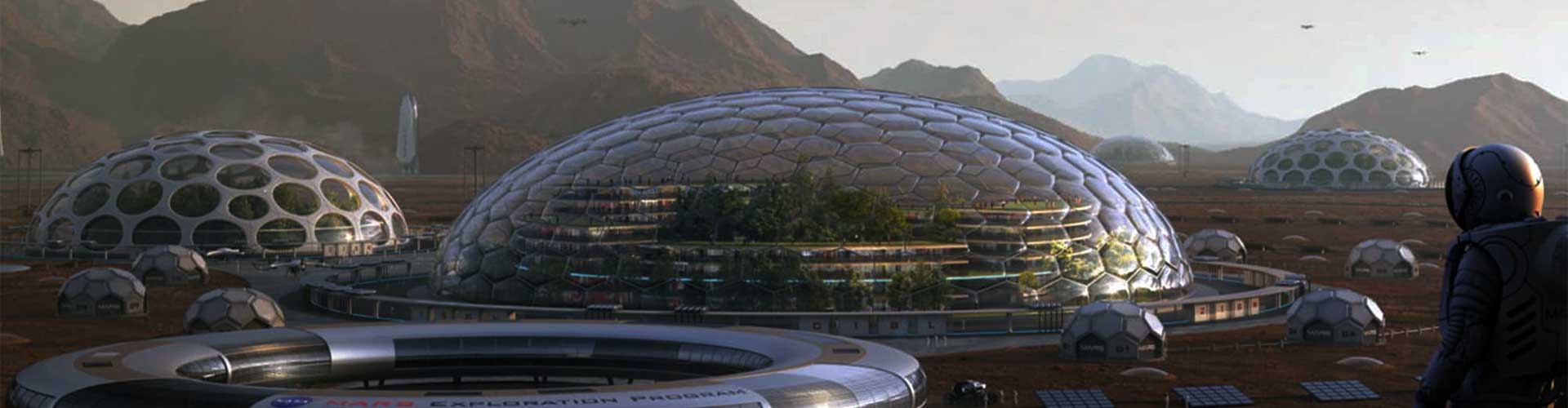 Colonizing Mars
 Opportunity (NASA Mars Rover)
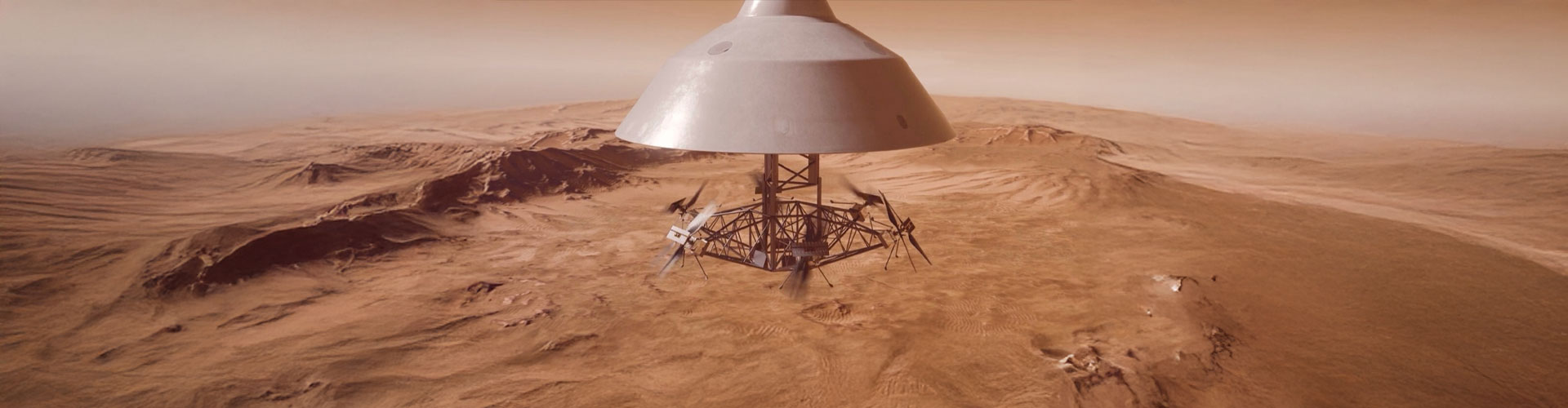 Skyfall (NASA Mars Helicopters)
 Triton (Neptune moon)
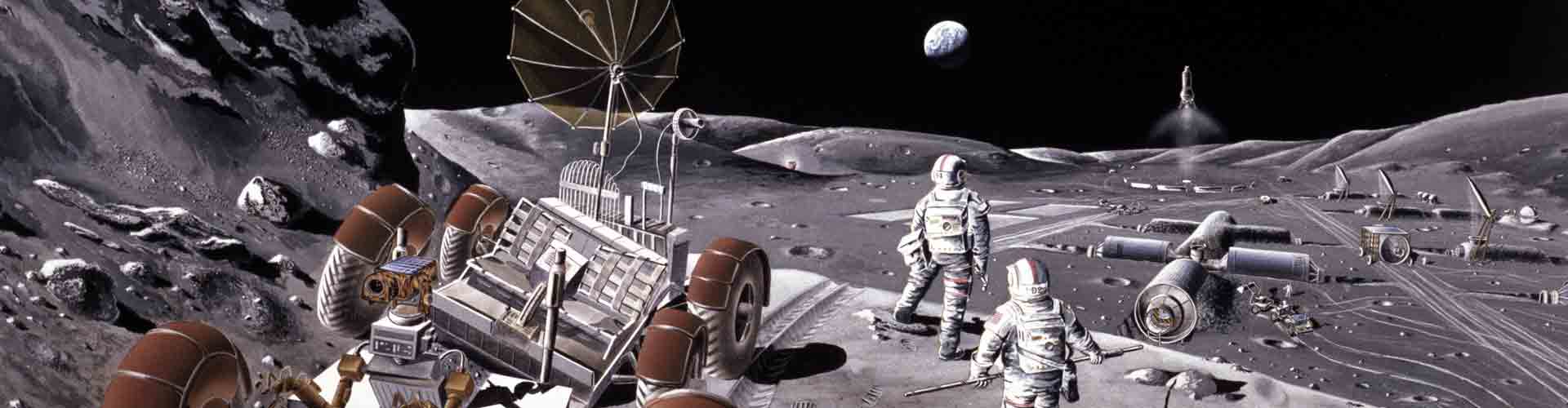 COLONIZING THE MOON
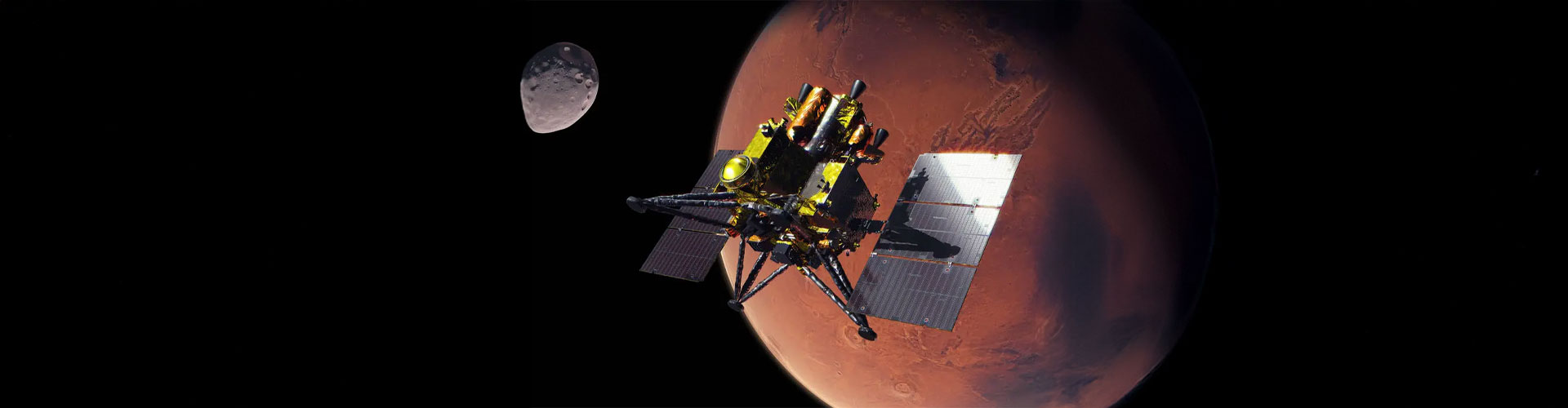 MMX Martian Moons eXploration (JAXA Spacecraft)
 The Moon
 EUROPA (JUPITER MOON)
 Moon Crash of Falcon 9 Flight 401 Upper Stage (Second Stage)
 IO (JUPITER MOON)




