
The heliosphere is the vast, bubble-like region of space that surrounds and is created by the Sun. In plasma physics terms, it is the cavity formed by the Sun in the surrounding interstellar medium. The “bubble” of the heliosphere is continuously “inflated” by plasma originating from the Sun, known as the solar wind. The edge of the heliosphere is called the heliopause. Image credit: NASA
Related channels: INTERSTELLAR BOUNDARY EXPLORER (NASA SATELLITE), THE SUN, THE SOLAR SYSTEM, MERCURY, VENUS, EARTH, THE MOON, MARS, JUPITER, SATURN, URANUS, NEPTUNE, DWARF PLANETS, MOONS, ASTEROIDS, COMETS, KUIPER BELT, PLANETESIMALS
Heliosphere latest news
1
/
2


New 3D map reveals invisible boundary between our solar system and interstellar space
For the first time, a team of scientists has mapped the boundary between our solar system and interstellar space — a region known as the heliopause.
Learn more:
HELIOSPHERE https://www.spacetv.net/heliosphere/
INTERSTELLAR BOUNDARY EXPLORER SATELLITE https://www.spacetv.net/interstellar-boundary-explorer-nasa-satellite/
THE SOLAR SYSTEM https://www.spacetv.net/the-solar-system/
Written and hosted by Cambrie Caldwell
https://twitter.com/CambrieCaldwell
Follow SPACETV on Twitter https://twitter.com/SPACETVnet
Join us on Facebook https://www.facebook.com/spacetv.net
We're now on Tiktok https://www.tiktok.com/@spacetvnet
Sources:
https://www.iflscience.com/space/boundary-between-the-heliosphere-and-interstellar-space-has-been-mapped-for-the-first-time/
https://phys.org/news/2021-06-boundary-heliosphere.html
https://www.livescience.com/heliosphere-map-solar-wind.html
https://science.nasa.gov/heliophysics/focus-areas/heliosphere
https://www.forbes.com/sites/jamiecartereurope/2021/06/18/the-edge-of-our-solar-system-has-been-found-the-heliosphere-bubble-just-got-mapped/?sh=3b10f85bf8d4
https://svs.gsfc.nasa.gov/13003
https://svs.gsfc.nasa.gov/20299
https://images.nasa.gov/details-GSFC_20100922_IBEX_m10654_Heliopause_Segment_1
https://svs.gsfc.nasa.gov/13642
https://svs.gsfc.nasa.gov/20186
https://svs.gsfc.nasa.gov/10499
https://www.jpl.nasa.gov/infographics/an-orbit-map-of-the-solar-system
Credits:
NASA GSFC/CIL/Krystofer Kim
NASA Goddard/CIL/Jonathan North
NASA / Goddard Space Flight Center
NASA / Goddard Space Flight Center, Conceptual Image Lab
Goddard Space Flight Center / Ryan Fitzgibbons, Walt Feimer, Chris Meaney, Swarupa Nune, Merav Opher SPACETV.NET 2021
NSN Webinar Series: The Polarimeter to Unify the Corona and Heliosphere (PUNCH) Mission
NASA Night Sky Network members joined on Dr. Nicholeen Viall on July 20 for an update on NASA's PUNCH mission to study the Sun's corona.
The Sun’s outer atmosphere, the corona, is hundreds of times hotter than the visible surface of the Sun below it. This super-hot coronal plasma (electrons and ions) expands outwards in all directions, accelerating up to millions of miles per hour, carrying part of the Sun’s magnetic field with it, and becoming the solar wind. The Polarimeter to Unify the Corona and Heliosphere (PUNCH) Mission is a NASA Small Explorer (SMEX) mission to better understand the processes of how the energy of the Sun’s corona fills the solar system, and how coronal mass ejections evolve on their way to the Earth and other planets. We will describe the PUNCH mission and how it will answer these fascinating questions about our Sun and space environment.
About Dr. Nicholeen Viall
Dr. Nicholeen Viall is a Research Astrophysicist at NASA’s Goddard Space Flight Center, and is the Mission Scientist for the PUNCH mission. She earned her B.S. in Physics and Astronomy from the University of Washington, and earned her PhD in Astronomy from Boston University. She is the 2018 winner of the Karen Harvey prize from the Solar Physics Division of the American Astronomical Society for a significant contribution to the study of the Sun early in a person’s professional career. She was awarded NASA’s Early Career Achievement Medal for “fundamental contributions to understanding coronal heating and the slow solar wind and for valuable service to NASA, the science community and the public.”
Find related resources and links on this webinar's resource page, hosted by the NASA Night Sky Network:
https://nightsky.jpl.nasa.gov/download-view.cfm?Doc_ID=693 NSN Webinar Series Page: Current & Upcoming Event Schedule:
https://nightsky.jpl.nasa.gov/news-display.cfm?News_ID=707
Night Sky Network
https://nightsky.jpl.nasa.gov/
Astronomical Society of the Pacific
https://astrosociety.org/
First 3D Map Of The Solar System Made Using Echos Reveals the Heliosphere
Good telescope that I've used to learn the basics: https://amzn.to/35r1jAk
Get a Wonderful Person shirt: https://teespring.com/stores/whatdamath
Alternatively, PayPal donations can be sent here: http://paypal.me/whatdamath
Hello and welcome! My name is Anton and in this video, we will talk about the first 3d map of the heliosphere on our solar system
More about IBEX: https://www.nasa.gov/mission_pages/ibex/index.html
Paper: https://iopscience.iop.org/article/10.3847/1538-4365/abf658
Support this channel on Patreon to help me make this a full time job:
https://www.patreon.com/whatdamath
Bitcoins to spare? Donate them here to help this channel grow!
32ygEA36irM9Dsqx2rXZmHQ9rj7ZoWDYWZ
Space Engine is available for free here: http://spaceengine.org
Enjoy and please subscribe.
Twitter: https://twitter.com/WhatDaMath
Facebook: https://www.facebook.com/whatdamath
Twitch: http://www.twitch.tv/whatdamath
The hardware used to record these videos:
New Camera: https://amzn.to/34DUUlv
CPU: https://amzn.to/2LZFQCJ
Video Card: https://amzn.to/2M1W26C
Motherboard: https://amzn.to/2JYGiQQ
RAM: https://amzn.to/2Mwy2t4
PSU: https://amzn.to/2LZcrIH
Case: https://amzn.to/2MwJZz4
Microphone: https://amzn.to/2t5jTv0
Mixer: https://amzn.to/2JOL0oF
Recording and Editing: https://amzn.to/2LX6uvU
Some of the above are affiliate links, meaning I would get a (very small) percentage of the price paid.
Thank you to all Patreon supporters of this channel
Special thanks also goes to all the wonderful supporters of the channel through YouTube Memberships:
Tybie Fitzhugh
Viktor Óriás
Les Heifner
theGrga
Steven Cincotta
Mitchell McCowan
Partially Engineered Humanoid
Alexander Falk
Drew Hart
Arie Verhoeff
Aaron Smyth
Mike Davis
Greg Testroet
John Taylor
EXcitedJoyousWorldly !
Christopher Ellard
Gregory Shore
maggie obrien
Matt Showalter
Tamara Franz
R Schaefer
diffuselogic
Grundle Muffins
Images/Videos:
Yanpas , CC BY-SA 4.0 , https://en.wikipedia.org/wiki/Heliosphere#/media/File:Heliosphere-washbasin.svg
NASA / JPL-Caltech
NASA/Goddard Space Flight Center Scientific Visualization Studio/Tom Bridgman
NASA/IBEX/Adler Planetarium
NASA/JPL/JHUAPL
NASA/Goddard Space Flight Center/CI Lab
https://www.youtube.com/watch?v=9IE2VUZ6wZM
https://www.youtube.com/watch?v=suo7_u18C_s
NASA/IBEX/ADLER PLANETARIUM
Licenses used:
https://creativecommons.org/licenses/by/4.0/
https://creativecommons.org/licenses/by-sa/4.0/
https://creativecommons.org/licenses/by/3.0/
https://creativecommons.org/licenses/by-sa/3.0/
https://creativecommons.org/licenses/by/2.5/
https://creativecommons.org/licenses/by-sa/2.5/
https://creativecommons.org/licenses/by/2.0/
https://creativecommons.org/licenses/by-sa/2.0/
Classroom Aid - Sentinels of the Heliosphere
Text at http://howfarawayisit.com/documents/
In this segment of our video book, we cover the Sentinels of the Heliosphere fleet; the distance to the edge of our Sun’s solar wind; the Aurora Borealis, Comets, the Kuiper Belt and the Oort Cloud.
We start by defining the limits of the Sun’s influence, including the Termination Shock, Heliopause, Heliosheath, and the Bow Shock. Voyager 1 and Voyager 2 progress is reviewed.
Next, we cover the near-Earth fleet of satellites Hinode, RHESSI, TRACE, and FAST; the Magnetosphere satellites Cluster 1 through 4 plus Geotail; the Sun observers Stereo A and Stereo B; the solar wind observers orbiting Lagrange Point 1 – ACE, Wind, and SOHO; and back to the Magnetosphere with THEMIS A through E; and back again to Voyager 1 and 2. We conclude with a look at the big November 2011 solar storm observed by Stereo.
We then cover the nature of the aurora Borealis and aurora Australis. This includes the Bohr atomic model where we explain the quantum jumps in high altitude Oxygen atoms that create photons.
Next we cover what a comet is and the history of comets including the Great Comet of 1577 studied by Tyco Brahe and the many comets that became Halley’s Comet. We then examine comet orbits including the long period comets Siding Spring, Hale-Bopp and Lovejoy 2014, and the short period comets 67P, Encke and Halley’s Comet.
These two kinds of comet orbits along with evaporating comets leads us to the Kuiper Belt and Oort Cloud as areas that generate new comets. We end the segment on comets with a look at Shoemaker Levy crashing into Jupiter and the Rosetta Mission to 67P.
We conclude with a review of the Solar System distances we have covered in this and the previous segments.
Q&A Mini Course (H1): The Breathing Heliosphere & Solar Activity Cycle (Part 1)
This live course was made by and for patrons of Patreon. Without their generosity this broadcast would not have been possible.
What's It Like at the Edge of the Solar System?
Where does our solar system end, and interstellar space begin, and what is it like there? Satellites and probes like IBEX and Voyager 1 & 2 help us get a better look at our special corner of the galaxy.
Nature League: Can Complex Life Evolve Without Oxygen? - From A to B : https://www.youtube.com/watch?v=f9qlDMZnWCk
Hosted by: Caitlin Hofmeister
----------
Support SciShow by becoming a patron on Patreon: https://www.patreon.com/scishow
----------
Dooblydoo thanks go to the following Patreon supporters:
Jerry Perez, Lazarus G, Kelly Landrum Jones, Sam Lutfi, Kevin Knupp, Nicholas Smith, D.A. Noe, alexander wadsworth, سلطان الخليفي, Piya Shedden, KatieMarie Magnone, Scott Satovsky Jr, Charles Southerland, Bader AlGhamdi, James Harshaw, Patrick D. Ashmore, Candy, Tim Curwick, charles george, Saul, Mark Terrio-Cameron, Viraansh Bhanushali, Kevin Bealer, Philippe von Bergen, Chris Peters, Justin Lentz
----------
Like SciShow? Want to help support us, and also get things to put on your walls, cover your torso and hold your liquids? Check out our awesome products over at DFTBA Records: http://dftba.com/scishow
----------
Looking for SciShow elsewhere on the internet?
Facebook: http://www.facebook.com/scishow
Twitter: http://www.twitter.com/scishow
Tumblr: http://scishow.tumblr.com
Instagram: http://instagram.com/thescishow
----------
Sources:
http://ibex.swri.edu/mission/index.shtml
http://ibex.swri.edu/students/What_are_energetic_neutral.shtml
https://www.space.com/22797-voyager-1-interstellar-space-nasa-proof.html
https://asd.gsfc.nasa.gov/blueshift/index.php/2015/07/22/how-many-stars-in-the-milky-way/
https://astrobites.org/2012/05/14/no-shocks-for-this-bow-ibex-says-were-wrong/
https://www.nasa.gov/mission_pages/ibex/news/nobowshock.html
https://web.archive.org/web/20140823162722/http://www.astrobio.net/topic/solar-system/outer-solar-system/the-ever-changing-edge-of-the-solar-system/
https://astrobites.org/2012/02/10/solar-system-is-oxygen-rich-compared-to-surroundings/
https://www.nasa.gov/mission_pages/ibex/news/ribbon-explained.html
https://www.npr.org/2012/02/03/146350499/ibex-spacecraft-intercepts-alien-particles Images:
https://en.wikipedia.org/wiki/File:IBEX_spacecraft.jpg
https://www.jpl.nasa.gov/spaceimages/details.php?id=pia17046
https://www.nasa.gov/feature/goddard/2016/nasa-s-ibex-observations-pin-down-interstellar-magnetic-field
https://en.wikipedia.org/wiki/File:72408main_ACD97-0036-1.jpg
https://svs.gsfc.nasa.gov/cgi-bin/details.cgi?aid=4087
https://svs.gsfc.nasa.gov/10332
https://svs.gsfc.nasa.gov/20131
https://svs.gsfc.nasa.gov/11382
https://svs.gsfc.nasa.gov/10906
https://commons.wikimedia.org/wiki/File:B-1_pensacola_show.jpg
https://svs.gsfc.nasa.gov/10499
https://en.wikipedia.org/wiki/File:Voyager_1_entering_heliosheath_region.jpg
https://svs.gsfc.nasa.gov/10905
https://svs.gsfc.nasa.gov/10260
https://www.nasa.gov/mission_pages/ibex/allsky_visuals.html
Voyager 2 only the second spacecraft ever to cross the Heliosphere
NASA's Voyager 2 became only the second spacecraft ever to cross the Heliosphere. Heliosphere is the protective wrapping containing supersonic charged particles emanating from the sun.
The spacecraft has now moved interstellar space medium covering a distance of over 11 billion kilometers.
Scientists have now confirmed that this crossing took a year ago, on November 5, 2018. Two energetic particle detectors onboard the Voyager 2 have confirmed huge decline in heliospheric particles.
And at the same time a great increase in level of high energy cosmic rays. These changes have confirmed the fact that the spacecraft has entered a new space zone.
Voyager 2's twin spacecraft called the Voyager 1 had crossed the heliosphere 2012.
Both these spacecrafts were launched 1977 to study the solar system. But even after 42 years they continue to operate and communicate data to NASA's deep space network.
Voyager 1 is the farthest a man made object has ever travelled from the earth.
The Truth is 'WAY' out There - Voyager leaves the Heliosphere - Prof Simon
One or two things define us as humans. This month we (the human race) have sent two spacecraft into 'inter stellar space' . Congratulations to JPL for
keeping their 'Voyager' probes working for so long.
Archive JPL and NASA
thanks for watching
Prof Simon.
Patron Link
https://www.patreon.com/profsimon
Sentinels of the Heliosphere
What NASA calls its 'Heliophysics Observatory' is an impressive fleet of spacecraft designed (often with international partnership) to study the relationship between the Sun, Earth, and Solar System. Flying in an array of trajectories and orbits, many of these satellites do not take images in the conventional sense but record fields, particle energies and fluxes in situ to give mankind a better understanding of space weather and space environments.
Voyager 2 Discovers Wall of Fire at Solar System's Edge
Wonderful Person shirts: https://amzn.to/3QFIrFX
Get a Wonderful Person shirt: https://teespring.com/stores/whatdamath
Alternatively, PayPal donations can be sent here: paypal.me/whatdamath
Hello and welcome! My name is Anton and in this video, we will talk about the reports of what Voyager 2 discovered as it left the solar system and the discovery of physical barrier at the edge of the solar system.
Support this channel on Patreon to help me make this a full time job:
https://www.patreon.com/whatdamath
Space Engine is available for free here: http://spaceengine.org
Enjoy and please subscribe.
Twitter: https://twitter.com/WhatDaMath
Facebook: https://www.facebook.com/whatdamath
Twitch: http://www.twitch.tv/whatdamath
Bitcoins to spare? Donate them here to help this channel grow!
1GFiTKxWyEjAjZv4vsNtWTUmL53HgXBuvu
The hardware used to record these videos:
CPU: https://amzn.to/2LZFQCJ
Video Card: https://amzn.to/2M1W26C
Motherboard: https://amzn.to/2JYGiQQ
RAM: https://amzn.to/2Mwy2t4
PSU: https://amzn.to/2LZcrIH
Case: https://amzn.to/2MwJZz4
Microphone: https://amzn.to/2t5jTv0
Mixer: https://amzn.to/2JOL0oF
Recording and Editing: https://amzn.to/2LX6uvU Thank you to all Patreon supporters of this channel
Specifically, great thanks to the following members:
Morrison Waud
Vlad Manshin
Mark Teranishi
TheHuntress
Daniel Rosvall
Lilith Dawn
Ralph Spataro
Albert B. Cannon
Greg Lambros
adam lee
Henry Spadoni
Jer
Nick Dolgy
Luminger
Konrad Kummli
UnexpectedBooks.com
Gabriel Seiffert
George Williams
J Carter
Mary Kristof
Oleg Hurmak
Shinne
Jakub Glos
Lauren Smith
Michael Tiganila
Lyndon Riley
Johann Goergen
Jake Salo
LS Greger
Dave Blair
Michael Mitsuda
Russell Sears
Vinod sethi
Robert Wyssbrod
RandalM
Gordon Cooper
Tracy Burgess
Assaf Dar Sagol
Jayjay Volz
Liam Moss
Timothy Welter MD
Kai Raphahn
Sander Stols
Anataine Deva
Sergio Ruelas
Bodo Graßmann
Douglas Burns
gary steelman
Jan Šoulák
Michael Koebel
Olegas Budnik
Shelley Passage
Steven Aiello
xyndicate
Honey Suzanne Lyons
Dale Andrew Darling
James Myers
Niji
Peter Hamrak
Matthew Lazear
Anton Newman
Anton Reed
Charles Nadeau
Daniel Charles Smith
Daniel G.
Dave A
Doug Baker
Doug MacDonald
Eugene Sandulenko
GrittyFlix
Max McNally
Minovsky Man
Mr Fluffington
Paul Koploy
Sal Carrera
Victor Julian Castillo
Becky
Steven
Jacob Spencer
brian plummer
Lee Densmore
Sir David Coyne
Veronika A. Czebe
Steve Wotton
Adam Smith
Alberto Diaz Saldana
Chaos Gamer
Daniel Coleman
Jana Persson
Kearny Li
Rafael Aguila
Rock Howard
Tedd Speck
rfc1135
Vincent L. Cleaver
Claye Griffith
David Lewis
JohnTaylorWalker
Kyle eagle
Michael J Fluharty
Tarik Qassem
Scary ASMR
Arp Lee
Barnard Rabenold
Lisa Stadlbauer
Lisette Ramos-Voigt
Márton Fülöp
Reynir Guðmundsson
Rs Wlms
tom g.
Greyson Flippo
Hampton Tunis
Ivan Gallagher
Jordaen Davids
Lynn Johnson
Rob Law
Thierry Ray Jehlen Gasnier
Troy Schmidt
William Warren
Arikkat Unnikrishnan
Uwe Böhnke
Carla
Deanna Korell-Hall
Dipen Bhattacharya
Josh Shultz
Samuel Mathison
Bryan Linsley
Chris Bingley
David Bennett
David Wortz
Douglas Wilkinson
Lionel Sleeper
Markus Bidi
Matthew C Weiss
Michael McCloskey
Mr. Numi Who-
Orlando J Carter
Peter Sedmák
Randall J Silva
Vladyslav Kurmaz
Walter van der Kamp
Brittany House
david jungerman
Doug Beeferman
JL Solidum
Luis M Gaytan Tovar
Men I Trust
Sol Bergeron Beauchemin
Hernán Coronel
Mr MOD
Branden Loizides
Chris the Mad Sciencer
Christopher Borra
Dave
Hein Spijker
Ingmar Rauschert
James McClarty
karlos preddie
Kitara Burke
Lance Fielden
Laura Coutu
Luis Lengsfeld
Lumi Pakkanen
MARK ANDERSON
Michael R Mendoza
Miek Thompson
N30D@nt3
Robert Clyde
Steven Uttley
Susanne Bauer
Suzanne Brummitt
Yvan Lengwiler
Å ukasz Adamski
Todd Gregory-Gibbs
Adam Burnett
Christian Rane
gene valle
Hidden Hinges
Jan-Chris
Jelle Baris
john requa
Joseph Conard
kristian svensson
Qauthar Saleh
Tuukka Arola
Allen DuBeau
Bob Goswick
Daniel Schakel
Derek Bamber
Gerald Williams
Gideon Falta
Gregory T Hart
Jennifer Pumphrey
Marcel Barros
Michael Luce
Peyton Vaughn
Quasar
Sandy Flowers
Svein Trondsen
Bonnie Veldey
Christian Jochum
Daniel Morris
Dreameroutthere
Jeff Blakemore
Maciej Świerczewski
Mahesh Gopalan
Marilyn Aldridge
Paul Maybury
Richard Reich
RiddleJacks
Sean Spartan
Tim Jones
Paul dunn
Robert the Green
JoachimB
Alec Estrada
Devonte Foy
Gawen Thompson
Jessica Anderson
Ketan More
Nina and Ivan
PartyMartyy & Dem OTF Bois
Patrick Denny
PAUL G STEWART
Sander Hollebrand
Suzanne Miezis
ZarconDeeGrissom
Galen Thurber
Indy Car
Joseph Wheeler
Julia Ruggiero
Norm Zemke
Phlllp A Falson
Rafael Espericueta
Brian Jorgensen
Darktorn
David Campos
Irene Ka
Jefware
Laura Sanborn
maycon kruger
Mike Laffoon
Patrik Franzén
Stephen Bowland
Vyacheslav Ermakov
Check Patreon to join!
The Heliosphere
The heliosphere is a bubble that surrounds our entire solar system and is inflated by the outward solar wind, which pushes out and deflects the material from the part of the galactic medium through which our Sun and solar system continually moves. This animation starts at our sun and quickly zooms out from the solar system to reveal the heliosphere and its collision with interstellar gas.
Our Boundary to Interstellar Space: A New Regime of Space Physics
What lies beyond our solar system? Beyond the heliosphere? Join the Interstellar Probe Study Team for a webinar discussion: "Our Boundary to Interstellar Space: A New Regime of Space Physics."
Panelists
Dr. Elena Provornikova (Lead Scientist for Heliophysics, Interstellar Probe Study)
Professor Merav Opher (Department of Astronomy, Boston University)
Dr. Jamie Rankin (Space Physics Postdoctoral Research Associate, Princeton University)
Our panelists discuss the discoveries and the latest research on the nature of the boundary between the heliosphere and the very local interstellar medium. They summarize the primary outstanding questions in the field, and what measurements could be made to answer them.
More on the Interstellar Probe: http://interstellarprobe.jhuapl.edu/
What Lies Beyond the Edge of Our Solar System?
The Voyager space probes have gone further into the unknown than any other spacecraft. With both probes officially in interstellar space, what have we learned?
»Subscribe to Seeker! http://bit.ly/subscribeseeker
»Watch more Focal Point: https://bit.ly/31Ms6mj
In 1965, a PhD student figured out that every 176 years the four planets in our solar system align in such a unique way that it is possible to use their gravitational forces to slingshot from one planet to the next.
This insight, that came to fruition using just a slide rule and simple computer programs, became part of an ambitious mission to send two probes and golden records out into space for a grand tour.
Enter: The Voyagers.
The Voyager probes are two obscure looking robots, weighing roughly 800 kilograms with giant arms and big ears, it took 1,500 engineers and scientists to bring these robotic explorers to life.
The Voyagers took some of the first detailed snapshots of planets and moons—revealing Io’s volcanism, close-up details of Saturn’s icy rings, and Neptune’s great dark spot.
And after traveling for more than 43 years, clocking in 18 billion kilometers traveled, the Voyagers are taking humanity into the next great beyond: interstellar space.
With the opportunity to visit Uranus and Neptune, the NASA engineers developed a mission within a mission, outfitting the probes with 11 different instruments, redundant systems, and autonomous controls.
Find out more about the Voyager mission, what we’ve learned so far, and the experts behind it all on this episode of Focal Point.
#NASA #Space #Interstellar #Voyagers #Galaxy #Seeker #FocalPoint #Science
____________________
Read More:
Voyager Mission Reveals Unexpected Pressure at The Edge of The Solar System
https://www.sciencealert.com/scientists-measured-the-pressure-at-the-solar-system-s-edge-and-received-a-surprise
“NASA astronomers have used data from the Voyager probes to measure the bustle of particles rippling at the very edge of our Solar System, and discovered the pressure in the distant borderlands of our star is higher than they expected.”
NASA's Voyager 2 Probe Enters Interstellar Space
https://voyager.jpl.nasa.gov/news/details.php?article_id=112
“For the second time in history, a human-made object has reached the space between the stars. NASA's Voyager 2 probe now has exited the heliosphere - the protective bubble of particles and magnetic fields created by the Sun.”
How NASA Will Prolong the Lives of the Voyager Probes, 11 Billion Miles From Earth
https://gizmodo.com/how-nasa-will-prolong-the-lives-of-the-voyager-probes-1836219431
“Launched 42 years ago, the Voyager 1 and Voyager 2 space probes are now exploring the outer realms of our solar system. Sadly, the end of the mission is now firmly in sight, but NASA has a plan to keep the probes operational for as long as possible before their power finally runs out.”
____________________
Our scientific understanding of the universe is advancing at an unprecedented rate. Join Focal Point as we meet the people building tomorrow’s world. Witness the astonishing discoveries that will propel humanity forward and zero-in on the places where science-fiction becomes science-reality.
Seeker empowers the curious to understand the science shaping our world. We tell award-winning stories about the natural forces and groundbreaking innovations that impact our lives, our planet, and our universe.
Visit the Seeker website https://www.seeker.com
Seeker on Facebook https://www.facebook.com/SeekerMedia/
Focal Point on Facebook https://www.facebook.com/FocalPointShow/
Seeker on Twitter http://twitter.com/seeker
Voyager 2 Finds Wall Of Fire And Enters Interstellar Space!
There are a lot of things out there in the universe that need our attention, but a wall of fire found by the Voyager probes? Yeah, that's something else. Join us as we explore exactly what's going on here.
7. What Are The Voyager Probes?
Considering that we're talking about how the Voyager Space Probes were the ones that discovered this "wall of fire" in deep space, it would probably be nice to know what they are, right?
6. The Wall Of Fire
While it's true that the Voyager Probes haven't left the solar system as of yet, that doesn't mean they haven't gone far. They are in a place now that is defined as "Interstellar Space", though that classification can mean many different things. In the context of this video though they're past the Heliosphere. That is where solar winds emitted from our sun still blow things outwards. So in many ways, the probes are away from the reach of the sun.
5. The Problem With Plasma
Plasma, if you didn't know, is the fourth state of matter, and it was always known, or at least believed, that there was some outside the Heliosphere, as between the suns' emissions and the rest of the universe pouring things into deep space, it was basically pretty natural for it to be there. And when Voyager 1 first reached the point of Interstellar Space, it noticed some slightly higher levels of plasma, but it was Voyager 2 that showed that it was MUCH bigger than anticipated.
4. Leaks?
As noted, there are many problems with this wall of fire, and one of them may just be how exactly this thing is forming. After all, scientists were a bit stunned by the density that the Wall of Fire exudes in Interstellar Space. But what might be even more surprising though is that Voyager 2 indicates that part of the reason the field of fire is so thick is that the Heliosphere has a leak in it.
3. Magnetic Fields and Magnetic Shields
The discovery of the Wall of Fire wasn't the only thing that people at NASA were interested in when it was discovered. Instead, it was also the fact that there was new information given about the magnetic fields that were there in the outer reaches of interstellar space. You see, our solar system is held within a magnetic field that is comprised mostly of the suns' field. Not unlike the orbits of the planets and such. Thus, when you get out of the reach of the sun via the Heliosphere, it goes to reason that the magnetic field would go off in a different direction entirely. In fact, that is what everyone at NASA thought before Voyager 1 & 2 proved them very, very wrong.
2. The Question Of Space Travel
Ok, so now let's talk about one of the biggest problems with this Wall of Fire. Mainly...how are we going to get past it?
---
Video Chapters:
00:00 - Introduction
00:18 - What Are The Voyager Probes?
02:22 - The Wall of Fire
04:30 - The Problem With Plasma
06:14 - Leaks
07:34 - Magnetic Fields and Magnetic Shields
09:07 - The Question of Space Travel
11:29 - Space: The Final Frontier
#insanecuriosity #voyager2 #interstellar
Voyager Finds Magnetic Foam at Solar System's Edge
The Voyager satellites are now traveling through the outer edge of the solar system, called the heliosheath. Using a computer model based on Voyager data, scientists have shown that the sun's magnetic field becomes bubbly in this region due to reconnection. Because of this, cosmic rays must slowly work their way through the magnetic foam before continuing on toward the sun.
Mapping the Heliosphere for the first time
For the first time, the boundary of the heliosphere has been mapped, giving scientists a better understanding of how solar and interstellar winds interact. The heliosphere is a bubble created by the solar wind, a stream of mostly protons, electrons, and alpha particles that extends from the Sun into interstellar space and protects the Earth from harmful interstellar radiation.
Dan Reisenfeld and a team of other scientists used data from NASA’s Earth-orbiting Interstellar Boundary Explorer (IBEX) satellite, which detects particles that come from the heliosheath, the boundary layer between the solar system and interstellar space. The team was able to map the edge of this zone —a region called the heliopause. Here, the solar wind, which pushes out toward interstellar space, collides with the interstellar wind, which pushes in towards the Sun.
LA-UR-21-25385
The Heliosphere, and why it's so important
Everything about the heliosphere and why we probably wouldn't be here to talk about it without it. Sources:
https://www.nasa.gov/mission_pages/sunearth/science/Heliosphere.html
https://science.nasa.gov/heliophysics/focus-areas/heliosphere
https://en.wikipedia.org/wiki/Heliosphere
Some extra material on the topic:
http://web.mit.edu/space/www/helio.review/axford.suess.html
The difference between cosmic and gamma rays in a lot of depth:
http://www.astro.com.sg/cgi1/display_doc_Final.cgi?docno=50009639&desc=Difference%20between%20Gamma-Rays%20and%20Cosmic%20Rays%20-%20by%20Albert%20Lim%20_2000_
music: https://www.youtube.com/watch?v=89eaxsthTqc
Classroom Aid - The Heliosphere
Text at http://howfarawayisit.com/documents/
In this segment of our video book, we cover the Sentinels of the Heliosphere fleet; the distance to the edge of our Sun’s solar wind; the Aurora Borealis, Comets, the Kuiper Belt and the Oort Cloud.
We start by defining the limits of the Sun’s influence, including the Termination Shock, Heliopause, Heliosheath, and the Bow Shock. Voyager 1 and Voyager 2 progress is reviewed.
Next, we cover the near-Earth fleet of satellites Hinode, RHESSI, TRACE, and FAST; the Magnetosphere satellites Cluster 1 through 4 plus Geotail; the Sun observers Stereo A and Stereo B; the solar wind observers orbiting Lagrange Point 1 – ACE, Wind, and SOHO; and back to the Magnetosphere with THEMIS A through E; and back again to Voyager 1 and 2. We conclude with a look at the big November 2011 solar storm observed by Stereo.
We then cover the nature of the aurora Borealis and aurora Australis. This includes the Bohr atomic model where we explain the quantum jumps in high altitude Oxygen atoms that create photons.
Next we cover what a comet is and the history of comets including the Great Comet of 1577 studied by Tyco Brahe and the many comets that became Halley’s Comet. We then examine comet orbits including the long period comets Siding Spring, Hale-Bopp and Lovejoy 2014, and the short period comets 67P, Encke and Halley’s Comet.
These two kinds of comet orbits along with evaporating comets leads us to the Kuiper Belt and Oort Cloud as areas that generate new comets. We end the segment on comets with a look at Shoemaker Levy crashing into Jupiter and the Rosetta Mission to 67P.
We conclude with a review of the Solar System distances we have covered in this and the previous segments.
Saved by the Heliosphere
The sun's power reaches far beyond our solar system. Solar winds blow into the Kuiper Belt creating a giant bubble around our solar system protecting us from deadly cosmic rays. | http://science.discovery.com/tv-shows/how-the-universe-works/
Catch new episodes of HOW THE UNIVERSE WORKS Tuesdays at 10/9c on Science!
Watch full episodes:
http://bit.ly/HTUWFullEpisodes
Subscribe to Science Channel:
http://www.youtube.com/subscription_center?add_user=sciencechannel
Check out SCI2 for infinitely awesome science videos. Every day.
http://bit.ly/SCI2YT
Download the TestTube app:
http://testu.be/1ndmmMq
NASA | Sentinels of the Heliosphere
What NASA calls its 'Heliophysics Observatory' is an impressive fleet of spacecraft designed (often with international partnership) to study the relationship between the Sun, Earth, and Solar System. Flying in an array of trajectories and orbits, many of these satellites do not take images in the conventional sense but record fields, particle energies and fluxes in situ to give mankind a better understanding of space weather and space environments.
Find this video for HD download at:
http://svs.gsfc.nasa.gov/goto?3595
Want more? Subscribe to NASA on iTunes!
http://phobos.apple.com/WebObjects/MZStore.woa/wa/viewPodcast?id=283424434
Or get tweeted by NASA:
http://twitter.com/NASAGoddard
1
/
2
Also Recommended
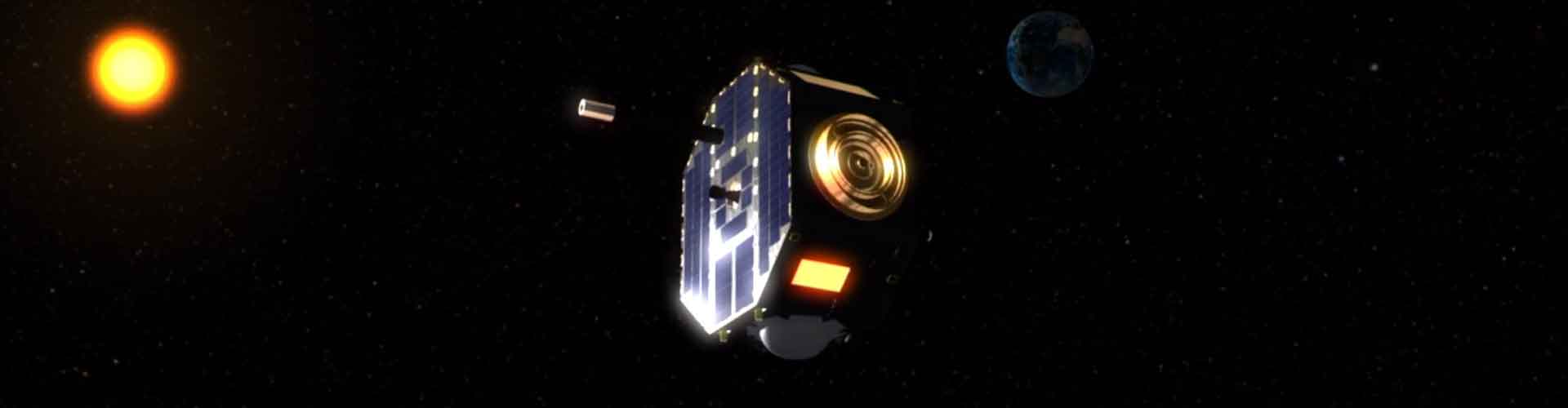 Interstellar Boundary Explorer (NASA Satellite)
 Comet Interceptor (ESA Spacecraft)
 Interstellar Objects
 Voyager (NASA Spacecrafts)
 Solar System
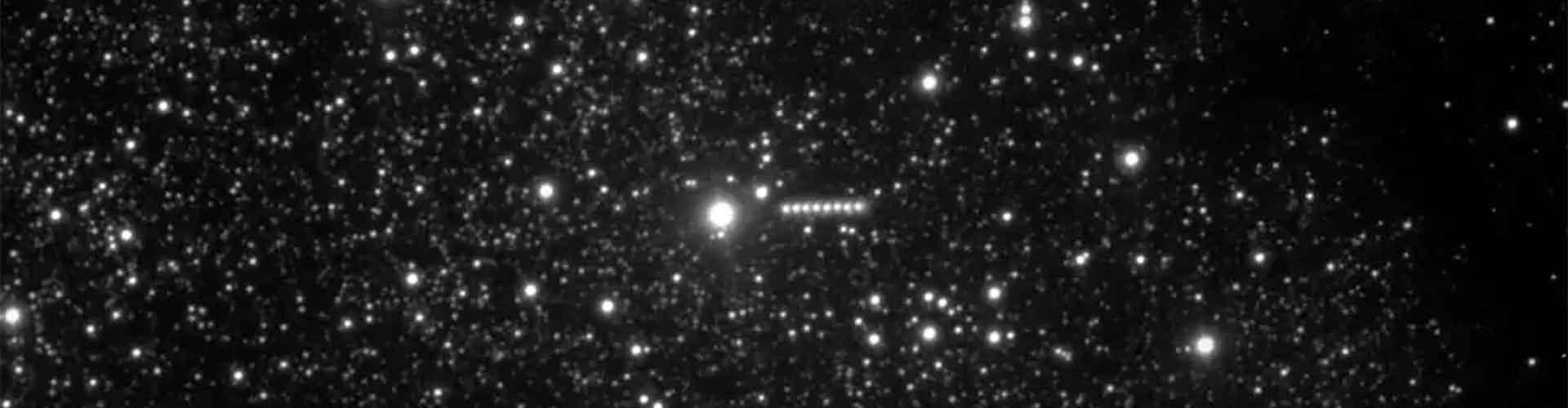 Interstellar Comet 3I/ATLAS
 C/2014 UN271 (Bernardinelli-Bernstein)
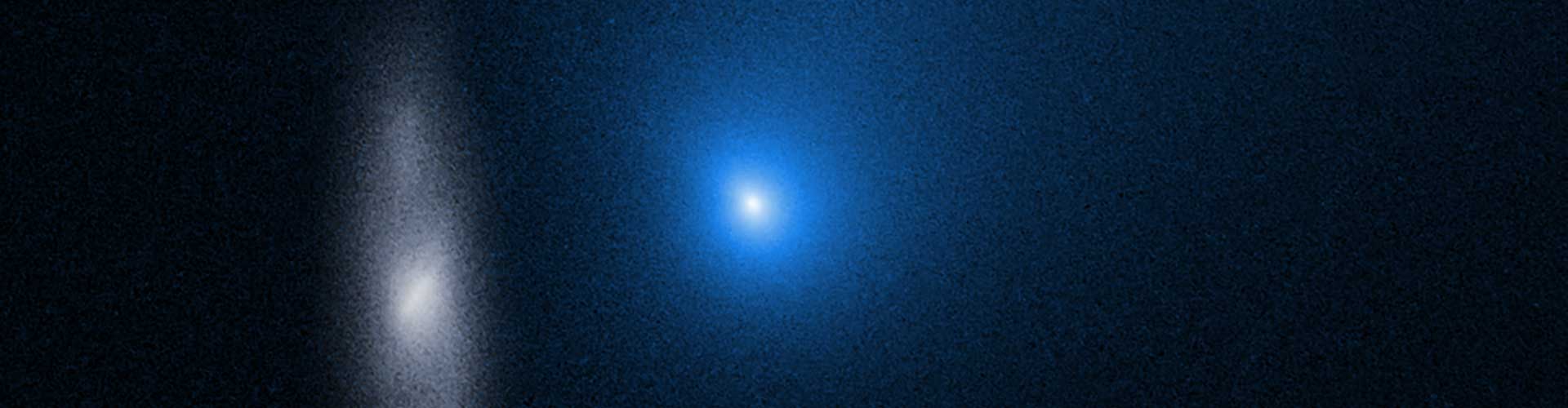 Interstellar Comet 2I/Borisov
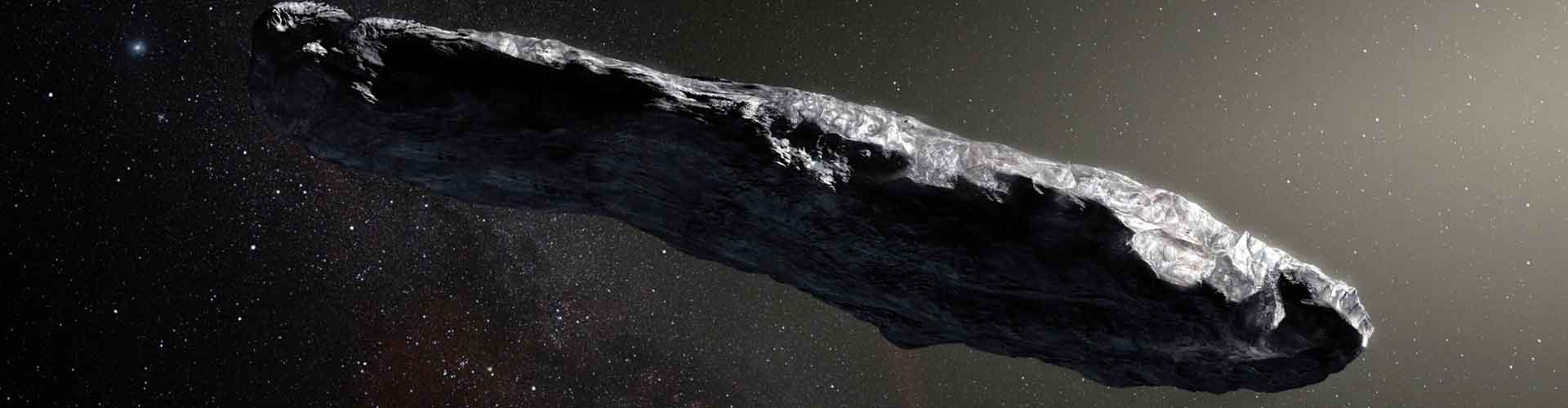 OUMUAMUA (1i-2017-U1)
 SMILE (spacecraft)
 PLANET NEPTUNE
 Carolyn Porco
 ASTEROID DAY
 PLANET NINE
 IRIS (NASA Satellite)
 Planetesimals
 PLANET URANUS
 Vigil (ESA Spacecraft)




